
In the vast landscape of electrical machinery, motors are the unsung heroes that power our modern world, converting electrical energy into mechanical motion. Among the myriad types, the synchronous motor stands out for its unique operational characteristics, particularly its ability to maintain a constant speed irrespective of load variations, provided the supply frequency remains constant. This distinctive feature makes it indispensable in numerous industrial and technological applications where precision and efficiency are paramount. To truly understand its significance, we must delve into its fundamental principles, design, and operational nuances.
The Core Principle of Synchronous Operation
The defining characteristic of a synchronous motor is its “synchronous” speed, meaning the rotor rotates at precisely the same speed as the rotating magnetic field generated by the stator windings. Unlike induction motors, where the rotor always lags behind the stator field (experiencing “slip”), a synchronous motor’s rotor locks into step with the magnetic field. This lock-step operation is achieved through the interaction of two magnetic fields: one produced by alternating current (AC) in the stator windings, creating a rotating magnetic field, and another produced by direct current (DC) in the rotor windings, creating a fixed-polarity magnetic field.
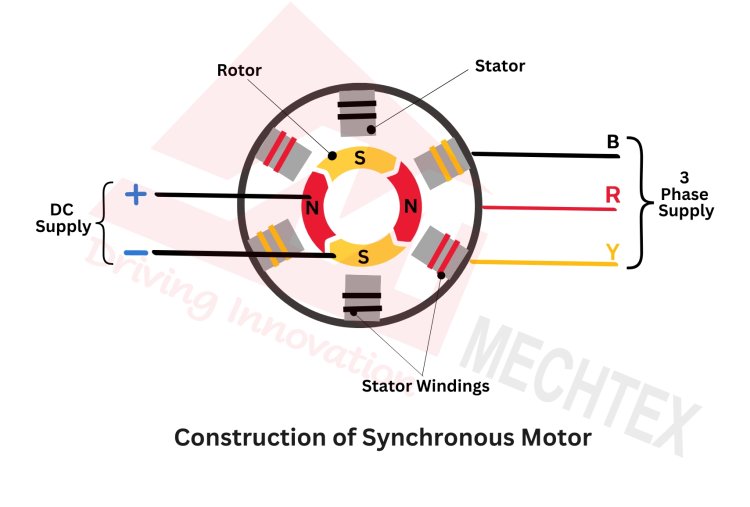
Imagine a magnetic north pole chasing another magnetic south pole. If they are strong enough and the chase is initiated correctly, they will eventually lock together and rotate at the same speed. In a synchronous motor, the stator’s rotating magnetic field continuously pulls the rotor’s fixed magnetic poles along with it. This fundamental principle ensures that the motor’s speed is directly proportional to the frequency of the AC power supply and inversely proportional to the number of pole pairs in the motor, expressed by the formula: $Ns = (120 times f) / P$, where $Ns$ is the synchronous speed in revolutions per minute (RPM), $f$ is the supply frequency in Hertz (Hz), and $P$ is the total number of stator poles. This inherent speed stability is a major advantage in applications requiring precise timing and control.
How Synchronous Motors Work
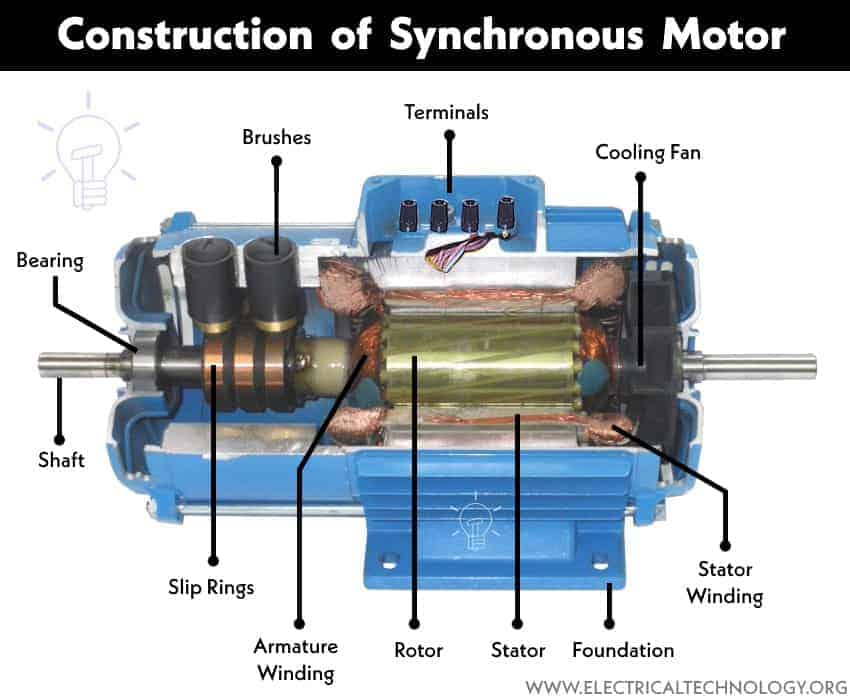
Understanding the internal architecture and operational sequence is crucial to appreciating the sophistication of synchronous motors. Their construction differs significantly from that of simpler AC motors, primarily due to the need for a separate DC excitation system for the rotor.
Stator and Rotor Components
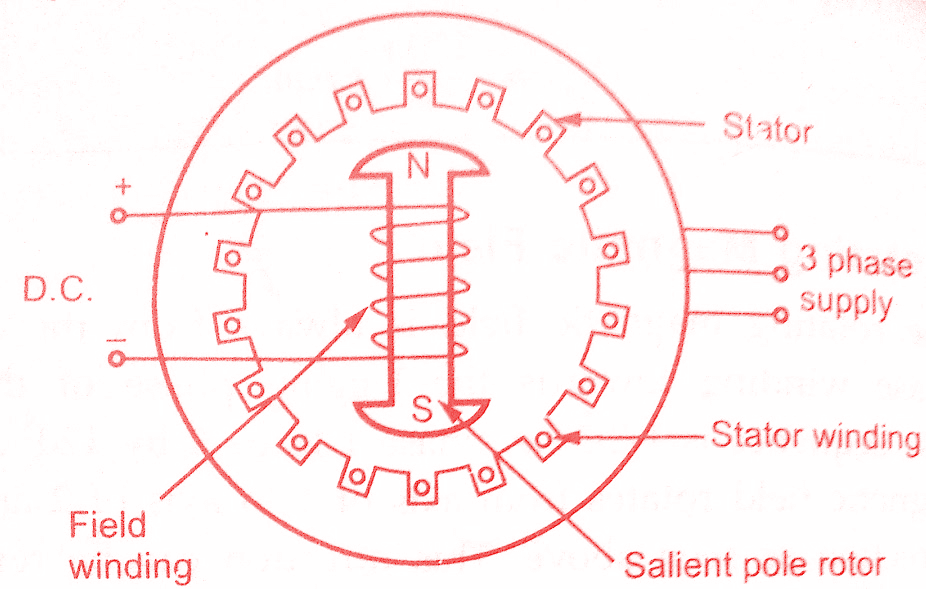
The stator of a synchronous motor is very similar to that of an induction motor. It consists of a laminated iron core with slots that house three-phase windings. When a three-phase AC supply is connected to these windings, it creates a rotating magnetic field, often referred to as the synchronous magnetic field, whose speed is determined by the supply frequency and the number of stator poles.
The rotor, however, is the distinguishing component. It typically consists of a set of electromagnets excited by a DC current. There are two primary types of rotor constructions:
- Salient Pole Rotor: This type has prominent poles projecting from the rotor core, designed for low-speed applications and larger motors. The field windings are wound around these projecting poles, and the DC current is supplied via slip rings and brushes.
- Cylindrical (Non-Salient) Pole Rotor: This rotor has a smooth, cylindrical surface with distributed windings placed in slots along its periphery. It’s generally preferred for high-speed applications like turbo-generators, as its smooth construction offers better mechanical balance and resistance to centrifugal forces.
The rotor’s DC excitation creates a stationary magnetic field that interacts with the stator’s rotating magnetic field. For the motor to operate synchronously, these two fields must “lock” together.
Starting Methods
One of the significant operational challenges of a synchronous motor is its inability to self-start under typical conditions. At standstill, the rotating magnetic field of the stator changes polarity so rapidly that the rotor’s fixed poles experience rapidly alternating attractive and repulsive forces, resulting in zero net torque. To overcome this, synchronous motors employ various starting methods:
- Damper Windings (Amortisseur Windings): The most common method involves embedding squirrel-cage-like conductors (damper windings) in the rotor pole faces. During starting, with the DC excitation off, these windings act like a short-circuited rotor of an induction motor, developing an asynchronous starting torque. Once the motor reaches a speed close to synchronous speed, the DC excitation is applied, and the rotor pulls into synchronism.
- External Prime Mover: Smaller auxiliary motors (pony motors) or internal combustion engines can be used to bring the synchronous motor up to synchronous speed before applying DC excitation.
- Variable Frequency Drives (VFDs): Modern control systems using VFDs can vary the frequency of the stator supply, allowing the motor to start from zero speed and gradually ramp up to synchronous speed while maintaining the rotor-stator field lock. This offers a highly controlled and smooth start-up.
Excitation and Power Factor Control
Once the motor is running synchronously, the DC current supplied to the rotor field windings (excitation current) plays a critical role in controlling the motor’s power factor.
- Normal Excitation: When the excitation is set such that the motor operates at unity power factor, it draws only active power from the supply.
- Under-Excitation: If the DC excitation current is reduced, the motor operates at a lagging power factor, drawing reactive power from the supply.
- Over-Excitation: Conversely, increasing the DC excitation current causes the motor to operate at a leading power factor, supplying reactive power to the grid. This capability makes synchronous motors (when over-excited) valuable as synchronous condensers for power factor correction in industrial plants or utility grids, improving overall system efficiency and voltage stability.
Key Characteristics and Advantages
Synchronous motors offer several compelling advantages that make them the preferred choice for specific applications, particularly in industrial and power systems.
Constant Speed
The most prominent advantage is their inherent ability to run at a constant speed, precisely determined by the supply frequency and the number of poles. This characteristic is invaluable in applications requiring precise timing, synchronized operations, or a stable operating point regardless of load fluctuations, such as in textile mills, paper mills, or rolling mills where speed consistency directly impacts product quality.
High Efficiency
Synchronous motors are known for their high efficiency, especially at large power ratings. Since there are no rotor copper losses due to induced currents (as in induction motors’ slip), and the rotor field is supplied by DC, power losses are primarily limited to stator copper losses, core losses, and mechanical losses. This high efficiency translates to lower operating costs and reduced energy consumption, a critical factor in energy-intensive industries.
Power Factor Correction Capabilities
As discussed, synchronous motors possess the unique ability to operate at leading, lagging, or unity power factors simply by adjusting their DC field excitation. When over-excited, they supply reactive power to the grid, acting as “synchronous condensers.” This feature is hugely beneficial for industrial facilities with a large number of inductive loads (e.g., induction motors), which typically draw lagging reactive power and lead to a poor overall power factor. By deploying an over-excited synchronous motor, industries can improve their power factor, reducing penalties from utility companies and enhancing voltage regulation.
Applications Across Industries
The distinctive features of synchronous motors make them suitable for a wide array of applications, impacting various facets of technology and industry.
Industrial Drives
Synchronous motors are extensively used as industrial drives, especially for large, constant-speed loads where efficiency and power factor correction are important. They power:
- Compressors: In industries like oil and gas, chemical processing, and air conditioning systems, large compressors often use synchronous motors for their constant speed and high efficiency.
- Pumps: High-volume pumps in water treatment plants, irrigation systems, and industrial fluid handling benefit from the precise and stable operation of synchronous motors.
- Extruders and Mills: In manufacturing processes such as plastic extrusion, rubber processing, and grinding mills, consistent speed is crucial for product quality and throughput.
Power Generation (as Generators)
While this article focuses on motors, it’s essential to note that the fundamental principle is reversible. Synchronous machines are overwhelmingly used as synchronous generators (alternators) in power plants, converting mechanical energy from turbines (steam, gas, hydro, wind) into electrical energy for the grid. Their ability to maintain a constant output frequency and voltage (with excitation control) is vital for stable grid operation.
Precision Timing and Control
For applications demanding high precision and synchronization, synchronous motors are often the preferred choice:
- Electric Clocks: Historically, synchronous motors were used in electric clocks to ensure accurate timekeeping synchronized with the power grid frequency.
- Recording Devices: In audio and video recording equipment, their constant speed ensures accurate playback and recording speeds.
- Textile and Paper Machines: Where multiple sections of a machine must operate in perfect unison at a constant speed to maintain product integrity and tension.
Challenges and Considerations
Despite their numerous advantages, synchronous motors come with certain complexities and considerations that need to be evaluated during their selection and deployment.
Starting Complexity
As discussed, synchronous motors are not self-starting and require auxiliary methods to accelerate them to near synchronous speed. This adds complexity and cost to their control systems compared to self-starting induction motors. While modern VFDs simplify this, they also introduce additional system costs.
Cost and Maintenance
Generally, synchronous motors tend to be more expensive than equivalent induction motors, primarily due to their more complex construction (rotor windings, slip rings, brushes, DC excitation system) and the need for starting mechanisms. The presence of slip rings and brushes also introduces maintenance requirements, such as brush replacement and commutator cleaning, which are absent in squirrel-cage induction motors. This can lead to higher overall lifetime costs, especially for smaller ratings where the efficiency gains might not offset the initial investment and maintenance.
Stability Issues
Synchronous motors can experience stability problems if subjected to sudden, heavy load changes or severe voltage dips. If the load torque exceeds the maximum pull-out torque, the rotor can lose synchronism (fall out of step) with the rotating magnetic field, leading to motor stoppage or significant damage. Protective relays and control systems are necessary to manage these potential stability issues, adding to the overall system complexity.
In conclusion, the synchronous motor is a marvel of electrical engineering, offering unparalleled precision, high efficiency, and unique power factor correction capabilities. While its starting complexity and higher initial cost warrant careful consideration, its inherent strengths make it an indispensable component in critical industrial applications, large-scale power systems, and any scenario demanding unwavering speed and power quality. As technology continues to evolve, advanced control techniques and materials are further enhancing the performance and applicability of these crucial machines.
aViewFromTheCave is a participant in the Amazon Services LLC Associates Program, an affiliate advertising program designed to provide a means for sites to earn advertising fees by advertising and linking to Amazon.com. Amazon, the Amazon logo, AmazonSupply, and the AmazonSupply logo are trademarks of Amazon.com, Inc. or its affiliates. As an Amazon Associate we earn affiliate commissions from qualifying purchases.