
In the landscape of modern technology, the word “switching” serves as a foundational pillar for how information moves, how processors execute commands, and how the internet functions at scale. At its most basic level, switching refers to the process of connecting various nodes within a network or managing the transition between different computational states to ensure that data reaches its intended destination with speed and accuracy.
Whether you are streaming a high-definition video, sending an encrypted email, or running complex AI algorithms on a cloud server, “switching” is happening billions of times per second behind the scenes. This article explores the various dimensions of switching within the tech niche—ranging from telecommunications and hardware networking to the intricate world of operating system context switching and the future of quantum data transfer.
1. The Core of Connectivity: Network Switching Fundamentals
To understand what switching is, one must first look at the infrastructure of the internet and local area networks (LANs). In this context, switching is the mechanism by which data packets are moved from one device to another within a network. Unlike a “hub,” which blindly broadcasts data to every connected device, a switch is an intelligent component that identifies the specific recipient.
The Mechanics of Packet Switching
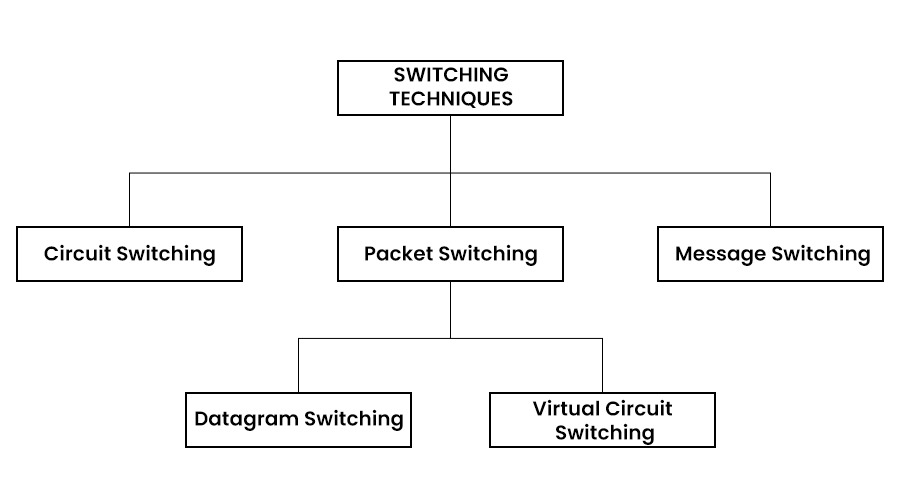
The modern internet relies primarily on packet switching. In this method, data is broken down into small, manageable units called “packets.” Each packet contains a header with destination information, a payload (the actual data), and a trailer for error checking.
When you send data, the packets may take different physical paths across a network to reach the destination. The switch’s role is to receive these packets, inspect the destination address, and forward them through the most efficient port. This efficiency is what allows thousands of users to share the same network infrastructure simultaneously without a total collapse of bandwidth.
Circuit Switching: The Legacy of Telecommunications
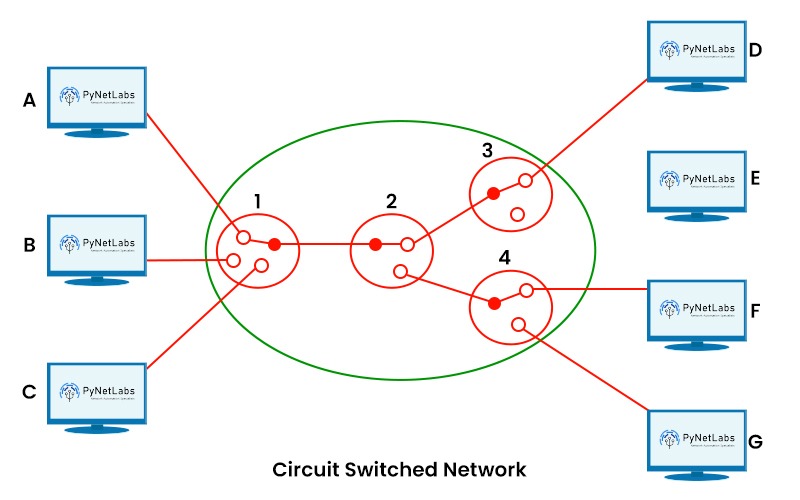
Before packet switching became the standard, the world relied on circuit switching. This is the traditional method used by the public switched telephone network (PSTN). In circuit switching, a dedicated physical path (a circuit) is established between two points for the duration of the communication.
While this ensures a constant bit rate and no delay (latency) caused by packet processing, it is highly inefficient for data transfer. If no one is speaking, the circuit remains open but unused, wasting valuable bandwidth. Today, circuit switching is largely being phased out in favor of Voice over IP (VoIP), which applies packet-switching logic to voice data.
Message Switching: The Store-and-Forward Model
Message switching is a precursor to modern networking where entire messages are sent from the source to an intermediate node, stored there, and then forwarded to the next node. While this method is rarely used for real-time applications today due to the high latency involved in storing large files at every “hop,” it laid the conceptual groundwork for how modern routers and switches manage data buffering during periods of heavy traffic congestion.
2. Hardware and Infrastructure: The Role of the Network Switch
In the world of hardware, a “switch” is a physical device that connects multiple devices on a computer network. It operates primarily at Layer 2 (the Data Link Layer) of the Open Systems Interconnection (OSI) model, though advanced switches can operate at higher layers.
Layer 2 vs. Layer 3 Switching
Most standard office or home switches are Layer 2 switches. They use Media Access Control (MAC) addresses to determine where to send data. When a device is plugged into a switch, the switch records its MAC address in a “Forwarding Information Base” (FIB). When a packet arrives, the switch looks at the MAC address and sends it directly to the corresponding port.
Layer 3 switches, often called “routing switches,” combine the speed of a switch with the intelligence of a router. They can inspect IP addresses and perform routing functions between different subnets. This is crucial for large-scale enterprise environments where different departments (e.g., HR, Engineering, Sales) need to be on separate virtual networks for security and performance but still need to communicate with one another.
Managed vs. Unmanaged Switches: Choosing the Right Tool
For a small home office, an unmanaged switch is a “plug-and-play” device that requires no configuration. However, for digital security and optimization, tech professionals utilize managed switches. These devices allow administrators to monitor traffic, prioritize certain types of data (like video calls over background downloads) via Quality of Service (QoS) settings, and create Virtual Local Area Networks (VLANs). VLANs are essential for security, as they segment the network so that a breach in one area does not automatically compromise the entire system.
Software-Defined Switching (SDN)
As we move toward cloud-centric infrastructures, switching is becoming increasingly decoupled from physical hardware. Software-Defined Networking (SDN) allows network administrators to manage switching functions through a centralized software interface. This “virtual switching” allows for incredible flexibility, enabling data centers to reroute traffic instantly based on demand, which is a cornerstone of modern AI tool deployment and high-scale web hosting.
3. Context Switching: The Engine of Multi-Tasking in Computing
Beyond the cables and routers of networking, “switching” has a specialized meaning in computer science and operating systems: Context Switching. This is the process that allows your computer to run dozens of applications at once, even if it only has a limited number of CPU cores.
How the CPU Manages Multiple Tasks
A Central Processing Unit (CPU) can only execute one instruction at a time per core. To give the illusion of multitasking, the Operating System (OS) performs context switching. This involves saving the state (the “context”) of a currently running process or thread—including its register values and memory maps—and loading the saved state of a different process.
This happens so rapidly (in microseconds) that it feels seamless to the user. Without context switching, you could not listen to music while typing in a word processor or running a virus scan in the background.
The Performance Overhead of Switching
While context switching is essential, it is not “free” in terms of performance. Every time a switch occurs, the CPU is performing administrative work rather than executing the user’s actual code. This is known as “switching overhead.”
In high-performance computing and AI training, developers strive to minimize unnecessary context switching. Excessive switching—often caused by poorly optimized software or too many background processes—leads to “thrashing,” where the system spends more time switching between tasks than actually performing them, resulting in a noticeable lag.
Thread Switching and Modern App Development
Modern apps, particularly those built for digital security or real-time data analysis, use “multithreading” to manage tasks. Switching between threads within the same process is generally faster than switching between two entirely different applications because threads share the same memory space. Understanding the nuances of thread switching is vital for developers who want to create responsive, high-performance software.
4. The Future of Switching: Optical, Quantum, and Beyond
As the demand for data grows exponentially—driven by the rise of AI tools, 8K video streaming, and the Internet of Things (IoT)—traditional electronic switching is reaching its physical limits. The future of switching lies in moving away from electrons and toward more advanced mediums.
Photonic (Optical) Switching
Currently, data travels through fiber optic cables as light, but it must be converted back into electricity to be “switched” by a standard network switch. This conversion generates heat and introduces latency. Photonic switching aims to route data using light alone, without ever converting it to electricity. This would theoretically allow for petabit-per-second speeds and a massive reduction in the energy consumption of data centers.
Quantum Switching and Entanglement
In the realm of quantum computing, switching takes on a mind-bending form. Quantum switches utilize the principle of entanglement and superposition to route information. Unlike a binary switch that is either “On” or “Off” (1 or 0), a quantum switch can exist in multiple states simultaneously. This could revolutionize digital security through Quantum Key Distribution (QKD), where any attempt to “intercept” or “switch” data in an unauthorized way would fundamentally change the data’s state, alerting the users to a breach.
AI-Driven Autonomous Switching
The next generation of networking hardware will likely feature AI-driven switching. These switches will not just follow static rules but will use machine learning to predict traffic spikes, identify potential security threats in real-time, and “switch” traffic patterns autonomously to prevent downtime. This level of intelligent switching is what will power the smart cities and autonomous vehicle networks of the future.
Conclusion
Switching is far more than just a button on a wall or a box in a server room. It is the sophisticated logic of data distribution that defines the efficiency of our digital world. From the packet switching that enables the global internet to the context switching that allows our devices to multitask, this technology is the “traffic controller” of the information age.
As we look toward the future, the evolution of switching—through optical breakthroughs and quantum mechanics—will continue to be the primary driver of technological progress. Understanding “what is switching” is therefore essential for anyone looking to grasp how our connected world operates today and how it will transform tomorrow.
aViewFromTheCave is a participant in the Amazon Services LLC Associates Program, an affiliate advertising program designed to provide a means for sites to earn advertising fees by advertising and linking to Amazon.com. Amazon, the Amazon logo, AmazonSupply, and the AmazonSupply logo are trademarks of Amazon.com, Inc. or its affiliates. As an Amazon Associate we earn affiliate commissions from qualifying purchases.