
In a world increasingly reliant on complex machinery, intricate structures, and advanced materials, the unseen forces acting upon them dictate their longevity, performance, and ultimately, our safety. This is the domain of Stress Engineering—a critical discipline focused on understanding, predicting, and mitigating the effects of physical forces on materials and structures. It is the science of ensuring that everything from the smallest microchip to the largest skyscraper can withstand the loads and environments they are designed to face, without failing prematurely or unexpectedly.
Stress engineering is not merely about preventing catastrophic failures; it’s about optimizing designs for efficiency, durability, and cost-effectiveness. It underpins the very foundation of modern technological advancement, enabling engineers to push the boundaries of design with confidence, knowing their creations will perform reliably under specified conditions. From the aerodynamic stresses on an aircraft wing to the thermal stresses within a semiconductor, and the vibrational stresses on a wind turbine, stress engineering provides the analytical and computational tools to foresee and counteract potential issues before they manifest in the real world. This interdisciplinary field draws heavily from mechanics of materials, solid mechanics, computational science, and materials science, making it an indispensable component of product development and infrastructure design across virtually every industry.
The Fundamental Principles of Stress Engineering
At its core, stress engineering revolves around a few key concepts that describe how materials react to applied forces. Understanding these principles is the first step towards designing robust and reliable systems.
Defining Stress and Strain
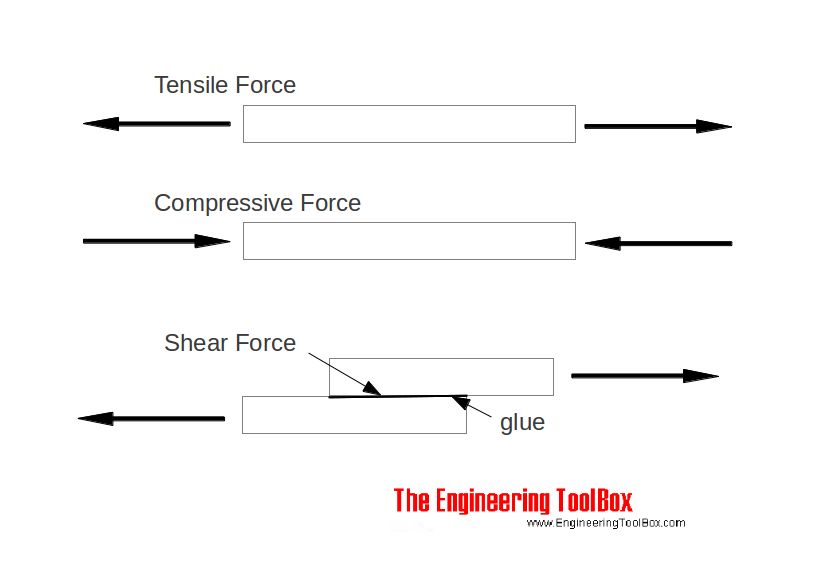
The terms “stress” and “strain” are central to this discipline. Stress (σ) is defined as the internal force per unit area that components of a body exert on each other. Imagine pushing or pulling on an object; the internal resistance to that external force, distributed over the object’s cross-sectional area, is stress. It is typically measured in Pascals (Pa) or pounds per square inch (psi). There are various types of stress:
- Tensile Stress: Occurs when forces pull a material apart, causing it to stretch.
- Compressive Stress: Occurs when forces push a material together, causing it to compress or shorten.
- Shear Stress: Occurs when forces act parallel to a surface, causing one part of the material to slide past another (like cutting with scissors).
Strain (ε), on the other hand, is a measure of the deformation of a material in response to stress. It is a dimensionless quantity, often expressed as a percentage or a ratio of change in length to original length. For instance, if a 100 mm rod stretches by 1 mm under tension, its strain is 0.01 or 1%. Strain allows engineers to quantify how much a material deforms under specific loads.
The relationship between stress and strain is often described by Hooke’s Law, which states that for many materials within their elastic limit, stress is directly proportional to strain. The constant of proportionality is known as Young’s Modulus (E), a fundamental material property indicating its stiffness. Other material properties, such as Poisson’s Ratio (ν), describe how a material deforms in directions perpendicular to the applied load.
Material Behavior Under Load
Materials do not deform indefinitely or linearly. Their behavior under load is complex and crucial for stress engineers to understand.
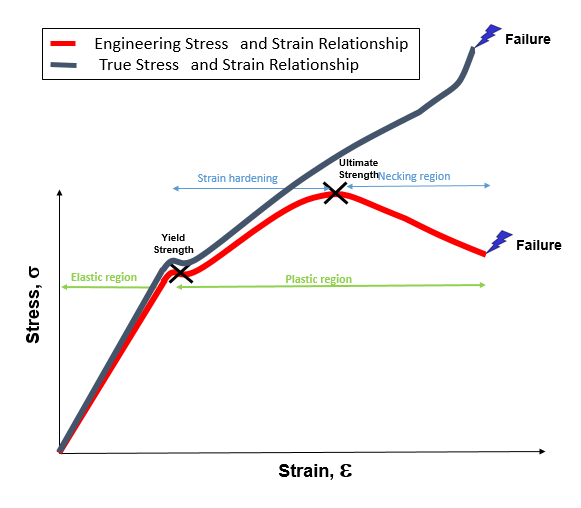
- Elastic Deformation: This is temporary deformation. When the load is removed, the material returns to its original shape. Designs typically aim to keep stresses within the elastic limit to prevent permanent damage.
- Plastic Deformation: If the stress exceeds the material’s yield strength, it enters the plastic region, meaning it will deform permanently even after the load is removed. While sometimes desired (e.g., in forming processes), it usually signifies failure in structural applications.
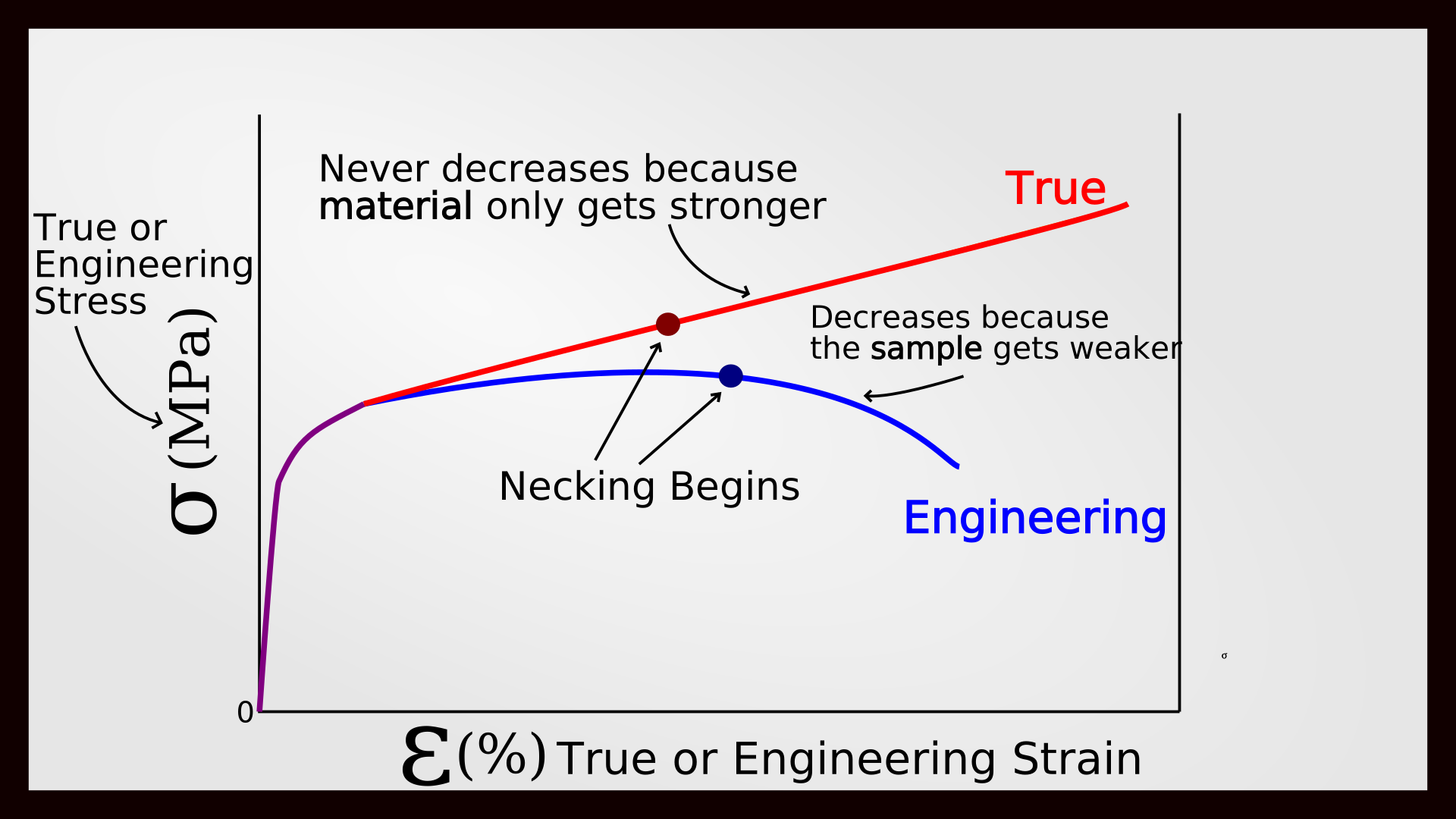
- Ultimate Tensile Strength (UTS): This is the maximum stress a material can withstand before it begins to neck down (localize deformation) and eventually fracture.
- Fatigue: Many materials can fail at stresses well below their yield strength if subjected to repeated loading and unloading cycles. This phenomenon, known as fatigue, is a major concern in components subjected to cyclic stresses (e.g., aircraft wings, rotating shafts). The fatigue limit or endurance limit is the stress level below which a material can theoretically endure an infinite number of load cycles.
- Creep: At elevated temperatures, some materials slowly deform over time under constant stress, even if that stress is below the yield strength. This is particularly relevant in high-temperature applications like jet engines or power plants.
The selection of appropriate materials, considering their mechanical properties, is a cornerstone of stress engineering. A material’s ability to resist deformation, absorb energy, or withstand high temperatures directly impacts the safety factor and operational life of a component.
Failure Modes and Prevention
A primary objective of stress engineering is to prevent various modes of failure. These can include:
- Fracture: The complete separation of a material into two or more pieces. This can be brittle (sudden, without significant plastic deformation) or ductile (with noticeable plastic deformation before fracture).
- Buckling: A sudden lateral instability that occurs in slender compression members (like columns or thin shells) when the compressive load reaches a critical value, even if the stress is below the material’s yield strength.
- Wear and Corrosion: While not direct stress failures, these can reduce a material’s effective cross-section, thereby increasing stress and making it more susceptible to other failure modes.
By accurately analyzing anticipated loads, material properties, and environmental conditions, stress engineers can design components and structures with adequate safety margins, mitigating the risk of these failures. This often involves iterative design and analysis, optimizing geometry and material selection to distribute stresses effectively and avoid stress concentrations, which are localized areas of high stress that can initiate cracks.
Methodologies and Tools in Stress Engineering
The evolution of stress engineering has been profoundly shaped by advancements in analytical, computational, and experimental techniques. These tools enable engineers to tackle increasingly complex design challenges.
Analytical Methods
Historically, stress analysis relied heavily on analytical methods involving mathematical equations derived from fundamental principles of mechanics. These include beam bending theory, plate theory, and classical elasticity solutions. Such methods are invaluable for understanding basic structural behavior and for preliminary design calculations. They provide closed-form solutions for simplified geometries and loading conditions. However, their limitations become apparent when dealing with complex geometries, heterogeneous materials, or non-linear behaviors (e.g., large deformations, plasticity). For instance, calculating the stresses in a simple rectangular beam is straightforward, but analyzing a multi-branched engine manifold or an aircraft fuselage section quickly exceeds the practical scope of hand calculations.
Computational Methods (FEA/FEM)
The advent of powerful computers revolutionized stress engineering through Computational Methods, particularly the Finite Element Analysis (FEA) or Finite Element Method (FEM). FEA is now the cornerstone of modern engineering design and analysis. It works by dividing a complex structure (the “continuum”) into a large number of smaller, simpler elements (the “finite elements”). These elements are interconnected at specific points called “nodes.”
The process typically involves:
- Preprocessing:
- CAD Model: Creating a 3D digital model of the component.
- Meshing: Discretizing the CAD model into a mesh of finite elements (e.g., triangles, quadrilaterals, tetrahedrons, hexahedrons). The fineness of the mesh significantly impacts accuracy and computational time.
- Material Properties: Assigning relevant material properties (Young’s Modulus, Poisson’s Ratio, yield strength, density) to the elements.
- Boundary Conditions: Applying realistic constraints (fixed supports, pinned joints) and loads (forces, pressures, temperatures, accelerations) to the model.
- Solver: A specialized software program (e.g., ANSYS, ABAQUS, SolidWorks Simulation, NASTRAN, COMSOL) solves a vast system of equations for each element, calculating displacements, strains, and stresses throughout the entire structure.
- Post-processing: The results are then visualized through color contours, deformation plots, and numerical data, allowing engineers to identify high-stress areas, predict potential failure points, and optimize the design.
FEA’s key advantages include its ability to handle intricate geometries, analyze complex loading scenarios (static, dynamic, thermal, vibrational), and simulate non-linear material behavior (plasticity, hyperelasticity, contact). It allows engineers to virtually test and refine designs countless times before physical prototyping, significantly reducing development costs and time.
Experimental Stress Analysis
While computational methods are powerful, Experimental Stress Analysis remains vital for validating simulations and analyzing phenomena too complex for current modeling capabilities. This involves physically testing prototypes or components in a lab or in-situ.
- Strain Gauges: Small electrical resistors bonded to the surface of a component. As the component deforms, the gauge deforms with it, changing its electrical resistance. This change is precisely measured and correlated to strain, and subsequently, to stress.
- Photoelasticity: A technique where transparent models of components made from specific plastics are observed under polarized light while subjected to loads. Stress concentrations reveal themselves as distinct patterns of colored fringes.
- Extensometers: Devices used to measure the change in length of a specimen under tensile or compressive load, providing precise strain data.
- Fatigue Testing Machines: Repeatedly load specimens to determine their fatigue life or endurance limit.
Experimental data provides empirical validation for theoretical and computational models, helping to refine material properties, confirm boundary conditions, and build confidence in engineered designs. In many critical applications, such as aerospace or medical devices, physical testing is mandatory for certification.
Applications Across Technological Domains
Stress engineering is an omnipresent discipline, touching nearly every aspect of modern technology and infrastructure. Its applications are diverse and critical for safety, performance, and innovation.
Aerospace and Automotive
In aerospace, stress engineers design aircraft structures, engine components, and spacecraft to withstand extreme conditions—high speeds, varying temperatures, and immense cyclic loads. The constant push for lighter, more fuel-efficient aircraft necessitates meticulous stress analysis to optimize designs without compromising safety. Fatigue analysis is paramount for components like wings, fuselages, and landing gear, which undergo millions of load cycles during their operational life. Similarly, in the automotive industry, stress engineering ensures vehicle safety through crashworthiness simulations, optimizes engine components for performance and durability, and designs lightweight chassis for better fuel efficiency. Impact analysis and vibrational analysis are crucial for passenger safety and comfort.
Civil and Structural Engineering
For civil and structural engineers, stress analysis is fundamental to designing safe and resilient buildings, bridges, dams, and tunnels. They must account for a multitude of static and dynamic loads, including self-weight, live loads (occupants, vehicles), wind loads, seismic forces, and thermal expansion/contraction. Stress engineers ensure that these massive structures maintain their integrity over decades, often centuries, under unpredictable environmental conditions. Material selection, particularly for concrete and steel, and the prevention of buckling in columns and beams are key considerations.
Mechanical and Manufacturing Engineering
In mechanical and manufacturing engineering, stress analysis is applied to a vast array of machinery, pressure vessels, pipelines, pumps, and gears. Designing for optimal performance, minimizing wear, and preventing catastrophic failures due to internal pressures or rotating loads are primary concerns. For instance, pressure vessels holding high-pressure fluids must be meticulously analyzed to prevent rupture, which could have devastating consequences. The design of cutting tools, molds, and dies also relies on stress engineering to ensure they withstand the forces encountered during manufacturing processes and maintain their shape and effectiveness over time.
Consumer Electronics and Medical Devices
Even in seemingly less “heavy-duty” fields like consumer electronics, stress engineering plays a vital role. Devices like smartphones, laptops, and wearables must be designed to withstand everyday drops, impacts, and thermal stresses from operation. Miniaturization demands that tiny components handle significant thermal loads and mechanical stresses without failing. In medical devices, stress engineering is critical for the design of implants (e.g., hip replacements, dental implants), prosthetics, and surgical instruments. Biocompatibility, long-term durability within the human body, and resistance to fatigue are paramount, as failure can have life-altering consequences for patients.
Energy Sector
The energy sector presents some of the most challenging environments for stress engineering. Wind turbine blades are subjected to enormous cyclic aerodynamic loads, requiring sophisticated fatigue analysis. Offshore oil and gas platforms must withstand harsh marine environments, including powerful waves, currents, and corrosion. Nuclear reactor components operate under extreme temperatures, radiation, and pressure, demanding exceptionally high reliability and thorough stress analysis to ensure safety and prevent material degradation like creep or embrittlement over their long operational lives.
The Role of Stress Engineering in Innovation and Future Tech
As technology advances, so too does the complexity and importance of stress engineering. It is not just a reactive discipline preventing failure but a proactive one enabling the next generation of technological breakthroughs.
Advanced Materials and Manufacturing
The emergence of advanced materials like composites (carbon fiber reinforced polymers), ceramics, and smart materials, alongside revolutionary manufacturing processes such as additive manufacturing (3D printing), presents both new challenges and opportunities for stress engineering. Composites, with their anisotropic properties (different strengths in different directions), require specialized analysis techniques. Additive manufacturing allows for previously impossible geometries, leading to lightweight and optimized structures, but also introduces new considerations regarding material microstructure, residual stresses, and post-processing effects. Stress engineers are at the forefront of developing new analytical and computational models to accurately predict the behavior of these novel materials and designs, including concepts like topology optimization, where algorithms are used to generate the optimal shape for a component given a set of loads and constraints.
AI, Machine Learning, and Digital Twins
The integration of Artificial Intelligence (AI) and Machine Learning (ML) is set to further transform stress engineering. AI can be used to accelerate the design optimization process, predict material behavior with greater accuracy, and even interpret complex simulation results more efficiently. Machine learning algorithms can learn from vast datasets of material tests and simulation outcomes to provide predictive models for fatigue life or fracture toughness. The concept of Digital Twins—virtual replicas of physical assets that update in real-time with sensor data—is another exciting frontier. Digital twins, powered by stress engineering principles, can monitor the structural health of components in real-time, predict impending failures, and optimize maintenance schedules, moving from reactive to predictive maintenance strategies. This will be critical for large-scale infrastructure and complex machinery.
Sustainable Engineering
Stress engineering also plays a crucial role in sustainable engineering practices. By optimizing designs for durability and longevity, engineers can extend the lifespan of products and structures, reducing waste and the need for frequent replacements. Lightweighting, a direct output of stress optimization, reduces material consumption and often leads to energy savings in transportation (e.g., lighter cars use less fuel) and manufacturing. Furthermore, designing components to be repairable or recyclable requires an understanding of their stress performance throughout their lifecycle. By ensuring that materials are used efficiently and structures are designed to last, stress engineering directly contributes to a more sustainable future.
Conclusion
Stress engineering is far more than a niche technical field; it is an indispensable discipline that underpins the safety, reliability, and performance of virtually every engineered product and structure in our modern world. From the intricate circuits in our smartphones to the towering skyscrapers that define our cities, the principles and methodologies of stress engineering ensure their integrity and functionality.
By meticulously analyzing the forces at play, understanding how materials behave, and employing advanced computational and experimental tools, stress engineers empower innovation across all technological domains. As we continue to push the boundaries of materials science, manufacturing techniques, and intelligent systems, the role of stress engineering will only grow in importance. It is a field that continually adapts, integrating new technologies like AI and digital twins to build a safer, more efficient, and more sustainable future, proving that truly understanding “what is stress engineering” is to grasp a foundational pillar of modern technological advancement.
aViewFromTheCave is a participant in the Amazon Services LLC Associates Program, an affiliate advertising program designed to provide a means for sites to earn advertising fees by advertising and linking to Amazon.com. Amazon, the Amazon logo, AmazonSupply, and the AmazonSupply logo are trademarks of Amazon.com, Inc. or its affiliates. As an Amazon Associate we earn affiliate commissions from qualifying purchases.