
Amazon Prime Video stands as a colossal pillar in the digital entertainment landscape, offering an expansive universe of content accessible through the marvel of streaming technology. Far more than just a repository of movies and TV shows, it represents a sophisticated technological ecosystem designed to deliver high-quality media directly to users across a multitude of devices. Understanding “what is streaming on Amazon Prime” necessitates a deep dive not only into the vast library of content but, crucially, into the underlying technological infrastructure, user interface innovations, and digital delivery mechanisms that make this seamless experience possible. This article will unravel the intricate tech tapestry that defines Amazon Prime Video, exploring how cutting-edge software, robust networks, and intelligent algorithms converge to bring entertainment to your screens.
Understanding the Technology Behind Amazon Prime Streaming
At its core, streaming on Amazon Prime is a testament to advanced internet technology, transforming how we consume media. It’s the process of delivering multimedia content to an end-user in a continuous, compressed form over the internet, allowing playback to begin before the entire file has been transmitted. This real-time delivery mechanism is what differentiates streaming from traditional downloading, where the entire file must be acquired before viewing.
The Mechanics of On-Demand Content Delivery
The journey of a movie or TV show from Amazon’s servers to your device is a complex ballet of data. When you select a title on Amazon Prime Video, your device sends a request to Amazon’s content delivery network (CDN). CDNs are geographically distributed networks of proxy servers and data centers, designed to provide high availability and performance by distributing service requests spatially relative to end-users. This proximity minimizes latency and ensures faster, more reliable content delivery, regardless of where the user is located. The content itself is stored on these servers, ready to be transmitted in small, manageable packets.
Key components of this delivery include:
-
Content Encoding and Transcoding: Before content is even stored, it undergoes rigorous encoding. Raw video and audio files are compressed into various digital formats (codecs) at different quality levels (resolutions, bitrates). This process, known as transcoding, creates multiple versions of the same content, optimizing it for diverse network conditions and device capabilities.
-
Digital Rights Management (DRM): To protect intellectual property, Amazon employs robust DRM technologies. These encryption schemes ensure that content can only be accessed by authorized users and devices, preventing unauthorized copying or distribution. DRM protocols are integrated into the streaming process, requiring devices to authenticate themselves before playback.
-
Adaptive Bitrate Streaming (ABS): This is perhaps the most critical technological feature enabling smooth streaming. Instead of delivering a fixed-quality stream, ABS dynamically adjusts the video quality (bitrate) in real-time based on the user’s internet connection speed and device processing capability. If your Wi-Fi momentarily slows down, the player seamlessly switches to a lower-bitrate version of the video to prevent buffering, and then scales up again when conditions improve. This is achieved by dividing the video into small chunks, each encoded at multiple bitrates, and letting the player decide which chunk to request next.
Codecs, Bitrates, and Device Compatibility
The quality and efficiency of streaming heavily depend on the chosen video and audio codecs. Amazon Prime Video leverages industry-standard and proprietary codecs to deliver an optimal viewing experience.
-
Video Codecs: Common codecs include H.264 (AVC) and increasingly H.265 (HEVC). HEVC is particularly important for 4K UHD and HDR content due to its superior compression efficiency, delivering the same quality as H.264 at roughly half the bitrate, or significantly higher quality at the same bitrate. This is crucial for high-resolution content, which demands substantial bandwidth.
-
Audio Codecs: For audio, Amazon Prime often uses codecs like AAC (Advanced Audio Coding) for stereo and multi-channel audio, and increasingly Dolby Digital and Dolby Atmos for immersive surround sound experiences, which require specific hardware decoding capabilities in the playback device.
-
Device Compatibility: Amazon Prime Video’s reach is vast, supporting a plethora of devices. This requires meticulous software engineering to ensure compatibility across operating systems (iOS, Android, Windows, macOS), smart TVs (Samsung, LG, Sony), streaming media players (Fire TV, Roku, Apple TV), game consoles (PlayStation, Xbox), and web browsers. Each platform requires a tailored application or web interface, optimized to leverage the device’s hardware accelerators for decoding video and audio efficiently, ensuring smooth playback and a consistent user experience. This broad device support is a major technological undertaking, involving extensive testing and continuous updates.
Navigating the Vast Content Library: Beyond Just Movies and TV Shows
The technological prowess of Amazon Prime Video is truly realized in the expansive, diverse content it delivers. The “what” of streaming on Amazon Prime isn’t just about a catalogue; it’s about a curated and dynamically updated digital library enabled by sophisticated content management systems.
Original Productions and Exclusive Content
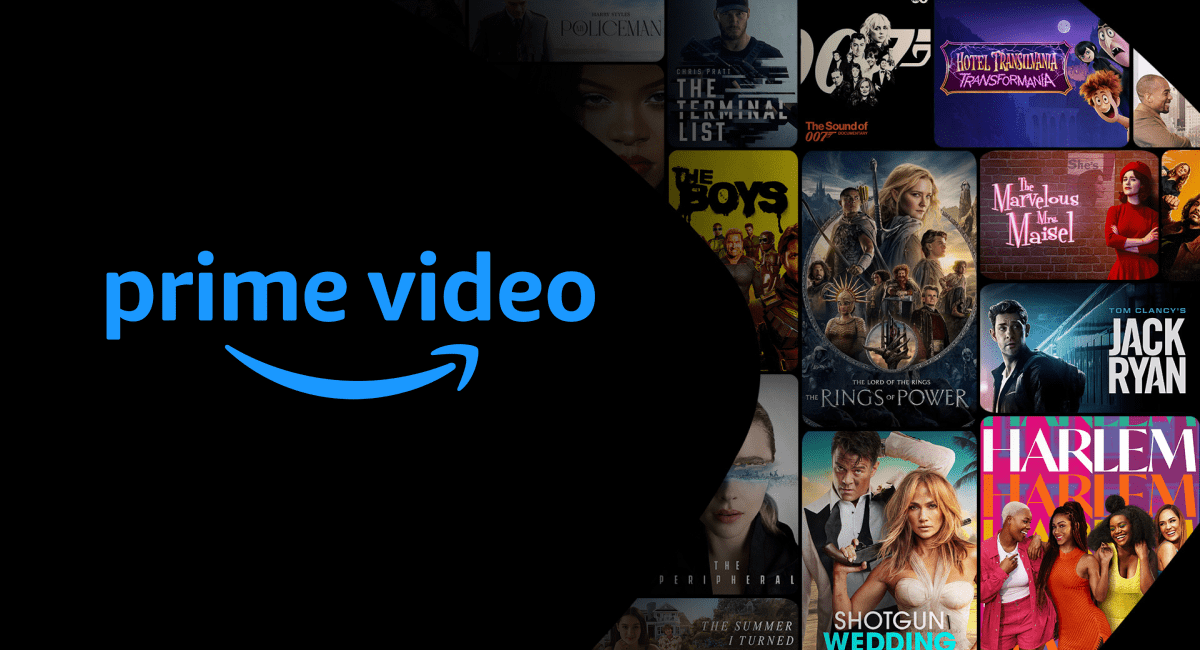
A significant draw for Amazon Prime subscribers is its investment in original content. Amazon Studios produces and acquires a wide array of exclusive movies, television series, and documentaries. These “Amazon Originals” are often high-budget productions featuring top talent, designed to compete directly with other streaming giants. Shows like The Boys, The Marvelous Mrs. Maisel, Reacher, and films such as Manchester by the Sea are prime examples of this strategic content acquisition and creation. From a technical perspective, producing these originals often involves pushing the boundaries of cinematic technology, from advanced CGI and special effects to capturing content in 4K HDR, directly impacting the quality of the stream available to viewers. Exclusivity acts as a key differentiator in a crowded market, driving subscription growth and retention.
Third-Party Content and Licensing Agreements
Beyond its originals, Amazon Prime Video features a rotating selection of licensed movies and TV shows from major Hollywood studios and independent distributors. These licensing deals are complex, dictating availability windows, geographical restrictions, and resolution limits. The technical infrastructure needs to manage these dynamic rights, ensuring content is displayed only where and when legally permitted. The constant flux of third-party content means the catalogue is always evolving, requiring a robust content ingestion pipeline and metadata management system to handle new additions and removals seamlessly.
Renting, Buying, and Channel Subscriptions
Amazon Prime Video extends its content offerings beyond the core Prime subscription with a robust transactional video-on-demand (TVOD) service. Users can rent or purchase the latest movies and TV show seasons that are not included with their Prime membership. This involves a separate billing and access system, integrated within the same application.

Furthermore, Amazon offers Prime Video Channels, allowing subscribers to add premium streaming services like Max, Paramount+, Starz, or BritBox as à la carte subscriptions directly through the Prime Video interface. This “aggregator” model simplifies billing and access for users, providing a unified platform for managing multiple subscriptions. From a technical standpoint, this requires seamless integration with external partners’ content delivery systems, user authentication, and billing mechanisms, while maintaining Amazon’s consistent user experience. It’s a testament to a flexible and extensible platform architecture designed to host diverse content sources.
Enhancing the User Experience Through Technology
The best content means little if the user experience is clunky or unintuitive. Amazon Prime Video leverages advanced technology to make content discovery, playback, and interaction as smooth and engaging as possible.
Personalization Algorithms and Recommendations
Behind the seemingly simple “For You” section lies a sophisticated recommendation engine powered by machine learning and artificial intelligence. These algorithms analyze your viewing history, ratings, watchlists, search queries, and even the viewing habits of similar users to suggest content you’re likely to enjoy. This goes beyond simple genre matching; it identifies subtle patterns, actor preferences, directorial styles, and thematic connections. The effectiveness of these algorithms directly impacts user engagement, helping subscribers navigate the vast library and discover new content without feeling overwhelmed, thereby increasing watch time and satisfaction.
X-Ray Feature: A Second Screen Experience
One of Amazon Prime Video’s unique technological innovations is X-Ray, powered by IMDb (which Amazon owns). During playback, X-Ray provides on-demand information about actors on screen, the music playing, trivia, goofs, and behind-the-scenes facts. This “second screen” experience can be accessed with a tap or click, pausing the main content in the background or displaying information non-intrusively. Technically, X-Ray relies on precise temporal metadata synchronized with the video stream, linking specific moments in the content to a rich database of information. It enhances engagement by offering contextual details that enrich the viewing experience without requiring a separate search.
Offline Viewing and Data Management
Recognizing the need for entertainment on the go or in areas with limited connectivity, Amazon Prime Video offers an offline viewing feature. Subscribers can download select titles to their mobile devices or tablets for later viewing without an internet connection. This feature requires robust digital rights management to enforce expiration dates and viewing limits, secure storage mechanisms on the user’s device, and efficient download management within the app. From a data management perspective, it means optimizing file sizes for downloads while maintaining acceptable quality, and managing storage allocation on the user’s device. This technological capability greatly enhances the flexibility and value proposition for users.
The Future of Streaming on Amazon Prime: Innovations and Trends
The streaming landscape is in constant evolution, driven by technological advancements. Amazon Prime Video is at the forefront of adopting and pushing these innovations.
Advancements in Video Quality (4K, HDR, Spatial Audio)
The relentless pursuit of a more immersive viewing experience continues. Amazon Prime Video is a leader in offering content in 4K Ultra HD (UHD), High Dynamic Range (HDR) formats like HDR10+ (Amazon’s preferred open standard), and Dolby Vision. HDR significantly expands the range of colors and contrast, bringing scenes closer to real-life perception. Achieving this requires not only content captured and mastered in these formats but also sophisticated encoding, efficient network delivery, and compatible playback devices. The shift towards spatial audio technologies like Dolby Atmos further enhances immersion, delivering a multi-dimensional sound experience that places sounds precisely around the listener. These technologies demand higher bandwidth and more powerful decoding hardware, driving ongoing improvements in network infrastructure and device capabilities.
Interactive Content and Live Streaming Developments
While not as prevalent as traditional linear content, interactive content, where viewers make choices that influence the storyline (e.g., Bandersnatch on Netflix, but similar experiments could emerge), represents a fascinating technological frontier. This requires complex branching narratives and dynamic content delivery systems. More immediately relevant is the expansion into live streaming. Amazon has made significant investments in live sports (e.g., NFL’s Thursday Night Football in the US, Premier League in the UK), esports, and live events. Live streaming is a vastly different technical challenge from on-demand video. It demands ultra-low latency, massive scalability to handle concurrent viewers, robust real-time encoding, and specialized CDNs optimized for live event delivery, all while maintaining high quality and reliability to prevent buffering during critical moments.
AI-Powered Search and Discovery
The future will see even more sophisticated AI at play. Beyond personalized recommendations, AI will power more natural language search queries, allowing users to find content based on complex descriptions (“show me action movies with strong female leads from the 90s”). It will also enhance content tagging and metadata creation, making the vast library even more discoverable. AI could also be used for real-time content enhancement, such as upscaling older content to higher resolutions or dynamically adjusting audio levels for optimal listening in different environments. The integration of AI will make the platform even smarter, more intuitive, and more anticipatory of user needs.

Conclusion
“What is streaming on Amazon Prime” is fundamentally a question about the confluence of content and cutting-edge technology. It’s a sophisticated digital service built upon a foundation of advanced codecs, adaptive bitrate streaming, robust content delivery networks, and stringent digital rights management. Its value is enhanced by smart user experience features like X-Ray and powerful recommendation algorithms, all accessible across an incredibly diverse range of devices. As Amazon Prime Video continues to innovate with higher resolutions, immersive audio, live content, and artificial intelligence, it remains a prime example of how technology relentlessly shapes and elevates the landscape of digital entertainment, offering an ever-richer, more personalized, and seamless viewing experience for millions worldwide.
aViewFromTheCave is a participant in the Amazon Services LLC Associates Program, an affiliate advertising program designed to provide a means for sites to earn advertising fees by advertising and linking to Amazon.com. Amazon, the Amazon logo, AmazonSupply, and the AmazonSupply logo are trademarks of Amazon.com, Inc. or its affiliates. As an Amazon Associate we earn affiliate commissions from qualifying purchases.