
In the landscape of personal finance and global economics, few concepts are as foundational—and yet as frequently misunderstood—as the “stock.” For centuries, stocks have served as the primary vehicle for wealth creation, allowing individual investors to participate in the growth of the world’s most successful corporations. To understand what a stock is, one must look beyond the flickering green and red numbers on a trading screen and see the underlying reality of business ownership.
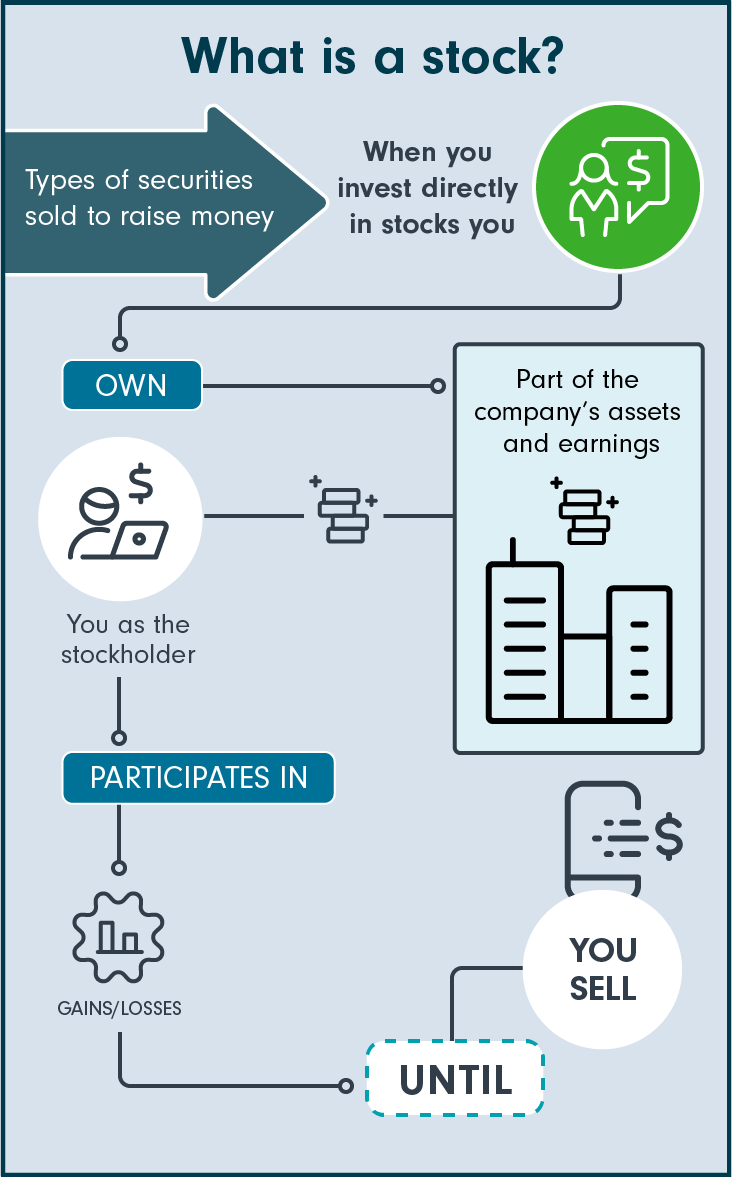
At its most basic level, a stock represents a claim on a part of a corporation’s assets and earnings. When you buy a stock, you are purchasing a “share” of that company. You are no longer just a consumer of their products; you are a part-owner. This ownership stake, known as equity, provides the potential for financial gain but also carries the inherent risks of the business world.

Foundations of Ownership: Understanding the Mechanics of Stocks
The concept of a stock is rooted in the idea of shared risk and shared reward. When a company wants to grow—perhaps by building a new factory, developing a new product line, or expanding into international markets—it needs capital. It can either borrow this money (debt) or sell a portion of itself to the public (equity). When it chooses the latter, it issues shares.
Shares and Equity
A share is the smallest unit of ownership in a company. If a company has issued 1,000 shares and you own 10 of them, you own 1% of the company. This ownership gives you a proportional claim to everything the company possesses and everything it earns. In the world of finance, this is referred to as “equity.” Unlike a bondholder, who is a lender to the company and expects to be paid back with interest, a shareholder is an owner. You do not have a guaranteed return, but your potential for profit is theoretically unlimited.
The Stock Market vs. The Individual Stock
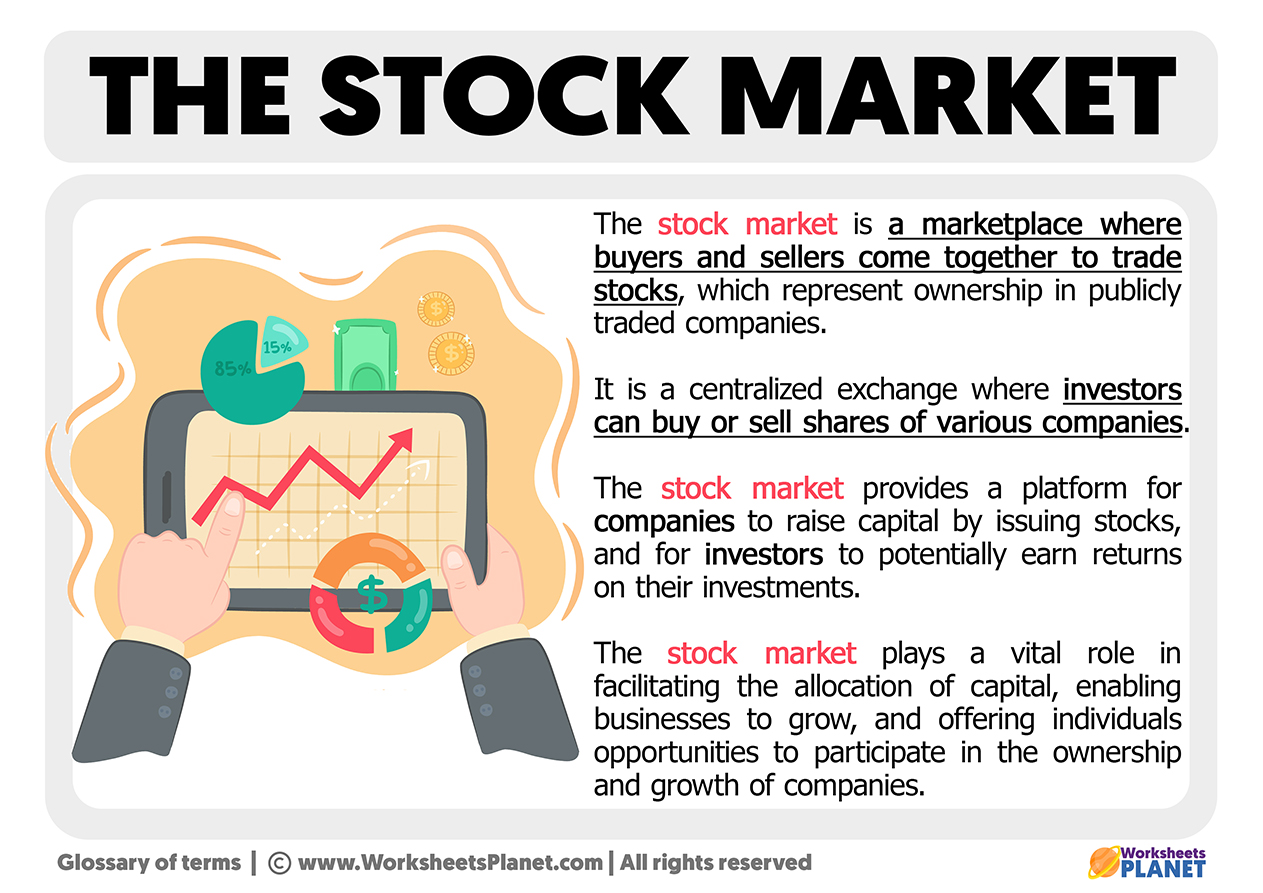
It is important to distinguish between an individual stock and the “stock market” at large. An individual stock represents a specific business entity, such as Apple, Coca-Cola, or a local utility provider. The stock market, conversely, is the aggregate of all these individual shares being traded. It serves as a secondary market where investors buy and sell shares from one another rather than from the company itself. The price of an individual stock is driven by the specific performance of that company, whereas the stock market’s overall movement is often driven by broader economic indicators like interest rates, inflation, and geopolitical stability.
Public vs. Private Companies
Not every company has stocks that you can buy on an exchange. Private companies are owned by founders, employees, or private investors (like venture capitalists). These shares are not traded on public exchanges and are often difficult to value. When a private company reaches a certain size and maturity, it may undergo an Initial Public Offering (IPO). This is the process of “going public,” where the company’s shares are listed on an exchange, allowing the general public to purchase them for the first time.
Types of Stocks and Investment Classes
While all stocks represent ownership, they are not all created equal. From a financial perspective, stocks are categorized based on the rights they grant the holder and the financial characteristics they exhibit. Understanding these distinctions is crucial for building a balanced investment portfolio.
Common Stock vs. Preferred Stock
Most investors buy “common stock.” Common stockholders typically have voting rights at shareholder meetings—usually one vote per share—allowing them to weigh in on corporate policy and the election of the board of directors. If the company grows, common stock yields the highest potential for long-term capital appreciation.
Preferred stock, however, functions more like a hybrid between a stock and a bond. Preferred shareholders usually do not have voting rights, but they have a higher claim on assets and earnings. For instance, if a company pays dividends, preferred shareholders must be paid before common shareholders. In the event of bankruptcy, preferred shareholders are also higher up in the “pecking order” to receive whatever assets remain.
Growth Stocks vs. Value Stocks
In the realm of personal finance, investors often categorize stocks by their “personality.” Growth stocks are companies that are expected to grow at a rate significantly above the average for the market. These companies usually reinvest all their profits back into the business to fuel further expansion rather than paying dividends.
Value stocks, on the other hand, are companies that are currently trading at a price lower than what their fundamentals (like earnings or sales) suggest they are worth. These are often established companies that have fallen out of favor with the market but still maintain strong cash flows and stable business models.
Dividend-Paying Stocks
Many mature companies distribute a portion of their earnings back to shareholders in the form of dividends. This provides investors with a steady stream of passive income. Dividend stocks are highly sought after by those looking for “income investing,” as they provide a way to profit from a stock without necessarily selling the shares. Reinvesting these dividends can significantly accelerate the power of compounding over time.
Market Capitalization (Large, Mid, and Small Cap)
Stocks are also categorized by their market capitalization, which is the total dollar value of all outstanding shares.
- Large-Cap: Companies with a market value of $10 billion or more. These are generally stable, “blue-chip” companies.
- Mid-Cap: Companies valued between $2 billion and $10 billion. These offer a blend of growth potential and relative stability.
- Small-Cap: Companies valued between $300 million and $2 billion. These are often younger companies with high growth potential but significantly higher risk and volatility.
How the Stock Market Functions: Trading and Exchanges
To buy or sell a stock, you must participate in a marketplace. In the modern era, this is almost entirely digital, but the underlying principles remain the same as they were on the floor of the New York Stock Exchange decades ago.
Stock Exchanges (NYSE and NASDAQ)
An exchange is a centralized location where shares are traded. The New York Stock Exchange (NYSE) is the world’s largest exchange by market capitalization and is known for its auction-based system. The NASDAQ is a global electronic marketplace and is heavily associated with technology and growth companies. These exchanges provide liquidity—the ability to quickly turn an investment into cash—and ensure that trading is fair, transparent, and regulated.
Supply and Demand Dynamics
The price of a stock is determined by the law of supply and demand. If more people want to buy a stock (demand) than sell it (supply), the price goes up. If more people want to sell than buy, the price goes down. What influences this demand? Usually, it is a combination of the company’s current earnings, its future growth prospects, and the overall health of the economy. If a company announces a revolutionary new product or record-breaking profits, demand for its stock typically spikes, driving the price higher.
The Role of Indices
Investors use indices to track the performance of the stock market. The S&P 500, for example, tracks the performance of 500 of the largest publicly traded companies in the United States. It is often used as a benchmark for the health of the overall economy. The Dow Jones Industrial Average (DJIA) tracks 30 prominent companies. When people say “the market is up today,” they are usually referring to the performance of these major indices.
The Benefits and Risks of Stock Investing
Investing in stocks is one of the most effective ways to outpace inflation and build long-term wealth, but it is not a “get rich quick” scheme. It requires a nuanced understanding of risk and reward.
Capital Appreciation and Dividends
There are two primary ways to make money from stocks. The first is capital appreciation—selling the stock for more than you paid for it. The second is dividends—receiving periodic cash payments from the company’s profits. Together, these make up the “total return” of an investment. Over long periods, the historical return of the stock market has averaged approximately 7% to 10% annually after adjusting for inflation, which is significantly higher than the returns offered by savings accounts or bonds.
Diversification and Compounding
One of the greatest benefits of the modern financial system is the ability to diversify. By owning a variety of stocks across different industries and geographies, you reduce the risk of a single company’s failure ruining your financial future. This, combined with the power of compounding—where your investment returns earn their own returns—can lead to exponential wealth growth over decades.
Market Volatility and Risk Management
The primary risk of stock investing is volatility. Stock prices can fluctuate wildly in the short term due to news cycles, economic shifts, or investor sentiment. There is also “business risk”—the possibility that a company’s management makes poor decisions or its industry becomes obsolete. To manage these risks, disciplined investors use strategies like “dollar-cost averaging” (investing a fixed amount regularly regardless of price) and maintaining a long-term perspective that looks past temporary market dips.
Developing a Strategic Approach to Equity
Understanding what a stock is represents only the first step. To succeed, an investor must develop a strategy that aligns with their financial goals and risk tolerance.
Long-term vs. Short-term Strategies
Short-term trading, often called “day trading” or “swing trading,” involves trying to profit from daily price movements. This is highly risky and often functions more like gambling than investing. Long-term investing, or “buy and hold,” focuses on the fundamental strength of businesses over years or decades. History shows that for the vast majority of people, the long-term approach is far more successful.
Fundamental vs. Technical Analysis
Investors generally use two methods to evaluate stocks. Fundamental analysis involves looking at the company’s “vitals”: its balance sheet, its revenue growth, its competitive advantage, and its management team. The goal is to determine the “intrinsic value” of the stock. Technical analysis, by contrast, involves looking at price charts and historical patterns to predict future price movements. While some use a blend of both, fundamental analysis remains the gold standard for long-term wealth building.
Getting Started with Financial Tools
In today’s digital age, the barrier to entry for stock investing is lower than ever. Online brokerages and mobile apps allow individuals to buy fractional shares (parts of a single share) with as little as one dollar. Furthermore, tools like Index Funds and Exchange-Traded Funds (ETFs) allow investors to buy a “basket” of hundreds of stocks in a single transaction, providing instant diversification.
In conclusion, a stock is more than a ticker symbol; it is a legal claim to the future productivity of a business. By understanding the mechanics of ownership, the types of equity available, and the forces that move the markets, individuals can move from being passive observers of the economy to active participants in the creation of wealth. Whether through a retirement account or a personal brokerage portfolio, stocks remains the most potent tool in the arsenal of the modern investor.
aViewFromTheCave is a participant in the Amazon Services LLC Associates Program, an affiliate advertising program designed to provide a means for sites to earn advertising fees by advertising and linking to Amazon.com. Amazon, the Amazon logo, AmazonSupply, and the AmazonSupply logo are trademarks of Amazon.com, Inc. or its affiliates. As an Amazon Associate we earn affiliate commissions from qualifying purchases.