
Stock trading, often perceived as a complex and intimidating world reserved for seasoned financiers, is in essence the act of buying and selling shares of publicly traded companies. At its core, it’s a dynamic marketplace where individuals and institutions exchange ownership stakes in businesses with the expectation of profit. This introductory guide aims to demystify stock trading, exploring its fundamental principles, the motivations behind it, the diverse strategies employed, and the inherent risks and rewards that define this crucial component of global financial markets. Understanding stock trading is not just about making money; it’s about comprehending a fundamental mechanism that fuels economic growth, allocates capital, and allows individuals to participate in the success of enterprises worldwide.

The Fundamentals: Deconstructing the Stock Market
To truly grasp what stock trading entails, one must first understand its foundational elements: stocks themselves and the markets in which they are traded. This section lays the groundwork, defining key terms and illustrating the basic mechanics of how these transactions occur.
Defining Stocks and Shares
A stock, also known as an equity or share, represents a fractional ownership interest in a company. When you purchase a share of a company’s stock, you become a part-owner of that company. This ownership comes with certain rights, typically including a claim on a portion of the company’s assets and earnings, and often, the right to vote on corporate matters at shareholder meetings. Companies issue stocks primarily to raise capital for growth, expansion, or debt repayment, making their ownership available to the public in exchange for investment.
The value of a stock is influenced by a myriad of factors, including the company’s financial performance, industry trends, economic conditions, and investor sentiment. As these factors shift, so does the perceived value of the company, leading to fluctuations in its stock price. It is these fluctuations that create opportunities for traders to buy low and sell high, or vice versa.
The Mechanics of Buying and Selling
At its simplest, stock trading involves two primary actions: buying and selling. An investor buys shares, hoping their value will increase over time, allowing them to sell those shares at a higher price later, thus realizing a profit. Conversely, if an investor believes a stock’s value will decline, they might choose to sell their existing shares to prevent further losses or even engage in “short selling”—a more advanced strategy where one borrows and sells shares, hoping to buy them back at a lower price.
These transactions are facilitated through various intermediaries and platforms. Individual investors typically use brokerage firms, which provide access to stock exchanges. These firms offer online trading platforms, mobile apps, and human brokers through which orders to buy or sell stocks are placed. When an order is placed, it is routed to an exchange (like the NYSE or NASDAQ), where it is matched with a corresponding buy or sell order from another participant.
Primary vs. Secondary Markets
The stock market isn’t a single entity but a system comprising different markets. The distinction between primary and secondary markets is crucial for understanding how stocks are initially introduced and subsequently traded.
The primary market is where companies first issue new stocks to the public. This process is known as an Initial Public Offering (IPO). When a company goes public, it sells its shares directly to investors for the first time, raising capital for its operations. This is often managed by investment banks that underwrite the offering. Once these shares are sold, the company receives the proceeds directly.
The secondary market, on the other hand, is where previously issued stocks are traded among investors. This is what most people refer to when they talk about the “stock market.” Companies do not directly receive money from trades on the secondary market; instead, the transactions occur between investors. The secondary market provides liquidity to investors, meaning they can easily buy or sell shares without directly impacting the issuing company’s finances. It is in this secondary market that the majority of stock trading activity takes place, with prices constantly fluctuating based on supply and demand.
Why People Engage in Stock Trading
People are drawn to stock trading for a multitude of reasons, ranging from the pursuit of significant financial gains to the strategic diversification of personal wealth. While the potential for profit is a primary motivator, the underlying aims are often more nuanced and integrated into broader financial planning.
Capital Appreciation
The most straightforward reason to engage in stock trading is the pursuit of capital appreciation. This refers to the increase in the value of an asset over time. Traders buy stocks at one price with the expectation that the company will grow, its performance will improve, or market sentiment will become more positive, thereby driving the stock price higher. When they sell these appreciated shares, the difference between the selling price and the purchase price represents a capital gain. This growth potential is particularly appealing to those looking to outpace inflation and grow their wealth more aggressively than traditional savings accounts or bonds might allow.
Dividend Income
Beyond capital appreciation, many companies distribute a portion of their profits to shareholders in the form of dividends. These are typically paid out quarterly, though some companies pay monthly or annually. For investors, dividends represent a direct return on their investment, providing a steady stream of income. Companies that consistently pay dividends are often established, financially stable entities, making their stocks attractive to income-focused investors or those seeking a more predictable return alongside potential capital appreciation. Dividend income can be a significant component of an investor’s total return, especially for long-term strategies.
Portfolio Diversification
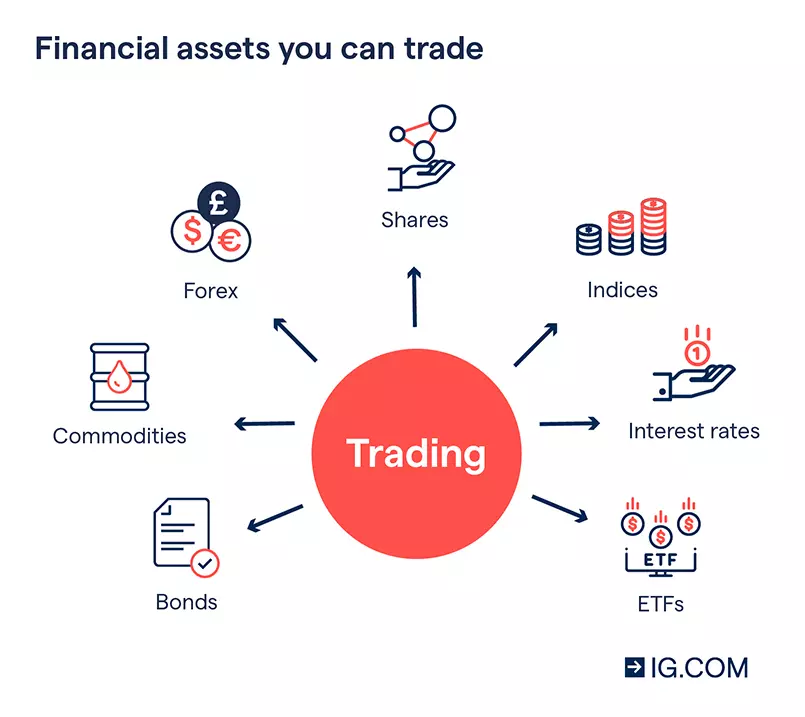
Stock trading also serves as a critical tool for portfolio diversification. Diversification is the strategy of spreading investments across various asset classes, industries, and geographies to reduce overall risk. By investing in stocks from different companies and sectors, an investor can mitigate the impact of poor performance by a single company or industry on their entire portfolio. For instance, if one sector experiences a downturn, gains in another might offset those losses. Stocks can complement other asset classes like bonds, real estate, or commodities, creating a more balanced and resilient investment portfolio designed to withstand various market conditions.
Economic Participation and Empowerment
Finally, engaging in stock trading offers a unique form of economic participation and empowerment. It allows individuals to directly invest in the success and growth of companies they believe in, from innovative tech startups to established consumer brands. This participation provides a tangible link to the broader economy, allowing investors to benefit from economic upturns and contribute to capital formation. For many, it’s an educational journey into understanding market dynamics, company valuations, and global economic forces, fostering financial literacy and a sense of direct involvement in the capitalist system.
Understanding Different Trading Styles and Strategies
The world of stock trading is diverse, with participants employing a wide array of strategies tailored to their risk tolerance, financial goals, and time commitment. These strategies can generally be categorized by the holding period of the assets and the analytical approaches used.
Day Trading
Day trading is perhaps the most intense and high-frequency form of stock trading. Day traders open and close positions within the same trading day, meaning they do not hold any positions overnight. The goal is to profit from small price movements that occur during a single trading session. This strategy requires constant monitoring of the market, quick decision-making, and a deep understanding of technical analysis, charts, and indicators. Due to the rapid pace and inherent volatility, day trading is extremely risky and is generally only suitable for experienced traders with substantial capital and a high tolerance for risk. It demands significant time commitment and psychological discipline.
Swing Trading
Swing trading occupies a middle ground between day trading and long-term investing. Swing traders aim to capture gains over a period of a few days to several weeks. They look for “swings” in stock prices—periods where a stock’s price is expected to move significantly in one direction. This strategy often involves analyzing chart patterns, market trends, and fundamental news releases that could impact a stock over a short to medium term. Swing trading is less time-intensive than day trading but still requires active market monitoring and careful risk management. It typically uses both technical and fundamental analysis to identify potential entry and exit points.
Long-Term Investing (Positional Trading)
Long-term investing, sometimes referred to as positional trading, involves holding stocks for extended periods, ranging from several months to many years. The core philosophy here is to invest in fundamentally sound companies with strong growth potential and to weather short-term market fluctuations. Long-term investors are less concerned with daily price movements and more focused on a company’s intrinsic value, management quality, competitive advantages, and long-term earnings prospects. This strategy often involves a “buy and hold” approach, allowing the power of compounding to work over time. It is generally considered less risky than short-term trading styles and is suitable for individuals building wealth for retirement or other distant financial goals.
Value Investing vs. Growth Investing
Within long-term investing, two prominent philosophical approaches stand out:
- Value Investing: Pioneered by legendary investors like Benjamin Graham and Warren Buffett, value investing involves identifying stocks that are trading below their intrinsic value. Value investors look for companies with strong fundamentals, good cash flow, and a solid business model, but whose stock price is currently undervalued by the market. They believe that eventually, the market will recognize the true value, leading to appreciation.
- Growth Investing: Growth investors, conversely, focus on companies that are expected to grow at an above-average rate compared to the overall market. These companies often reinvest their earnings back into the business rather than paying dividends, aiming for rapid expansion. Growth stocks tend to be more volatile but offer the potential for substantial returns if the company’s growth trajectory continues. Technology companies and emerging industries are often targets for growth investors.
Key Concepts and Terminology for Traders
Navigating the stock market requires familiarity with a specific lexicon and understanding of various operational concepts. Mastering these terms is crucial for effective decision-making and interpreting market information.
Bid-Ask Spread
The bid-ask spread is a fundamental concept representing the difference between the highest price a buyer is willing to pay for a security (bid price) and the lowest price a seller is willing to accept (ask price). Market makers facilitate trades by quoting both a bid and an ask price. For an investor, the bid price is what they would receive if they sold shares immediately, and the ask price is what they would pay if they bought shares immediately. The spread is essentially the market maker’s profit margin and a cost of trading. A narrow spread typically indicates high liquidity and competition, while a wide spread might suggest lower liquidity or higher volatility.
Market Orders vs. Limit Orders
When placing a trade, investors typically choose between different order types:
- Market Order: This is an instruction to buy or sell a stock immediately at the best available current price. Market orders prioritize execution speed over price. While they guarantee that the trade will be executed, there’s no guarantee of the price, especially in fast-moving or volatile markets, where the price might change between the time the order is placed and when it’s filled.
- Limit Order: A limit order specifies a maximum price an investor is willing to pay when buying or a minimum price they are willing to accept when selling. Unlike market orders, limit orders guarantee the price, but not necessarily the execution. If the market price never reaches the specified limit, the order will not be filled. Limit orders are useful for controlling price risk and executing trades at specific desired levels.
Volatility and Liquidity
These two terms are critical for understanding market behavior and risk:
- Volatility: Refers to the degree of variation of a trading price series over time. Highly volatile stocks experience sharp and unpredictable price swings, offering potential for quick gains but also carrying higher risk of substantial losses. Less volatile stocks tend to have more stable price movements. Volatility is often measured by standard deviation or through indices like the VIX (Volatility Index).
- Liquidity: Describes the ease with which an asset can be converted into cash without affecting its market price. A highly liquid stock can be bought or sold quickly without causing a significant price change, meaning there are always willing buyers and sellers. Illiquid stocks, conversely, may be difficult to trade without impacting their price, making them riskier for active traders.
Technical vs. Fundamental Analysis
Traders and investors use different analytical approaches to make informed decisions:
- Fundamental Analysis: Involves evaluating a company’s intrinsic value by examining its financial statements (income statement, balance sheet, cash flow statement), management quality, industry trends, competitive landscape, and economic factors. Fundamental analysts believe that a stock’s price will eventually reflect its true underlying value. This approach is more common among long-term investors.
- Technical Analysis: Focuses on studying past market data, primarily price and volume, to predict future price movements. Technical analysts use charts, patterns, and indicators (like moving averages, relative strength index, MACD) to identify trends, support and resistance levels, and potential entry/exit points. This approach assumes that all relevant information is already reflected in the stock price and that historical price action can indicate future behavior. Technical analysis is predominantly used by short-term traders.
Risks and Rewards in Stock Trading
While stock trading offers tantalizing opportunities for wealth creation, it is imperative to approach it with a clear understanding of both its potential rewards and its inherent risks. A balanced perspective is crucial for sustainable engagement in the financial markets.
Market Volatility and Capital Loss
The most prominent risk in stock trading is the potential for capital loss. Stock prices are constantly fluctuating, and there is no guarantee that an investment will increase in value. Economic downturns, company-specific crises, industry shifts, geopolitical events, or even broad market sentiment can lead to significant and rapid declines in stock prices. Investors can lose a portion, or even all, of their invested capital. This inherent market volatility underscores the importance of not investing money that you cannot afford to lose and understanding that past performance is not indicative of future results.
The Importance of Risk Management
Effective risk management is arguably the most critical component of successful stock trading. It involves strategies and practices designed to minimize potential losses. Key aspects include:
- Diversification: As mentioned earlier, spreading investments across various stocks, sectors, and asset classes helps mitigate the impact of a single poor-performing asset.
- Stop-Loss Orders: These are pre-set instructions to sell a stock if its price falls to a certain level, automatically limiting potential losses on a position.
- Position Sizing: Determining the appropriate amount of capital to allocate to any single trade based on one’s overall portfolio size and risk tolerance. Over-leveraging or concentrating too much capital in one stock can amplify losses.
- Continuous Learning and Adaptation: Markets are dynamic. Traders must continuously educate themselves, adapt their strategies, and stay informed about market conditions and global events.
- Emotional Control: Fear and greed are powerful emotions that can lead to impulsive and detrimental trading decisions. A disciplined, rational approach is vital.
Potential for Significant Returns
Despite the risks, the allure of stock trading lies in its potential for significant returns. Historically, the stock market has offered higher returns over the long term compared to other traditional investment vehicles like savings accounts or bonds, though with greater volatility. Successful stock trading can lead to substantial capital appreciation, regular dividend income, and accelerated wealth accumulation. It provides an avenue for individuals to grow their capital beyond inflation, fund major life goals like retirement or education, and achieve financial independence. Companies that innovate, expand, and deliver strong earnings growth often reward their shareholders handsomely, making intelligent stock selection a powerful driver of personal wealth.

Psychological Aspects of Trading
Beyond the technical and analytical skills, the psychological aspects of trading are often underestimated but critically important. The emotional rollercoaster of gains and losses can lead to irrational decisions. Fear can cause traders to sell too early during a market dip, missing subsequent recoveries. Greed can compel traders to hold onto losing positions too long, hoping for a turnaround, or to take on excessive risk for larger gains. Patience, discipline, objectivity, and the ability to accept losses are hallmarks of successful traders. Developing a robust trading plan and adhering to it, even when emotions are high, is essential for navigating the psychological challenges inherent in stock trading.
In conclusion, stock trading is a multifaceted financial activity involving the buying and selling of company shares with the objective of generating profit. It is a critical engine of capital formation, providing companies with funding and offering investors diverse opportunities for wealth growth. From the basic mechanics of buying and selling to the intricate dance of different trading styles and risk management, understanding stock trade is an ongoing journey. While it carries inherent risks, particularly the potential for capital loss, a disciplined, informed approach, coupled with effective risk management and emotional control, can unlock the significant potential rewards that the stock market has historically offered. For anyone looking to actively participate in the financial markets or simply understand how capital moves, grasping the fundamentals of stock trading is an indispensable step.
aViewFromTheCave is a participant in the Amazon Services LLC Associates Program, an affiliate advertising program designed to provide a means for sites to earn advertising fees by advertising and linking to Amazon.com. Amazon, the Amazon logo, AmazonSupply, and the AmazonSupply logo are trademarks of Amazon.com, Inc. or its affiliates. As an Amazon Associate we earn affiliate commissions from qualifying purchases.