
The starter motor stands as one of the most critical, yet often overlooked, components of a modern vehicle’s electrical and mechanical ecosystem. While most drivers are familiar with the concept of turning a key or pressing a button to bring an engine to life, the actual process occurring under the hood is a marvel of electromechanical engineering. At its core, the starter motor is a powerful direct-current (DC) electric motor designed to initiate the combustion engine’s operation, acting as the bridge between stored electrical energy and the mechanical kinetic energy required to start the internal combustion cycle.
The Anatomy and Function of a Starter Motor
Understanding the starter motor requires breaking down its primary components and the sequence of operations that occur in the milliseconds after the ignition signal is sent. Because a combustion engine cannot start itself—it requires an external force to rotate the crankshaft to the point where the air-fuel mixture can ignite—the starter motor serves as the indispensable catalyst for this process.
Core Components
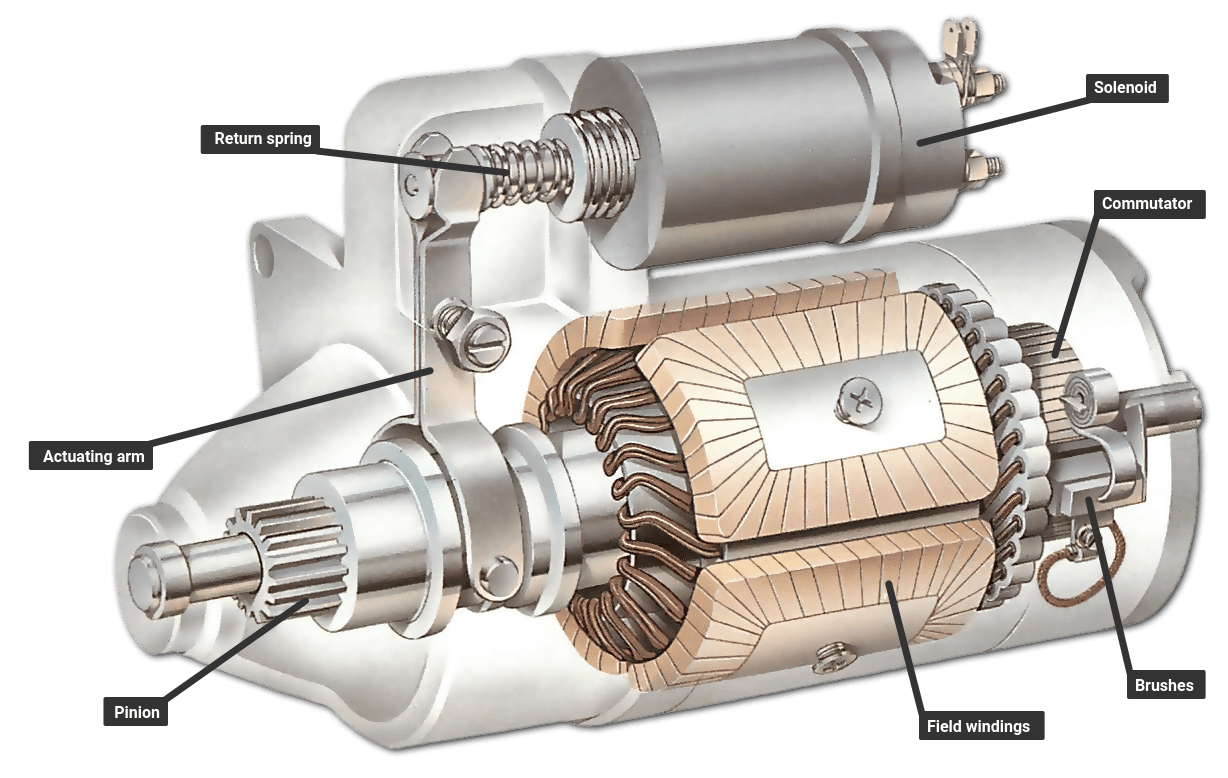
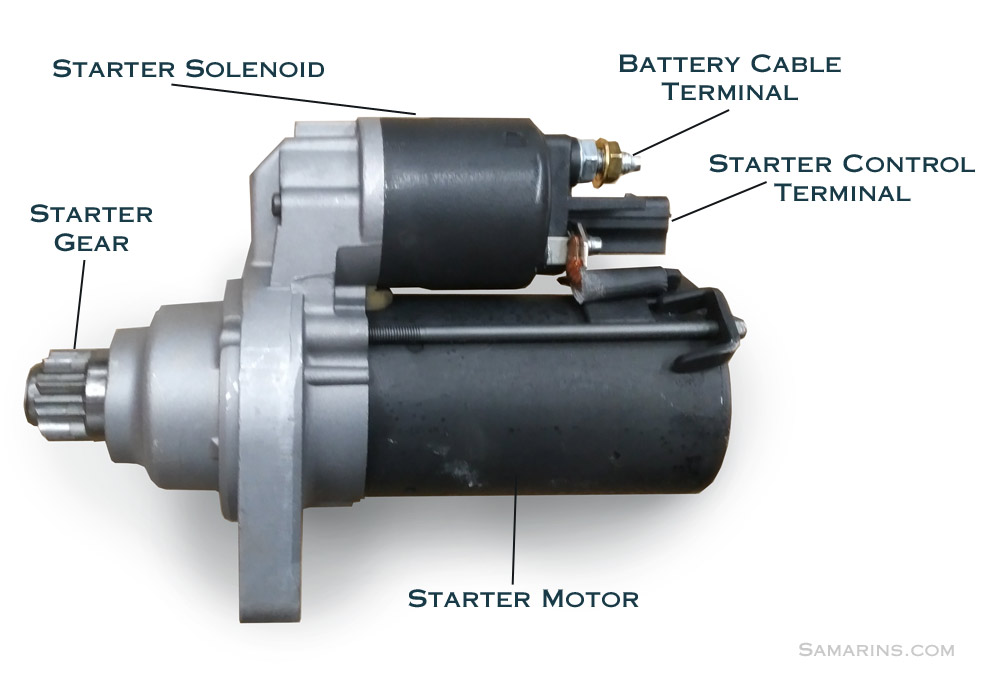
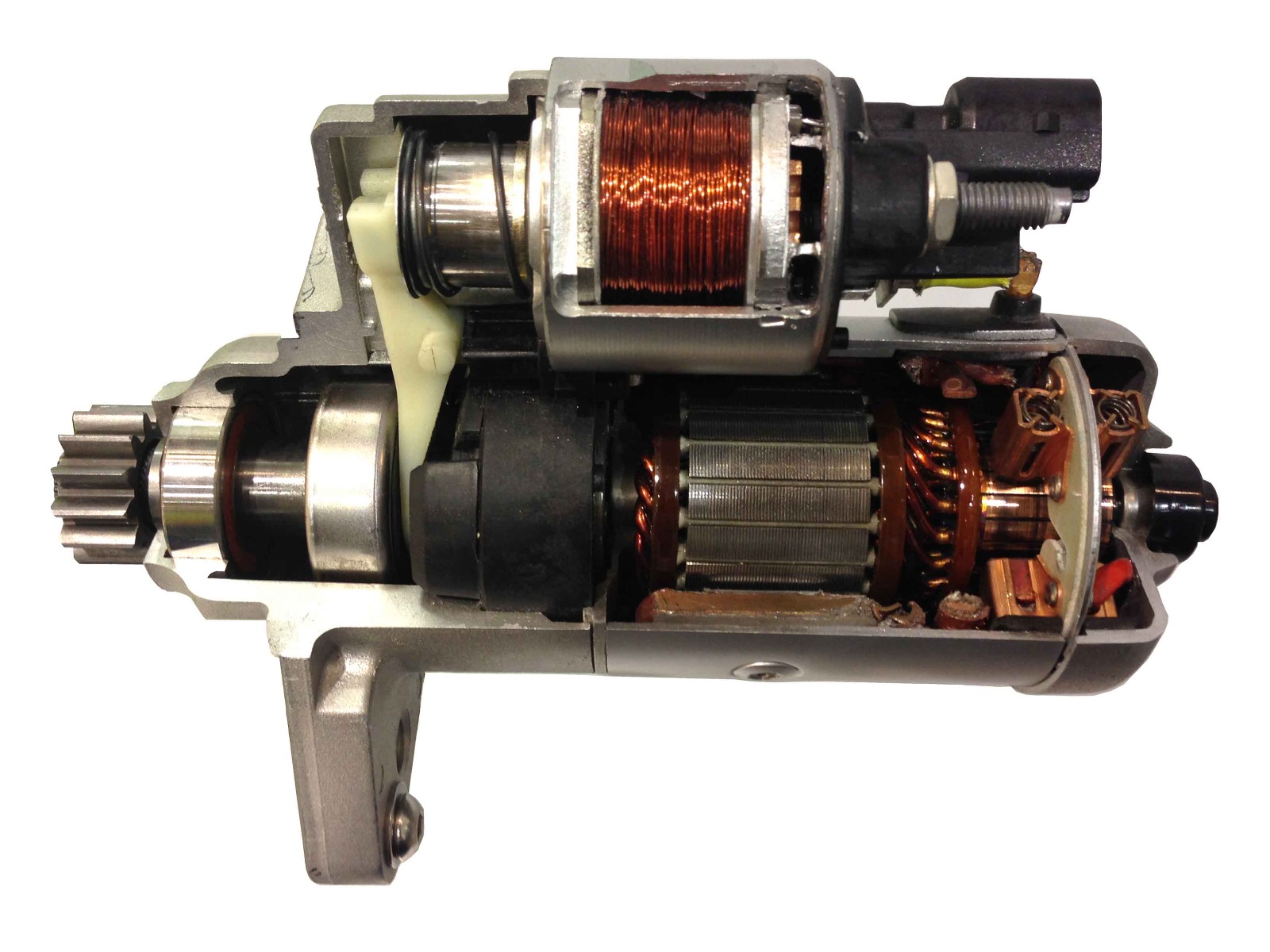
The starter motor assembly is a robust unit typically comprised of four major elements: the motor housing, the solenoid, the pinion gear, and the drive lever. The solenoid acts as the “brain” and heavy-duty relay of the system. It receives a low-current signal from the ignition switch or the vehicle’s Engine Control Unit (ECU) and translates it into a high-current connection from the battery. This allows the massive power required to turn over a heavy engine to flow through the starter motor windings.
The motor itself is a high-torque DC motor. When energized, it converts electrical energy into rotational motion. This rotational force is delivered to the engine via the pinion gear—a small gear that moves along the drive shaft to engage with the engine’s flywheel or flexplate. The drive lever ensures that the pinion gear physically meshes with the flywheel’s teeth precisely when the motor begins to rotate, ensuring that the engine is cranked effectively.
The Sequence of Operation
The ignition process follows a precise chronological sequence:
- Engagement: When the driver triggers the ignition, the solenoid is energized, pulling a plunger inward.
- Meshing: This movement of the plunger simultaneously closes the high-current electrical contacts and pushes the pinion gear forward via the drive lever, forcing it to mesh with the teeth of the engine flywheel.
- Cranking: With the pinion locked into the flywheel, the high-current connection is completed, sending power to the motor and forcing the pinion to rotate. Since the pinion is meshed with the flywheel, it forces the crankshaft to spin, facilitating the intake and compression strokes of the engine cylinders.
- Disengagement: As soon as the engine catches and begins to run on its own power, the RPMs increase significantly. To prevent the engine from spinning the starter motor at dangerously high speeds, an overrunning clutch—or “sprag clutch”—allows the pinion gear to spin freely relative to the motor shaft, preventing damage until the solenoid retracts and disengages the gear from the flywheel.
Common Signs of Starter Motor Failure
Like any mechanical component subjected to extreme stress and high electrical loads, starter motors are prone to wear over time. Recognizing the early warning signs of a failing starter can prevent a driver from becoming stranded. Because the starter relies on a clean, high-amperage connection, many perceived “starter failures” are actually issues with the battery or electrical cables; however, once these are ruled out, specific symptoms point directly to the starter unit itself.
The “Clicking” Symptom
Perhaps the most common indicator of a faulty starter is a single, loud “click” or a rapid “clicking” sound when attempting to start the vehicle. A single click often suggests that the solenoid is engaging, but the internal motor is failing to turn or is failing to make the necessary electrical contact to drive the motor. Rapid clicking, conversely, often indicates a low-voltage scenario—the battery is providing enough power to engage the solenoid, but not enough to sustain the motor, causing the solenoid to engage and disengage repeatedly as the voltage drops.
Cranking Difficulty and Sluggishness
If the engine cranks slowly or sounds like it is struggling to rotate—a phenomenon often described as “dragging”—the starter may be reaching the end of its service life. Internal resistance, caused by worn brushes or carbon buildup on the commutator, reduces the torque the motor can generate. When the motor cannot generate sufficient torque to overcome the internal friction and compression of the engine, the vehicle will struggle to start, particularly in cold weather conditions where engine oil viscosity is higher and the battery’s capacity is naturally diminished.
Unusual Noises: Grinding and Whirring
A loud, high-pitched grinding noise while cranking is a hallmark of mechanical failure, specifically within the engagement system. This is usually caused by worn-out teeth on the pinion gear or the flywheel. If the gears fail to mesh properly, the teeth will slip against each other, creating a metallic screeching sound. Conversely, a “whirring” sound without the engine cranking suggests that the motor is spinning, but the pinion gear is failing to extend or engage with the flywheel, often caused by a failed drive lever or a stuck solenoid.
Maintenance and Diagnostic Best Practices
While a starter motor is often considered a “service-free” component, its longevity is heavily influenced by the health of the broader electrical system. A proactive approach to vehicle maintenance can significantly extend the lifespan of the starter unit and prevent premature failure.
The Importance of Electrical Integrity
The most common cause of premature starter failure is not internal wear, but rather voltage drop caused by poor connections. Because the starter draws hundreds of amps during the cranking phase, even a tiny amount of resistance—due to corrosion on battery terminals, frayed ground cables, or loose connections—can cause the starter to underperform. Regularly cleaning battery terminals and ensuring that the main engine-to-chassis ground cable is secure is the single most effective way to prevent starter burnout. If a starter is forced to work with insufficient voltage, it often draws even more current to compensate, leading to overheating of the internal copper windings and eventual failure of the solenoid contacts.
Testing Procedures
If a starter is suspected of being faulty, a systematic diagnostic approach is essential before recommending replacement. Technicians typically utilize a digital multimeter and a voltage drop test. By measuring the voltage at the starter terminal while the engine is being cranked, one can determine if the starter is receiving the necessary energy. If the voltage at the terminal drops significantly below 10 volts during cranking, the issue lies with the battery or cables. If the battery shows 12.6 volts at rest and remains above 10 volts during cranking, but the starter refuses to turn or spins weakly, the starter itself is almost certainly the culprit.
Thermal Management and Environment
In high-performance or heavy-duty applications, heat is the enemy of electrical motors. Starters located in close proximity to exhaust manifolds are susceptible to heat soak, which can degrade the internal insulating varnish on the copper windings. In these scenarios, using thermal heat shielding or ensuring the engine bay remains well-ventilated is vital. Furthermore, if the vehicle is used in environments where it is started and stopped frequently—such as delivery vehicles—the sheer number of cycles will lead to physical wear on the brushes and the pinion gear drive mechanism, necessitating a more aggressive maintenance schedule.
By understanding the starter motor as a complex electromechanical device rather than a simple on/off switch, drivers and enthusiasts can better appreciate the engineering involved in the daily act of ignition. From the high-current demands of the solenoid to the precise mechanical engagement of the pinion gear, the starter motor remains a testament to the reliability and sophistication of modern automotive technology. Maintenance of the supporting electrical system and awareness of the auditory symptoms of wear ensure that this critical component continues to fulfill its purpose for the life of the vehicle.
aViewFromTheCave is a participant in the Amazon Services LLC Associates Program, an affiliate advertising program designed to provide a means for sites to earn advertising fees by advertising and linking to Amazon.com. Amazon, the Amazon logo, AmazonSupply, and the AmazonSupply logo are trademarks of Amazon.com, Inc. or its affiliates. As an Amazon Associate we earn affiliate commissions from qualifying purchases.