
In the realms of chemical engineering, hardware manufacturing, and sophisticated software simulation, the term “Standard Temperature and Pressure” (STP) serves as more than just a scientific footnote. It is a fundamental baseline—a digital and physical “reset point” that allows engineers, developers, and data scientists to compare results across disparate environments. Without a standardized reference point, the data generated by industrial sensors, the performance benchmarks of high-end processors, and the accuracy of digital twin simulations would be inconsistent and, ultimately, unreliable.
As technology pushes further into the microcosmic level of semiconductor design and the macrocosmic scale of global industrial IoT (IIoT) networks, understanding the technical nuances of STP is essential. This guide explores the definition of STP through a technological lens, its application in hardware and software, and why it remains the cornerstone of digital precision.

Defining the Baseline: The Technical Mechanics of STP
At its core, Standard Temperature and Pressure is a set of defined conditions for experimental measurements to be established, allowing comparisons to be made between different sets of data. In the tech industry, these standards are vital for calibrating sensitive hardware and ensuring that software algorithms are processing environmental data correctly.
The Fundamental Constants
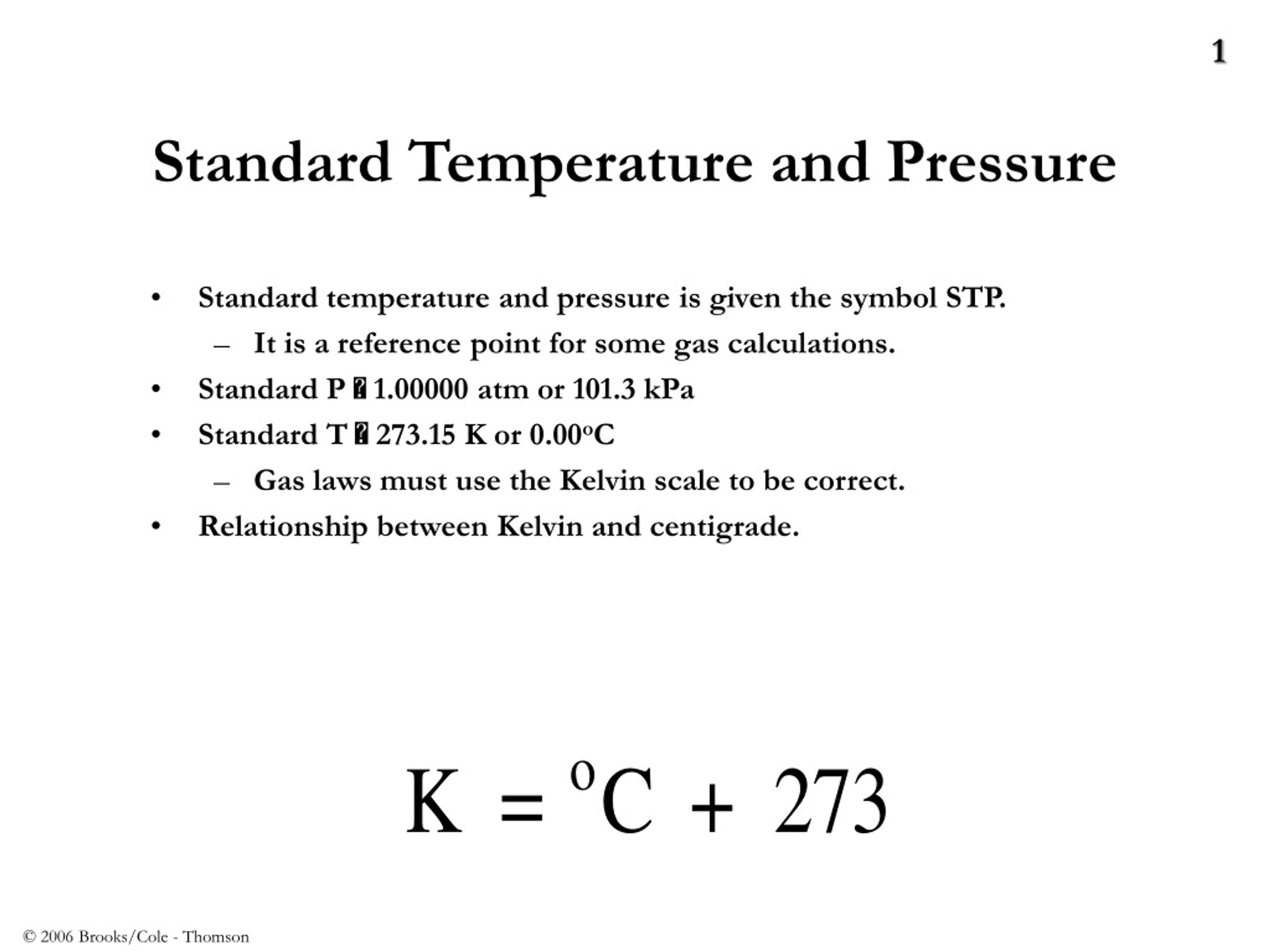
The most commonly used definition of STP comes from the International Union of Pure and Applied Chemistry (IUPAC). Currently, the IUPAC defines STP as:
- Standard Temperature: 273.15 K (0 °C, 32 °F)
- Standard Pressure: 100,000 Pa (1 bar, 14.504 psi, 0.987 atm)
However, it is important for tech professionals to note that the National Institute of Standards and Technology (NIST) in the United States uses a slightly different baseline for many engineering applications, often citing 20 °C (293.15 K) and 101.325 kPa (1 atm). This discrepancy is precisely why documentation in software development and hardware testing must explicitly state which “standard” is being utilized to avoid catastrophic calculation errors in automated systems.
Why Standardization Matters in Digital Calibration
In the world of digital sensors—whether they are the barometers in your smartphone or the flow meters in a smart factory—the raw data collected is rarely the data reported. Sensors are subject to environmental drift. To provide an accurate reading, the device’s firmware must “normalize” the data. By referencing STP, software can apply correction factors to convert a raw pressure reading into a standardized value. This allows a weather-monitoring app to compare air pressure in Denver to air pressure in Miami with mathematical consistency, despite the massive difference in altitude and ambient conditions.
STP in Hardware Engineering and Semiconductor Manufacturing
The hardware that powers our digital world is incredibly sensitive to its physical environment. From the cleanrooms where silicon wafers are etched to the data centers housing thousands of servers, STP provides the benchmark for performance and reliability.
Managing Thermal Envelopes
Every CPU and GPU has a “thermal design power” (TDP), which indicates the maximum amount of heat the component is expected to dissipate under a normal workload. When hardware manufacturers like Intel, AMD, or NVIDIA benchmark their chips, they do so under controlled environmental conditions. STP acts as the controlled variable.
If a piece of hardware is tested in a lab that is significantly warmer than the “standard” temperature, the resulting performance data will be skewed. For tech reviewers and hardware engineers, understanding STP is vital for calculating “Delta T” (the difference between the component temperature and the ambient air). This calculation is what allows engineers to design cooling solutions—such as vapor chambers or liquid cooling loops—that ensure hardware longevity and prevent thermal throttling.
Pressure Sensitivity in Advanced Circuits
While temperature is a well-known factor in hardware performance, pressure is equally critical in the manufacturing phase. Semiconductor fabrication involves vacuum deposition and lithography processes that occur at pressures far removed from STP. However, the equipment used to create these vacuums must be calibrated against standard atmospheric pressure to ensure precision.
Furthermore, hard disk drives (HDDs) and even certain sealed optical components are designed to operate within a specific pressure range. As tech moves toward “edge computing” in extreme environments—such as high-altitude aerospace tech or deep-sea data centers—engineers must use STP as the reference point to simulate how pressure changes will affect the mechanical integrity of the hardware.

The Role of STP in Digital Twins and Industrial IoT (IIoT)
As we move toward Industry 4.0, the concept of the “Digital Twin” has become a dominant trend. A digital twin is a virtual representation of a physical object or system. To make these simulations accurate, they must account for the physics of the real world, starting with STP.
Simulating Real-World Environments
In software packages like ANSYS or Autodesk Fusion 360, engineers simulate fluid dynamics, heat transfer, and structural stress. These simulations require “initial conditions.” By default, these programs often initialize the environment at STP.
For instance, if an aerospace startup is designing a high-altitude drone using software, the developers must program the transition from STP at sea level to the low-pressure, low-temperature environment of the upper atmosphere. If the software’s baseline (STP) is incorrectly defined, the entire simulation of lift and drag will be flawed, leading to expensive failures in physical prototypes.
Data Normalization for Sensor Networks
In the Industrial Internet of Things (IIoT), thousands of sensors across a global supply chain report data to a centralized cloud platform. A gas pipeline in Siberia and a chemical plant in the Sahara both report gas volumes. However, gas volume changes drastically with temperature and pressure (following the Ideal Gas Law: PV=nRT).
To make this data useful for business intelligence and safety monitoring, the software must perform “Standard Volume” calculations. It takes the “Actual” conditions reported by the sensor and converts them to what the volume would be at STP. This process, known as data normalization, is a critical software function that allows for accurate billing, leak detection, and inventory management in tech-driven industrial sectors.
Future Trends: Evolving Standards for Extreme Computing
As technology evolves, our reliance on “Standard” conditions is being challenged by the move toward extreme environments and exotic computing architectures.
Quantum Computing and Non-Standard Environments
Quantum computers represent the frontier of technology, but they cannot operate at STP. Most quantum processors require temperatures near absolute zero (0.015 Kelvin) to maintain qubit decoherence. In this niche, STP is not a goal but a hurdle. The “Tech” challenge here lies in the cryogenics and the specialized software used to monitor these systems.
Engineers must build sophisticated “dilution refrigerators” that fight against the natural tendency of the system to return to standard ambient temperatures. The software monitoring these systems uses STP as a “warning zone”—if the internal temperature of a quantum computer drifts anywhere near “Standard” levels, the system fails instantly.
AI-Driven Environmental Optimization
Artificial Intelligence is now being used to manage the environments of massive data centers. Companies like Google and Microsoft use AI algorithms to predict heat loads and adjust cooling systems in real-time. These AI tools use STP as a baseline to understand efficiency. By analyzing how far the data center’s “micro-climate” deviates from standard conditions, the AI can optimize power usage effectiveness (PUE), saving millions of dollars in energy costs.
This intersection of environmental science and machine learning highlights the enduring relevance of STP. Even as we move toward more complex and automated systems, the need for a fixed, universal constant remains.
Conclusion: The Digital Necessity of a Physical Constant
Standard Temperature and Pressure may seem like a relic of high school chemistry, but in the modern tech landscape, it is a vital tool for precision, interoperability, and innovation. Whether it is a developer writing code for a drone’s flight controller, a hardware engineer designing the next generation of GPUs, or a data scientist normalizing IIoT streams in the cloud, STP provides the necessary framework for accuracy.
As we look toward a future of AI-managed environments and quantum breakthroughs, the definitions provided by STP will continue to serve as the bridge between the chaotic variability of the physical world and the precise requirements of the digital one. In technology, you cannot manage what you cannot measure—and you cannot measure without a standard.
aViewFromTheCave is a participant in the Amazon Services LLC Associates Program, an affiliate advertising program designed to provide a means for sites to earn advertising fees by advertising and linking to Amazon.com. Amazon, the Amazon logo, AmazonSupply, and the AmazonSupply logo are trademarks of Amazon.com, Inc. or its affiliates. As an Amazon Associate we earn affiliate commissions from qualifying purchases.