
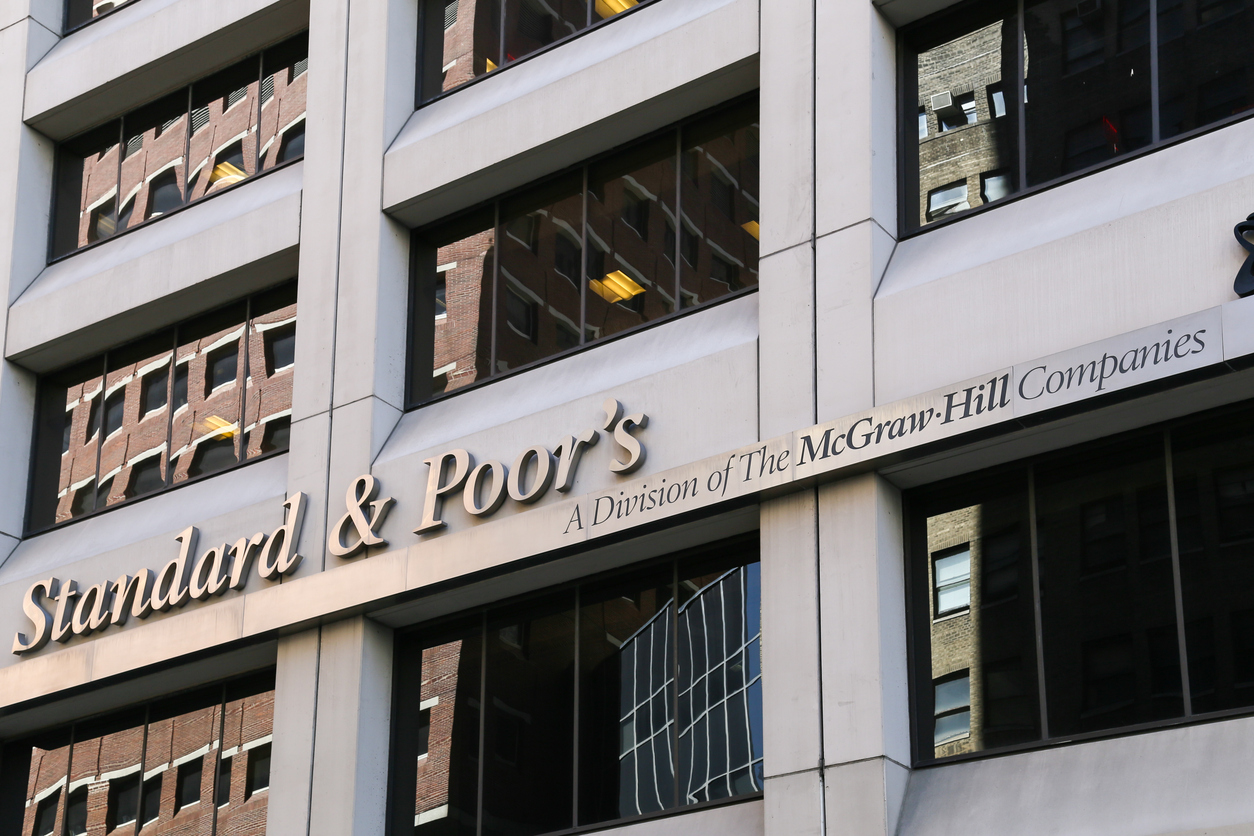
In the vast and often complex world of global finance, certain institutions stand as pillars, providing the data, analysis, and benchmarks that guide countless investment decisions, corporate strategies, and economic policies. Among these, Standard & Poor’s (S&P) holds an undeniably prominent position. Far from being a mere name, S&P is a critical component of the financial infrastructure, renowned for its credit ratings, market indices—most famously the S&P 500—and a wealth of financial data and insights that empower investors, businesses, and governments alike. Understanding “what is Standard & Poor’s” means delving into its history, its core functions, and its profound impact on the ebb and flow of capital markets, firmly placing it within the domain of money and finance.

The Foundation and Evolution of a Financial Giant
The story of Standard & Poor’s is one of continuous adaptation and expansion, mirroring the very evolution of modern financial markets. What began as a venture to provide transparent financial information has grown into a global powerhouse, influencing how risk is perceived and how performance is measured.
A Legacy of Financial Insight
The roots of Standard & Poor’s stretch back to the late 19th and early 20th centuries, a period marked by burgeoning industrialization and the rise of corporate America. Henry Varnum Poor founded Poor’s Publishing Company in 1860, initially publishing a comprehensive history of U.S. railroads, which quickly evolved into a financial manual for investors. This early work recognized the burgeoning need for reliable data on corporate performance and debt. Concurrently, Luther Lee Blake founded the Standard Statistics Bureau in 1906, leveraging statistical analysis to provide data on non-railroad companies, particularly industrial and utility firms. Blake’s vision was to offer a “standard” measure of these companies’ financial health.
These two distinct, yet complementary, entities operated independently for decades, each contributing significantly to the nascent field of financial analysis. Poor’s focused on the qualitative and historical aspects, providing narratives and corporate histories, while Standard Statistics championed quantitative data and statistical rigor. Both companies understood that informed investment decisions hinged on access to accurate, impartial financial information, a concept that was revolutionary in an era often characterized by opaque markets and insider trading. The groundwork laid by Poor and Blake established a precedent for financial transparency and analytical depth that would become the hallmark of the combined entity.
From Print to Global Influence
The pivotal moment in the history of Standard & Poor’s came in 1941 when Poor’s Publishing Company and Standard Statistics Bureau merged. This union created Standard & Poor’s Corporation, combining their respective strengths to offer a more comprehensive suite of financial information and analysis. The new entity was better equipped to meet the growing demands of a rapidly globalizing financial landscape and the increasing complexity of investment instruments. The post-war economic boom and the rise of mutual funds further amplified the need for standardized financial benchmarks and credible risk assessments.
Over the subsequent decades, S&P continually innovated. It developed and refined its methodologies for credit ratings, a service that became increasingly crucial as companies and governments sought to raise capital through debt markets. The introduction and widespread adoption of its market indices, particularly the S&P 500 in 1957, transformed how market performance was understood and benchmarked. These indices moved beyond simple averages, offering weighted measures that more accurately reflected the overall market capitalization and economic impact of leading companies. Today, S&P Global, the parent company, is a multinational enterprise, a leading provider of financial intelligence, including credit ratings, benchmarks, and analytics, operating across numerous divisions and serving clients in virtually every corner of the global economy. Its journey from specialized print manuals to a digital, data-driven global financial information provider underscores its adaptability and enduring relevance in the world of money.
Core Functions: Rating, Indexing, and Data
The reputation of Standard & Poor’s is built upon three foundational pillars: credit ratings, market indices, and comprehensive financial data. These core functions collectively provide the transparency and analytical tools essential for navigating the complexities of modern finance.
Credit Ratings: Assessing Solvency and Risk
Perhaps the most recognized service offered by Standard & Poor’s is its independent credit ratings. A credit rating is an assessment of the creditworthiness of a debtor—whether it’s a corporation, a government, a financial institution, or even a structured finance product. S&P assigns ratings from ‘AAA’ (extremely strong capacity to meet financial commitments) down to ‘D’ (default), with various intermediate categories and modifiers like ‘+’ or ‘-‘ to provide granularity. These ratings are not recommendations to buy, sell, or hold a security; rather, they are forward-looking opinions about an entity’s ability and willingness to meet its financial obligations on time and in full.
The process of assigning a credit rating is rigorous and data-intensive. S&P’s analysts delve into a vast array of financial, operational, and economic factors. For corporations, this involves scrutinizing balance sheets, income statements, cash flow analyses, debt structures, industry trends, competitive landscapes, and management quality. For sovereign governments, factors include economic strength, political stability, fiscal policy, debt burden, and external vulnerabilities. These ratings are crucial for investors, helping them assess the risk associated with lending money or buying debt securities. They also play a vital role for issuers, as higher ratings typically translate to lower borrowing costs, facilitating access to capital markets. The independence and transparency of S&P’s rating methodologies are paramount to their credibility, making them a cornerstone of global bond markets.
Market Indices: Benchmarking Performance (S&P 500)
Beyond credit ratings, Standard & Poor’s is famous for its suite of market indices, the most iconic of which is the S&P 500. An index is a statistical measure of change in an economy or a financial market, and S&P’s indices are designed to reflect the performance of specific market segments or the broader market itself. The S&P 500, launched in 1957, is widely considered the best gauge of large-cap U.S. equities and a proxy for the overall health of the U.S. stock market. It comprises 500 leading publicly traded companies in the U.S., selected by a committee based on criteria such as market size, liquidity, and sector representation. Unlike simpler indices, the S&P 500 is market-capitalization-weighted, meaning companies with larger market values have a greater impact on the index’s performance.
The utility of S&P indices extends far beyond mere measurement. They serve as critical benchmarks against which active fund managers compare their performance, helping investors determine if they are receiving value for their management fees. Furthermore, S&P indices form the basis for a vast array of investment products, including exchange-traded funds (ETFs) and mutual funds that track the index’s performance, allowing individuals and institutions to gain diversified exposure to specific market segments at low cost. Other prominent S&P indices include the S&P Dow Jones Indices family, which encompasses the Dow Jones Industrial Average, the S&P MidCap 400, the S&P SmallCap 600, and global and sector-specific indices, each providing a unique lens through which to view market movements and investment opportunities.
Financial Data and Analytics: Empowering Informed Decisions
Underpinning its ratings and indices, Standard & Poor’s provides an extensive array of financial data and analytics through its S&P Global Market Intelligence division. This encompasses a vast repository of information on public and private companies, credit markets, commodities, and macroeconomic trends. This data includes fundamental company financials, ownership structures, M&A transactions, news, and sector-specific metrics, all aggregated and structured for easy access and analysis.
Financial data from S&P Global is crucial for a diverse set of users. Investment professionals, including portfolio managers, analysts, and traders, rely on it for due diligence, valuation modeling, and identifying investment opportunities. Corporations use the data for competitive analysis, strategic planning, and understanding market dynamics. Academics and researchers leverage it for economic studies and market behavior analysis. The sophistication lies not just in the volume of data but in the analytical tools and platforms S&P provides to interpret it, allowing users to screen for specific criteria, build complex models, and generate actionable insights. In an age where information is currency, S&P’s role as a purveyor of high-quality, reliable financial data is indispensable for making informed decisions and managing financial risk effectively.
S&P’s Role in the Global Financial Ecosystem
Standard & Poor’s is not merely an information provider; its influence permeates the entire global financial ecosystem, shaping investor behavior, corporate governance, and the very functioning of capital markets.
Influencing Investment Decisions
The information and analyses provided by S&P significantly influence how investors allocate capital. A company’s or sovereign entity’s credit rating, for instance, directly impacts the interest rate it must pay to borrow money. A downgrade by S&P can trigger a sell-off in bonds, raise borrowing costs, and make it more challenging for an entity to access new capital, potentially signaling financial distress. Conversely, an upgrade can lower borrowing costs, attract more investors, and improve market sentiment. For investors, these ratings serve as a critical risk indicator, helping them gauge the likelihood of an investment returning principal and interest.
Similarly, the S&P 500 index dictates investment flows on a massive scale. Billions of dollars are invested in index funds and ETFs designed to mirror the S&P 500’s performance. When a company is added to or removed from this prestigious index, it can lead to significant buying or selling pressure on its stock, as fund managers adjust their portfolios to match the index’s composition. This makes S&P’s index committee decisions incredibly influential, affecting share prices, trading volumes, and investor sentiment for individual companies. This direct correlation between S&P’s outputs and investment decisions underscores its central role in the mechanics of modern finance and the efficient allocation of global capital.
Shaping Corporate Governance and Transparency

Beyond direct investment impacts, S&P’s methodologies and public disclosures contribute to stronger corporate governance and greater market transparency. To receive a favorable credit rating, companies must often adhere to certain standards of financial reporting, disclose material risks, and demonstrate sound management practices. The threat of a downgrade serves as a powerful incentive for management teams to maintain fiscal discipline, manage debt responsibly, and communicate clearly with the market. This indirectly fosters a culture of accountability within corporations.
Furthermore, S&P’s research and analytical reports often highlight best practices and emerging risks across industries, setting de facto standards for corporate behavior. By consistently evaluating and publishing opinions on thousands of entities, S&P creates a benchmark for what constitutes prudent financial management and robust operational frameworks. This pressure for transparency extends to governments as well, as sovereign ratings push nations to manage their public finances more responsibly and provide clearer economic data to the international community. In essence, S&P acts as an independent arbiter, encouraging better financial stewardship and greater openness across the board.
Impact on Capital Markets and Economic Stability
The aggregate effect of S&P’s activities is a profound impact on the functioning of capital markets and, by extension, economic stability. By providing standardized, credible information on credit risk and market performance, S&P reduces information asymmetry between borrowers and lenders, and between companies and investors. This reduction in uncertainty facilitates more efficient capital allocation, allowing capital to flow to its most productive uses. Without such independent assessments, investors would face higher due diligence costs and greater risks, potentially leading to less investment, higher borrowing costs, and less liquid markets.
During times of economic stress, S&P’s ratings can have amplified effects. Downgrades during financial crises, while sometimes criticized for being reactive, often reflect deteriorating conditions and can accelerate market reactions, forcing rapid policy adjustments or corporate restructuring. Conversely, upgrades can signal recovery and instill confidence, helping to restore stability. By contributing to the overall transparency and risk awareness within the financial system, S&P helps to build more robust and resilient capital markets, which are essential for long-term economic growth and stability. Its analytical tools also help regulators monitor systemic risks, contributing to the broader goal of financial stability.
The Methodologies Behind S&P’s Offerings
The credibility and widespread acceptance of Standard & Poor’s ratings, indices, and data stem from the rigorous, transparent, and consistently applied methodologies that govern each of its services. These methodologies are continuously reviewed and updated to reflect evolving market conditions and financial instruments.
Rigor in Credit Rating Analysis
S&P’s credit rating methodology is a complex, multi-faceted process designed to provide an objective, forward-looking opinion on an entity’s creditworthiness. It begins with a deep dive into both quantitative and qualitative factors. Quantitative analysis involves scrutinizing financial statements, debt levels, liquidity, profitability, and cash flow generation, often benchmarked against peers and historical performance. Qualitative factors include an assessment of management’s strategy, industry position, competitive landscape, regulatory environment, and governance structures. For sovereign ratings, analysts consider economic structure, fiscal policy, political stability, and external finances.
The process involves extensive interaction with the rated entity’s management, including interviews and data requests, to gain a comprehensive understanding of their business model, risk management practices, and future prospects. A rating committee, comprising experienced analysts, then debates and assigns the rating, ensuring consistency and impartiality. This committee-based approach mitigates individual bias. Furthermore, S&P maintains strict independence between its analytical and commercial operations to prevent conflicts of interest. The methodologies are publicly available, providing transparency on how ratings are derived, which allows market participants to understand the basis of S&P’s opinions. This commitment to methodological rigor is what grants S&P’s ratings their significant weight in financial markets.
Index Construction and Maintenance
The construction and maintenance of S&P’s market indices, especially the S&P 500, are governed by a meticulous set of rules and an independent index committee. The goal is to ensure that indices accurately reflect the market segment they are designed to represent, remaining impartial and transparent. For the S&P 500, selection criteria are strict: companies must be U.S.-based, have a market capitalization exceeding a specific threshold (which changes over time), possess sufficient liquidity, and be financially viable with positive aggregate earnings over the past four quarters. Sector balance is also considered to ensure broad representation of the U.S. economy.
Once a company is included, its weight in the index is determined by its float-adjusted market capitalization—meaning only shares available for public trading are counted, not those held by insiders or governments. The index committee regularly reviews the constituent companies, making adjustments for mergers, acquisitions, bankruptcies, or if a company no longer meets the selection criteria. These rebalancings are communicated in advance to minimize market disruption. The rules-based, transparent approach to index construction ensures that the S&P 500 and other indices are reliable benchmarks for market performance, free from subjective bias, making them invaluable tools for investors and financial professionals for measuring and tracking market segments effectively.
Data Aggregation and Quality Assurance
The sheer volume and diversity of financial data that S&P Global Market Intelligence manages necessitate robust aggregation and quality assurance processes. S&P collects data from thousands of public and private sources globally, including company filings, press releases, news feeds, market exchanges, and direct corporate outreach. This raw data is then subjected to extensive validation and standardization procedures to ensure accuracy, consistency, and comparability across different companies and regions.
Data quality is paramount, as even small errors can lead to significant analytical flaws or incorrect investment decisions. S&P employs a combination of automated checks and human review by experienced data analysts to identify and rectify discrepancies. Data is mapped to common identifiers and taxonomies, making it searchable and integratable into various financial models and applications. Furthermore, S&P continually invests in technology and artificial intelligence to enhance its data collection, processing, and analytical capabilities, ensuring it remains at the forefront of financial information provision. This commitment to data integrity and advanced analytics empowers clients with reliable, actionable insights crucial for navigating today’s complex financial landscape.
Understanding S&P’s Significance for Investors and Businesses
For anyone engaged in finance, from individual investors planning for retirement to multinational corporations seeking capital, S&P’s contributions are woven into the very fabric of financial decision-making. Its services provide frameworks for understanding risk, measuring performance, and accessing opportunities.
Navigating Investment Landscapes with S&P Indices
For investors, S&P’s indices are foundational tools for navigating complex investment landscapes. The S&P 500, for example, is more than just a number; it is a barometer for the health of the U.S. economy and the broader stock market. Investors use it to understand historical market performance, gauge current market sentiment, and make strategic asset allocation decisions. Those seeking broad market exposure often invest in S&P 500 index funds or ETFs, gaining diversified portfolios that mirror the performance of 500 leading companies without the need for extensive individual stock research. This passive investing strategy has democratized access to institutional-quality diversification.
Beyond the flagship S&P 500, other S&P indices allow investors to target specific market segments, such as mid-cap companies (S&P MidCap 400), small-cap companies (S&P SmallCap 600), international markets, or particular sectors. This provides granular control over investment strategies. Financial advisors frequently use S&P indices as benchmarks to evaluate the performance of active fund managers, ensuring their clients’ portfolios are competitive. For both sophisticated institutional investors and retail individuals, S&P’s indices offer a transparent, cost-effective, and efficient way to measure market segments and execute investment strategies, making informed decisions about where to place their money.
Leveraging Credit Ratings for Capital Access
For businesses and governments, S&P’s credit ratings are indispensable for accessing capital markets. A strong credit rating (e.g., ‘AAA’ or ‘AA’) signals to potential lenders and bond investors that the entity is highly likely to meet its debt obligations. This translates directly into lower borrowing costs—companies with higher ratings typically pay lower interest rates on their bonds, saving potentially millions or billions of dollars over the life of their debt. Lower borrowing costs improve profitability for businesses and free up funds for public services for governments.
Conversely, a poor credit rating or a downgrade can significantly increase borrowing costs, make it harder to attract investors, or even limit access to capital altogether. This dynamic incentivizes entities to maintain strong financial health and transparent reporting. Companies often strive to improve or maintain their S&P ratings through prudent financial management, strategic planning, and clear communication with rating analysts. By providing a universally recognized standard of creditworthiness, S&P ratings facilitate the efficient functioning of bond markets, enabling companies and governments to raise necessary capital to fund operations, expansion, and public projects, thereby driving economic activity and growth.
Strategic Insights from S&P Global Market Intelligence
S&P Global Market Intelligence offers a wealth of strategic insights that go beyond simple data points, providing deep dives into industries, companies, and macroeconomic trends. Businesses utilize this intelligence for competitive analysis, identifying market opportunities, understanding regulatory landscapes, and making informed decisions about mergers, acquisitions, and divestitures. For example, a company planning an expansion into a new market might use S&P’s data to analyze the competitive intensity, consumer spending patterns, and regulatory hurdles in that region.
Investment professionals, on the other hand, leverage S&P’s extensive datasets and analytical tools for due diligence, equity research, fixed income analysis, and risk management. This includes access to detailed company financials, executive compensation data, ownership structures, M&A transaction histories, and real-time news feeds. The ability to screen vast amounts of data for specific criteria, build sophisticated financial models, and access expert research reports empowers analysts to uncover undervalued assets, assess credit risk accurately, and construct robust portfolios. In a rapidly evolving financial world, the strategic insights provided by S&P Global Market Intelligence are critical for maintaining a competitive edge, mitigating financial risks, and identifying profitable ventures, making it an essential partner in managing money and making sound financial choices.
aViewFromTheCave is a participant in the Amazon Services LLC Associates Program, an affiliate advertising program designed to provide a means for sites to earn advertising fees by advertising and linking to Amazon.com. Amazon, the Amazon logo, AmazonSupply, and the AmazonSupply logo are trademarks of Amazon.com, Inc. or its affiliates. As an Amazon Associate we earn affiliate commissions from qualifying purchases.