
The Standard & Poor’s 500, commonly known as the S&P 500, stands as one of the most widely recognized and influential benchmarks of the U.S. stock market. Far more than just a list of companies, it serves as a robust indicator of the health of the American economy and the performance of large-cap U.S. equities. For investors, financial analysts, and economists alike, understanding the S&P 500 is fundamental to navigating the complex world of finance. This comprehensive guide delves into its origins, methodology, significance, and how it impacts both individual investment strategies and the broader financial landscape.

The Genesis and Purpose of the S&P 500
The story of the S&P 500 is one of evolution, from humble beginnings as a simple market indicator to its current status as a global financial bellwether. Its fundamental purpose has always been to provide a clear, comprehensive, and representative measure of the market’s performance, allowing stakeholders to gauge trends and make informed decisions.
A Premier Benchmark for the U.S. Market
First introduced on March 4, 1957, by Standard & Poor’s, the S&P 500 wasn’t the first stock market index, but it quickly distinguished itself through its broad representation. Unlike its contemporary, the Dow Jones Industrial Average (DJIA), which initially comprised a mere 12 stocks and now tracks 30, the S&P 500 aimed for a much wider swath of the economy. By including 500 of the largest publicly traded companies in the United States, it sought to capture approximately 80% of the total market capitalization of the U.S. stock market. This extensive coverage makes it an exceptionally strong proxy for the overall health and direction of the U.S. equity market, offering a more diversified and accurate snapshot than indices with fewer components.
Who Manages the Index?
The S&P 500 index is maintained by S&P Dow Jones Indices, a joint venture between S&P Global, CME Group, and News Corp. This entity is responsible for setting the criteria for inclusion, reviewing component companies, and ensuring the index accurately reflects its defined market segment. The rigorous, committee-driven process for selecting and managing the index constituents ensures its integrity and relevance, removing political or subjective biases often associated with smaller, less formalized indices. This professional oversight is critical to maintaining the S&P 500’s credibility and its status as a reliable financial tool.
Evolution of an Economic Indicator
While formally launched in 1957, Standard & Poor’s had been calculating market indices since the 1920s, with a 90-stock index being published daily as early as 1926. The expansion to 500 stocks marked a significant leap forward, recognizing the growing complexity and diversification of the American economy. Over the decades, the index has adapted to profound shifts in economic structure, technological advancements, and regulatory environments. Its methodology has been refined to ensure it remains a dynamic and accurate reflection of the contemporary market, constantly reviewing and adjusting its components to mirror the ever-changing landscape of American enterprise. This continuous evolution is key to its enduring relevance as an economic indicator.
Understanding the S&P 500’s Composition
The strength of the S&P 500 lies not just in the number of companies it tracks, but in the sophisticated methodology used to select and weight them. This methodology ensures the index provides a fair and balanced representation of the broader market.
Selection Criteria for Component Companies
Inclusion in the S&P 500 is a coveted achievement for public companies, signifying their prominence and stability. However, the selection process is far from arbitrary. A committee at S&P Dow Jones Indices employs several rigorous criteria:
- Market Capitalization: Companies must have a large market capitalization, though there isn’t a fixed dollar amount. The current minimum is typically around $14.5 billion, subject to change. This ensures only large-cap companies are included.
- Liquidity: The stock must be highly liquid, meaning it trades frequently and in high volumes. This ensures that the index accurately reflects market prices without being unduly influenced by a few trades.
- Domicile: Companies must be domiciled in the U.S.
- Public Float: A minimum of 50% of a company’s shares must be available for public trading (not held by insiders or restricted stock).
- Profitability: Companies must have positive reported earnings in the most recent quarter, and the sum of their earnings over the prior four consecutive quarters must also be positive. This “GAAP earnings” rule ensures financial health.
- Sector Representation: The committee aims for a balance across different sectors of the U.S. economy, though strict sector allocation rules are not applied. The goal is to reflect the overall sector composition of the large-cap market.
- Exchange Listing: Companies must be listed on either the New York Stock Exchange (NYSE) or Nasdaq.
These criteria ensure that the S&P 500 represents stable, mature, and economically significant U.S. companies, making it a reliable gauge of the market’s performance.
Market-Capitalization Weighting Explained
Unlike price-weighted indices like the Dow Jones Industrial Average, where companies with higher stock prices have a greater impact, the S&P 500 is a market-capitalization-weighted index. This means that companies with larger market capitalizations (stock price multiplied by the number of outstanding shares) have a greater influence on the index’s value.
For example, if Apple has a market cap of $2 trillion and a smaller company like a regional bank has a market cap of $20 billion, Apple’s stock price movement will have 100 times the impact on the S&P 500’s overall value than the regional bank’s. This weighting methodology naturally gives more sway to the largest, most economically significant companies, which some argue makes the index a more accurate reflection of the overall market’s value and performance. However, it also means that the index can be heavily influenced by the performance of a few very large companies.
Diversification Across Sectors
While individual companies are weighted by market cap, the S&P 500 still offers substantial diversification across various sectors of the economy. The index generally includes companies from all 11 Global Industry Classification Standard (GICS) sectors: Energy, Materials, Industrials, Consumer Discretionary, Consumer Staples, Healthcare, Financials, Information Technology, Communication Services, Utilities, and Real Estate. This sectoral breadth minimizes the impact of a downturn in any single industry and ensures the index broadly represents the economic activities driving the U.S. market. This diversification is a key reason why many investors view the S&P 500 as a proxy for the entire U.S. economy.
Why the S&P 500 Matters to Investors and Economists
The S&P 500’s prominence extends beyond its intricate construction. It holds significant weight for various financial participants, acting as a crucial barometer and a benchmark for performance.
A Barometer of U.S. Economic Health
Economists and policymakers frequently monitor the S&P 500 as a real-time indicator of investor sentiment and, by extension, the broader economic outlook. A rising S&P 500 often signals confidence in corporate earnings, economic growth, and future prospects, while a declining index can reflect concerns about recessions, inflation, or other economic headwinds. Because it comprises 500 major U.S. companies across diverse sectors, its collective performance offers valuable insights into consumer spending, industrial production, corporate profitability, and the overall stability of the American economic engine. It’s often cited in economic reports, news headlines, and policy discussions as a shorthand for “how the market is doing.”
The Gold Standard for Large-Cap Performance

For professional money managers and individual investors alike, the S&P 500 serves as the de facto benchmark for evaluating the performance of large-cap U.S. equity portfolios. If a mutual fund or an actively managed portfolio invests in large U.S. companies, its performance is almost invariably compared to the S&P 500’s returns over the same period. Beating the S&P 500 is a significant achievement for fund managers, while underperforming it often raises questions about their strategy. This benchmarking function is critical for accountability and transparency in the investment world, allowing investors to assess whether they are getting value for money from their investment managers.
Comparing to Other Major Indices
While the S&P 500 is paramount, it’s not the only U.S. market index. Understanding its relationship to others provides a fuller picture:
- Dow Jones Industrial Average (DJIA): The Dow tracks 30 large, established U.S. companies. It’s price-weighted, meaning stocks with higher share prices have more influence. While historically significant, its smaller size and weighting methodology make it less representative of the broader market than the S&P 500.
- Nasdaq Composite: This index tracks nearly all stocks listed on the Nasdaq exchange, heavily skewed towards technology and growth companies. While important for tech-heavy sectors, it doesn’t offer the same broad economic representation as the S&P 500.
- Russell 2000: This index measures the performance of 2,000 small-cap U.S. companies. It provides insight into smaller, often more volatile segments of the market, which the S&P 500 does not cover.
Each index offers a unique perspective, but the S&P 500 remains the most comprehensive and widely accepted indicator for the overall U.S. large-cap market.
Investing in the S&P 500: A Practical Guide
Given its broad diversification and status as a market benchmark, direct investment in the S&P 500 is not possible, as it’s an index. However, investors can gain exposure to its performance through various financial products designed to mimic its returns.
Index Funds and Exchange-Traded Funds (ETFs)
The most popular and accessible ways for individual investors to invest in the S&P 500 are through index funds and Exchange-Traded Funds (ETFs).
- S&P 500 Index Funds: These are mutual funds that aim to replicate the performance of the S&P 500 by holding all 500 component stocks in the same proportions as the index. They are passively managed, meaning they don’t have a fund manager actively picking stocks, which results in lower management fees compared to actively managed funds. Investors buy and sell shares of index funds at the end of the trading day based on their Net Asset Value (NAV).
- S&P 500 ETFs: Similar to index funds, ETFs also track the S&P 500, but they trade like individual stocks on an exchange throughout the day. This offers more flexibility for investors who wish to buy or sell at specific market prices. ETFs also typically have low expense ratios, making them a cost-effective way to gain diversified exposure to the large-cap U.S. market. Popular examples include SPY, IVV, and VOO.
Both options provide broad diversification, typically lower costs, and consistent market exposure, making them cornerstone investments for many long-term financial plans.
Benefits of S&P 500 Investing
Investing in products that track the S&P 500 offers several compelling advantages:
- Diversification: With 500 companies across all major sectors, it significantly reduces company-specific risk compared to investing in individual stocks.
- Cost-Effectiveness: Passively managed index funds and ETFs generally have very low expense ratios, meaning more of your money goes towards investing and less towards fees.
- Market Returns: Over long periods, the S&P 500 has historically delivered robust returns, reflecting the growth of the U.S. economy. For many, simply matching the market’s performance is a successful investment strategy.
- Simplicity: It removes the need for individual stock picking and extensive research, offering a straightforward path to investing in the U.S. stock market.
- Liquidity: S&P 500 ETFs and index funds are highly liquid, allowing investors to easily buy and sell shares.
Considerations and Risks
While generally considered a relatively safe and reliable investment for long-term growth, S&P 500 investing is not without risks:
- Market Risk: As an equity investment, it is subject to market fluctuations. A broad market downturn will affect S&P 500-tracking investments. There’s no guarantee of positive returns, and losses are possible.
- Lack of Outperformance: By definition, an S&P 500 index fund or ETF will match the market’s performance, not outperform it. Investors seeking to beat the market will need to pursue different strategies (which inherently carry higher risk).
- Concentration Risk (Within the S&P 500): Due to its market-cap weighting, the index can become heavily concentrated in a few very large companies or dominant sectors (e.g., technology). If these concentrated holdings perform poorly, it can significantly impact the entire index.
- Currency Risk (for non-U.S. investors): Investors buying S&P 500 products in a currency other than USD are exposed to currency fluctuations.
Despite these considerations, for most investors, particularly those building a diversified portfolio for long-term growth, S&P 500-tracking investments remain a cornerstone recommendation due to their balance of risk and reward.
The S&P 500’s Historical Impact and Future Relevance
The S&P 500 has not merely been a static measure; it has evolved alongside the economy, continually reflecting the dynamism of American commerce and guiding investment decisions for generations.
Decades of Market Representation
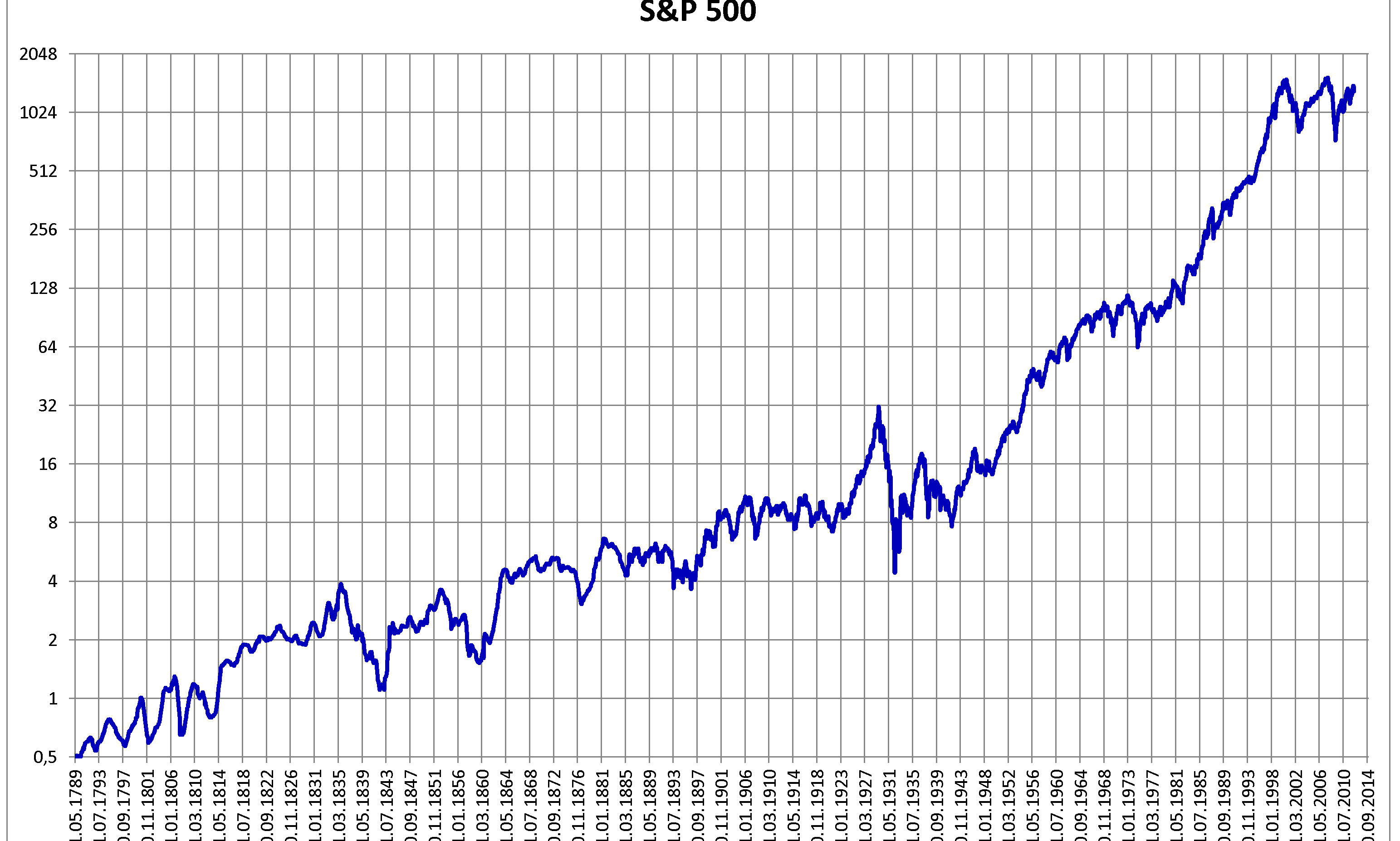
Since its inception, the S&P 500 has provided an unbroken chain of data reflecting the performance of America’s leading companies. This rich historical record allows analysts to study market cycles, understand the impact of economic events, and forecast future trends. It has weathered numerous financial crises, technological revolutions, and geopolitical shifts, always providing a consistent measure of the market’s resilience and capacity for growth. The index’s long track record of delivering positive returns over extended periods underpins its credibility as a vehicle for wealth creation.
Adapting to Economic Shifts
The S&P 500 committee continually reviews and rebalances the index to ensure it remains representative of the current economic landscape. Companies that shrink or fail are removed, and new, growing companies are added. This dynamic adjustment mechanism ensures the index doesn’t become outdated. For instance, the rise of technology and healthcare sectors has seen their representation in the S&P 500 grow significantly over time, while traditional industrial and energy companies’ weighting has adjusted. This adaptive quality ensures its continued relevance as the U.S. economy itself transforms.
A Continuous Measure of American Enterprise
In essence, the S&P 500 is more than just a number; it’s a living reflection of American innovation, entrepreneurship, and economic power. It tracks the collective journey of companies that drive employment, research, and development, influencing global markets and livelihoods. As long as capitalism thrives and markets evolve, the S&P 500 will likely remain a crucial and enduring measure of the strength and direction of American enterprise, providing invaluable insights for investors, economists, and anyone interested in the pulse of the global economy. Its role as a transparent, reliable, and comprehensive benchmark solidifies its position as an indispensable tool in the world of finance.
aViewFromTheCave is a participant in the Amazon Services LLC Associates Program, an affiliate advertising program designed to provide a means for sites to earn advertising fees by advertising and linking to Amazon.com. Amazon, the Amazon logo, AmazonSupply, and the AmazonSupply logo are trademarks of Amazon.com, Inc. or its affiliates. As an Amazon Associate we earn affiliate commissions from qualifying purchases.