
ST Math, an acronym for Spatial-Temporal Math, is a pre-K through 8th-grade visual instructional program that leverages cutting-edge research in neuroscience and education to build deep conceptual understanding of mathematics. It is a distinctive form of educational technology, designed not merely to supplement traditional teaching methods but to fundamentally reshape how students perceive and interact with mathematical concepts. Far from being another digital textbook or drill-and-practice platform, ST Math is a comprehensive software suite that prioritizes visual learning and problem-solving through an immersive, game-based environment.
Understanding the Core Concept of ST Math
At its heart, ST Math is built upon the premise that learning mathematics should be an intuitive, discovery-based process, much like learning a language. Its unique methodology moves beyond symbolic manipulation to foster a genuine grasp of mathematical ideas. The program’s design is heavily influenced by principles of cognitive science, focusing on how the brain processes information and builds understanding.
Visual Learning and Spatial-Temporal Reasoning
The cornerstone of ST Math is its reliance on visual models and interactive puzzles. Unlike traditional math instruction that often introduces abstract symbols and numbers first, ST Math begins with wordless, animated problems. Students manipulate on-screen objects, test hypotheses, and observe the immediate consequences of their actions, enabling them to construct mathematical meaning visually. This approach is particularly effective because visual processing is a powerful pathway for learning, engaging different parts of the brain than linguistic or symbolic processing alone.
Spatial-temporal reasoning, the program’s namesake, refers to the mental manipulation of objects in space and time to solve problems. This cognitive skill is crucial for mathematical understanding, allowing students to visualize relationships, predict outcomes, and develop strategies without immediate reliance on language or memorized algorithms. By strengthening these innate abilities, ST Math helps students develop a robust mental framework for higher-level mathematical thinking.
Research-Based Pedagogical Approach
ST Math is not an arbitrary collection of games; it is grounded in decades of research from the MIND Research Institute (the creators of ST Math). This research highlights that profound learning occurs when students engage in productive struggle – tackling challenging problems that are within their reach, failing, analyzing their errors, and trying again. The program meticulously sequences content to ensure that new concepts build upon previously mastered ones, creating a cohesive and logically structured learning pathway. Every puzzle and interaction is designed to reveal mathematical structure and relationships, guiding students toward self-discovery rather than rote memorization.
Key Features and How ST Math Works
ST Math operates as a dynamic, adaptive learning platform, providing a personalized experience for each student while offering rich data for educators. Its features are engineered to create an engaging and effective learning environment.
Interactive Puzzles and Gamified Learning
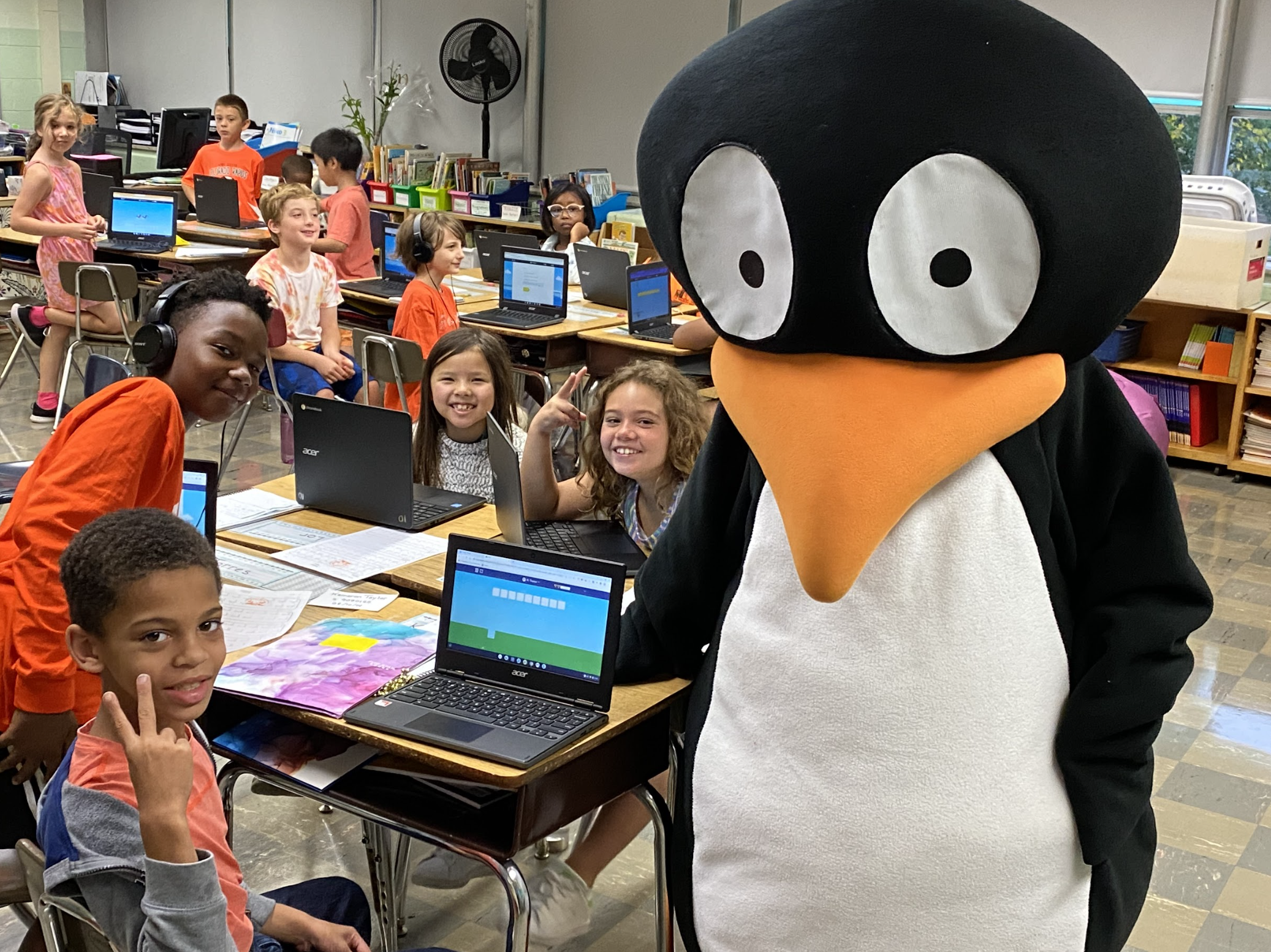
The core of the student experience in ST Math is its library of over 35,000 interactive, animated puzzles featuring the beloved penguin protagonist, JiJi. These puzzles cover a full spectrum of mathematical concepts from number sense and operations to algebra and geometry. Students navigate through these challenges by manipulating visual representations, often without a single number or symbol initially. The gamified elements, such as immediate visual feedback, progress tracking, and celebratory animations, keep students motivated and immersed. Crucially, the “game” aspect is intrinsically linked to the math content, ensuring that engagement directly translates to mathematical learning, rather than being a superficial overlay.
Adaptive Pathways and Differentiated Instruction
One of ST Math’s most powerful technological aspects is its adaptive learning engine. As students progress, the system intelligently adjusts the difficulty and sequence of puzzles based on their performance. If a student struggles with a particular concept, the program offers alternative pathways and prerequisite puzzles to reinforce foundational understanding before returning to the more advanced topic. Conversely, students who demonstrate mastery can accelerate through content. This differentiation ensures that every student is consistently challenged at their optimal learning edge, preventing both boredom and frustration.
Data-Driven Insights for Educators
For educators, ST Math provides a robust dashboard of data and analytics. Teachers can monitor individual student progress, identify specific areas of struggle, and track usage time and mastery levels. This real-time data allows teachers to make informed instructional decisions, pinpoint students who need extra support or enrichment, and tailor their classroom lessons to address collective learning gaps. The data is presented in an accessible format, transforming complex learning analytics into actionable insights for effective classroom management and intervention strategies.
The Technology Behind ST Math
The technological architecture of ST Math is designed for robustness, accessibility, and pedagogical effectiveness, ensuring a seamless and impactful user experience.

Platform Accessibility and Device Compatibility
ST Math is delivered as a web-based application, making it accessible across a wide range of devices including desktop computers, laptops, Chromebooks, and tablets (both iOS and Android). This cross-platform compatibility ensures that schools and families can integrate the program into various learning environments, from traditional computer labs to one-to-one device initiatives and even remote learning setups. The interface is intuitively designed for touch interaction on tablets and mouse interaction on computers, catering to diverse input methods.
Algorithmic Design for Personalized Progress
The heart of ST Math’s adaptive nature lies in its sophisticated algorithms. These algorithms continuously analyze student responses, not just whether an answer is correct or incorrect, but also the patterns of errors and successful strategies. This deep analysis informs the program’s decision-making process, dynamically adjusting the learning path, providing targeted feedback, and selecting the most appropriate subsequent puzzles. The algorithmic design ensures that the learning experience is not static but evolves with each student’s unique needs and pace, maximizing engagement and learning efficiency.
Impact and Implementation in Educational Settings
The implementation of ST Math in schools and districts has demonstrated significant impact on student achievement and educator practices, fundamentally changing the landscape of math education.
Fostering Conceptual Understanding
Research studies and anecdotal evidence consistently show that ST Math helps students develop a deeper conceptual understanding of mathematics. By visualizing concepts before formal symbols are introduced, students build strong mental models that make abstract ideas more concrete and relatable. This foundational understanding equips them to tackle complex problems and promotes greater flexibility in problem-solving, moving beyond rote memorization of procedures.
Supporting Diverse Learners
The visual, language-agnostic nature of ST Math makes it particularly effective for diverse student populations, including English language learners (ELLs) and students with learning disabilities. Because the puzzles are initially wordless, language barriers are minimized, allowing all students to engage with the mathematical content directly. The adaptive pathways also cater to students at various readiness levels, providing scaffolding for those who need it and acceleration for those who are ready for more advanced challenges.
Integration with Classroom Instruction
ST Math is designed to be a powerful tool for blended learning environments. While students engage independently with the software, teachers leverage the program’s data to inform their whole-group instruction, small-group interventions, and one-on-one tutoring. The visual models and problem types encountered in ST Math can be brought into classroom discussions, providing a common language and framework for students to articulate their mathematical thinking. Many schools implement ST Math as a regular station in a rotation model or as a complement to daily math lessons, with students typically spending 60-90 minutes per week on the program.
Advantages and Considerations for Adoption
Adopting an advanced educational technology like ST Math brings numerous advantages but also requires thoughtful consideration regarding implementation and support.
Benefits for Student Engagement and Achievement
The primary advantage of ST Math is its proven impact on student engagement and academic achievement. Students often perceive ST Math as a game, leading to higher motivation and persistence in tackling challenging math problems. This increased engagement translates into improved performance on standardized tests and a stronger overall grasp of mathematical concepts, fostering a positive attitude towards math that can last a lifetime. The program helps students develop critical thinking skills, problem-solving strategies, and a growth mindset.
Professional Development and Support
For successful implementation, ST Math provides comprehensive professional development for educators. This training covers not only the technical aspects of using the software but also the underlying pedagogical philosophy and strategies for integrating ST Math effectively into daily instruction. Ongoing support, including access to resources, coaching, and a dedicated support team, is crucial for maximizing the program’s potential and ensuring that teachers feel confident and equipped to leverage its features fully.

Addressing Common Misconceptions
It’s important to address common misconceptions about ST Math. It is not merely a “game” for entertainment; every element is meticulously designed with specific learning objectives. Nor is it intended to replace teachers; instead, it empowers educators with valuable insights and tools to enhance their instruction. Finally, while it excels at conceptual understanding, it also seamlessly integrates the development of procedural fluency as students transition from visual models to symbolic representations, ensuring a well-rounded mathematical education. ST Math represents a forward-thinking approach to math education, harnessing technology to unlock deeper understanding and greater achievement for all students.
aViewFromTheCave is a participant in the Amazon Services LLC Associates Program, an affiliate advertising program designed to provide a means for sites to earn advertising fees by advertising and linking to Amazon.com. Amazon, the Amazon logo, AmazonSupply, and the AmazonSupply logo are trademarks of Amazon.com, Inc. or its affiliates. As an Amazon Associate we earn affiliate commissions from qualifying purchases.