
Navigating the landscape of retirement planning can feel like deciphering a complex code, especially when it comes to understanding Social Security. For millions of Americans, Social Security benefits form a critical pillar of financial stability in their golden years. A fundamental question at the heart of this planning is: “What is my Social Security retirement age?” This isn’t a single, fixed number for everyone, but rather a dynamic concept tied to your birth year and influenced by your claiming decisions. Understanding these nuances is paramount to maximizing your benefits and ensuring a secure financial future.

This comprehensive guide will demystify the Social Security retirement age, exploring its various facets from the official Full Retirement Age (FRA) to the strategic implications of claiming benefits early or delaying them. We’ll delve into how your choices impact your monthly payments, discuss key factors beyond age that influence your benefits, and offer insights into integrating Social Security into your broader financial plan.
Understanding Social Security Retirement Benefits
Social Security is more than just a government program; it’s a social insurance system that provides a safety net for millions of Americans, including retirees, the disabled, and survivors of deceased workers. Funded through dedicated payroll taxes (FICA taxes) paid by workers and their employers, it’s designed to replace a portion of pre-retirement income.
The Foundation of American Retirement Security
Established in 1935, Social Security was a cornerstone of the New Deal, created to provide a basic level of economic security during old age. Over the decades, it has evolved to cover more workers and provide a wider range of benefits. For many, particularly those with modest incomes, Social Security represents their primary or even sole source of retirement income. For others, it supplements pensions, 401(k)s, and personal savings, playing a crucial role in maintaining their desired lifestyle in retirement. Its importance cannot be overstated, as it provides a predictable, inflation-indexed income stream that can last a lifetime.
How Social Security Works: A Brief Overview
In essence, current workers’ contributions fund the benefits of current retirees and other beneficiaries. While it’s often perceived as a personal savings account, it’s more accurately described as a pay-as-you-go system. When you work, a portion of your earnings is taxed and contributed to the Social Security system. To qualify for retirement benefits, you typically need to accumulate 40 “credits” over your working lifetime, which usually equates to about 10 years of work. The amount of your monthly benefit is primarily determined by your average indexed monthly earnings (AIME) over your 35 highest-earning years. This calculation leads to your Primary Insurance Amount (PIA), which is the benefit you receive if you claim at your Full Retirement Age.
Key Factors Influencing Your Benefits
While age is a critical determinant, several other factors significantly influence the size of your Social Security benefits:
-
Earnings Record: Your average lifetime earnings are the foundation of your benefit calculation. Higher earnings, up to an annual limit, generally lead to higher benefits. The Social Security Administration (SSA) uses your 35 highest-earning years, indexed for inflation, to calculate your PIA. If you have fewer than 35 years of earnings, the missing years are counted as zero, which can substantially lower your average.
-
Claiming Age: This is arguably the most impactful factor under your direct control. Claiming before or after your Full Retirement Age dramatically alters your monthly payment amount.
-
Cost-of-Living Adjustments (COLAs): Once you start receiving benefits, they are subject to annual COLAs, which help your purchasing power keep pace with inflation.
-
Spousal and Survivor Benefits: If eligible, you may receive benefits based on a spouse’s or former spouse’s earnings record, or as a survivor of a deceased worker, potentially providing a higher payment than your own earned benefit.
Decoding Your Full Retirement Age (FRA)
The concept of “Social Security retirement age” is most precisely defined by your Full Retirement Age (FRA). This is the age at which you are entitled to receive 100% of your Primary Insurance Amount (PIA) – the benefit calculated based on your earnings record. It’s crucial to understand that your FRA is not static; it has incrementally increased over time for different birth cohorts.
Age-Based Determination: The Birth Year Chart
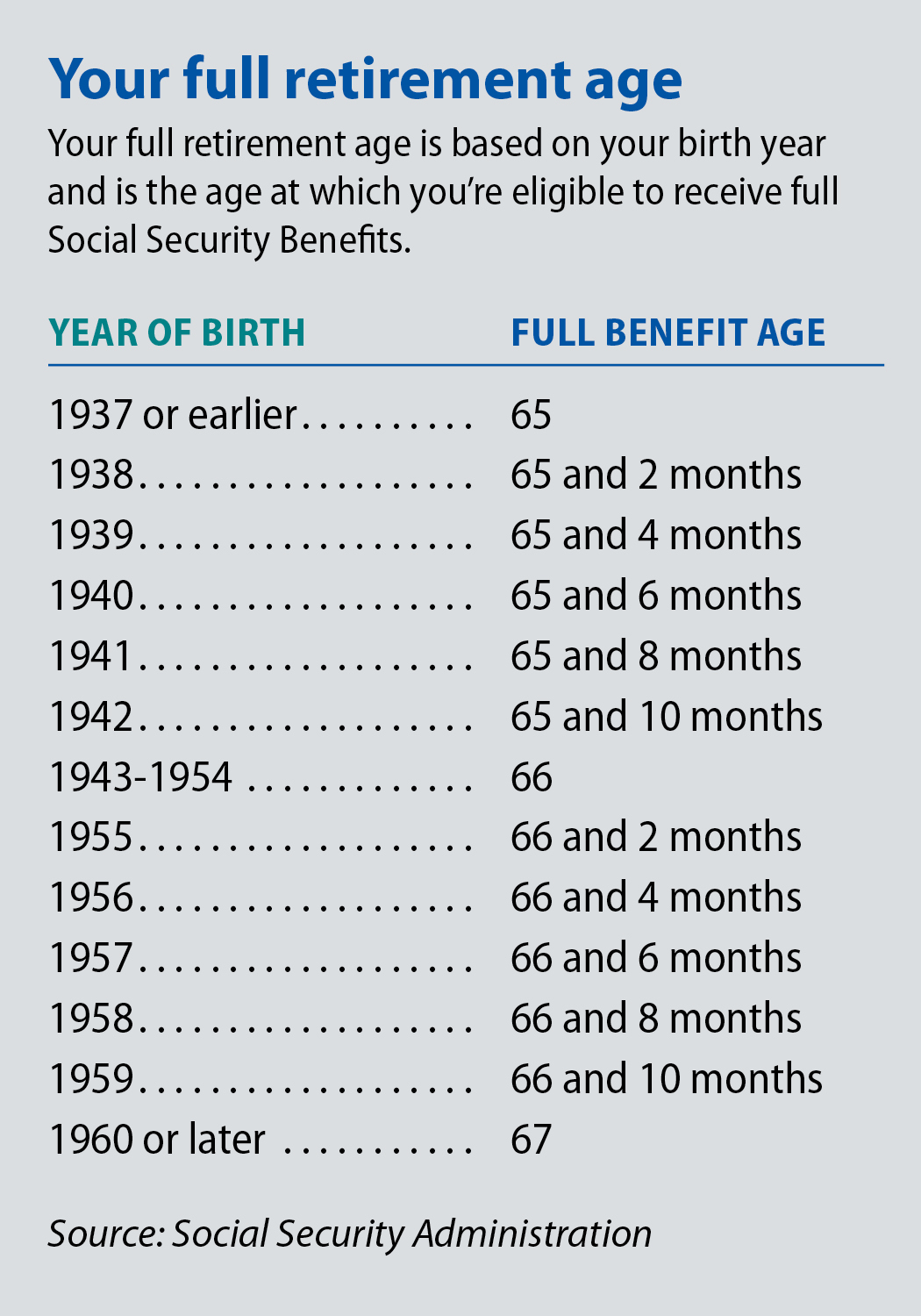
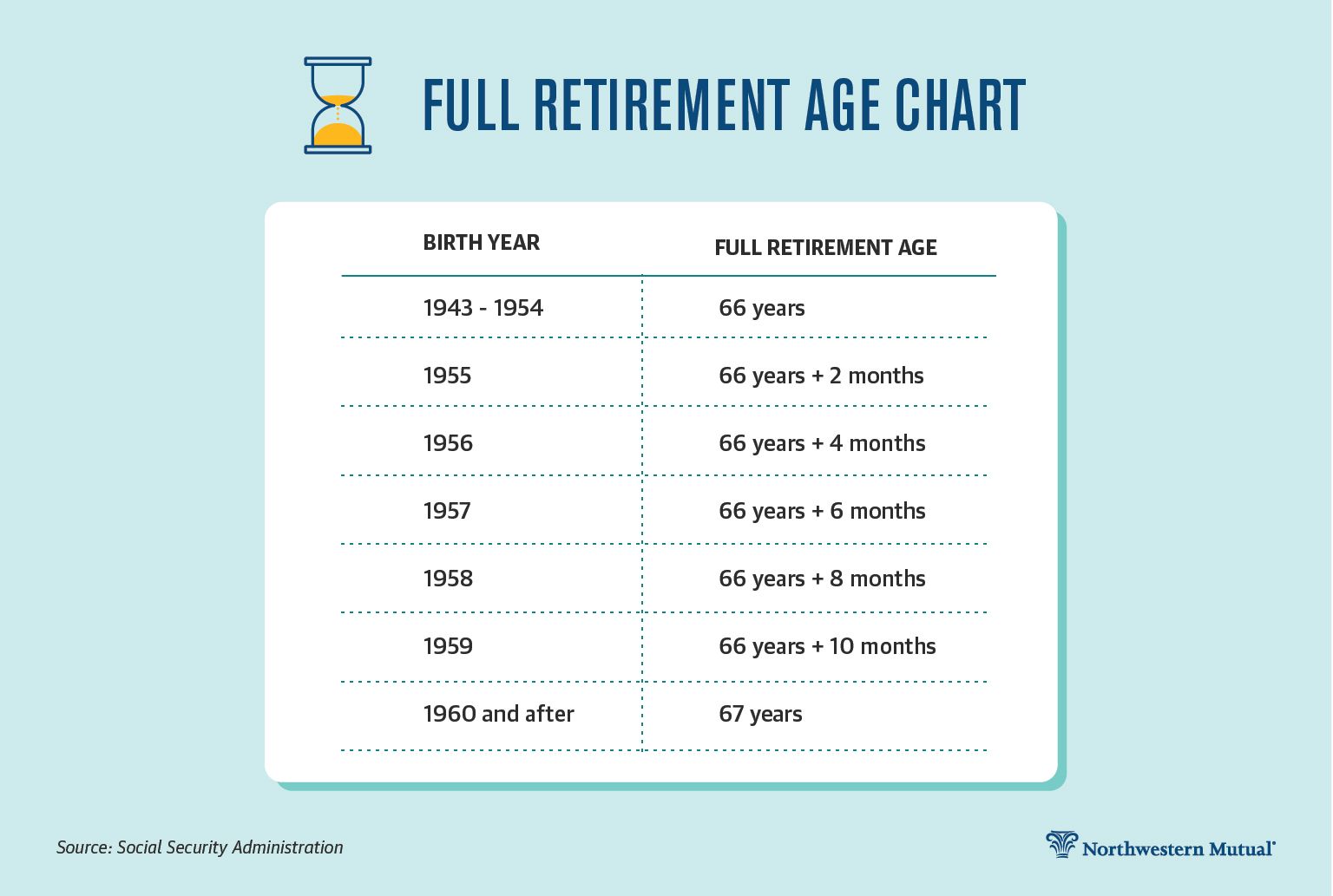
The Social Security Administration (SSA) uses a specific chart to determine an individual’s FRA based on their birth year. For those born in 1937 or earlier, the FRA was 65. For subsequent birth years, it gradually increased.
Here’s a simplified overview:
-
Born 1937 or earlier: FRA is 65
-
Born 1938: FRA is 65 and 2 months
-
Born 1939: FRA is 65 and 4 months
-
Born 1940: FRA is 65 and 6 months
-
Born 1941: FRA is 65 and 8 months
-
Born 1942: FRA is 65 and 10 months
-
Born 1943-1954: FRA is 66
-
Born 1955: FRA is 66 and 2 months
-
Born 1956: FRA is 66 and 4 months
-
Born 1957: FRA is 66 and 6 months
-
Born 1958: FRA is 66 and 8 months
-
Born 1959: FRA is 66 and 10 months
-
Born 1960 or later: FRA is 67
Knowing your precise FRA is the first step in making informed claiming decisions, as it serves as the benchmark for calculating benefit reductions or increases.
Why FRA Matters: Maximizing Your Standard Benefit
Your FRA is the pivotal point for your Social Security benefits. Claiming at your FRA means you receive exactly your calculated PIA, without any reduction for early claiming or any increase for delayed claiming. It represents the standard, unadjusted benefit amount you’ve earned. Understanding your FRA helps you assess the financial implications of choosing to claim benefits at other ages. It’s the baseline against which all other claiming scenarios are measured. For many, claiming at FRA strikes a balance between starting benefits sooner and receiving a substantial monthly payment.
The Difference Between Early, Full, and Delayed Retirement
The three primary claiming windows for Social Security retirement benefits are:
-
Early Retirement: You can start receiving benefits as early as age 62. However, claiming before your FRA results in a permanent reduction in your monthly benefit amount. The benefit is reduced by a certain percentage for each month you claim before your FRA.
-
Full Retirement: Claiming exactly at your FRA ensures you receive 100% of your PIA.
-
Delayed Retirement: You can choose to delay claiming benefits beyond your FRA, up to age 70. For each month you delay past your FRA, your monthly benefit increases through Delayed Retirement Credits (DRCs). This can significantly boost your monthly payment.
Each of these choices carries distinct financial consequences that require careful consideration in your overall retirement strategy.
Navigating Early Retirement: Pros and Cons
While your Full Retirement Age might be 66 or 67, the earliest you can typically start receiving Social Security retirement benefits is age 62. This option is popular for those who wish to leave the workforce sooner, but it comes with a significant trade-off: a permanently reduced monthly payment.
When Can You Claim Early? (Minimum Age: 62)
The earliest eligibility age for retirement benefits is 62. If you meet the work credit requirements (typically 40 credits or 10 years of work), you can apply for benefits starting in the month you turn 62. However, this decision has lasting financial implications. The Social Security Administration’s goal is for a person to receive roughly the same total amount of benefits over their lifetime, regardless of when they claim. Therefore, if you claim early, you receive benefits for more years, but each monthly payment is smaller.
The Impact of Benefit Reduction
The reduction for claiming early is substantial and permanent. The amount of the reduction depends on how many months you claim before your FRA. For example, if your FRA is 67 and you claim at 62, your monthly benefit will be reduced by approximately 30%. If your FRA is 66, claiming at 62 results in about a 25% reduction. This reduction factor is applied to your Primary Insurance Amount (PIA) and lasts for the rest of your life. While you receive payments for more years, the cumulative effect of a smaller monthly check can mean a significantly lower total lifetime benefit, especially if you live a long life.
Considerations for Financial Planning
Deciding to claim early should not be taken lightly and requires a thorough review of your financial situation:
-
Health and Life Expectancy: If you have health issues or a family history of shorter lifespans, claiming early might make sense to receive benefits while you can. Conversely, if you expect to live a long life, the cumulative loss from early claiming can be substantial.
-
Other Income Sources: Do you have sufficient savings, pensions, or other income streams to supplement the reduced Social Security payment? If Social Security will be your primary income, the reduction from early claiming could create financial hardship.
-
Continued Employment: If you plan to work while receiving benefits before your FRA, you might be subject to the Social Security earnings limit. Earning above this limit can lead to a temporary reduction or withholding of your benefits, which are later credited back to you at FRA, but it adds another layer of complexity to early claiming.
-
Spousal/Survivor Benefits: Early claiming can also impact the benefits your spouse or survivors might receive based on your record.
The Benefits of Delayed Retirement: Boosting Your Income
Just as claiming early reduces your monthly benefit, waiting beyond your Full Retirement Age (FRA) can significantly increase it. This strategy, known as delayed retirement, is a powerful tool for boosting your guaranteed retirement income.
Beyond Full Retirement Age: Earning Delayed Retirement Credits (DRCs)
You have the option to delay claiming your Social Security benefits beyond your Full Retirement Age, up until age 70. For every month you delay past your FRA, your monthly benefit amount increases. These increases are known as Delayed Retirement Credits (DRCs). These credits continue to accrue until you reach age 70, at which point your benefit amount maxes out, and there’s no further advantage to delaying.
How DRCs Work: A Percentage Increase
Delayed Retirement Credits are substantial. For those born in 1943 or later, your benefit increases by 8% for each full year you delay claiming past your FRA, up to age 70. This means if your FRA is 67, and you wait until age 70 to claim, your monthly benefit will be 124% of your Primary Insurance Amount (PIA). This 24% increase (8% per year for 3 years) is a guaranteed, inflation-adjusted boost that lasts for the rest of your life. This effectively means you could be receiving a benefit almost one-quarter higher than what you would have received at your FRA.
Strategic Planning for Maximum Lifetime Benefits
Delaying Social Security is often a strategic move for those who are in good health, have sufficient alternative income sources to bridge the gap, or simply wish to maximize their guaranteed income stream for later in life.
-
Longevity Hedge: A higher monthly payment provides an excellent hedge against outliving your other savings, especially if you expect to live a very long life. The guaranteed, inflation-adjusted income stream becomes increasingly valuable over time.
-
Spousal Benefits: If you are the higher-earning spouse, delaying your benefits can also increase the survivor benefit your spouse would receive if you pass away first, providing greater security for them.
-
Market Volatility: For those concerned about market volatility impacting their investment portfolios, a larger Social Security benefit offers a more predictable and stable income source, reducing reliance on potentially fluctuating investment returns.
-
Healthy Finances: Delaying benefits often works best for individuals who are still working, have substantial retirement savings, or can comfortably live off other income sources during the delay period.
Before deciding, it’s crucial to calculate the breakeven point – how long you’d need to live to make the larger delayed payment financially superior to starting earlier. This typically ranges from 12-15 years after your FRA, but it’s a personalized calculation.
Important Factors Beyond Age
While your birth year and claiming age are central to determining your Social Security benefits, several other critical factors play a significant role in the ultimate amount you receive and how those benefits interact with your overall financial situation.
Earning Record: The 35 Years Rule
Your Primary Insurance Amount (PIA) – the benefit you receive at your Full Retirement Age – is calculated based on your Average Indexed Monthly Earnings (AIME) over your 35 highest-earning years. The Social Security Administration (SSA) “indexes” your past earnings to account for changes in average wages over time, bringing earlier earnings up to a more current value. If you have fewer than 35 years of earnings, the SSA will use zeros for the missing years in the calculation. This can substantially lower your average and, consequently, your monthly benefit. Therefore, working at least 35 years, especially with consistent or increasing income, is vital for maximizing your PIA. If you’re nearing retirement and have some low-earning or zero-earning years in your top 35, continuing to work for a few more years, even part-time, could replace those low years with higher ones, leading to a bump in your benefit.
Spousal and Survivor Benefits
Social Security extends benefits beyond individual earnings. If you are married, divorced (under certain conditions), or a widow/widower, you may be eligible for benefits based on your current or former spouse’s earnings record.
-
Spousal Benefits: If your spouse is collecting retirement benefits, you might be eligible for spousal benefits, which can be up to 50% of their PIA. This is particularly beneficial if your own earned benefit is lower than your spousal benefit. You can claim spousal benefits as early as age 62, but they will be reduced if claimed before your FRA.
-
Survivor Benefits: If your spouse or former spouse dies, you may be eligible for survivor benefits. These can be up to 100% of the deceased worker’s benefit amount if you claim at your FRA as a widow/widower (or if you are caring for a child under 16 or disabled). Survivor benefits can be claimed as early as age 60 (or age 50 if disabled).
Understanding these auxiliary benefits is crucial for couples and individuals, as they can significantly impact overall household retirement income.
Taxation of Social Security Benefits
It’s a common misconception that Social Security benefits are entirely tax-free. For many beneficiaries, a portion of their benefits is subject to federal income tax. The amount that’s taxable depends on your “provisional income,” which is the sum of your adjusted gross income (AGI), any tax-exempt interest, and half of your Social Security benefits.
-
Up to 50% of benefits taxable: If your provisional income is between $25,000 and $34,000 for an individual, or $32,000 and $44,000 for a couple filing jointly.
-
Up to 85% of benefits taxable: If your provisional income exceeds $34,000 for an individual, or $44,000 for a couple filing jointly.
Additionally, some states also tax Social Security benefits, so it’s important to understand your state’s tax laws. Factoring potential taxes into your retirement budget is essential for accurate financial planning.
Working While Receiving Benefits: Earnings Limit
If you claim Social Security benefits before your Full Retirement Age (FRA) and continue to work, your benefits may be temporarily reduced or withheld if your earnings exceed an annual limit.
-
Before FRA: For every $2 you earn above the annual limit, $1 is withheld from your benefits.
-
In the year you reach FRA: For every $3 you earn above a different, higher limit, $1 is withheld from your benefits, up to the month you reach your FRA.
-
At or after FRA: Once you reach your FRA, the earnings limit no longer applies, and you can earn as much as you want without affecting your Social Security benefits.
Any benefits withheld due to the earnings limit are not lost forever; they are factored back into your benefit calculation when you reach your FRA, resulting in a slightly higher monthly payment. However, it’s a critical consideration for those planning a phased retirement or needing to work part-time while claiming early.
Financial Planning Strategies Around Your FRA
The decision of when to claim Social Security is one of the most significant financial choices you’ll make for retirement. It’s rarely an isolated decision but rather a cornerstone of a broader, integrated financial strategy.
Coordinating Social Security with Other Retirement Accounts (401k, IRA)
Optimizing your Social Security claiming strategy often involves coordinating it with withdrawals from your other retirement savings vehicles, such as 401(k)s, IRAs, and taxable investment accounts.
-
Bridging the Gap: If you decide to delay Social Security to earn Delayed Retirement Credits, you might draw more heavily from your 401(k) or IRA during those early retirement years (e.g., age 62-70) to cover living expenses. This strategy allows your Social Security benefit to grow, while potentially drawing down tax-deferred accounts before Required Minimum Distributions (RMDs) kick in at age 73 (for those born 1960 or later).
-
Tax Efficiency: Consider the tax implications. Drawing from pre-tax retirement accounts can increase your provisional income, potentially making more of your Social Security benefits taxable. Strategic withdrawals can help manage your tax bracket in retirement. For example, a Roth conversion ladder could be used in early retirement years before claiming Social Security to manage future RMDs and tax liability.
-
Income Diversification: A well-diversified retirement income stream includes Social Security, pensions (if applicable), and withdrawals from various investment accounts. Understanding how these pieces fit together ensures a robust and sustainable income plan.
Healthcare Costs in Retirement (Medicare)
Healthcare is often one of the largest and most unpredictable expenses in retirement. Social Security and Medicare are often linked, as most people enroll in Medicare (the federal health insurance program for those 65 and older) when they become eligible for Social Security.
-
Medicare Enrollment: While you can claim Social Security as early as 62, Medicare eligibility generally starts at age 65, regardless of your Social Security claiming age. If you’re delaying Social Security but retiring before 65, you’ll need to secure health insurance through an employer plan (if still working), COBRA, or the Affordable Care Act (ACA) marketplace until Medicare kicks in.
-
Premiums from Benefits: If you are receiving Social Security benefits, your Medicare Part B (medical insurance) premiums are typically deducted directly from your monthly Social Security check. This is an important budgeting consideration, as it reduces the net amount you receive. High-income earners may also pay an Income-Related Monthly Adjustment Amount (IRMAA) for Medicare Parts B and D.
-
Holistic Planning: Your healthcare needs and anticipated costs should influence your Social Security claiming strategy. A higher Social Security benefit might provide more disposable income to cover premiums, deductibles, and out-of-pocket medical expenses.
Seeking Professional Financial Advice
Given the complexity and personalized nature of Social Security decisions, consulting with a qualified financial advisor is highly recommended. A professional can help you:
-
Calculate Your Personalized Optimal Strategy: They can run projections based on your specific earnings history, life expectancy, marital status, and other income sources to determine the most beneficial claiming strategy for you and your family.
-
Integrate Social Security into Your Overall Plan: An advisor can help you see how your Social Security decision impacts your taxes, investment withdrawal strategies, estate planning, and spousal/survivor benefits.
-
Navigate Rules and Regulations: The rules surrounding Social Security, especially for divorced spouses, widows/widowers, or those working in retirement, can be intricate. An advisor can help clarify these complexities and ensure you don’t miss out on eligible benefits.
Making the right Social Security claiming decision requires careful consideration of numerous factors unique to your situation. By understanding your Full Retirement Age, the implications of early vs. delayed claiming, and how Social Security interacts with your other financial resources, you can make an informed choice that supports a secure and comfortable retirement.
aViewFromTheCave is a participant in the Amazon Services LLC Associates Program, an affiliate advertising program designed to provide a means for sites to earn advertising fees by advertising and linking to Amazon.com. Amazon, the Amazon logo, AmazonSupply, and the AmazonSupply logo are trademarks of Amazon.com, Inc. or its affiliates. As an Amazon Associate we earn affiliate commissions from qualifying purchases.