
In the vast ecosystem of the global financial markets, few symbols carry as much weight or recognition as “SPY.” For the novice investor, it may appear as just another ticker scrolling across a news ticker. For the institutional titan, it is an essential tool for liquidity and risk management. SPY is the ticker symbol for the SPDR S&P 500 ETF Trust, the first exchange-traded fund (ETF) listed in the United States and currently one of the most heavily traded investment vehicles in the world.

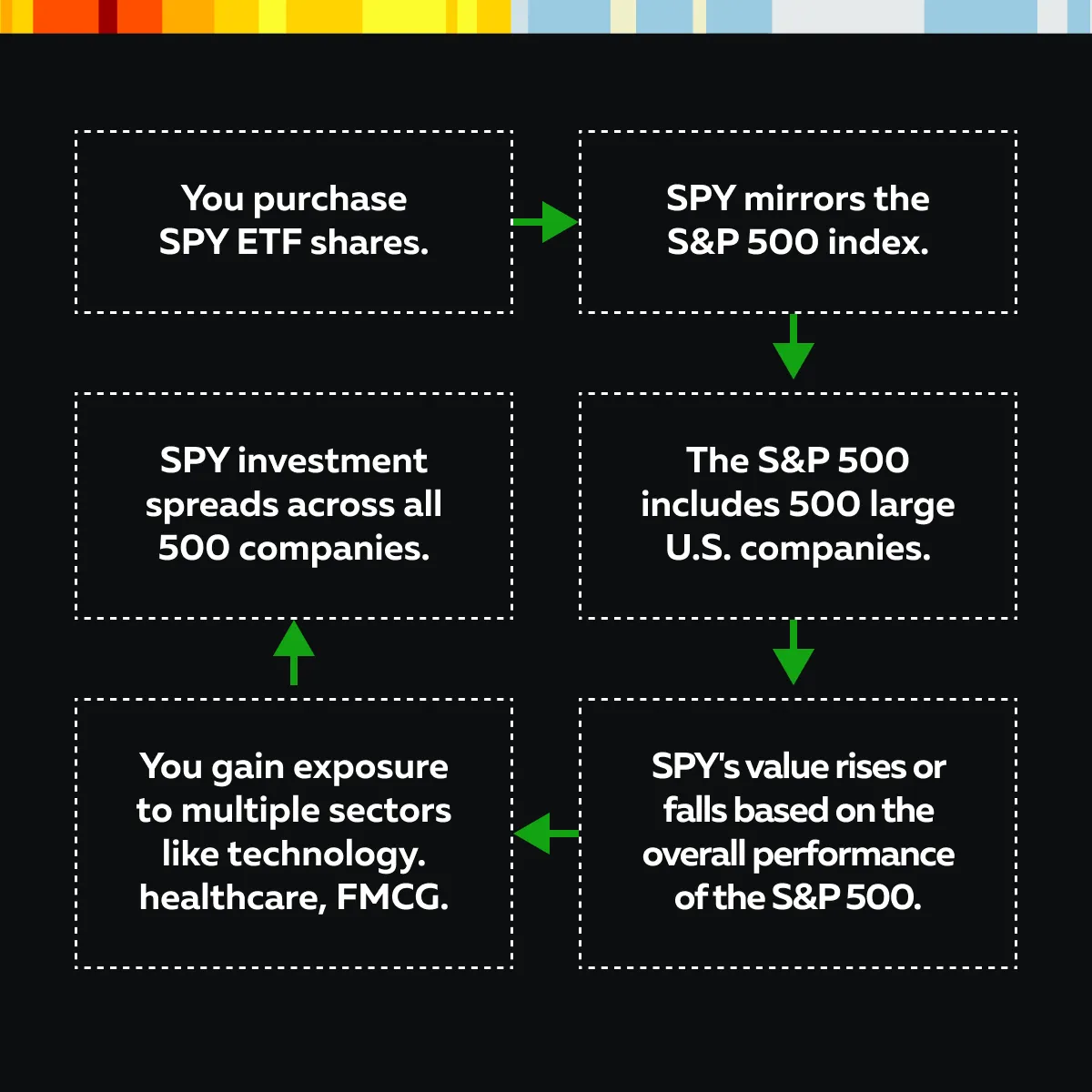
To understand SPY is to understand the bedrock of modern passive investing. It serves as a bridge between the average individual investor and the performance of the 500 largest publicly traded companies in the United States. By purchasing a single share of SPY, an investor effectively gains fractional ownership in a diversified basket of American corporate giants, ranging from technology leaders like Apple and Microsoft to industrial mainstays like Caterpillar and Union Pacific.
Understanding the Mechanics of the SPY ETF
The SPDR S&P 500 ETF Trust was launched in January 1993 by State Street Global Advisors. Its primary objective is simple yet profound: to track the price and yield performance of the S&P 500 Index. The S&P 500 itself is a market-capitalization-weighted index, meaning companies with the highest total market value have the greatest influence on the index’s movement.
The Role of State Street and the Unit Investment Trust Structure
Unlike many modern ETFs that are structured as open-end management companies, SPY is technically a Unit Investment Trust (UIT). This distinction is more than just legal jargon; it dictates how the fund operates. As a UIT, SPY must fully replicate its index. It holds a portfolio of the common stocks that comprise the S&P 500 in nearly the exact proportions as they appear in the index.
Furthermore, the UIT structure means that SPY has a specific expiration date in the distant future—though it is frequently extended—and it cannot reinvest dividends paid by the underlying companies back into the trust before distributing them to shareholders. Instead, these dividends are held in a non-interest-bearing account until they are paid out quarterly to SPY investors.
Market Capitalization Weighting
Because SPY tracks a market-cap-weighted index, it provides a snapshot of the U.S. economy’s “heavy hitters.” When a company like NVIDIA or Alphabet sees its stock price surge, its weight within the S&P 500 increases, and consequently, its weight within SPY increases. This ensures that the ETF is always skewed toward the companies that the market values most highly. This “survival of the fittest” mechanism means that failing companies naturally shrink in importance within the fund, while rising stars take up more space, providing a built-in layer of momentum and quality control.
Why SPY is the Gold Standard for Investors
Since its inception, SPY has grown to manage hundreds of billions of dollars in assets. Its popularity is not merely a result of being first to market, but rather a combination of factors that make it an ideal instrument for both long-term wealth accumulation and short-term tactical trading.
Unrivaled Liquidity and Tight Spreads
One of the most significant advantages of SPY is its liquidity. On any given day, tens of millions of shares of SPY change hands. For investors, high liquidity translates to “tight bid-ask spreads.” This means the difference between the price at which you can buy a share and the price at which you can sell it is usually just a penny. For large-scale institutional investors who need to move millions of dollars in or out of the market quickly, SPY is the only vehicle that offers the necessary depth without causing massive price fluctuations.
Diversification and Risk Mitigation
The mantra of “not putting all your eggs in one basket” is the core philosophy behind SPY. By owning SPY, an investor is diversified across eleven different sectors, including Technology, Healthcare, Financials, Consumer Discretionary, and Energy. If one sector, such as Retail, faces a downturn, the impact on the total portfolio may be offset by gains in another sector, such as Technology or Utilities. This diversification significantly reduces “unsystematic risk”—the risk associated with a specific company—leaving the investor primarily exposed to “systematic risk,” or the movement of the broader market.
Cost Efficiency and Accessibility
Before the advent of ETFs like SPY, an investor wanting to mirror the S&P 500 would have had to purchase all 500 individual stocks, incurring massive commission fees and balancing headaches. SPY charges an expense ratio of approximately 0.0945%. This means for every $10,000 invested, the annual fee is less than $10. This low-cost structure allows investors to keep a larger portion of their market returns compared to traditional actively managed mutual funds, which often charge 1% or more.
Comparing SPY with Other S&P 500 ETFs
While SPY was the pioneer, it is no longer the only option for those seeking S&P 500 exposure. Major competitors include the iShares Core S&P 500 ETF (IVV) and the Vanguard S&P 500 ETF (VOO). While all three track the same index, subtle differences exist that may influence an investor’s choice.
SPY vs. VOO and IVV: The Expense Ratio Debate
For the long-term “buy and hold” investor, the expense ratio is often the deciding factor. Both VOO and IVV generally offer lower expense ratios than SPY, often hovering around 0.03%. While a difference of 0.06% may seem negligible, over several decades of compounding on a large balance, it can amount to thousands of dollars. Therefore, retail investors who plan to hold their positions for years often gravitate toward VOO or IVV.
Why Traders Still Prefer SPY
Despite having a slightly higher expense ratio, SPY remains the king of the trading floor. The reason lies in the options market. The options chain for SPY is the most robust and liquid in the world, with expirations available for almost every day of the week. Professional traders, hedge funds, and institutions use SPY options to hedge their portfolios, speculate on market volatility, or generate income. The sheer volume of the SPY options market makes it a superior tool for sophisticated financial strategies that VOO and IVV cannot currently match.
Structural Nuances
As mentioned, SPY is a Unit Investment Trust, whereas VOO and IVV are structured as open-end funds. Open-end funds have more flexibility; they can lend out the securities in their portfolio to short-sellers and pocket the fees to offset expenses for the fund’s benefit. They can also reinvest dividends immediately. For a retail investor, these differences are minor, but for a financial purist, the structural transparency of the UIT model used by SPY offers a unique form of “pure” index tracking.
Strategic Implementation: How to Use SPY in a Portfolio
Whether you are a young professional starting your retirement journey or an experienced investor looking to stabilize your holdings, SPY offers several strategic applications.
Long-Term Wealth Accumulation
The most common use of SPY is as a “core” holding. Historical data shows that the S&P 500 has provided an average annual return of roughly 10% over long periods (before adjusting for inflation). By utilizing a dollar-cost averaging (DCA) strategy—investing a fixed amount into SPY every month—investors can benefit from the long-term growth of the American economy while smoothing out the impact of market volatility.
Income Generation Through Dividends
While SPY is primarily viewed as a growth vehicle, it also serves as a reliable source of dividend income. The companies within the S&P 500 include many “Dividend Aristocrats” that have increased their payouts for decades. SPY pays out these dividends quarterly, which can be taken as cash for living expenses or, more effectively, reinvested to purchase more shares, accelerating the power of compounding.
Tactical Asset Allocation and Hedging
For more active investors, SPY is a tool for expressing a “macro” view. If an investor believes the overall market is overvalued, they might reduce their SPY position or buy “put” options on SPY to protect their other investments. Conversely, if they believe a market recovery is imminent, they can quickly increase their exposure to the entire U.S. equity market through a single purchase of SPY.

The Future of SPY and Index Investing
The rise of SPY has been a central pillar in the massive shift from active to passive investing. For decades, stock pickers and fund managers attempted to “beat the market,” only for the majority to underperform the S&P 500 after fees were considered. SPY democratized the market, proving that for most people, “joining” the market is more profitable than trying to outsmart it.
As we look toward the future, the influence of SPY continues to grow. It has survived the Dot-com bubble, the 2008 Financial Crisis, and the pandemic-induced volatility of 2020, each time rebounding to reach new highs alongside the companies it tracks. While new financial products like thematic ETFs (focused on AI or clean energy) and crypto-assets capture headlines, SPY remains the reliable “North Star” of the investment world.
In conclusion, SPY is much more than a ticker symbol; it is a financial innovation that changed the way the world invests. It offers a combination of transparency, liquidity, and diversification that was once reserved only for the wealthiest individuals. For anyone asking “what is SPY in the stock market,” the answer is simple: it is the most efficient way to own a piece of the American dream, packaged into a single, tradable share. Whether you are seeking to build a retirement nest egg or navigate the complexities of intraday trading, SPY provides the foundation upon which modern portfolios are built.
aViewFromTheCave is a participant in the Amazon Services LLC Associates Program, an affiliate advertising program designed to provide a means for sites to earn advertising fees by advertising and linking to Amazon.com. Amazon, the Amazon logo, AmazonSupply, and the AmazonSupply logo are trademarks of Amazon.com, Inc. or its affiliates. As an Amazon Associate we earn affiliate commissions from qualifying purchases.