
In the vast and often complex world of finance, certain terms become ubiquitous, yet their precise meaning can elude even diligent individuals. “SPX stock” is one such phrase that frequently appears in discussions about market performance, investment strategies, and economic health. However, a crucial clarification is needed right from the start: there is no single “SPX stock.” The term “SPX” does not refer to an individual company’s share, but rather to the ticker symbol for the S&P 500 Index. Understanding this distinction is fundamental for anyone looking to navigate the U.S. stock market with confidence and make informed investment decisions.
The S&P 500 Index, or simply the S&P 500, is far more than just a list of companies; it is a meticulously constructed benchmark that serves as a vital barometer for the overall health and direction of the American economy and its equity markets. For decades, it has been recognized globally as a bellwether for large-cap U.S. stocks, reflecting the performance of the nation’s leading corporations. This article will delve into what the S&P 500 (SPX) truly represents, why it holds such significance for investors, how one can gain exposure to it, and critical strategies for incorporating it into a robust financial plan.
Understanding the S&P 500 Index (SPX)
To fully grasp the significance of “SPX,” we must first demystify what a stock market index is and how the S&P 500 is specifically constructed. It’s the foundation upon which much of modern financial analysis and passive investing rests.
What is a Stock Market Index?
At its core, a stock market index is a statistical measure that tracks the performance of a hypothetical portfolio of stocks. It acts as a representative sample of a particular segment of the market or the market as a whole. Instead of monitoring thousands of individual stocks, investors and analysts can look at an index to gauge market sentiment, assess economic trends, and compare the performance of their own investments or active fund managers. Indices are invaluable tools, providing a snapshot of market activity and health without the granular detail of every single security. They simplify complex market dynamics into a single, digestible number.
The Composition of the S&P 500
The S&P 500 is arguably the most famous and widely followed stock market index globally. It comprises 500 of the largest publicly traded companies in the United States, selected by a committee at S&P Dow Jones Indices. Unlike some other indices that might focus on specific sectors or company sizes, the S&P 500 aims to reflect the broad U.S. large-cap equity market. The companies included span a wide array of industries, from technology giants and financial institutions to healthcare leaders and consumer staples producers, ensuring a diversified representation of the American economy.
The selection criteria for inclusion are stringent and include factors such as market capitalization, liquidity, profitability, and sector representation to ensure the index remains a relevant and accurate reflection of the market. Crucially, the S&P 500 is a market-capitalization-weighted index. This means that companies with larger market values (share price multiplied by the number of shares outstanding) have a greater impact on the index’s performance than companies with smaller market values. For example, Apple or Microsoft, due to their immense market caps, will influence the S&P 500’s movement more significantly than a smaller company within the index. This weighting methodology naturally gives more prominence to the most successful and largest firms, ensuring the index reflects the leading edge of corporate America.
How the SPX is Calculated and Maintained
The calculation and maintenance of the S&P 500 are handled by S&P Dow Jones Indices, a division of S&P Global. The value of the index is determined by summing the market capitalization of all 500 constituent companies and then dividing by a proprietary divisor. This divisor is adjusted for corporate actions such as stock splits, mergers, and spin-offs to ensure the index’s continuity and prevent these events from artificially distorting its value.
The index composition is not static; it is regularly reviewed and rebalanced. Companies can be added or removed from the S&P 500 due to mergers and acquisitions, changes in market capitalization, or shifts in profitability and other eligibility criteria. This dynamic process ensures that the index remains relevant and continues to represent the leading U.S. companies, thereby maintaining its integrity as a key economic benchmark. For investors, this active management by S&P Dow Jones Indices means that an investment tracking the S&P 500 is continuously adjusted to reflect the most current state of the large-cap U.S. market.
Why the S&P 500 (SPX) Matters to Investors
The S&P 500’s prominence extends beyond mere market tracking; it serves several critical functions that make it indispensable for both individual and institutional investors. Its widely accepted status underscores its role as a cornerstone of modern investing.
A Key Economic Barometer
Often referred to as the pulse of the American economy, the S&P 500 is a widely cited economic indicator. Its performance is frequently reported in financial news and is used by economists, policymakers, and business leaders to gauge the health of corporate America and predict broader economic trends. A rising S&P 500 often signals investor confidence, robust corporate earnings, and economic growth, while a declining index can indicate pessimism, economic slowdowns, or market instability.
For professional investors and fund managers, the S&P 500 is the quintessential benchmark. Active fund managers often measure their success (or lack thereof) by comparing their fund’s returns against the S&P 500’s performance over various periods. Beating the index is a mark of superior skill, while underperforming it often leads to scrutiny. This benchmarking role underscores its importance in evaluating investment strategies and managerial prowess.
Diversification and Risk Management
One of the most compelling reasons for investors to consider exposure to the S&P 500 is the inherent diversification it offers. Instead of trying to pick individual winning stocks, which carries significant company-specific risk, investing in an S&P 500 tracking vehicle provides immediate exposure to 500 different large U.S. companies across virtually all major sectors. This broad diversification significantly reduces idiosyncratic risk – the risk associated with a single company performing poorly. If one or a few companies within the index underperform, their impact on the overall index is diluted by the performance of the other 490+ companies.
This built-in diversification is a cornerstone of prudent risk management. It allows investors to participate in the general growth of the U.S. economy without having to undertake extensive research into individual companies or bear the concentrated risk of holding only a handful of stocks. For many, it’s the simplest and most effective way to gain broad market exposure.
Historical Performance and Long-Term Growth
Historically, the S&P 500 has demonstrated a powerful upward trajectory over the long term, despite experiencing numerous periods of volatility, corrections, and even bear markets. Over many decades, its average annual return has been approximately 10-12% (before inflation), though past performance is not indicative of future results. This robust historical performance highlights the power of compounding and the resilience of the American corporate sector.
Investing in the S&P 500 allows investors to tap into this long-term growth potential. For patient investors with a long time horizon, consistent investment in an S&P 500 tracking fund can be a highly effective strategy for wealth accumulation. It embodies the principle that while market timing is difficult, time in the market is often a key determinant of success. The index has weathered wars, recessions, technological revolutions, and global pandemics, consistently recovering and reaching new highs over extended periods.
How to Invest in the S&P 500 (SPX)
Since “SPX stock” doesn’t exist as a single share, investors gain exposure to the S&P 500 through various financial products designed to mirror its performance. These methods offer different levels of accessibility, cost structures, and trading flexibilities.
Index Funds (Mutual Funds)
One of the most common and accessible ways for retail investors to track the S&P 500 is through S&P 500 index mutual funds. These are passively managed funds that hold a portfolio of stocks designed to replicate the composition and performance of the S&P 500. Investors buy shares in the fund, and the fund managers, instead of actively picking stocks, simply buy and hold the stocks in the index according to their weightings.

Benefits of S&P 500 index mutual funds include broad diversification, typically low expense ratios compared to actively managed funds, and professional management (albeit passive). They are an excellent choice for long-term investors who prefer to set it and forget it, making regular contributions to build wealth over time. Examples include Vanguard 500 Index Fund (VFIAX) or Fidelity 500 Index Fund (FXAIX).
Exchange-Traded Funds (ETFs)
Exchange-Traded Funds (ETFs) tracking the S&P 500 have become incredibly popular due to their unique combination of features. Like index mutual funds, S&P 500 ETFs also hold the underlying stocks of the index to replicate its performance. However, unlike mutual funds that trade only once a day after market close, ETFs trade like individual stocks on major exchanges throughout the trading day. This offers investors greater flexibility to buy or sell shares at market prices whenever the market is open.
Prominent examples of S&P 500 ETFs include SPDR S&P 500 ETF Trust (SPY), iShares Core S&P 500 (IVV), and Vanguard S&P 500 ETF (VOO). These ETFs typically boast very low expense ratios, high liquidity, and can offer tax efficiency benefits compared to traditional mutual funds. They are ideal for investors who appreciate the flexibility of stock trading combined with the diversification and low cost of an index fund.
Futures Contracts
For more sophisticated investors and institutional traders, S&P 500 futures contracts offer a leveraged way to speculate on the future direction of the index. The E-mini S&P 500 futures (ticker symbol ES) are particularly popular. A futures contract is an agreement to buy or sell a specific asset (in this case, the S&P 500 index value) at a predetermined price on a future date.
Investing in futures involves significant leverage and can lead to substantial gains or losses very quickly. It requires a deep understanding of market dynamics, margin requirements, and risk management. Futures are typically not recommended for most retail investors due to their complexity and heightened risk profile, serving more as tools for professional traders, hedgers, and large institutions.
Options on SPX
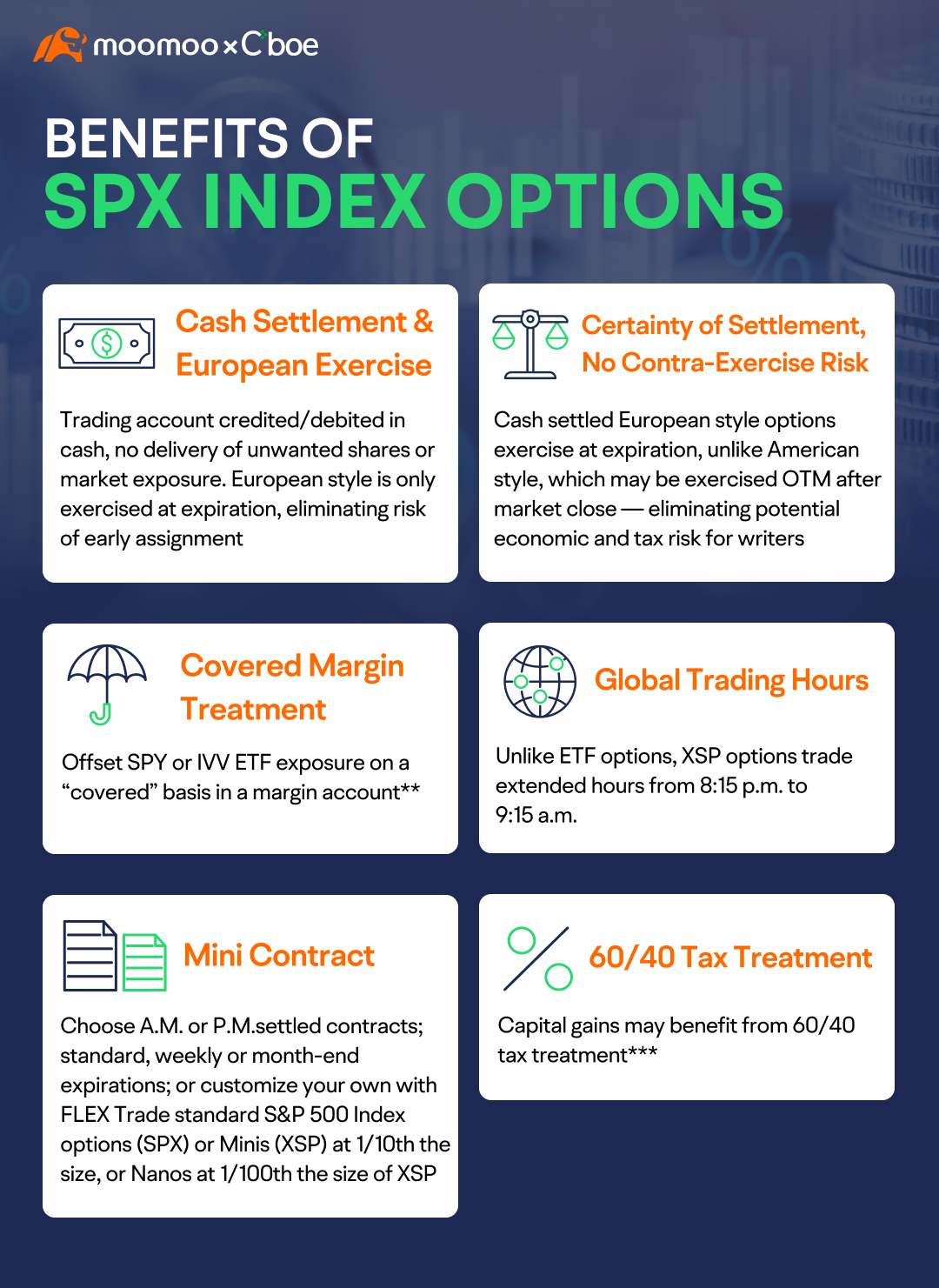
Options contracts on the S&P 500 (with the ticker SPX) provide another layer of sophisticated trading strategies. These contracts give the holder the right, but not the obligation, to buy (call option) or sell (put option) the value of the S&P 500 at a specific price (strike price) on or before a certain date (expiration date). SPX options are generally cash-settled, meaning no physical delivery of stocks occurs; rather, the difference in value is paid in cash.
SPX options are utilized by experienced traders for speculation, income generation (e.g., selling covered calls on S&P 500 ETFs), and sophisticated hedging strategies against existing portfolios. Like futures, options trading involves considerable risk, especially naked option selling, and is generally unsuitable for novice investors. They demand an advanced understanding of pricing models, volatility, and market timing.
Strategies and Considerations for S&P 500 Investors
Integrating the S&P 500 into an investment portfolio requires more than just choosing a fund; it involves understanding long-term strategies, managing costs, and ensuring a holistic approach to diversification.
Long-Term vs. Short-Term Approaches
For the vast majority of retail investors, a long-term buy-and-hold strategy is the most effective approach when investing in the S&P 500. This involves consistently investing in an S&P 500 index fund or ETF and holding it for many years, often decades, to benefit from the power of compounding and the index’s historical upward trend. Attempting to time the market (buying low and selling high in the short term) is notoriously difficult and often leads to worse returns than simply staying invested.
Short-term trading, using S&P 500 futures or options, is reserved for highly experienced traders with robust risk management frameworks. This approach involves frequent buying and selling to capitalize on short-term price fluctuations and is fundamentally different from a long-term investment strategy. It demands active monitoring, deep market knowledge, and can incur significant transaction costs.
Dollar-Cost Averaging
A highly recommended strategy for long-term investors in the S&P 500 is dollar-cost averaging (DCA). This involves investing a fixed amount of money at regular intervals (e.g., monthly or quarterly), regardless of the market’s current price. When the S&P 500’s value is high, your fixed investment buys fewer shares of the fund. When the value is low, it buys more shares.
Over time, DCA helps to smooth out the average cost of your investment, reducing the risk of making a large investment just before a market downturn. It takes the emotion out of investing and is a disciplined approach that benefits from market volatility by consistently buying shares at various price points. This strategy is particularly powerful when combined with a long-term horizon.
Expense Ratios and Fees
When choosing an S&P 500 index fund or ETF, paying close attention to the expense ratio is paramount. The expense ratio is the annual fee charged by the fund as a percentage of your total investment. Since S&P 500 funds are passively managed, their performance is largely dictated by how closely they track the index, and lower fees directly translate to higher net returns for the investor over time.
Even a difference of 0.10% or 0.20% in an expense ratio can amount to tens of thousands of dollars in lost returns over several decades due to the power of compounding. Investors should seek out funds with the lowest possible expense ratios, as there is often fierce competition among providers to offer the most cost-effective S&P 500 tracking products. Brokerage commissions for ETFs (though many brokers now offer commission-free ETF trading) and other potential account fees should also be considered.
Diversification Beyond the S&P 500
While investing in the S&P 500 offers excellent diversification within the large-cap U.S. equity market, it’s crucial to remember that it is still primarily focused on one asset class (U.S. large-cap stocks) in one country. For truly comprehensive portfolio diversification, investors should consider broadening their holdings to include:
-
International Stocks: Exposure to developed and emerging markets outside the U.S. can provide additional growth opportunities and reduce country-specific risk.
-
Bonds: Fixed-income investments like government or corporate bonds can provide stability, income, and act as a hedge against equity market volatility.
-
Other Asset Classes: Depending on an investor’s goals and risk tolerance, alternatives like real estate, commodities, or even small allocations to private equity could be considered.
A well-rounded portfolio typically involves strategic allocations across various asset classes, aligning with the investor’s individual risk tolerance, time horizon, and financial goals. The S&P 500 can serve as a strong core holding, but it should be part of a broader, diversified investment strategy.

Conclusion
The phrase “SPX stock” is a common misnomer, referring not to an individual stock but to the S&P 500 Index – a critical benchmark for the U.S. equity market. Comprising 500 of America’s largest publicly traded companies, the S&P 500 (SPX) is an indispensable tool for investors seeking broad market exposure, diversification, and long-term growth potential. It serves as a vital economic barometer, a benchmark for investment performance, and a core component of countless investment portfolios.
For most investors, gaining exposure to the S&P 500 is best achieved through low-cost index mutual funds or exchange-traded funds (ETFs) that passively track the index. By employing strategies like dollar-cost averaging and focusing on minimal expense ratios, individuals can harness the historical power of the S&P 500 to build substantial wealth over time. While advanced instruments like futures and options exist for sophisticated traders, the simplicity and effectiveness of passive S&P 500 investing remain a cornerstone of sound financial planning for the majority. Understanding “what is SPX” is the first step toward leveraging this powerful index for a more secure financial future.
aViewFromTheCave is a participant in the Amazon Services LLC Associates Program, an affiliate advertising program designed to provide a means for sites to earn advertising fees by advertising and linking to Amazon.com. Amazon, the Amazon logo, AmazonSupply, and the AmazonSupply logo are trademarks of Amazon.com, Inc. or its affiliates. As an Amazon Associate we earn affiliate commissions from qualifying purchases.