
In the landscape of modern fitness, the intersection of biometric data and software engineering has given rise to a new era of “quantified self” training. At the forefront of this movement is Orangetheory Fitness, a boutique fitness brand that has transformed the traditional workout into a data-driven experience. Central to this technological ecosystem is the “Splat Point,” a proprietary metric that serves as the primary KPI (Key Performance Indicator) for members. While casual observers might see it as a simple score, a deeper technical analysis reveals a sophisticated integration of wearable hardware, cloud computing, and algorithmic feedback loops designed to optimize human performance through real-time data visualization.

The Architecture of Biometric Tracking: Beyond the Wristband
To understand Splat Points, one must first understand the hardware-software stack that generates them. Unlike a standard gym session where progress is tracked through subjective feeling or manual logging, the Orangetheory environment functions as a localized Internet of Things (IoT) network.
The Role of Optical Heart Rate Sensors
The journey of a Splat Point begins with the OTbeat wearable line. These devices primarily utilize Photoplethysmography (PPG) technology. By emitting green light onto the skin and measuring the light absorption caused by blood flow, the sensor’s optical engine calculates the wearer’s pulse in real-time. This raw analog signal is processed via on-board firmware to filter out “noise”—such as arm movement or sweat interference—before being converted into a digital heart rate value. The accuracy of these sensors is paramount, as the entire gamification engine relies on the precision of the millisecond-by-millisecond data stream.
Proprietary Algorithms and the “Orange Zone”
Once the heart rate is digitized, it is passed through a proprietary algorithm to determine the user’s intensity level relative to their maximum heart rate (MHR). The system categorizes exertion into five color-coded zones: Grey, Blue, Green, Orange, and Red. A Splat Point is mathematically defined as one minute spent in the Orange or Red zones—specifically, at 84% or higher of the individual’s predicted or calculated MHR.
The technical challenge lies in the calculation of the MHR itself. Historically, fitness tech relied on the simplistic “220 minus age” formula, which suffers from significant statistical variance. Orangetheory’s software stack has evolved to include adaptive algorithms that analyze a member’s last 20 workouts. By applying machine learning to historical performance data, the system can recalibrate a user’s heart rate thresholds, ensuring the “Splat Point” remains a scientifically valid measure of high-intensity effort rather than a static, and potentially inaccurate, estimate.
Real-Time Data Synchronization and IoT Integration
The true technological feat of the Orangetheory ecosystem is the seamless synchronization between the wearable device and the studio’s display architecture. Utilizing a combination of ANT+ and Bluetooth Low Energy (BLE) protocols, the OTbeat devices transmit data to localized hubs positioned throughout the studio. These hubs aggregate the data and push it to a central server, which then broadcasts the live stats to large-scale LED monitors and individual “OTconnect” tablets mounted on treadmills and rowing machines. This real-time telemetry allows for a low-latency feedback loop, enabling the user to adjust their physical output instantly based on the digital visualization of their biometric state.
Understanding the Algorithm: The Science of High-Intensity Interval Training (HIIT)
The Splat Point is more than a digital badge; it is a software-driven representation of Excess Post-Exercise Oxygen Consumption (EPOC). From a technical standpoint, the goal of the algorithm is to guide the user into a physiological state where the body consumes oxygen at a higher rate for hours after the workout has ended.
Maximum Heart Rate (MHR) Formulas: From Tanaka to Personalized Baselines
The transition from the Tanaka formula to personalized heart rate sensors marks a significant shift in fitness tech. The Tanaka formula [208 − (0.7 × age)] was long considered the gold standard for software-based HR tracking. However, Orangetheory’s shift toward “MaxHR 2.0” represents an move toward big data analytics. By leveraging a cloud-based database of millions of individual workouts, the company can deploy a more nuanced algorithmic model. This model accounts for cardiovascular efficiency and “heart rate drift,” providing a more accurate trigger for when a Splat Point should be awarded.
The Five-Zone Interval Training Logic
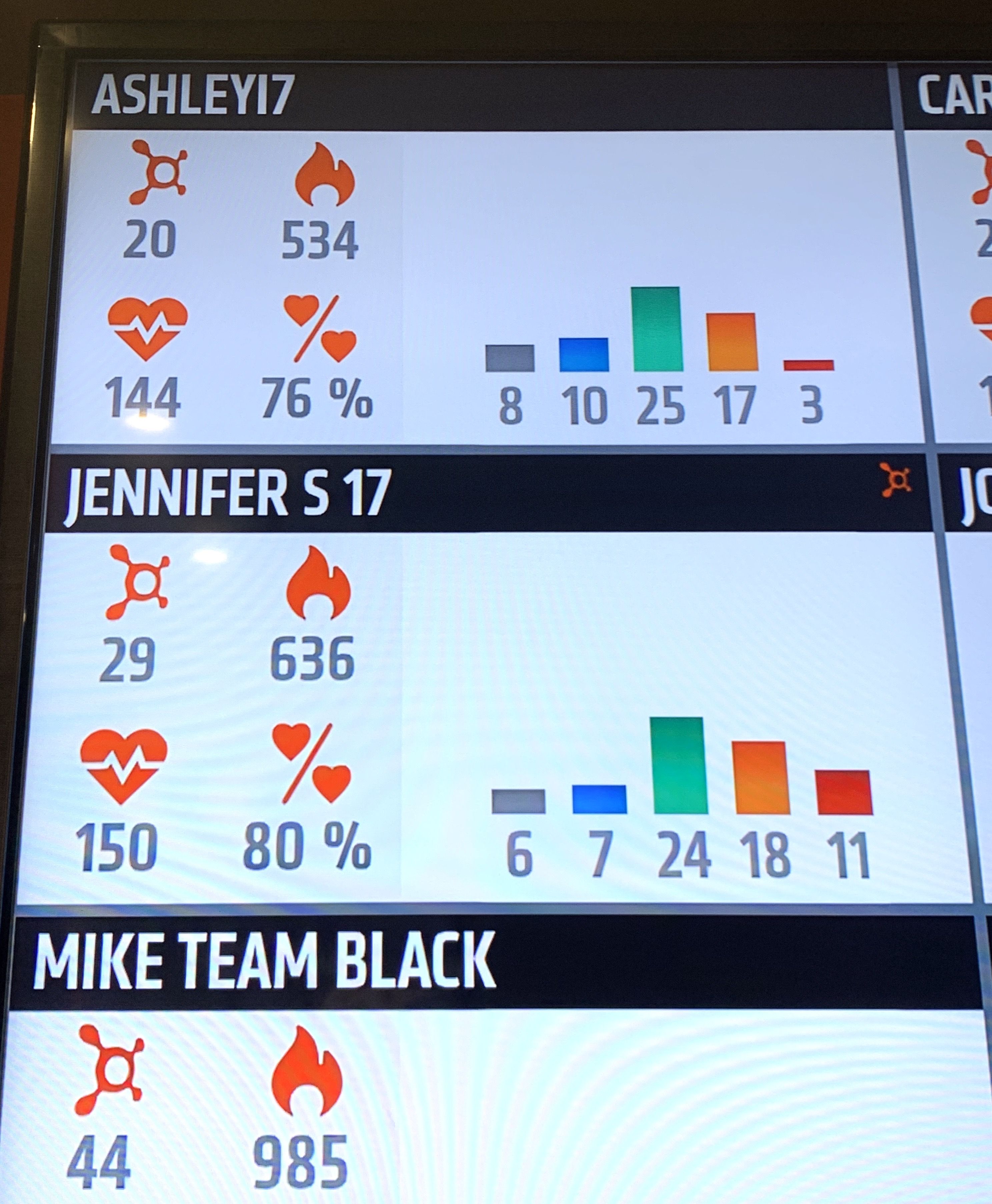
The software logic governing the workout is based on the principles of interval training. The Grey and Blue zones represent recovery and low-intensity activity. The Green zone (71–83% MHR) represents “base pace” or steady-state aerobic activity. The Orange (84–91%) and Red (92–100%) zones are where Splat Points are “earned.” The objective programmed into the system is for users to achieve 12 or more Splat Points per session. This specific threshold is not arbitrary; it is the algorithmic “sweet spot” designed to trigger the hormonal and metabolic responses associated with EPOC, or the “afterburn effect.”
EPOC: The Science Behind the Metric

In technical terms, EPOC is the measurable increase in oxygen intake following strenuous activity, intended to erase the “oxygen debt” created during the workout. The Splat Point serves as a proxy metric for this state. By tracking the duration of anaerobic exertion, the software can predict the likelihood of elevated metabolic activity for up to 24–36 hours post-workout. For the user, this transforms a complex biological process into a simple, actionable data point: 12 points equals success.
Gamification and the User Interface of Performance
A key component of Orangetheory’s success is its use of gamification. By turning physiological effort into a numerical score, the platform leverages psychological triggers to drive engagement and retention.
Feedback Loops and Psychological Incentivization
The user interface (UI) design of the Orangetheory app and in-studio screens is optimized for “glanceable” information. During high-intensity intervals, users have limited cognitive bandwidth. Therefore, the UI uses color psychology (the transition from Green to Orange) and numerical accumulation (the rising Splat Point count) to provide immediate positive reinforcement. This creates a powerful dopamine-driven feedback loop where the digital reward (the point) reinforces the physical effort.
The Cloud Ecosystem: OTconnect and App Synchronization
Post-workout, the data is not lost; it is instantly uploaded to the Orangetheory cloud. The “OTconnect” platform serves as the middleware that bridges the gap between the studio hardware and the member’s mobile device. Within seconds of the class ending, the member receives a performance summary—an “automated report” of their biometric journey. This includes total Splat Points, calories burned, average heart rate, and time spent in each zone.
From a data management perspective, this represents a significant volume of time-series data. Each workout generates thousands of data points per user. The ability of the mobile app to visualize this data—offering month-over-month comparisons, trend lines, and personal records—turns a single workout into a chapter in a larger “digital fitness narrative.”
Visualizing Progress: Data Analytics for Long-Term Engagement
The app’s dashboard uses advanced data visualization techniques to show “Splat Point Trends.” This allows users to see if they are becoming more efficient. For instance, if a user consistently earns 30 Splat Points, it may indicate a need to recalibrate their base pace or that their cardiovascular system has adapted, requiring the algorithm to adjust their MaxHR. This interaction between user performance and algorithmic adjustment is a classic example of a dynamic software system optimizing for human growth.
The Future of Wearable Tech in Boutique Fitness
As we look toward the future of fitness technology, the Splat Point model serves as a blueprint for how AI and deeper integration could further personalize the health experience.
AI-Driven Personalization and Adaptive Thresholds
The next frontier for Splat Points is predictive analytics. Future iterations of the software could potentially predict a user’s “readiness score” by analyzing sleep data and heart rate variability (HRV) from third-party devices before they even step into the studio. AI could then adjust the Splat Point threshold for that specific day, acknowledging that a user’s “Orange Zone” may be lower on a day when they are fatigued or recovering from illness.
Integration with Health Ecosystems
Orangetheory has already begun integrating with broader tech ecosystems, most notably through the “OTbeat Link,” which allows Apple Watch users to sync their device directly with the studio’s software. This interoperability is crucial. By allowing the “Splat Point” to live within the Apple Health or Google Fit ecosystems, Orangetheory ensures its proprietary metric remains a relevant part of the user’s comprehensive health data profile.
Privacy and Data Security in Biometric Tracking
As with any platform collecting sensitive biometric data, security is a paramount concern. The transition of Splat Point data from a wearable to a localized hub, and finally to the cloud, requires robust encryption protocols. Protecting user privacy while maintaining the “community” aspect of the platform—where users can see their names and stats on a public leaderboard—requires a sophisticated balance of data anonymization and secure authentication.
In conclusion, the Splat Point is far more than a marketing gimmick; it is a sophisticated application of biometric technology, IoT connectivity, and data science. By distilling complex physiological processes into a single, gamified metric, Orangetheory has created a high-tech bridge between the physical and digital worlds, proving that in the future of fitness, data is the ultimate motivator.
aViewFromTheCave is a participant in the Amazon Services LLC Associates Program, an affiliate advertising program designed to provide a means for sites to earn advertising fees by advertising and linking to Amazon.com. Amazon, the Amazon logo, AmazonSupply, and the AmazonSupply logo are trademarks of Amazon.com, Inc. or its affiliates. As an Amazon Associate we earn affiliate commissions from qualifying purchases.