
Speed droop is a fundamental concept in control systems, particularly critical in power generation and mechanical engineering, that describes the intentional decrease in the output speed (or frequency) of a prime mover as its load increases. It is a built-in characteristic of governors, the devices responsible for regulating engine or turbine speed, designed to ensure stability, proper load sharing among parallel-operating units, and overall system reliability. Without speed droop, maintaining a stable and synchronized power grid would be an incredibly complex, if not impossible, task, prone to instability and severe operational challenges.
The Core Concept of Governor Control
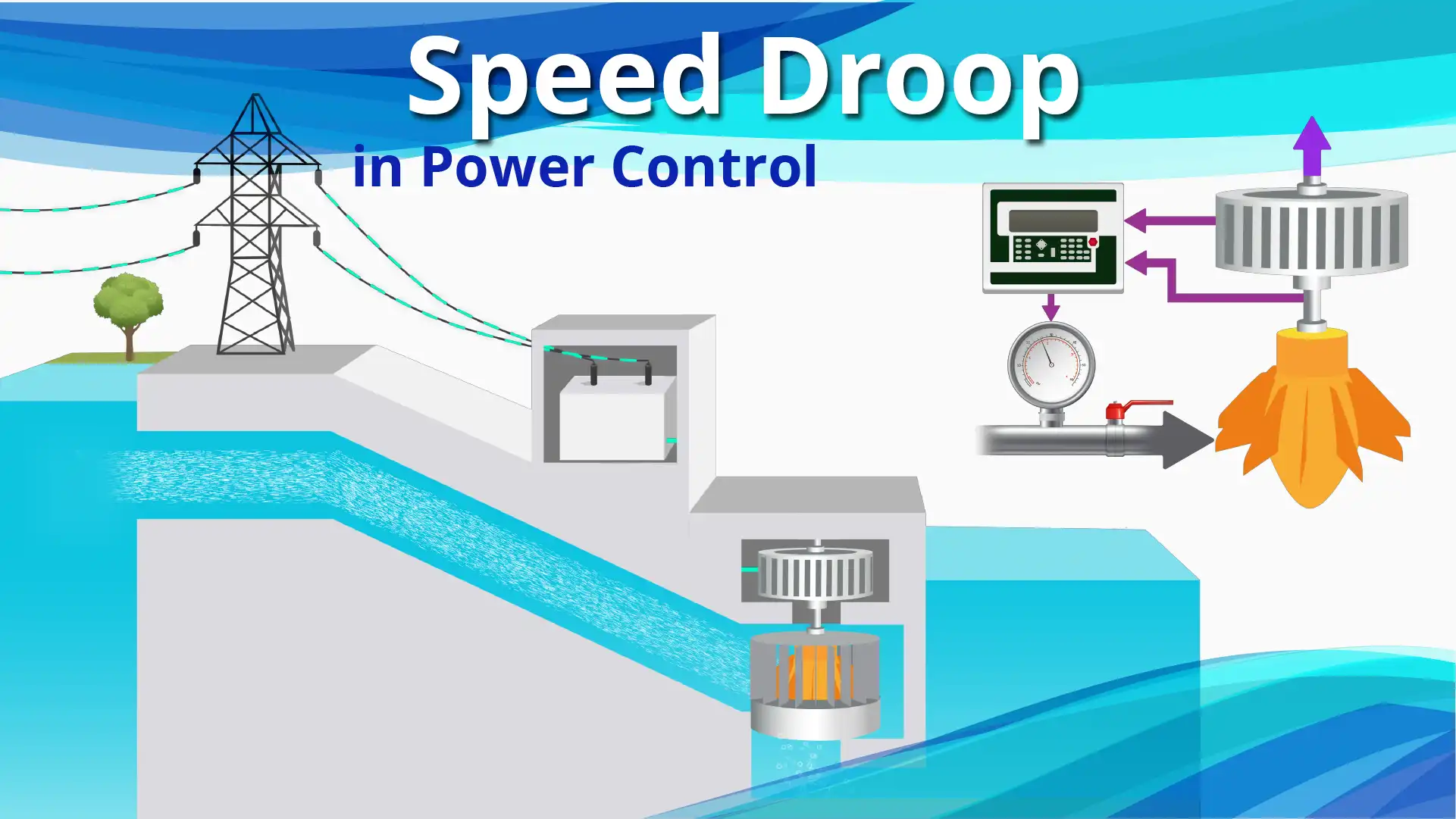
At the heart of speed droop lies the governor, a crucial component in systems ranging from steam turbines and hydro turbines to diesel engines and gas turbines. A governor’s primary function is to maintain a desired operational speed or frequency despite changes in the mechanical load applied to the prime mover. When the load on an engine or turbine increases, it naturally tends to slow down. Conversely, when the load decreases, it tends to speed up. The governor acts to counteract these changes by adjusting the fuel supply (for engines) or the steam/water flow (for turbines) to bring the speed back to the setpoint.
How Governors Work
Governors continuously monitor the rotational speed of the prime mover. If the speed deviates from the desired setpoint, the governor mechanism, whether mechanical, hydraulic, or electronic, adjusts the energy input to the prime mover. For instance, in a diesel generator, if the speed drops due to an increased electrical load, the governor will sense this decrease and command more fuel to be injected into the engine cylinders, thereby increasing power output and bringing the speed back up. The opposite occurs if the load decreases, reducing fuel to prevent overspeeding.
The Inherent Trade-off: Stability vs. Responsiveness
While the immediate intuition might be to design a governor that holds the speed absolutely constant regardless of load (isochronous operation), this approach presents significant challenges, especially when multiple prime movers operate in parallel, as is common in power grids. An isochronous governor, aggressively trying to maintain a fixed speed, can lead to instability, constant hunting (oscillations around the setpoint), and difficulty in sharing load predictably between generators.
Speed droop introduces a deliberate, proportional relationship: as the load increases, the set speed is allowed to slightly decrease. This controlled decrease creates a stable operating characteristic curve that is vital for grid stability. It ensures that each generator contributes its fair share of power and reacts predictably to changes in system load, preventing individual units from fighting each other for control of the system frequency.
Quantifying Speed Droop: The Droop Characteristic Curve
Speed droop is not just a qualitative concept; it is precisely quantifiable. It is typically expressed as a percentage and defines the extent to which the speed or frequency changes from no-load to full-load conditions, relative to the nominal speed. This characteristic forms a linear relationship on a graph, with speed (or frequency) on one axis and power output (or load) on the other.
Calculating Droop Percentage
The formula for calculating speed droop is:
Droop (%) = $[(N{No-Load} – N{Full-Load}) / N_{Full-Load}] times 100%$
Where:
- $N_{No-Load}$ is the prime mover speed (or system frequency) at zero load.
- $N_{Full-Load}$ is the prime mover speed (or system frequency) at 100% rated load.
A typical droop setting in power generation is around 4% to 5%. This means that if a generator is rated for 60 Hz at full load, its no-load frequency might be 62 Hz with a 5% droop setting. As load is applied, the frequency will linearly drop from 62 Hz down to 60 Hz at full capacity.
The Significance of the Droop Value
The chosen droop percentage has profound implications for system operation.
- Lower Droop (more “stiff” control): A lower droop percentage means the speed changes very little with load. This makes the generator more responsive to frequency changes but also more prone to instability and aggressive load swings if not managed carefully. It can make accurate load sharing difficult.
- Higher Droop (more “flexible” control): A higher droop percentage means the speed changes more significantly with load. This leads to more stable operation and better inherent load sharing, as a slight drop in frequency will cause a larger increase in power output from a droop-controlled unit. However, it also means the system frequency will vary more widely with load changes unless there is a primary frequency regulation mechanism or an isochronous unit providing frequency “setpoint” control.
Why Speed Droop is Essential in Power Generation
The most critical application of speed droop is in the parallel operation of synchronous generators within a power grid. Without this characteristic, a stable, reliable electricity supply would be practically impossible.
Load Sharing in Parallel Generators
Imagine multiple generators connected to the same electrical grid. If all generators were operating with an isochronous (zero-droop) governor, they would all try to maintain the exact same frequency. Any slight difference in their internal speed settings or mechanical characteristics would cause them to “fight” each other, with one generator trying to carry all the load and potentially tripping offline due to overload, while others might motor (absorb power).

With speed droop, each generator inherently reacts to changes in system frequency. If the total grid load increases, the system frequency will drop slightly. Each droop-controlled generator senses this frequency drop and, according to its droop characteristic, increases its power output to help meet the new demand. The amount of additional power each generator supplies is proportional to its droop setting and capacity, leading to a natural and stable distribution of the new load. Conversely, if the load decreases, the frequency rises, and each generator reduces its output. This self-regulating mechanism is fundamental to grid stability.
Ensuring System Stability and Frequency Regulation
The interconnected nature of power grids means that disturbances in one part of the system can propagate rapidly. Speed droop provides a built-in primary frequency response. When a sudden large load comes online or a generator trips offline, the system frequency will deviate. Droop-controlled generators immediately respond by increasing or decreasing their power output, providing the first line of defense against frequency excursions. This rapid, decentralized response buys time for slower, secondary frequency regulation mechanisms (like dispatch centers adjusting setpoints) to stabilize the system.
Preventing “Hunting” and Overload
“Hunting” refers to undesirable oscillations in speed and power output. Without droop, generators might constantly overcorrect, leading to these oscillations, which can be detrimental to equipment and grid stability. Speed droop dampens these oscillations by providing a predictable, proportional response. It also prevents any single generator from unilaterally attempting to take on an excessive amount of load, thus protecting individual units from overload and potential damage.
While droop allows frequency to vary with load, a single “swing” generator or a dedicated utility controller (using a digital governor in isochronous mode) is often used to fine-tune the frequency back to its nominal setpoint (e.g., 50 Hz or 60 Hz) by slightly adjusting the setpoint of the droop-controlled units or by absorbing the remaining load deviation.
Applications Beyond Power Grids
While prominently featured in power generation, the principle of speed droop or proportional control extends to various other technological domains where stable and predictable speed or flow regulation is essential.
Industrial Machinery Control
Many industrial processes require precise control over the speed of motors, pumps, or conveyors. While direct PID (Proportional-Integral-Derivative) controllers often provide very tight speed regulation, the concept of a proportional droop can be incorporated for stability, especially in systems with varying loads or where multiple drives operate in conjunction. For example, a pump system that needs to share flow across multiple units might use a droop-like characteristic to ensure stable operation and prevent one pump from trying to carry the entire load.
Marine Propulsion Systems
Large ships often employ sophisticated propulsion systems with multiple engines and propellers. Governors on these engines frequently incorporate speed droop to ensure smooth load sharing among engines operating in parallel for propulsion or for driving shipboard generators. This prevents one engine from being overloaded while others are underutilized, leading to more efficient fuel consumption and longer equipment life. It also allows for smoother transitions during maneuvering or changes in vessel speed.
Hybrid Electric Vehicles (Conceptual Analogy)
While not “speed droop” in the traditional sense, the control algorithms in hybrid electric vehicles (HEVs) exhibit analogous characteristics. The internal combustion engine (ICE) and electric motor/generator units must seamlessly share the task of propelling the vehicle and regenerating energy. The power management system often balances the contributions of the ICE and electric motor based on demand, battery state of charge, and efficiency maps. This intricate dance of power delivery, where each component contributes dynamically based on system needs, shares the spirit of stable load sharing seen in droop control. The system effectively “droops” the engine’s power delivery in favor of the electric motor under certain conditions, or vice-versa, to optimize performance and fuel economy.
Modern Control Systems and Droop
The advent of digital control technologies has revolutionized how speed droop is implemented and managed, offering unprecedented flexibility and precision.
Digital Governors and PID Control
Modern generators are equipped with digital governors, which replace older mechanical-hydraulic systems. These digital systems utilize advanced microprocessors and sophisticated PID (Proportional-Integral-Derivative) control algorithms to achieve precise speed and frequency regulation. While traditional droop is still a core setting, digital governors can implement it with much greater accuracy, repeatability, and adaptability. They can quickly detect and respond to frequency deviations, making the overall grid response faster and more stable.
Adaptive Droop and Smart Grids
The concept of “adaptive droop” is emerging in the context of smart grids and renewable energy integration. Traditional fixed droop settings might not always be optimal for a grid with highly variable renewable sources like solar and wind power. Adaptive droop allows the governor to dynamically adjust its droop characteristic based on real-time grid conditions, system stability requirements, and the availability of other generation resources. This can enhance grid resilience, improve frequency response, and allow for better integration of intermittent power sources. For example, a generator might operate with a steeper droop during periods of high grid stress to provide stronger primary response.

The Role of AI and Machine Learning in Optimization
Looking ahead, Artificial Intelligence (AI) and Machine Learning (ML) are poised to further optimize the application of speed droop. AI-driven control systems can analyze vast amounts of real-time grid data, predict load fluctuations, and even learn optimal droop settings for different operating scenarios. Machine learning algorithms could predict periods of potential instability and proactively adjust governor parameters, including droop, to maintain grid health. This could lead to hyper-efficient load sharing, ultra-precise frequency regulation, and a more resilient power grid capable of handling the complexities of future energy landscapes, including distributed generation and microgrids. The fundamental principle of speed droop will remain, but its implementation will become far more intelligent and dynamic.
aViewFromTheCave is a participant in the Amazon Services LLC Associates Program, an affiliate advertising program designed to provide a means for sites to earn advertising fees by advertising and linking to Amazon.com. Amazon, the Amazon logo, AmazonSupply, and the AmazonSupply logo are trademarks of Amazon.com, Inc. or its affiliates. As an Amazon Associate we earn affiliate commissions from qualifying purchases.