
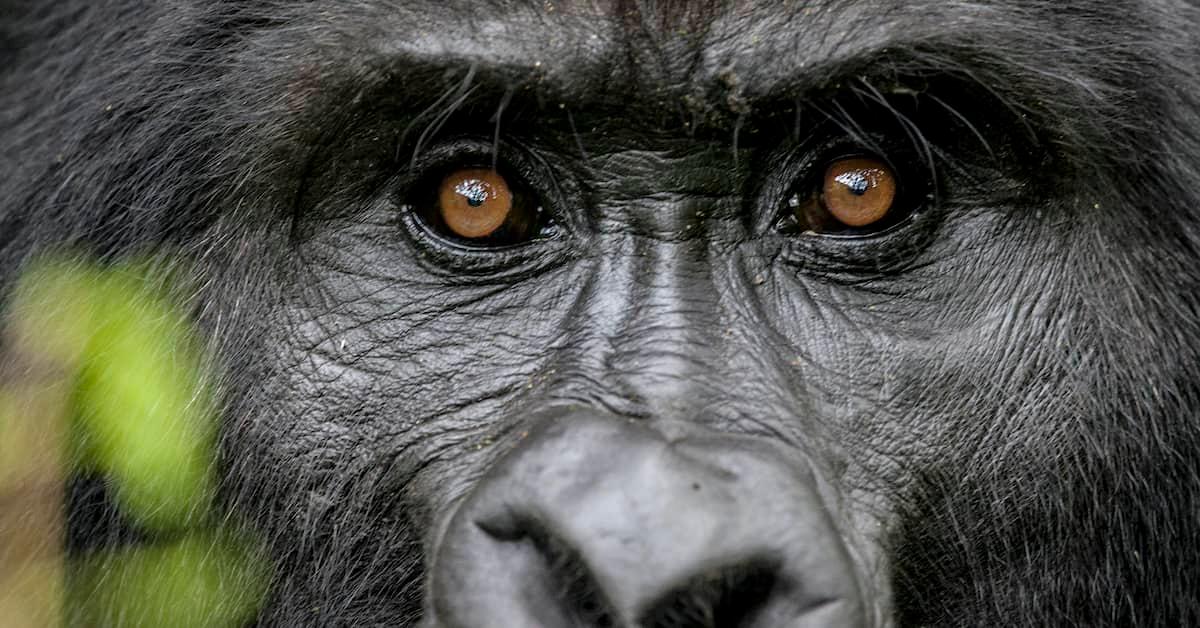
In the rapidly evolving landscape of biometric technology, the human fingerprint has long been the gold standard for individual identification. However, as software developers and data scientists look toward the natural world for more robust and non-invasive identification methods, an unlikely candidate has emerged as a focal point for technological innovation: the mountain gorilla’s nose. Each mountain gorilla possesses a unique pattern of wrinkles and indentations—often referred to as “nose prints”—that are as distinct as a human thumbprint.
What makes the mountain gorilla nose special from a technological perspective is its function as a natural, immutable barcode. In the field of “Conservation Tech,” these unique anatomical features are no longer just biological quirks; they are the primary data points for sophisticated facial recognition algorithms, non-invasive tracking systems, and decentralized biological databases. By digitizing these physical traits, technology is bridging the gap between field biology and high-level data science.
The Digital Fingerprint of the Wild: Biological Unique Identifiers (BUIs)
At the heart of modern security and identification systems is the concept of a Unique Identifier (UID). In tech circles, we typically associate this with MAC addresses, UUIDs in software development, or biometric signatures like Iris scans and FaceID. The mountain gorilla nose serves as a Biological Unique Identifier (BUI) that is remarkably resilient to the environmental challenges of the sub-Saharan highlands.
Decoding the Nose Print Topography
The “special” nature of the gorilla nose lies in its topography. Unlike other primates, mountain gorillas have a bridge and a series of nasal folds that remain consistent from late infancy throughout their adulthood. From a data acquisition standpoint, these folds provide high-contrast features that are easily detectable by optical sensors.
In computer vision, these are known as “keypoints.” When an AI model analyzes a photograph of a gorilla, it doesn’t see a face; it sees a coordinate map of shadows and peaks located on the nasal bridge. This specific area is less prone to the occlusion issues that plague full-face recognition, such as varying fur length or changes in facial expressions. By focusing exclusively on the nose, developers can create leaner, more efficient algorithms that require less processing power—a critical requirement for hardware deployed in remote, off-grid locations.
Data Stability Over Time
A primary requirement for any biometric tech is temporal stability. If a signature changes every six months, the database becomes obsolete. The mountain gorilla’s nose print is structurally stable. This allows for the creation of longitudinal datasets, where a single individual can be tracked over two decades without the need for invasive tagging or collars. This stability is the bedrock upon which long-term predictive analytics and population modeling are built.
AI and Pattern Recognition: Decoding the Primate Profile
The transition from manual identification to automated systems represents a massive leap in efficiency for wildlife technology. Historically, researchers had to memorize these nose prints or carry physical sketchbooks into the field. Today, machine learning (ML) has turned the mountain gorilla nose into a high-fidelity input for Convolutional Neural Networks (CNNs).
Training Neural Networks on Natural Patterns
Building an AI capable of identifying a gorilla via its nose involves a complex pipeline of data labeling and supervised learning. Engineers feed thousands of images into a model, marking the specific coordinates of the nasal folds. The “specialness” of the nose print facilitates a high Signal-to-Noise Ratio (SNR). Because the patterns are so distinct, the neural network can achieve high accuracy rates (often exceeding 90%) even with lower-resolution imagery.
This is particularly important for edge computing. In the tech world, “the edge” refers to processing data at the source—in this case, on the camera or the mobile device—rather than sending it to a central server. Because mountain gorillas live in areas with limited connectivity, the identification software must be optimized to run locally on ruggedized tablets or smart cameras. The unique geometry of the gorilla nose allows for “feature extraction” that is computationally inexpensive, making it the perfect use case for mobile AI.
Overcoming the Challenges of Variation
Environmental variables like rain, mud, and lighting can obscure a gorilla’s features. However, modern software utilizes “augmentation” techniques to train the AI. By digitally simulating various lighting conditions on the nose print patterns, developers ensure that the tech remains functional in the misty, low-light environments of the Bwindi Impenetrable Forest or the Virunga Massif. The specific contrast between the skin of the nose and the surrounding fur acts as a natural anchor point for the software’s “Region of Interest” (ROI) detection.

Conservation Tech Infrastructure: Beyond Simple Identification
The identification of a mountain gorilla via its nose is the entry point for a much larger ecosystem of digital tools. When we speak about what makes this anatomical feature special, we are really talking about the metadata it unlocks.
Integration with GIS and SMART Platforms
Once the biometric tech identifies an individual gorilla through its nose print, that data point is instantly geotagged. This information is typically fed into platforms like the Spatial Monitoring and Reporting Tool (SMART). This creates a real-time digital twin of the gorilla population.
From a software architecture perspective, the nose print serves as the primary key in a relational database. It connects the individual’s identity to their health records, family lineage, and movement patterns. This level of granular data allows for the automation of “Daily Monitoring Logs,” where software can flag anomalies—such as a specific individual not being spotted for several days—triggering immediate drone or ranger deployments.
Non-Invasive Data Collection
The tech industry is increasingly focused on “frictionless” user experiences. In the context of wildlife, “frictionless” means non-invasive. Traditional tracking tech often required tranquilizing animals to attach GPS collars. Using the nose as a biometric signature allows for “passive monitoring.” High-resolution cameras placed at watering holes or along known trails can capture nose prints and identify individuals without any human-to-animal contact. This reduces the stress on the animals and minimizes the risk of disease transmission, creating a purely digital observation loop.
The Future of Biometrics: From Gorillas to Global Security
The technological frameworks being developed for mountain gorilla nose recognition are not limited to the forest. They represent a sandbox for the next generation of biometric security and sensor technology.
Bio-Inspired Security Systems
The study of unique natural patterns is leading to new methodologies in “Hard-to-Forge” biometric systems. Unlike fingerprints, which can be lifted, or facial recognition, which can sometimes be fooled by deepfakes, the multi-dimensional topography of a nasal structure offers a more complex dataset. Tech firms are looking at how these natural indentations can inspire new forms of 3D facial mapping that are more resistant to spoofing.
Scaling the Tech to Other Species
The success of the “Nose-Print-as-ID” model is being scaled. If software can reliably identify a gorilla by a few square inches of its nose, similar logic can be applied to the whisker patterns of lions, the ear notches of elephants, or the fluke patterns of whales. We are seeing the rise of “Universal Biometric Engines” for the planet—a global API for identifying and protecting biodiversity.
The Role of Blockchain in Biological Data
As the uniqueness of the gorilla nose allows for the definitive identification of individuals, some tech firms are exploring the use of blockchain to secure this data. By creating a “Non-Fungible” digital identity for each gorilla based on its nose print, conservationists can ensure that data integrity is maintained across borders. This prevents the “double-counting” of individuals and creates an immutable audit trail for conservation funding and carbon credit verification.
Conclusion: The Silicon Valley of the Jungle
What is special about a mountain gorilla nose is its perfect alignment with the requirements of modern technology: it is unique, stable, high-contrast, and non-invasive. It has transformed from a biological trait into a critical piece of tech infrastructure. As we continue to refine AI, edge computing, and biometric sensors, the mountain gorilla nose stands as a testament to the power of nature-inspired design in solving complex data problems.
In the intersection of technology and biology, the mountain gorilla is no longer just a subject of study—it is a partner in the development of more sophisticated, efficient, and ethical identification systems. By looking closely at the wrinkles and folds of a primate’s nose, we are discovering the blueprints for the future of digital identity and global security.
aViewFromTheCave is a participant in the Amazon Services LLC Associates Program, an affiliate advertising program designed to provide a means for sites to earn advertising fees by advertising and linking to Amazon.com. Amazon, the Amazon logo, AmazonSupply, and the AmazonSupply logo are trademarks of Amazon.com, Inc. or its affiliates. As an Amazon Associate we earn affiliate commissions from qualifying purchases.