
In the world of electrical engineering and DIY electronics, understanding the fundamental components that govern current flow is essential. Among these, the switch is the most ubiquitous. While most people are familiar with the standard wall switch used to toggle a light on or off, technical applications often require more complex control. This is where the SPDT switch—or Single-Pole, Double-Throw switch—comes into play. It is a cornerstone component in everything from simple hobbyist circuits to complex industrial automation systems.
Defining the SPDT Switch: Mechanics and Terminology
To understand what a SPDT switch is, one must first break down the acronym itself. The designation “SPDT” stands for “Single-Pole, Double-Throw,” a classification system that defines how a switch routes electricity.

The Anatomy of the Pole
The “Pole” in SPDT refers to the number of separate circuits that the switch can control simultaneously. A “Single-Pole” switch manages just one physical circuit. Think of it as a gatekeeper for a single stream of electricity. If you had a Double-Pole (DP) switch, you would be controlling two separate circuits at the same time using a single actuator.
The Dynamics of the Throw
The “Throw” refers to the number of output positions (or paths) that each pole can connect to. A “Double-Throw” switch allows the incoming current to be diverted into one of two different paths. When the switch is in one position, it connects the input terminal to the first output terminal. When flipped to the other position, it breaks that connection and creates a new path to the second output terminal.
In essence, an SPDT switch functions as a bridge that can direct energy down Path A or Path B, but never both at once. This mechanism is what gives the SPDT its unique utility in logic gates, routing signals, and alternating power states.
How the SPDT Switch Operates
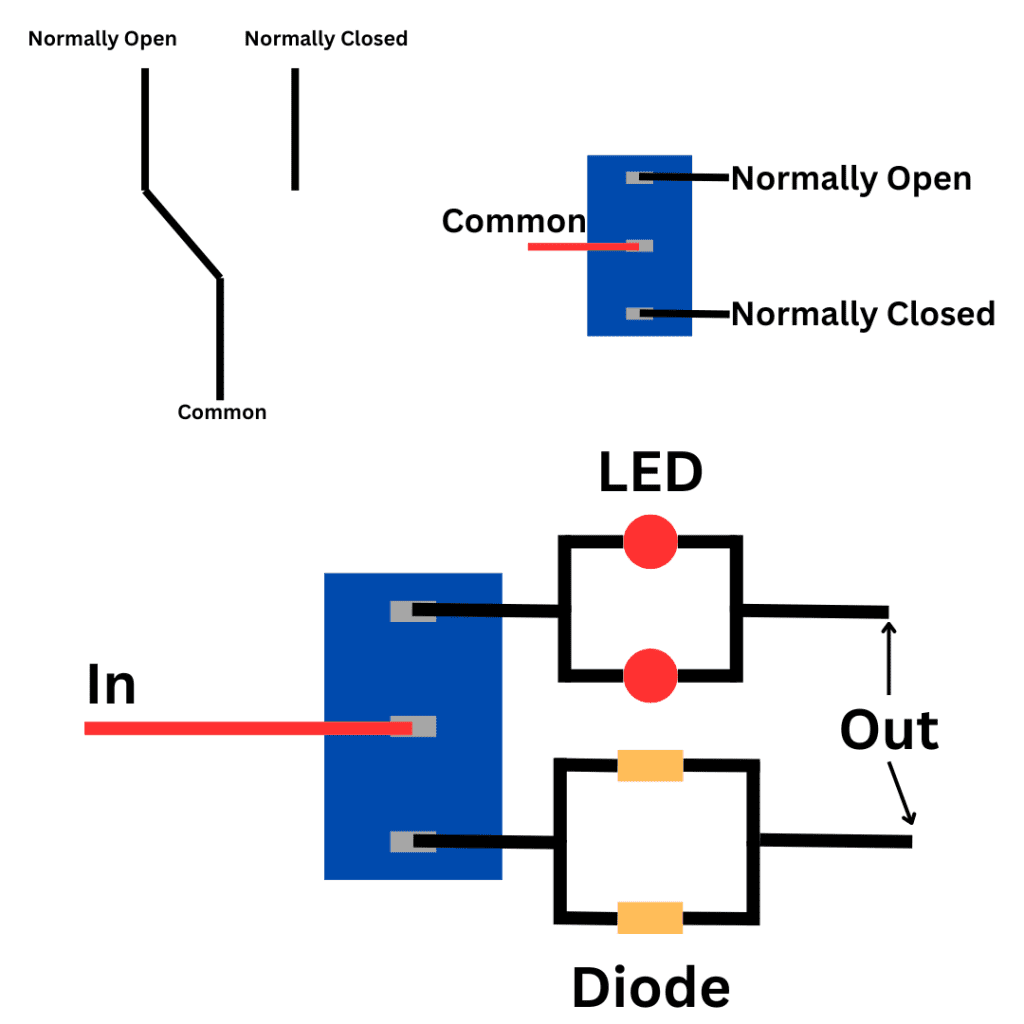
The internal mechanism of an SPDT switch is relatively straightforward, yet highly effective. It consists of three primary terminals: the Common (COM), the Normally Open (NO), and the Normally Closed (NC) terminal.
Understanding the Terminals
- Common (COM): This is the input terminal where the power source or the signal is connected. It serves as the bridge point from which the electricity begins its journey.
- Normally Closed (NC): This terminal is connected to the Common terminal when the switch is in its resting state (unactuated). If you are looking at a standard toggle switch, the NC terminal is the path that is active until you physically push or flip the switch to change the circuit.
- Normally Open (NO): This terminal remains disconnected from the Common terminal while the switch is at rest. It only becomes “live” once the actuator is pressed or toggled, completing the connection between the COM and NO terminals.
The Actuation Process
When you flip an SPDT switch, the internal contact arm physically moves from the NC side to the NO side. This break-before-make action is critical in electronics. It ensures that the current path from the COM to the NC is completely severed before the connection to the NO is established. This prevents short circuits and ensures that the two output devices connected to the switch never receive power simultaneously through that specific circuit path.
Practical Applications in Modern Technology

Because of its ability to toggle between two distinct states, the SPDT switch is used far beyond basic light switches. Its versatility makes it a staple in gadget design, automation, and telecommunications.
Three-Way Lighting Systems
One of the most common applications of the SPDT switch is the “three-way” light switch found in many residential hallways or staircases. By using two SPDT switches connected in a specific configuration, you can control a single light fixture from two different locations. In this setup, flipping either switch will toggle the state of the light, regardless of the position of the other switch. This is achieved by creating a circuit where the two switches can either complete or break the path of the current in tandem.
Signal Routing and Switching
In electronics and computing, SPDT switches are often utilized for signal routing. If a device needs to toggle between two different input sources—such as a microphone and an auxiliary line input—an SPDT switch allows the system to route the signal from one source while physically disconnecting the other. This prevents signal bleed and ensures that the circuitry only processes the intended input.
Limit Switches in Robotics
In industrial robotics and 3D printing, SPDT switches are frequently used as “limit switches.” These are precision-engineered switches placed at the end of a mechanical track. As a moving component (like a printer carriage or a robotic arm) reaches the end of its travel, it physically strikes the limit switch. The switch then sends a signal to the controller to stop the motor, preventing the mechanism from colliding with the frame or exceeding its intended range of motion. Because SPDT switches provide both an NO and an NC contact, they offer high reliability; the controller can monitor both states to ensure the switch hasn’t failed or jammed.
Choosing the Right SPDT Switch for Your Project
Not all SPDT switches are created equal. When selecting one for a specific application, several factors must be considered to ensure the longevity and safety of your electrical circuit.
Electrical Ratings: Amperage and Voltage
Every switch has a maximum current (Amps) and voltage rating. These ratings define the upper limits of what the metal contacts inside the switch can handle without melting, arcing, or welding together. If you are switching a low-voltage signal, such as an Arduino logic pin, almost any SPDT switch will work. However, if you are controlling a high-power motor or an appliance, you must ensure the switch is rated for the specific load. Ignoring these ratings is a primary cause of electrical fires and device failure.
Physical Form Factor
Switches come in a staggering variety of shapes, from miniature tactile push-buttons on printed circuit boards (PCBs) to heavy-duty industrial toggles with waterproof silicone boots. Consider the environment in which the switch will operate. Is it exposed to moisture, dust, or heavy vibrations? Selecting a switch with an appropriate IP (Ingress Protection) rating can prevent premature failure.
Mounting Style
- Panel Mount: These are designed to be inserted through a hole in a chassis or enclosure, secured with a nut. These are common for user-interface elements on equipment.
- PCB Mount: These are designed to be soldered directly onto a circuit board. They are typically smaller and have pins arranged in standard pitch distances for ease of assembly.
Durability and Lifecycle
In applications like industrial automation, a switch may be toggled thousands of times per day. In such scenarios, look for the mechanical life rating, often expressed in the number of cycles the switch can perform before physical degradation occurs. A high-quality switch will feature silver-plated or gold-plated contacts to ensure consistent conductivity over millions of operations.
Conclusion: The Reliability of the SPDT Design
The SPDT switch, while simple in its architectural concept, remains one of the most reliable and effective components in electrical design. Its ability to create a clean, binary choice between two paths allows for complex logic, user interaction, and machine safety. Whether you are troubleshooting a three-way light in your home, designing a robotics project, or simply learning the fundamentals of electrical engineering, the SPDT switch is an indispensable tool in your arsenal. By understanding how the Common, Normally Open, and Normally Closed terminals interact, you gain the power to route energy with precision, safety, and efficiency.
aViewFromTheCave is a participant in the Amazon Services LLC Associates Program, an affiliate advertising program designed to provide a means for sites to earn advertising fees by advertising and linking to Amazon.com. Amazon, the Amazon logo, AmazonSupply, and the AmazonSupply logo are trademarks of Amazon.com, Inc. or its affiliates. As an Amazon Associate we earn affiliate commissions from qualifying purchases.