
In the vast landscape of investment opportunities, the S&P Index Fund stands out as a remarkably popular and often recommended choice for both novice and seasoned investors. It represents a straightforward, low-cost, and highly diversified way to gain exposure to the U.S. stock market’s largest and most influential companies. For many, understanding what an S&P Index Fund is, how it works, and why it holds such a prominent position in personal finance is a crucial step towards building a robust investment portfolio.
At its core, an S&P Index Fund is an investment vehicle designed to mirror the performance of the S&P 500 Index. Instead of attempting to pick individual winning stocks or outperform the market, these funds simply aim to replicate the returns of this benchmark index. This passive investment strategy offers a compelling combination of simplicity, broad market exposure, and historical resilience, making it a cornerstone for long-term wealth creation.

This article will delve into the intricacies of S&P Index Funds, exploring the underlying index, the mechanics of how these funds operate, their myriad benefits, potential considerations, and who stands to gain most from incorporating them into their financial strategy.
Understanding the S&P 500 Index
To truly grasp the essence of an S&P Index Fund, one must first understand the powerhouse it seeks to replicate: the S&P 500 Index. This index is far more than just a list of companies; it’s a vital economic indicator and a benchmark against which the performance of large-cap U.S. stocks is measured.
The Benchmark of U.S. Stock Performance
The S&P 500 Index is a market-capitalization-weighted index that tracks the stock performance of 500 of the largest publicly traded companies in the United States. Compiled by S&P Dow Jones Indices, it is widely considered one of the best gauges of large-cap U.S. equities and a strong proxy for the overall health of the U.S. economy. The “market-capitalization-weighted” aspect means that companies with larger market values (share price multiplied by the number of outstanding shares) have a greater impact on the index’s movement than smaller companies. This ensures that the index accurately reflects the economic influence of its constituent companies.
Selection Criteria and Diversity
The companies included in the S&P 500 are not arbitrarily chosen. S&P Dow Jones Indices employs a committee that selects companies based on several stringent criteria, including market size, liquidity, domicile, and public float, profitability, and sector representation. While the index is broad, the committee ensures it remains representative of the overall U.S. economy, encompassing a wide array of sectors such as technology, healthcare, financials, industrials, consumer discretionary, and more. This careful selection process ensures the index remains relevant and diversified, offering exposure to the dominant players across nearly every major industry. This inherent diversity is one of its most attractive features, automatically spreading investment risk across hundreds of different businesses.
Why the S&P 500 Matters
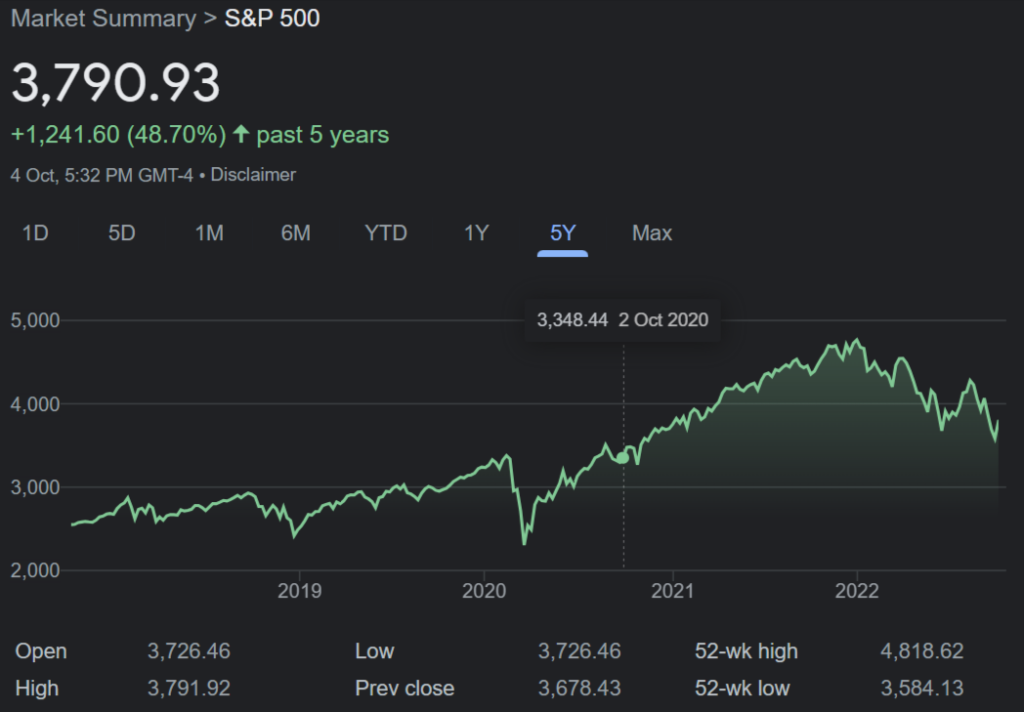
The S&P 500 matters because it encapsulates the performance of corporate America’s largest and most established entities. Its movements are closely watched by economists, analysts, and investors alike as a reliable indicator of economic sentiment and corporate profitability. Over the long term, the S&P 500 has demonstrated remarkable resilience and growth, averaging an annual return of approximately 10-12% (including dividends) over several decades. This historical performance provides a compelling argument for investing in a vehicle designed to track it.
The Mechanics of an S&P Index Fund
Understanding the S&P 500 is the first step; the next is to comprehend how an investment fund can effectively mimic its performance without actively managing a portfolio to beat it. This is where the passive investment philosophy and various fund structures come into play.
Passive Investing Philosophy
The core principle behind an S&P Index Fund is passive investing. Unlike actively managed funds, where fund managers constantly research, buy, and sell securities in an attempt to outperform the market, S&P Index Funds simply aim to track the performance of the S&P 500. This means their objective is not to beat the benchmark but to match it as closely as possible, minus minimal fees and tracking error. This philosophy is rooted in the belief that, over the long term, it is extremely difficult for even professional money managers to consistently outperform a broad market index like the S&P 500, especially after accounting for higher fees.
How They Replicate the Index
S&P Index Funds employ different strategies to replicate the index’s performance. The most common methods include:
- Full Replication: This involves purchasing all 500 stocks in the S&P 500 in the exact same proportions as they are weighted in the index. While this offers the most precise tracking, it can be complex and costly for very large or illiquid indexes.
- Sampling: For very large or complex indexes, funds may use a sampling approach. This involves holding a carefully selected subset of the index’s securities that are statistically representative of the entire index. The goal is to minimize tracking error while reducing transaction costs and management complexity.
- Synthetic Replication: Less common for broad equity indexes like the S&P 500, this method involves using derivatives (like futures or swaps) to replicate the index’s performance.
Regardless of the method, the fund’s portfolio is periodically rebalanced to ensure its holdings continue to accurately reflect the index’s current composition and weightings, especially when companies are added to or removed from the S&P 500.
Fund Structures: ETFs vs. Mutual Funds
S&P Index Funds typically come in two main structures, each with its own characteristics:
- Exchange-Traded Funds (ETFs): These funds trade on stock exchanges like individual stocks throughout the trading day. Their prices fluctuate based on market supply and demand, and they can be bought or sold at any time the market is open. ETFs generally boast lower expense ratios (annual fees) due to their passive nature and efficient structure. Popular S&P 500 ETFs include SPDR S&P 500 ETF Trust (SPY), iShares Core S&P 500 (IVV), and Vanguard S&P 500 ETF (VOO). They are often favored for their liquidity and tax efficiency.
- Mutual Funds: These funds are bought and sold directly through the fund company or a brokerage at their Net Asset Value (NAV), which is calculated once a day after the market closes. While some S&P 500 index mutual funds also have very low expense ratios (e.g., Vanguard 500 Index Fund Admiral Shares – VFIAX), they typically have minimum investment requirements and are not traded throughout the day. They might also be slightly less tax-efficient than ETFs due to their structure, but this varies by fund.
Both structures provide identical exposure to the S&P 500, so the choice often comes down to personal preference regarding trading flexibility, minimum investments, and specific expense ratios.
Key Benefits of Investing in an S&P Index Fund
The widespread appeal of S&P Index Funds is not accidental; it stems from a host of compelling advantages that cater to a broad spectrum of investors.
Diversification by Default
One of the most significant benefits is instant, broad diversification. By investing in a single S&P Index Fund, you gain exposure to 500 of the largest U.S. companies across numerous sectors. This automatic diversification drastically reduces the risk associated with investing in individual stocks. The poor performance of one or a few companies will have a minimal impact on your overall portfolio, as it is offset by the performance of the hundreds of others. This “don’t put all your eggs in one basket” principle is effortlessly achieved.
Lower Costs
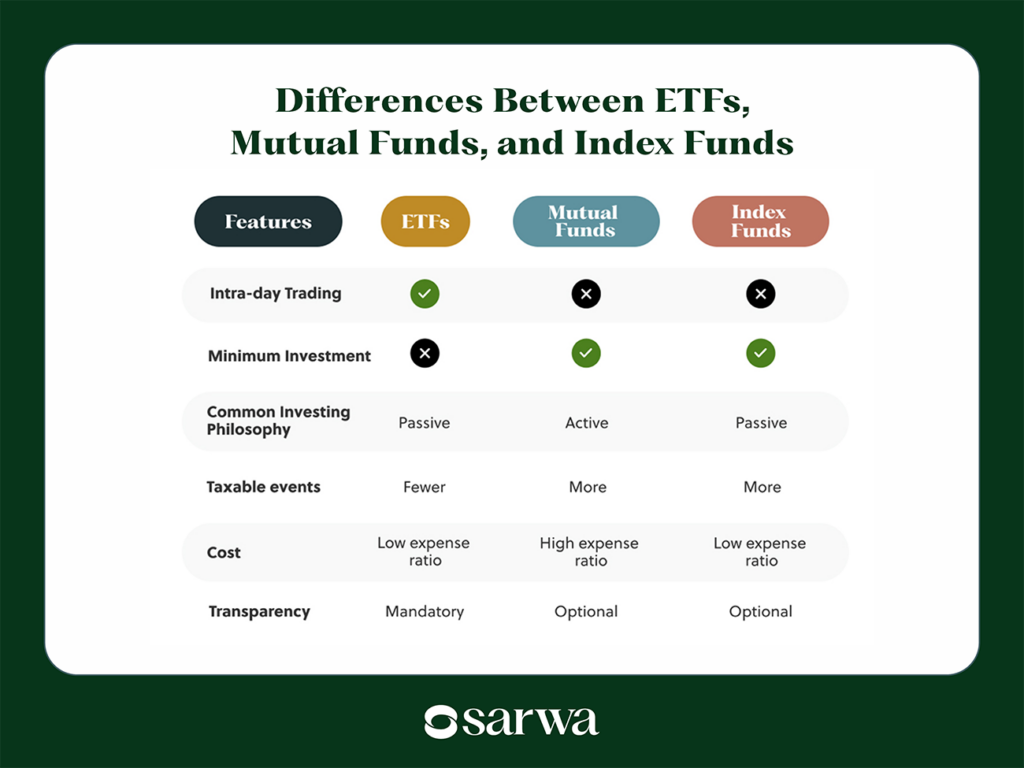
The passive nature of S&P Index Funds translates directly into significantly lower management fees, known as expense ratios. Since there’s no need for an expensive team of analysts or active trading decisions, these funds incur fewer operational costs than actively managed funds. Expense ratios for S&P 500 ETFs and mutual funds often hover around 0.03% to 0.09% per year, meaning you pay just a few dollars for every $10,000 invested. Over decades, these seemingly small differences in fees can accumulate into substantial savings, leaving more of your returns in your pocket.
Simplicity and Accessibility
S&P Index Funds are remarkably simple to understand and manage, making them an ideal choice for new investors or those who prefer a hands-off approach. You don’t need to research individual companies, analyze financial statements, or fret over market timing. The strategy is clear: invest consistently and let the broad market do the work. They are also highly accessible, available through nearly any brokerage platform with minimal investment amounts, especially for ETFs.
Strong Historical Performance
The S&P 500 has a robust and consistent long-term track record of growth. Despite periodic downturns and market corrections, the index has historically rebounded and continued its upward trajectory, reflecting the innovative and growth-oriented nature of the U.S. economy. Investors who commit to a long-term horizon (10+ years) have historically been rewarded with substantial returns that have outpaced inflation and many other asset classes.
Tax Efficiency (Especially for ETFs)
Due to their low portfolio turnover, S&P Index Funds, particularly ETFs, tend to be more tax-efficient than actively managed funds. Since they only buy and sell stocks when the index changes its composition or for rebalancing, they typically generate fewer taxable capital gains distributions. This allows investors to defer taxes on gains until they eventually sell their shares, promoting greater compounding over time.
Potential Drawbacks and Considerations
While S&P Index Funds offer numerous advantages, it’s essential to approach any investment with a balanced perspective and understand its limitations.
No Outperformance
By definition, an S&P Index Fund cannot “beat” the market; it is the market. Its explicit goal is to match the S&P 500’s performance. For investors who aspire to outperform the broader market through strategic stock picking or active management, an S&P Index Fund will not fulfill that specific ambition. You accept average market returns for lower risk and cost.
Market Risk Exposure
Investing in an S&P Index Fund means you are fully exposed to the fluctuations of the U.S. stock market. When the S&P 500 experiences a downturn, your index fund will decline in value proportionally. There is no built-in protection against bear markets or broad economic contractions. While historically the market recovers, this means enduring periods of significant losses, which can be emotionally challenging for some investors.
Lack of Customization
An S&P Index Fund provides a standardized investment in the largest U.S. companies. You cannot selectively choose which companies to invest in or divest from based on personal ethics, specific growth opportunities you identify, or a desire to avoid certain industries. Your investment is dictated by the index’s composition, meaning you own the good with the bad, and everything in between.
Concentration Risk within the S&P 500
While diversified across 500 companies, the S&P 500 is a market-capitalization-weighted index. This means a significant portion of its value (and thus your fund’s value) can be concentrated in a handful of very large companies, often in the technology sector. If these top-heavy companies underperform, it can disproportionately affect the entire index and your fund, despite the overall diversity. While not a lack of diversity in terms of company count, it is a concentration risk in terms of market cap weighting.
Who Should Consider an S&P Index Fund?
Given its unique characteristics, an S&P Index Fund is particularly well-suited for specific investor profiles and financial goals.
Long-Term Investors
These funds are an excellent fit for individuals with a long investment horizon, typically 10 years or more. This allows sufficient time for market fluctuations to smooth out and for the power of compounding to work its magic, leveraging the historical growth trend of the S&P 500.
Beginners in Investing
For those just starting their investment journey, an S&P Index Fund offers a straightforward, low-risk (relative to individual stocks), and highly effective entry point into equity markets. It bypasses the need for complex research or active portfolio management, making it easy to start building wealth.
Investors Seeking Diversification and Low Costs
Anyone prioritizing broad market diversification, minimal management fees, and simplicity will find an S&P Index Fund to be a foundational component of their portfolio. It’s often recommended as a core holding for a well-rounded, balanced investment strategy.
Those Who Believe in Efficient Markets
Investors who subscribe to the efficient market hypothesis—the idea that it’s difficult to consistently “beat” the market because all available information is already reflected in stock prices—will naturally gravitate towards index funds as a logical and effective investment strategy.
Conclusion
The S&P Index Fund is a testament to the power of simplicity and efficiency in investing. By offering a diversified, low-cost, and historically robust way to gain exposure to the U.S. economy’s leading companies, it democratizes access to sophisticated investment strategies. Whether you’re planning for retirement, saving for a major life goal, or simply looking to grow your wealth over time, an S&P Index Fund can serve as a potent and reliable tool in your financial arsenal. While it won’t promise to make you an overnight millionaire, it offers a proven path to consistent, long-term wealth accumulation, aligning your financial future with the enduring growth of the world’s largest economy. As with any investment, it’s crucial to align your choices with your personal financial goals, risk tolerance, and investment timeline.
aViewFromTheCave is a participant in the Amazon Services LLC Associates Program, an affiliate advertising program designed to provide a means for sites to earn advertising fees by advertising and linking to Amazon.com. Amazon, the Amazon logo, AmazonSupply, and the AmazonSupply logo are trademarks of Amazon.com, Inc. or its affiliates. As an Amazon Associate we earn affiliate commissions from qualifying purchases.