
In the dynamic world of business, understanding your potential customer base is paramount to success. You can have the most innovative product or service, the most compelling brand story, and the most robust financial plan, but without a clear grasp of your addressable market, your efforts can be akin to shooting in the dark. This is where the concept of SOM in business comes into play. SOM, which stands for Share of Market, is a critical metric that helps businesses define and strategize around the portion of their total market they aim to capture. It’s not just about knowing how big the pie is, but about strategically deciding what slice you intend to serve yourself.
This article will delve into the multifaceted concept of SOM within the business landscape, exploring its definition, its relationship with other market size concepts, and its practical applications across the domains of technology, brand building, and financial strategy. We will uncover how understanding your SOM empowers you to make informed decisions, optimize your marketing efforts, and ultimately drive sustainable growth.
The Pillars of Market Size: SAM, TAM, and SOM
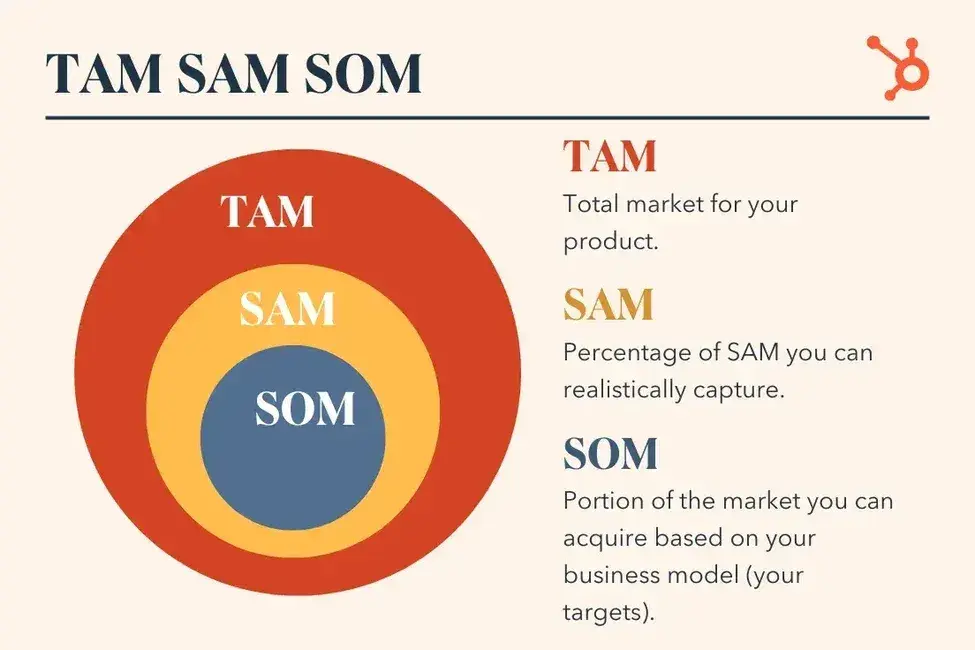
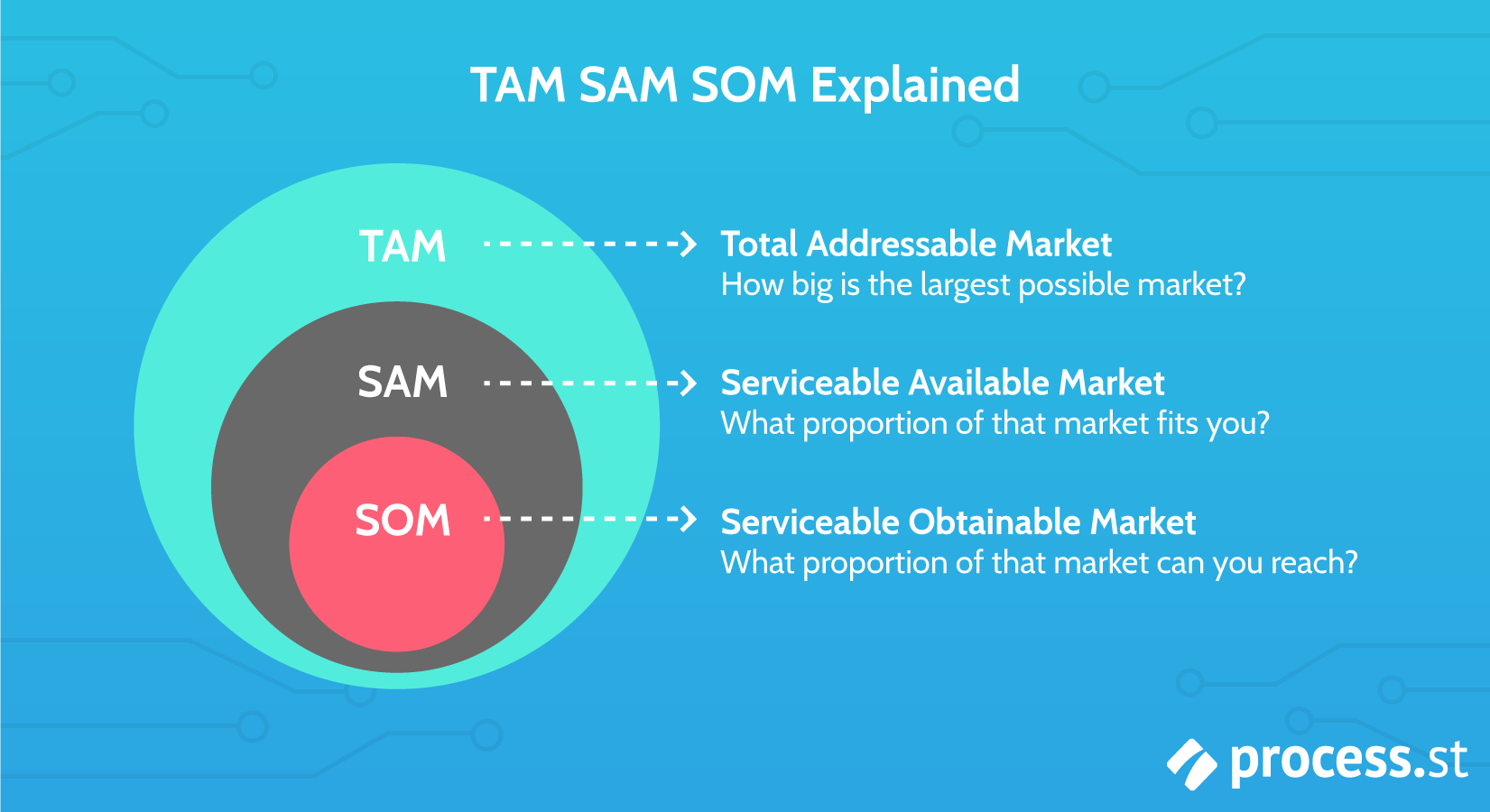
Before we fully immerse ourselves in the nuances of SOM, it’s crucial to understand its place within the broader framework of market sizing. Businesses often encounter three key terms when discussing market potential: TAM, SAM, and SOM. Each represents a different layer of accessibility and focus, forming a concentric circle of opportunity.
Total Available Market (TAM): The Grand Vision
The Total Available Market (TAM) represents the broadest possible definition of your market. It’s the total market demand for a specific product or service. Imagine it as the absolute ceiling of potential revenue if every single person or business that could possibly benefit from your offering were to buy it. For a software company developing a new project management tool, the TAM would encompass every business globally that uses or could potentially use project management software. This is often a theoretical number, a moonshot target that informs long-term strategic thinking and investor pitches. It helps to identify the sheer scale of the opportunity and whether the market is large enough to justify significant investment.
Serviceable Available Market (SAM): The Realistic Target
The Serviceable Available Market (SAM) narrows the focus from the TAM. It represents the segment of the TAM that your products or services can realistically reach with your current business model, geographic scope, and product capabilities. Continuing with our project management software example, the SAM might be the portion of global businesses that have the budget, technological infrastructure, and specific needs that your software is designed to address. This excludes businesses in regions where you don’t operate, those with incompatible systems, or those who simply wouldn’t be interested in your particular solution. SAM is a more practical measure, indicating the portion of the market you can serve.
Serviceable Obtainable Market (SOM): Your Strategic Slice
Finally, we arrive at Serviceable Obtainable Market (SOM). This is the most focused and actionable of the three. SOM represents the portion of the SAM that you can realistically capture and serve within a specific timeframe, given your resources, competitive landscape, marketing strategies, and sales capabilities. It’s your immediate and near-term target. For our project management software, the SOM might be the number of small to medium-sized businesses in North America that you believe you can acquire as customers within the next 1-3 years, considering your marketing budget, sales team size, and competitive advantages. SOM is about setting achievable goals and allocating resources effectively to win a specific share of the market.
The relationship between these three is hierarchical: TAM encompasses SAM, which in turn encompasses SOM. A healthy business demonstrates a clear understanding of all three, using TAM for long-term vision, SAM for strategic planning, and SOM for tactical execution.
SOM in Action: Strategic Applications Across Business Domains
Understanding and defining your SOM is not merely an academic exercise; it has profound implications for how you operate and strategize across various business functions. Let’s explore its impact on technology, branding, and finance.
Tech: Guiding Product Development and Market Penetration
In the fast-paced world of technology, SOM plays a crucial role in guiding product development and market penetration strategies. For software developers, AI tool creators, app developers, and gadget manufacturers, defining their SOM helps them prioritize features, tailor their offerings, and target their marketing efforts effectively.
Product Development and Feature Prioritization
By understanding who your SOM is, you gain invaluable insights into their specific needs, pain points, and preferences. This directly influences your product roadmap. For instance, if your SOM consists of freelance graphic designers, your project management tool might need to prioritize features like visual asset management, client feedback loops, and time tracking integrated with invoicing. Conversely, if your SOM is large enterprise IT departments, your focus might shift to security features, scalability, integration capabilities with existing enterprise systems, and robust reporting for compliance. Without a clear SOM, product development can become unfocused, leading to features that appeal to no one or a broad audience but satisfy no one deeply.
Targeted Marketing and User Acquisition
Once your product is developed, effectively reaching your SOM is paramount. Your SOM dictates your marketing channels and messaging. For a consumer app targeting Gen Z, your SOM analysis might lead you to focus on TikTok and Instagram marketing, influencer collaborations, and app store optimization (ASO) with trending keywords. For a B2B SaaS solution targeting established corporations, your SOM might necessitate content marketing, LinkedIn advertising, participation in industry trade shows, and a dedicated sales team focused on enterprise accounts. Understanding your SOM allows for hyper-targeted campaigns, maximizing your marketing ROI by speaking directly to the needs and habits of your intended customers. It prevents wasting resources on broad, untargeted campaigns that are unlikely to resonate with your core audience.
Competitive Analysis and Differentiation
The SOM also helps in understanding the competitive landscape within your achievable market. By analyzing who else is targeting your SOM, you can identify gaps, understand competitors’ strengths and weaknesses, and carve out a unique selling proposition (USP). If your SOM is already saturated with similar offerings, you might need to refine your product, adjust your pricing, or develop a stronger brand story to differentiate yourself. For example, if several project management tools already cater to small businesses, your SOM analysis might reveal an underserved niche within that segment, such as creative agencies, and you can then tailor your marketing and product features to appeal specifically to them.

Brand: Shaping Identity and Building Resonance
Brand strategy, personal branding, corporate identity, marketing, and design are all deeply intertwined with the concept of SOM. A strong brand is built on understanding who it’s trying to connect with, and that connection is defined by the SOM.
Crafting a Relevant Corporate Identity
Your corporate identity – the visual elements, tone of voice, and overall personality of your brand – should be meticulously crafted to resonate with your SOM. If your SOM is environmentally conscious consumers, your brand identity might feature natural colors, sustainable materials in your packaging, and messaging that emphasizes your commitment to eco-friendliness. If your SOM is a youthful, trend-setting demographic, your brand might be bolder, more playful, and utilize contemporary design aesthetics. A mismatch between your brand identity and your SOM will lead to disengagement and an inability to build a loyal customer base.
Developing Effective Marketing Campaigns
Marketing campaigns are fundamentally about communicating value to a specific audience. Your SOM is the bedrock of this communication. By understanding their aspirations, challenges, and media consumption habits, you can develop marketing messages that hit home. For a luxury fashion brand targeting high-net-worth individuals (their SOM), marketing campaigns will focus on exclusivity, craftsmanship, and aspirational lifestyles, often through high-end magazines and exclusive events. For a budget-friendly electronics brand targeting students, campaigns will emphasize affordability, functionality, and social trends, likely through social media and student-focused platforms. SOM ensures your marketing efforts are not only seen but also heard and understood by the people who matter most.
Building Brand Reputation and Loyalty
A strong brand reputation is built on consistently meeting and exceeding the expectations of your target market. When you clearly understand your SOM and tailor your products, services, and communications to their needs, you foster trust and loyalty. A brand that consistently delivers value to its SOM is more likely to receive positive word-of-mouth referrals and repeat business. Conversely, a brand that is perceived as not understanding or catering to its intended audience will struggle to build a strong reputation and will likely experience high customer churn. Case studies showcasing how your brand has successfully served businesses or individuals within your SOM can be powerful tools for solidifying your reputation.
Money: Optimizing Investment and Driving Profitability
In the realm of personal finance, investing, online income, side hustles, business finance, and financial tools, SOM is instrumental in guiding resource allocation, setting realistic financial targets, and ultimately driving profitability.
Strategic Financial Planning and Budgeting
Understanding your SOM directly informs your financial planning. The resources you allocate to product development, marketing, sales, and customer service should be proportionate to the market you aim to capture. If your SOM is relatively small but highly lucrative, you might invest heavily in specialized sales teams and premium marketing. If your SOM is large but less profitable per customer, you might focus on scalable, cost-effective marketing strategies and automation. SOM helps businesses avoid overspending on initiatives that won’t yield returns from their target market or underspending and missing out on significant opportunities.
Setting Realistic Revenue Goals and Projections
SOM provides a tangible basis for setting revenue goals. Instead of vague aspirations, businesses can set specific targets based on their estimated SOM and their projected market share within that SOM. For example, if your SOM is estimated to be 10,000 potential customers and you aim to capture 5% of that market in the first year, your revenue goal would be based on the average purchase value of those 500 customers. This makes financial projections more grounded and actionable, allowing for better performance tracking and adjustment of strategies as needed.
Optimizing Investment in Growth Opportunities
When considering new investments or expanding into new markets, your SOM analysis becomes crucial. It helps you determine whether a particular growth opportunity aligns with your core SOM or represents a diversification into a new market segment with its own distinct SOM. Investing in areas that directly serve your existing SOM often yields higher returns due to established brand recognition and customer relationships. Expanding into a new, adjacent SOM requires a fresh analysis and potentially a recalibration of your entire business strategy. Financial tools and investment strategies should be aligned with capturing your SOM effectively.
The Ever-Evolving Nature of SOM
It’s vital to remember that SOM is not a static figure. The market is constantly evolving, influenced by technological advancements, shifting consumer preferences, economic changes, and competitive dynamics. Therefore, businesses must regularly reassess and redefine their SOM.
- Technological Shifts: The emergence of new technologies can expand or shrink your TAM, SAM, and subsequently your SOM. For instance, the rise of mobile computing created new SOMs for app developers that didn’t exist a decade ago.
- Changing Consumer Behavior: Trends in how consumers purchase, what they value, and their digital habits can significantly alter your SOM. A brand that once targeted a physical retail SOM might find its SAM expanding into e-commerce and social commerce.
- Competitive Landscape: New entrants or strategic shifts by existing competitors can impact your ability to capture your current SOM, necessitating a re-evaluation of your strategies.
Regular market research, customer feedback analysis, and competitor monitoring are essential for keeping your SOM analysis current and relevant.
Conclusion: Mastering Your Market with SOM
In conclusion, what is SOM in business is fundamentally about defining and strategically pursuing your achievable market share. It is the crucial bridge between a grand vision (TAM) and a realistic plan of action. By understanding your SOM, businesses in the tech, brand, and money sectors can make more informed decisions, allocate resources more effectively, and craft more resonant strategies. Whether you’re developing a groundbreaking AI tool, building a powerful personal brand, or navigating the complexities of personal finance, a clear and actionable SOM is your compass, guiding you towards sustainable growth and ultimately, success. It empowers you to stop guessing and start executing with precision, ensuring that your efforts are not just widespread, but deeply impactful within the market you are truly positioned to win.
aViewFromTheCave is a participant in the Amazon Services LLC Associates Program, an affiliate advertising program designed to provide a means for sites to earn advertising fees by advertising and linking to Amazon.com. Amazon, the Amazon logo, AmazonSupply, and the AmazonSupply logo are trademarks of Amazon.com, Inc. or its affiliates. As an Amazon Associate we earn affiliate commissions from qualifying purchases.