
At the heart of nearly every electronic device, from the simplest toy to the most complex supercomputer, lies a fundamental process: soldering. It’s the art and science of joining metallic components, primarily electrical conductors, to form a secure and reliable electrical and mechanical connection. While simple soldering can be performed with a basic iron, the vast majority of modern electronics production relies on sophisticated “soldering machines” – automated or semi-automated systems designed for precision, speed, and consistency. These machines are indispensable tools in manufacturing, enabling the mass production of printed circuit boards (PCBs) and the assembly of intricate electronic components. Understanding what a soldering machine is involves delving into its core principles, the diverse types available, and the technological advancements that define their capabilities.
The Core Function and Principle of Soldering
Soldering is a metallurgical process where two or more items are joined together by melting and flowing a filler metal (solder) into the joint. The solder, having a lower melting point than the adjacent metal parts, wets the surfaces and forms a permanent bond upon solidification. Unlike welding, the base metals themselves do not melt, preserving their integrity and properties. This process is critical for establishing electrical continuity and mechanical stability in electronic assemblies.
Understanding the Soldering Process
The fundamental steps of soldering involve several key elements. First, the surfaces to be joined must be clean and free of oxides or contaminants. This is where flux comes into play. Second, heat is applied to raise the temperature of the components and the solder to its molten state. Third, the molten solder flows into the gap between the components, adhering to the surfaces through capillary action and creating a metallurgical bond. Finally, as the heat source is removed, the solder cools and solidifies, creating a robust connection. For electronics, this connection must not only be mechanically sound but also electrically conductive, ensuring reliable signal transmission and power delivery.
The Role of Solder and Flux
The choice of solder is paramount. Traditionally, tin-lead (Sn-Pb) alloys were dominant due to their excellent wetting properties and lower melting points. However, environmental concerns and regulations like RoHS (Restriction of Hazardous Substances) have driven a widespread shift towards lead-free solders, primarily tin-silver-copper (Sn-Ag-Cu) alloys. These lead-free alternatives often have higher melting points and present different challenges for process control but are essential for sustainable manufacturing.
Flux is an equally critical component. Its primary function is to clean the metallic surfaces by removing oxides and other impurities that form during storage or heating. By preventing re-oxidation during the soldering process, flux allows the molten solder to wet the surfaces effectively, ensuring a strong and reliable bond. Fluxes come in various forms, including rosin-based, no-clean, and water-soluble, each with specific applications and post-soldering cleaning requirements.
Types of Soldering Machines and Their Applications
The term “soldering machine” encompasses a broad spectrum of equipment, each engineered for specific applications, production volumes, and component types. From manual workstations for prototyping to highly automated systems for mass production, these machines leverage different heating methods and material handling techniques.
Manual Soldering Stations
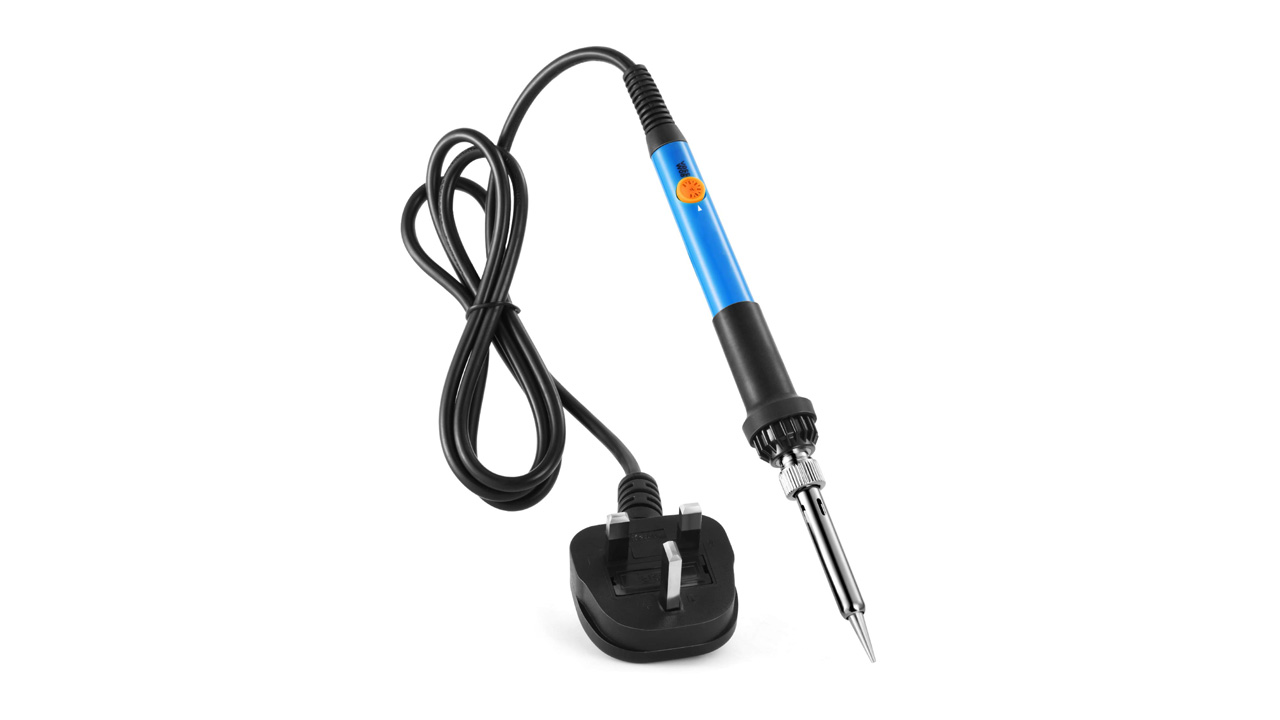
At the most basic level, a soldering machine can be a manual soldering station. These typically consist of a temperature-controlled soldering iron, a stand, a cleaning sponge or brass wool, and sometimes a fume extractor. They are ideal for prototyping, rework, repair, and low-volume production where precision and human dexterity are preferred over automation. Modern stations feature sophisticated temperature control, interchangeable tips, and ergonomic designs to enhance user experience and joint quality.
Wave Soldering Machines
Wave soldering is a widely adopted method for soldering through-hole components onto PCBs in high-volume production. The process involves passing a PCB over a “wave” of molten solder. Before contacting the solder wave, the board typically undergoes a fluxing stage (where flux is sprayed or foamed onto the bottom side) and a pre-heating stage (to activate the flux and prevent thermal shock). As the board glides over the solder wave, the molten solder selectively adheres to the component leads and pads, creating multiple solder joints simultaneously. Wave soldering is highly efficient for large batches of boards with consistent through-hole component layouts.
Reflow Soldering Ovens
Reflow soldering is the dominant method for attaching surface-mount technology (SMT) components to PCBs. This process utilizes solder paste, a sticky mixture of powdered solder alloy and flux, which is stenciled onto the component pads on the PCB. Components are then placed onto these paste deposits, and the entire assembly is passed through a reflow oven. The oven follows a precisely controlled thermal profile with distinct zones: preheat (to evaporate solvents and activate flux), soak (to stabilize temperature across the board), reflow (where solder melts and forms joints), and cool-down (to solidify solder quickly and prevent component damage). Reflow ovens can range from small benchtop units to large, multi-zone conveyorized systems, accommodating various production scales.
Selective Soldering Machines
As PCBs became more complex, often featuring a mix of SMT and through-hole components, selective soldering emerged as a specialized solution. These machines are designed to solder individual through-hole components on boards that have already undergone reflow soldering for their SMT parts. They use a precisely directed mini-wave or nozzle of molten solder to target specific pins or areas, preventing thermal damage to nearby SMT components. Selective soldering offers excellent process control, minimizes manual intervention, and is crucial for high-density, mixed-technology PCBs.
Robotic Soldering Systems
Robotic soldering systems integrate industrial robots with advanced soldering tools (iron, laser, or mini-wave nozzles). These systems offer unparalleled precision, repeatability, and flexibility. A robotic arm can be programmed to navigate complex board geometries, apply solder in intricate patterns, and perform tasks that would be difficult or impossible for human operators. They are particularly useful for high-mix, low-volume production, challenging geometries, or applications requiring extremely high consistency and traceability, such as in aerospace or medical electronics.
Laser Soldering Machines
Laser soldering is a non-contact soldering method that uses a focused laser beam to melt solder, either in paste form or as a wire fed into the joint. Its key advantage lies in its ability to deliver highly localized heat, minimizing thermal stress on surrounding components and the PCB itself. This makes it ideal for very fine-pitch components, heat-sensitive devices, or applications where precise spot heating is essential. Laser soldering offers excellent control over the heat input, leading to superior joint quality and reduced thermal impact.
Key Components and Features of Modern Soldering Machines
Modern soldering machines are sophisticated pieces of engineering, integrating various technologies to achieve optimal performance, reliability, and efficiency.
Heating Elements and Temperature Control
The core of any soldering machine is its ability to generate and precisely control heat. Soldering irons use ceramic or Nichrome heating elements. Reflow ovens utilize infrared emitters, convection heaters, or a combination. Wave solder machines rely on large pots of molten solder heated by immersion elements. Advanced machines feature PID (Proportional-Integral-Derivative) controllers for extremely stable temperature maintenance, rapid heat recovery, and accurate thermal profiling. This precision is vital for working with sensitive components and achieving consistent solder joint quality.
Control Systems and Automation

Modern soldering machines are typically controlled by programmable logic controllers (PLCs) or industrial PCs, running specialized software. These systems allow for precise parameter setting, recipe management, process monitoring, and data logging. Automation features include conveyor systems for material handling, robotic arms for component placement or soldering operations, and integrated vision systems for alignment and inspection. Such automation significantly boosts throughput, reduces human error, and ensures repeatability across production batches.
Vision Systems and Inspection
Many advanced soldering machines incorporate high-resolution cameras and vision systems. These are used for tasks such as precise component alignment before placement or soldering, verifying solder paste deposition, and performing automated optical inspection (AOI) of finished solder joints to detect defects like shorts, opens, or insufficient solder. Vision systems enhance accuracy, reduce rework, and contribute significantly to overall quality control.
Safety Features
Given the high temperatures and sometimes hazardous materials (like lead-based solders or certain fluxes), safety is a critical consideration. Modern machines include features such as integrated fume extraction systems to remove harmful vapors, emergency stop buttons, interlocks to prevent access during operation, and comprehensive thermal management systems to prevent overheating. ESD (Electrostatic Discharge) protection is also crucial to safeguard sensitive electronic components.
Material Handling and Robotics
For automated production lines, soldering machines are often integrated with other material handling systems. This includes automated conveyor belts that transport PCBs between different process stages (e.g., paste printing, pick-and-place, reflow). Robotic arms are increasingly used not only for soldering operations but also for loading/unloading boards, handling components, and performing complex assembly tasks, further enhancing the overall efficiency and flexibility of the manufacturing process.
The Evolution and Future of Soldering Technology
The trajectory of soldering machine technology is closely tied to the relentless pace of innovation in electronics. As components shrink, boards become denser, and demand for more powerful devices grows, soldering machines must evolve to meet these new challenges.
Miniaturization and Precision
The drive towards miniaturization is perhaps the most significant factor influencing soldering technology. As components become microscopic (e.g., 01005 chip resistors, µBGA packages), and pad pitches become extremely fine, the demand for machines capable of delivering unparalleled precision in solder paste deposition, component placement, and heat application intensifies. This has pushed the development of advanced vision systems, ultra-fine nozzles, and highly stable thermal control.
Environmental Considerations
The widespread adoption of lead-free solders mandated by environmental directives has significantly impacted machine design. Lead-free solders often require higher processing temperatures and have different wetting characteristics, necessitating more robust heating elements, precise temperature control, and optimized thermal profiles in reflow ovens and wave solder machines. Furthermore, energy efficiency and the reduction of waste (e.g., flux residues, spent solder) are ongoing considerations in machine development.
Industry 4.0 Integration
The concept of Industry 4.0 – smart factories, interconnected systems, and data-driven manufacturing – is profoundly influencing soldering machine development. Future machines will feature enhanced connectivity (IoT), real-time process monitoring, predictive maintenance capabilities (using AI and machine learning), and seamless integration with Manufacturing Execution Systems (MES). This enables factories to optimize production, identify issues proactively, and achieve higher levels of automation and efficiency.
Advanced Materials and Processes
Research into new solder alloys continues, focusing on properties like lower melting points (for temperature-sensitive components), improved mechanical strength, and enhanced reliability under harsh conditions. Innovations in flux chemistry are also ongoing, aiming for more effective cleaning with minimal residue and reduced environmental impact. Processes like vapor phase soldering, which uses a precisely controlled inert vapor for reflow, offer uniform heating and are gaining traction for specific applications.
Selecting the Right Soldering Machine for Your Needs
Choosing the appropriate soldering machine is a critical decision that impacts production efficiency, product quality, and cost. Several factors must be carefully evaluated.
Production Volume and Component Type
The scale of production is a primary driver. Low-volume prototyping or rework typically requires manual stations. Medium to high-volume production of through-hole boards demands wave soldering, while SMT-heavy boards necessitate reflow ovens. For mixed technology, selective soldering or robotic systems become essential. The size, type, and heat sensitivity of components also dictate the machine choice, with laser soldering favored for delicate or ultra-fine pitch applications.
Budget and Maintenance
Initial capital expenditure is a significant consideration. Basic manual stations are inexpensive, while fully automated robotic or multi-zone reflow systems represent substantial investments. Beyond the purchase price, ongoing operational costs, including energy consumption, solder and flux usage, spare parts, and routine maintenance, must be factored into the total cost of ownership.
Skill Level and Automation Desired
The level of automation desired will depend on available labor, desired consistency, and throughput goals. Manual operations require skilled technicians, while automated systems reduce reliance on manual dexterity but require programming and maintenance expertise. The goal is to strike a balance between human intervention and machine efficiency.

Quality and Reliability Requirements
Industries with stringent quality and reliability demands, such as aerospace, medical, or automotive, will gravitate towards machines that offer superior process control, repeatability, and integrated inspection capabilities. Features like precise temperature control, vision systems, and comprehensive data logging are crucial for meeting high-reliability standards and ensuring product longevity.
In conclusion, a soldering machine is far more than a simple tool for joining metals. It is a sophisticated piece of technology, evolving constantly to meet the ever-increasing demands of modern electronics manufacturing. From the fundamental principles of metallurgy and thermal management to the cutting-edge integration of robotics, AI, and environmental considerations, these machines are at the forefront of enabling the electronic devices that power our world.
aViewFromTheCave is a participant in the Amazon Services LLC Associates Program, an affiliate advertising program designed to provide a means for sites to earn advertising fees by advertising and linking to Amazon.com. Amazon, the Amazon logo, AmazonSupply, and the AmazonSupply logo are trademarks of Amazon.com, Inc. or its affiliates. As an Amazon Associate we earn affiliate commissions from qualifying purchases.