
Social Security stands as a cornerstone of financial security for millions of Americans, providing retirement, disability, and survivor benefits. Far from being a welfare program, it is primarily an earned benefit, deeply rooted in an individual’s work history and contributions to the system. Understanding the complex formula and the various factors that determine your specific benefit amount is crucial for effective financial planning and maximizing your future security.
The Foundation: Earned Income and Work Credits
At its core, Social Security benefits are a direct reflection of your working life. The system operates on a pay-as-you-go basis, where current workers’ contributions fund current retirees and beneficiaries. Your personal eligibility and the eventual size of your benefits are intrinsically linked to the income you’ve earned over your career and the corresponding Social Security taxes you’ve paid.
Understanding Work Credits
The first step to qualifying for any Social Security benefit is accumulating sufficient “work credits.” These credits are earned through your taxable earnings. For 2024, you earn one work credit for every $1,730 in earnings. You can earn a maximum of four credits per year. To become “fully insured” for retirement benefits, most individuals need 40 work credits, which typically translates to 10 years of work. This threshold ensures that individuals have contributed consistently to the system over a meaningful period.
It’s important to note that the number of credits required can vary for disability and survivor benefits. Younger workers, for instance, may qualify for disability benefits with fewer credits, as long as they have worked recently enough. This flexibility acknowledges that life events can impact earning capacity unexpectedly.
The Role of Taxable Earnings
Your earnings play a dual role: they determine your work credits and, more significantly, the average income used to calculate your benefit amount. Each payday, a portion of your wages (or self-employment income) is deducted as Federal Insurance Contributions Act (FICA) taxes. This comprises 6.2% for Social Security (up to a certain annual earnings limit) and 1.45% for Medicare. Your employer matches these contributions, totaling 12.4% for Social Security and 2.9% for Medicare. Self-employed individuals pay both halves, totaling 15.3% (known as SECA tax).
Crucially, only earnings up to the annual Social Security taxable earnings limit are subject to the 6.2% Social Security tax. For example, in 2024, this limit is $168,600. Any earnings above this threshold are not taxed for Social Security purposes and, therefore, do not contribute to your future benefit calculation. The Social Security Administration (SSA) meticulously tracks these taxable earnings throughout your career, creating a comprehensive record that forms the bedrock of your benefit calculation.
Calculating Your Primary Insurance Amount (PIA)
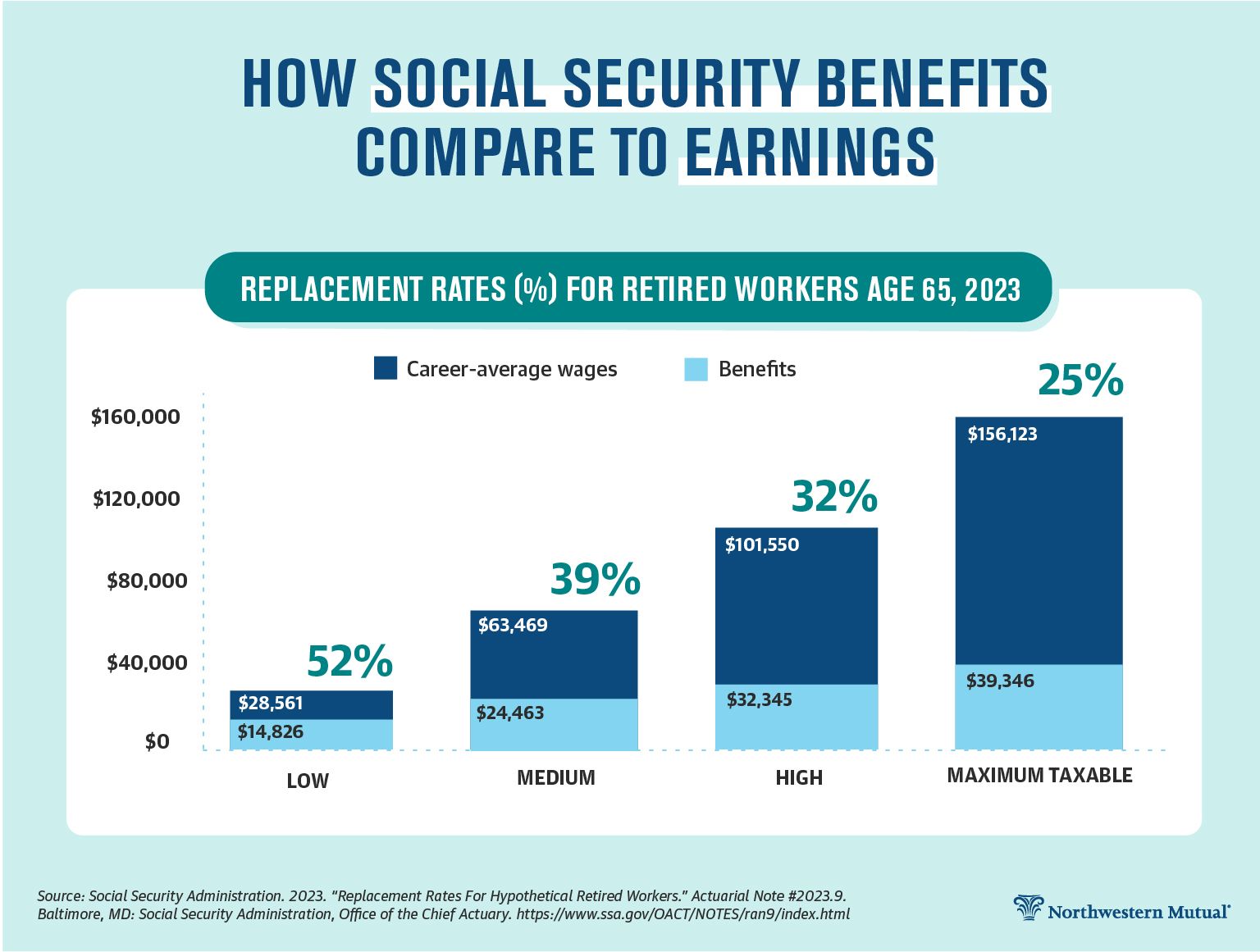
The Primary Insurance Amount (PIA) is the monthly benefit you would receive if you started collecting retirement benefits precisely at your Full Retirement Age (FRA). It is the base figure from which all other benefit types (spousal, survivor, disability, early/delayed retirement) are derived. The calculation of your PIA is a multi-step process designed to be somewhat progressive, meaning it replaces a higher percentage of pre-retirement earnings for lower-income workers.
Averaged Indexed Monthly Earnings (AIME)
The first key step in determining your PIA is calculating your Averaged Indexed Monthly Earnings (AIME). The SSA reviews your entire earnings history, typically considering your 35 highest-earning years. For each of these years, your actual earnings are “indexed” to account for changes in general wage levels over time. This indexing ensures that your past earnings reflect their relative value at the time you turn age 60, preventing inflation from diminishing the impact of early career contributions. For example, earnings from 1980 will be adjusted upward to be comparable to earnings in the late 1990s or early 2000s, reflecting the general rise in wages.
If you have fewer than 35 years of earnings, the missing years are entered as zeros in the calculation, which will reduce your AIME and, consequently, your PIA. This underscores the importance of a long and consistent work history in maximizing your Social Security benefits. Once indexed, these 35 highest years of earnings are summed and then divided by 420 (the number of months in 35 years) to arrive at your AIME.
The Bend Points Formula
Once your AIME is established, the SSA applies a progressive formula using “bend points” to calculate your PIA. This formula works by applying different percentages to specific segments of your AIME. For individuals becoming eligible in 2024, the formula is:
- 90% of the first $1,174 of AIME
- 32% of AIME between $1,174 and $7,078
- 15% of AIME above $7,078
These dollar amounts (bend points) are adjusted annually to keep pace with national wage growth. The progressive nature of this formula means that while higher earners will receive a larger absolute benefit, lower earners will have a greater percentage of their pre-retirement income replaced by Social Security. This mechanism is a foundational element of Social Security’s goal to provide a basic safety net.
Key Factors Influencing Your Benefit Amount
While your work history and PIA form the core of your Social Security benefit, several other critical factors can significantly alter the amount you actually receive. Strategic planning around these variables can have a substantial impact on your long-term financial well-being.
Claiming Age
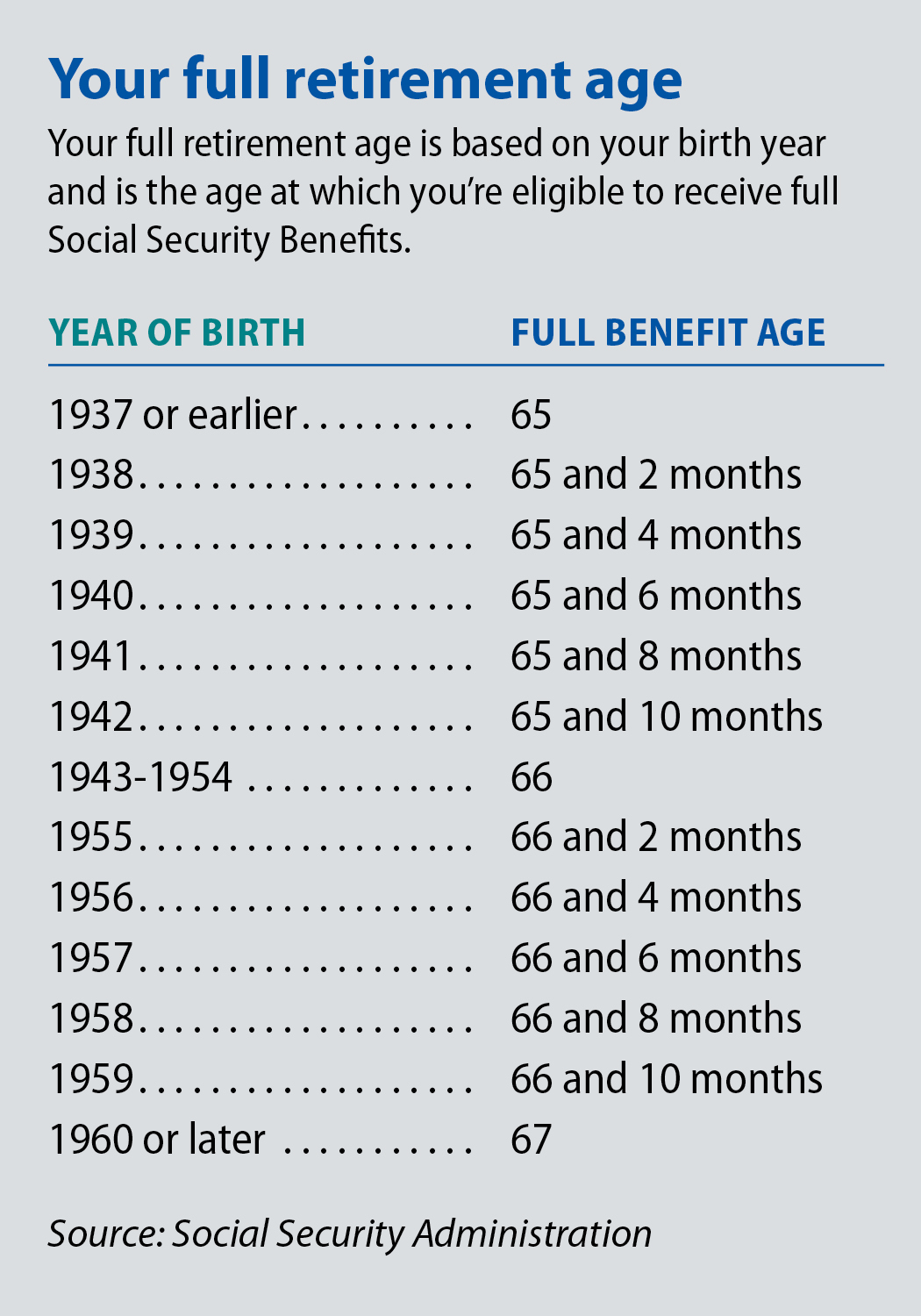
The age at which you choose to begin receiving retirement benefits is arguably the most impactful decision you’ll make regarding Social Security. Your Full Retirement Age (FRA) is the age at which you are entitled to 100% of your PIA. FRA varies based on your birth year: it’s 66 for those born between 1943 and 1954, gradually increases to 67 for those born in 1960 or later.
- Claiming Early: You can start collecting benefits as early as age 62. However, for each month you claim before your FRA, your benefits are permanently reduced. The reduction can be substantial, leading to a permanent decrease of up to 30% if you claim at 62 when your FRA is 67.
- Claiming Late: Conversely, if you delay claiming benefits past your FRA, you earn Delayed Retirement Credits (DRCs). These credits increase your monthly benefit by 8% per year for each year you delay, up to age 70. This can result in a benefit that is 24% to 32% higher than your FRA amount. This increase is also permanent and can significantly boost your lifetime income.
The decision to claim early, at FRA, or late involves a complex interplay of personal health, financial needs, other retirement assets, and life expectancy projections.
Cost-of-Living Adjustments (COLAs)
Once you begin receiving benefits, your payments are generally adjusted annually to keep pace with inflation through Cost-of-Living Adjustments (COLAs). COLAs are determined by changes in the Consumer Price Index for Urban Wage Earners and Clerical Workers (CPI-W). If the CPI-W increases from the third quarter of the previous year to the third quarter of the current year, a COLA is applied, increasing benefits for the following year. This mechanism is vital for maintaining the purchasing power of your benefits over time, especially during long retirements.
Taxation of Benefits
While Social Security benefits are often considered tax-free, a portion of them can become taxable at the federal level depending on your “provisional income.” Provisional income is calculated as your Adjusted Gross Income (AGI) + tax-exempt interest + half of your Social Security benefits.
- If your provisional income is between $25,000 and $34,000 for an individual (or $32,000 and $44,000 for a married couple filing jointly), up to 50% of your benefits may be subject to federal income tax.
- If your provisional income exceeds $34,000 for an individual (or $44,000 for a married couple filing jointly), up to 85% of your benefits may be subject to federal income tax.
Additionally, some states also tax Social Security benefits, further complicating the net amount you receive. Understanding these tax implications is crucial for accurate retirement income planning.
Working While Receiving Benefits (Before FRA)
If you decide to continue working while receiving Social Security benefits before reaching your Full Retirement Age, your benefits may be temporarily reduced if your earnings exceed a certain annual limit. For 2024, the earnings limit is $22,320. If you earn more than this, $1 in benefits will be withheld for every $2 you earn above the limit. In the year you reach your FRA, a higher limit applies ($59,520 in 2024), and $1 in benefits is withheld for every $3 earned above the limit, until the month you reach FRA. Once you reach your FRA, there are no limits on how much you can earn, and your benefits will not be reduced due to work. The good news is that any benefits withheld due to the earnings limit are not lost forever; the SSA recalculates your benefit at your FRA to account for the months you didn’t receive full payments, effectively increasing your monthly amount going forward.
Types of Social Security Benefits and Their Basis
While the PIA is the central figure, Social Security provides several distinct types of benefits, each with specific eligibility criteria and calculation nuances, all fundamentally rooted in an individual’s work history.
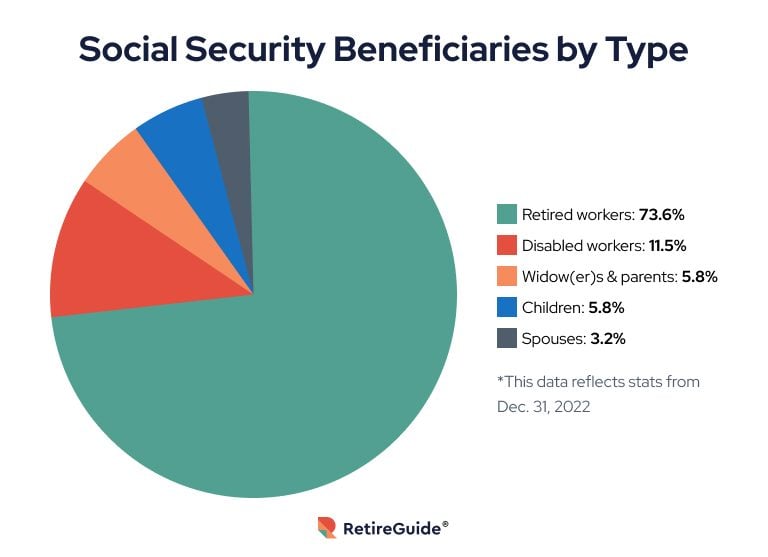
Retirement Benefits
These are the most common type of benefits and are directly based on your own PIA, adjusted for your claiming age. If you claim at your FRA, you receive 100% of your PIA. Claiming early reduces this amount, while delaying increases it.
Spousal Benefits
If you are married or divorced (and meet certain conditions), you may be eligible for benefits based on your spouse’s or former spouse’s work record. A spouse can receive up to 50% of their partner’s PIA if they claim at their own FRA. If they claim spousal benefits early, the amount is reduced. Importantly, the primary earner must generally have already filed for their own benefits for a spouse to claim spousal benefits, though specific rules apply for divorced spouses. Claiming spousal benefits does not reduce the primary earner’s benefit amount.
Survivor Benefits
Social Security provides crucial financial support to the surviving family members of a deceased worker. Eligible survivors include widows, widowers, dependent unmarried children, and sometimes dependent parents. The benefit amount is based on the deceased worker’s PIA, with various percentages applied depending on the relationship. For instance, a surviving spouse claiming at their own FRA can receive up to 100% of the deceased worker’s PIA, while children typically receive 75%. There is a family maximum benefit, which limits the total amount that can be paid to all survivors on a single worker’s record.
Disability Benefits (SSDI)
The Social Security Disability Insurance (SSDI) program provides benefits to workers who have become unable to engage in “Substantial Gainful Activity” (SGA) due to a severe medical condition that is expected to last at least 12 months or result in death. Eligibility requires a sufficient number of recent work credits. The disability benefit amount is calculated using a formula very similar to the retirement benefit formula, effectively determining what your PIA would be at the time you became disabled. Unlike retirement benefits, there are no age-related adjustments to the PIA for SSDI, as the benefit is meant to replace lost earnings due to an unforeseen event.
Accessing Your Information and Planning
Navigating the complexities of Social Security requires proactive engagement with your personal records and thoughtful financial planning.
Your Social Security Statement
The Social Security Administration provides a vital document known as your Social Security Statement. This statement, which you can access by creating a “my Social Security” online account, contains your complete earnings record, estimated future benefits at various claiming ages (early, FRA, and delayed), and estimates for disability and survivor benefits. It is highly recommended to review your statement annually to ensure your earnings record is accurate, as errors can impact your future benefits. Identifying and correcting discrepancies early can prevent significant issues down the line.
Strategic Planning
Social Security should be viewed as an integral component of your broader retirement strategy, not as a standalone solution. Understanding how your benefits are calculated and the impact of claiming age, earnings, and taxes allows you to make informed decisions. Many individuals consult with financial advisors to develop optimal claiming strategies that integrate Social Security with their 401(k)s, IRAs, and other savings. Maximizing your Social Security benefits often involves considering your health, family history, and other income sources to choose the claiming age that provides the greatest long-term financial security for you and your loved ones.
aViewFromTheCave is a participant in the Amazon Services LLC Associates Program, an affiliate advertising program designed to provide a means for sites to earn advertising fees by advertising and linking to Amazon.com. Amazon, the Amazon logo, AmazonSupply, and the AmazonSupply logo are trademarks of Amazon.com, Inc. or its affiliates. As an Amazon Associate we earn affiliate commissions from qualifying purchases.