
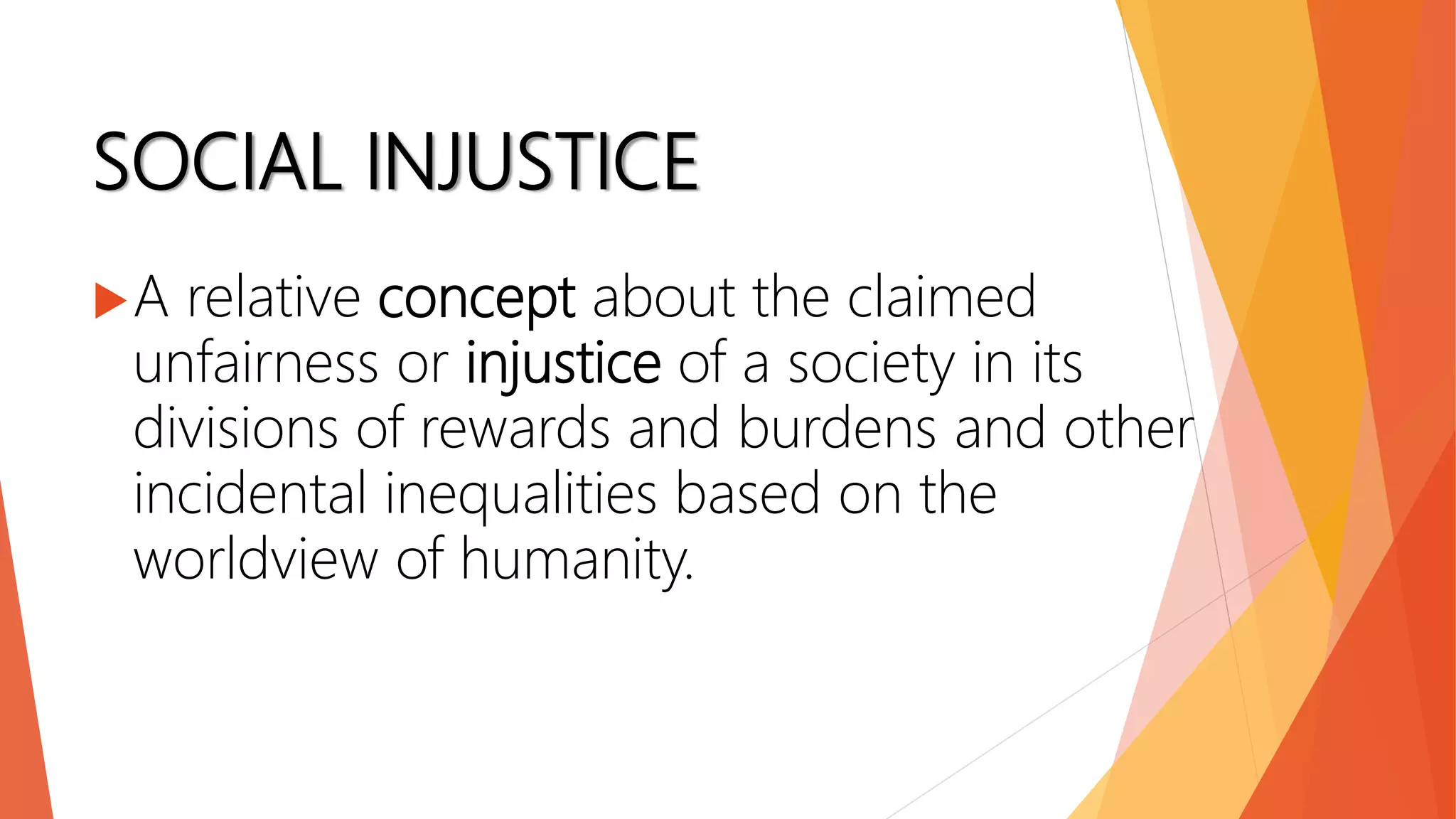
Social injustice is a pervasive and multifaceted issue characterized by unfairness and inequity in the distribution of resources, opportunities, and privileges within a society. It arises when systemic barriers, discriminatory practices, and historical disadvantages prevent certain groups from achieving full participation and well-being. While commonly understood through a lens of human rights and ethical considerations, social injustice is inextricably linked to economic structures, financial systems, and wealth distribution. From an economic perspective, social injustice manifests as a disproportionate accumulation of wealth, income, and financial power in the hands of a few, while simultaneously creating and perpetuating financial hardship, limited economic mobility, and systemic impoverishment for others.

Understanding social injustice within the “Money” niche requires an examination of how economic systems either uphold or dismantle equitable access to financial resources, stable income, asset building, and protection from financial exploitation. It delves into the mechanisms by which historical and ongoing societal biases — be they based on race, gender, ethnicity, religion, disability, or other characteristics — translate into tangible financial disadvantages and barriers to economic prosperity. This article will unpack the economic dimensions of social injustice, explore its financial costs, and discuss policy and business interventions aimed at fostering a more financially just world.
The Economic Roots and Manifestations of Social Injustice
Social injustice is not merely a matter of individual misfortune; it is deeply embedded in economic systems and societal structures, leading to predictable and persistent financial disparities. The way wealth is generated, distributed, and accessed often reflects and reinforces existing power imbalances.
Systemic Disparities in Wealth and Income
One of the most evident manifestations of social injustice in the financial realm is the vast and growing chasm in wealth and income distribution. Systemic disparities mean that certain demographic groups consistently earn less and accumulate significantly less wealth over their lifetimes, irrespective of individual effort or merit. This isn’t merely about personal choices; it’s about deeply entrenched mechanisms that favor some while disadvantaging others. For instance, historical policies like redlining segregated communities, depreciating property values and preventing wealth accumulation for Black families for generations. Similar patterns exist with gender pay gaps, where women, particularly women of color, consistently earn less than their male counterparts for equivalent work, significantly impacting their lifetime earnings, savings, and retirement security. These gaps are not accidental; they are the cumulative result of discriminatory hiring practices, lack of opportunities for advancement, and a devaluation of certain types of labor or demographic groups within the economy.
Access to Capital and Financial Services
A critical component of financial well-being is access to capital and robust financial services. Social injustice often dictates who gets approved for loans, who can secure affordable mortgages, and who can access investment opportunities. Predatory lending practices, for example, disproportionately target low-income communities and minority groups, trapping individuals in cycles of debt with exorbitant interest rates. Mainstream banks and financial institutions may be less present in underserved areas, forcing residents to rely on high-cost alternatives like check-cashing services or payday loans. This financial exclusion limits opportunities for entrepreneurship, homeownership, and education—all crucial pathways to wealth creation and economic mobility. Without equitable access to affordable credit and banking, individuals and communities are systematically prevented from investing in their future, starting businesses, or recovering from financial shocks.
Labor Market Inequality and Wage Gaps
The labor market is another primary arena where social injustice plays out financially. Beyond direct wage discrimination, labor market inequality includes disparities in job access, training, and promotion. Marginalized groups often find themselves concentrated in precarious, low-wage jobs with limited benefits and little opportunity for advancement. This phenomenon, sometimes called “occupational segregation,” means that entire industries or job types become informally assigned to specific demographic groups, often those with less power and voice. Furthermore, systemic barriers in education and vocational training can limit access to higher-paying professions. Even when individuals from marginalized groups enter professional fields, they may face a “glass ceiling” or “bamboo ceiling,” preventing them from reaching leadership positions and commanding higher salaries. These persistent wage gaps and limited career trajectories translate directly into lower lifetime earnings, reduced savings, and a diminished capacity for intergenerational wealth transfer, perpetuating cycles of poverty and financial vulnerability.
The Financial Cost of Discrimination and Exclusion
The repercussions of social injustice extend far beyond individual hardship; they impose significant financial costs on individuals, communities, and the broader economy. Discrimination and exclusion are not just morally wrong; they are economically inefficient and detrimental to overall prosperity.
Impact on Individual Financial Well-being
For individuals, the financial impact of social injustice can be devastating. Experiencing discrimination in housing can mean paying higher rents, living in substandard conditions, or facing homelessness. In employment, it translates to lower wages, job insecurity, and reduced benefits, directly impacting an individual’s ability to save, invest, and plan for the future. The stress and trauma associated with navigating systemic injustice can also lead to higher healthcare costs and lost productivity. Victims of financial fraud or predatory lending, often targeted due to their perceived vulnerability or lack of financial literacy, suffer direct financial losses that can take years to recover from, if ever. The cumulative effect is a significant erosion of personal wealth, increased debt burdens, and a perpetual state of financial precarity, making it nearly impossible for individuals to build a stable financial foundation or achieve upward mobility.
Economic Consequences for Marginalized Communities
At a communal level, social injustice stifles economic growth and resilience. Communities that are predominantly marginalized often face disinvestment, leading to a lack of essential infrastructure, quality schools, and healthcare facilities. Banks may redline these areas, denying business loans that could stimulate local economies or mortgages that would build community wealth through homeownership. The result is a cycle where lack of investment leads to fewer job opportunities, lower property values, and a declining tax base, further reducing the resources available for public services. This systemic neglect creates “financial deserts” where residents have limited access to healthy food, affordable transportation, and essential services, all of which have profound economic implications. The inability of these communities to thrive economically creates a persistent drag on regional and national economic performance, preventing entire segments of the population from contributing their full potential.
The Macroeconomic Burden of Inequality
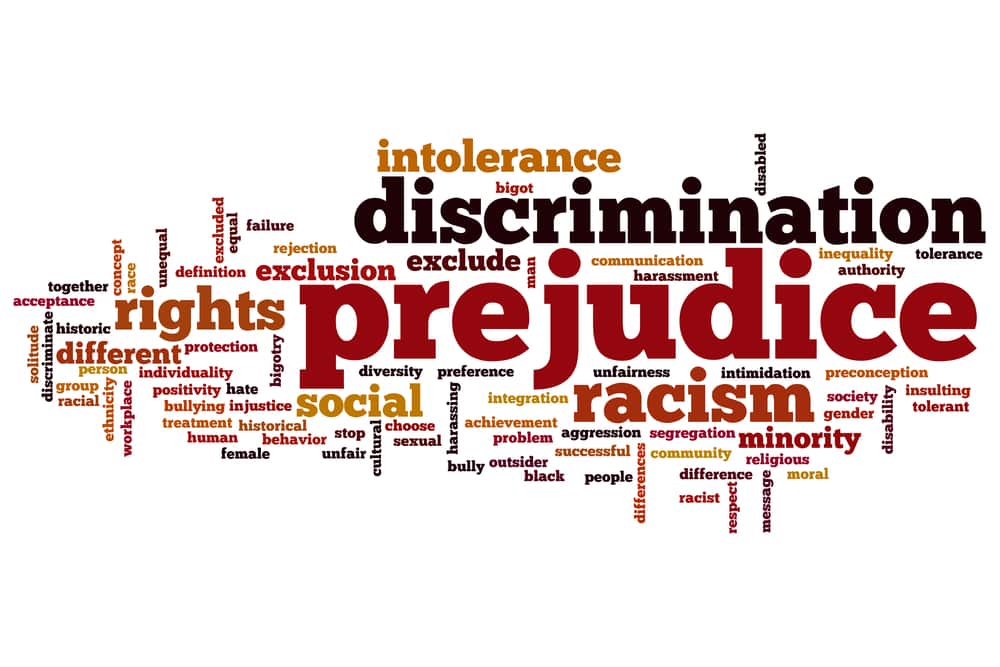
On a macroeconomic scale, social injustice represents a massive lost opportunity. High levels of income and wealth inequality are consistently linked to slower economic growth, reduced innovation, and increased social instability. When a significant portion of the population is unable to access education, healthcare, or quality employment due to systemic barriers, their potential contributions to the economy — as workers, consumers, and innovators — are severely curtailed. This results in a smaller consumer base, less skilled labor, and a less dynamic entrepreneurial ecosystem. Moreover, the social costs associated with inequality, such as increased crime rates, higher healthcare expenditures due to chronic stress, and expanded social welfare programs to address poverty, divert resources that could otherwise be invested in productive economic activities. Research from institutions like the IMF and OECD has repeatedly shown that reducing inequality can actually lead to more sustainable and robust economic growth for all, highlighting that social injustice is not just an ethical issue but a critical economic impediment.
Policy Interventions and Financial Solutions for Equity
Addressing social injustice from a financial perspective requires comprehensive policy interventions and a rethinking of how economic systems are designed and regulated. These solutions aim to dismantle systemic barriers and create pathways for equitable financial participation and wealth accumulation.
Reforming Financial Systems and Regulations
A fundamental step is to reform financial systems and regulations to ensure fairness, transparency, and accessibility for all. This includes robust anti-discrimination laws in lending, housing, and employment, with strict enforcement mechanisms. Regulators must scrutinize practices like redlining and predatory lending, imposing severe penalties on institutions that perpetuate them. Policies that promote financial inclusion, such as encouraging community development financial institutions (CDFIs) and credit unions in underserved areas, can help bridge gaps in access to affordable credit and banking services. Furthermore, progressive tax policies that ensure the wealthy pay their fair share can help fund public services and redistribute resources, directly combating wealth inequality. Reforming bankruptcy laws to provide a fairer second chance and establishing clear rules for consumer financial protection are also crucial to prevent individuals from falling into inescapable debt traps.
Investing in Equitable Economic Development
True economic equity requires targeted investments that uplift marginalized communities and create inclusive growth. This means directing public and private capital into infrastructure projects, quality education, and job training programs in historically neglected areas. Policies that support minority-owned businesses and entrepreneurs, through grants, mentorship, and access to capital, can foster local economic ecosystems. Investing in affordable housing initiatives can stabilize communities, prevent displacement, and provide a foundation for wealth building. Additionally, efforts to ensure broadband access and digital literacy in all communities are essential, as digital inclusion is increasingly a prerequisite for economic participation in the modern economy. These investments are not merely social spending; they are strategic economic investments that yield long-term returns by expanding the tax base, increasing productivity, and reducing the costs associated with poverty and inequality.
Promoting Financial Literacy and Empowerment
While systemic change is paramount, empowering individuals with financial literacy and tools is also a vital component of addressing social injustice. Providing accessible, culturally relevant financial education can equip individuals with the knowledge to make informed decisions about saving, investing, debt management, and consumer protection. However, it’s crucial that such efforts are paired with genuine access to fair financial products and opportunities. Empowerment also involves protecting consumers from predatory practices, ensuring they understand their rights, and providing avenues for recourse when exploited. Community-based programs that offer financial counseling, asset-building workshops, and access to micro-loans can help individuals navigate complex financial landscapes and build resilience. This holistic approach — combining systemic reform with individual empowerment — is necessary to break cycles of financial disadvantage and foster genuine financial equity.
Business’s Role in Addressing Financial Injustice
While government policy is critical, the private sector has a substantial role to play in either perpetuating or mitigating social injustice, particularly from a financial perspective. Businesses, as major employers, investors, and service providers, wield significant economic power.
Corporate Social Responsibility and Ethical Investing
Corporate Social Responsibility (CSR) is no longer just about philanthropy; it’s about integrating ethical and equitable practices into the core business model. For the “Money” niche, this means businesses should evaluate their financial impact on all stakeholders, not just shareholders. Ethical investing, or Environmental, Social, and Governance (ESG) investing, is a growing trend where investors prioritize companies with strong social justice records, fair labor practices, and sustainable operations. This can include scrutinizing supply chains for exploitative labor, ensuring fair wages and benefits for all employees, and actively promoting diversity and inclusion within leadership. Companies can also use their financial influence to advocate for policies that reduce inequality and promote economic justice. By aligning their financial decisions with ethical principles, businesses can become powerful agents for positive social change.
Inclusive Business Practices and Supply Chains
Businesses can directly combat financial injustice by adopting inclusive practices throughout their operations. This includes fair hiring practices, ensuring equal pay for equal work, and investing in training and development programs that uplift employees from marginalized backgrounds. Creating inclusive supply chains means partnering with diverse suppliers, including minority- and women-owned businesses, providing them with stable contracts and growth opportunities. Banks and financial institutions, in particular, have a responsibility to ensure their lending practices are non-discriminatory, and they can actively work to expand access to credit and financial services in underserved communities. Fintech companies have a unique opportunity to innovate financial products that are accessible, affordable, and tailored to the needs of financially marginalized populations, leveraging technology to democratize access to financial tools that were previously out of reach.
Philanthropy and Impact Investing
Beyond direct business operations, corporate philanthropy and impact investing offer powerful avenues for addressing financial injustice. Strategic philanthropy can fund non-profit organizations working to provide financial literacy, legal aid against predatory practices, or support for economic development in disadvantaged communities. Impact investing goes a step further, where investments are made with the explicit intention of generating positive social or environmental impact alongside a financial return. This can involve investing in affordable housing projects, social enterprises that create jobs in marginalized communities, or funds that support minority entrepreneurs. By channeling capital towards ventures that actively work to solve social and economic problems, businesses and investors can leverage financial markets to drive systemic change, proving that profit and purpose are not mutually exclusive but can be powerfully intertwined in the pursuit of a more financially just society.
Ultimately, understanding “what is social injustice” within the realm of money reveals a complex interplay of historical disadvantages, systemic discrimination, and entrenched economic disparities. Addressing it requires a concerted effort across policy, industry, and individual action to dismantle barriers, foster inclusion, and build a financial system that truly works for everyone.
aViewFromTheCave is a participant in the Amazon Services LLC Associates Program, an affiliate advertising program designed to provide a means for sites to earn advertising fees by advertising and linking to Amazon.com. Amazon, the Amazon logo, AmazonSupply, and the AmazonSupply logo are trademarks of Amazon.com, Inc. or its affiliates. As an Amazon Associate we earn affiliate commissions from qualifying purchases.