
The S&P 500, often referred to simply as “the S&P,” stands as one of the most widely recognized and important financial benchmarks in the world. It’s more than just a list of companies; it’s a dynamic reflection of the health and trajectory of the U.S. economy, a crucial indicator for investors, economists, and policymakers alike. For anyone looking to understand the core mechanisms of the stock market, grasp the concept of diversified investing, or simply keep a pulse on corporate America, comprehending the S&P 500 is an indispensable first step. This index represents a basket of 500 of the largest publicly traded companies in the United States, carefully selected to offer a broad and representative cross-section of the market. Its performance is meticulously tracked, analyzed, and cited daily, influencing investment decisions, retirement planning, and global market sentiment. Delving into its structure, significance, and methods of investment reveals why this index has earned its revered status as a cornerstone of modern finance.

Understanding the S&P 500: A Benchmark of the American Economy
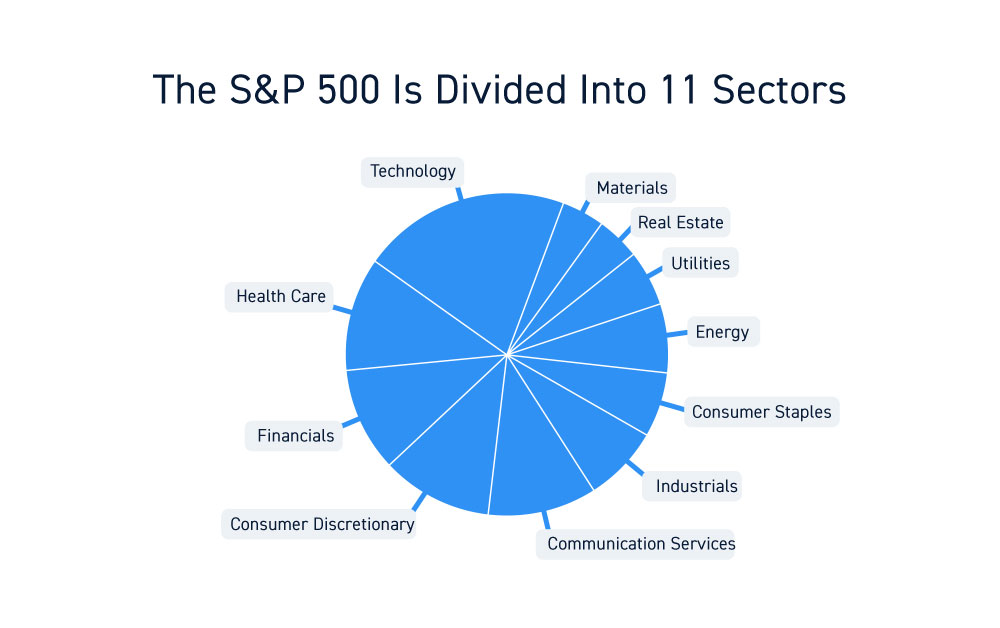
At its core, the S&P 500 is a stock market index maintained by S&P Dow Jones Indices. It’s not an investment vehicle in itself, but rather a tool used to measure the performance of a segment of the stock market. Unlike the Dow Jones Industrial Average, which comprises only 30 large companies and is price-weighted, the S&P 500 offers a much broader and arguably more accurate representation of the broader U.S. equity market. Its diverse composition spans a multitude of sectors, from technology and finance to healthcare and consumer goods, ensuring that its movement reflects a wide array of economic activity and corporate success stories. Understanding the nuances of its construction is key to appreciating its predictive power and utility as an investment benchmark.
What Exactly is an Index?
In the context of finance, an index is a statistical measure of the changes in a portfolio of stocks, bonds, or other securities. Its primary purpose is to provide a standardized way to track the performance of a specific market, segment, or asset class over time. Think of it as a weighted average that moves up or down as the prices of its constituent securities change. Financial indices serve several critical functions: they act as benchmarks against which professional fund managers measure their success, provide a general gauge of market sentiment, and serve as the underlying asset for various investment products like index funds and exchange-traded funds (ETFs). The S&P 500 is arguably the most prominent equity index globally, offering a snapshot of large-cap U.S. stocks.
The “500” Explained: Selection Criteria and Composition
The “500” in S&P 500 refers to the approximate number of companies included in the index. However, it’s not simply the 500 largest companies by market capitalization. S&P Dow Jones Indices employs a committee that applies specific criteria for inclusion, aiming to ensure the index remains representative of the U.S. economy. Key criteria include:
- Market Capitalization: Companies must generally have a market cap of at least $14.6 billion (this figure is subject to change).
- Liquidity: There must be sufficient trading volume to ensure that the stock price is determined by market forces and not easily manipulated.
- Public Float: A substantial portion of the company’s shares must be available for public trading (not held by insiders or restricted shares).
- U.S. Company: The company must be a U.S. entity.
- Financial Viability: Companies must have positive reported earnings in the most recent quarter and cumulative positive earnings over the preceding four quarters.
- Sector Representation: The committee aims for a balance across various sectors to accurately reflect the broader economy.
These criteria mean that inclusion in the S&P 500 is prestigious and often leads to increased investor interest and institutional buying, further cementing its role as a leading indicator. The committee regularly reviews and rebalances the index, adding and removing companies as market conditions and corporate performances evolve.
Market-Cap Weighting: Why Size Matters
The S&P 500 is a market-capitalization-weighted index. This means that companies with larger market capitalizations (stock price multiplied by the number of outstanding shares) have a greater impact on the index’s overall value and performance than companies with smaller market caps. For example, a 1% move in Apple’s stock (a company with a very large market cap) will have a significantly greater effect on the S&P 500’s movement than a 1% move in a smaller constituent company. This weighting methodology ensures that the index accurately reflects the true size and influence of its largest components within the broader market. While this approach has its critics, who argue it can lead to concentration risk (where a few mega-cap stocks dominate performance), it is generally accepted as the most effective way to track the overall market’s value proposition.
The Significance and Role of the S&P 500 in Investing
Beyond its construction, the true power of the S&P 500 lies in its multifaceted significance for the financial world. It transcends being a mere list of companies to become a dynamic entity that guides decisions, measures success, and underpins countless investment strategies. Its pervasive influence makes it an essential concept for anyone engaging with the stock market, from individual retail investors to sophisticated institutional money managers.
A Barometer of Economic Health
One of the S&P 500’s most cited roles is its function as a leading indicator, or barometer, of the U.S. economy. Because it encompasses 500 large, publicly traded companies across diverse sectors, its collective performance often reflects the overall health and sentiment of corporate America. When the S&P 500 is rising, it typically signals investor optimism about future corporate earnings, economic growth, and stability. Conversely, a sustained decline can indicate concerns about recessions, corporate profitability, or broader economic headwinds. While it’s not a perfect predictor and can be influenced by factors beyond fundamental economic health, its movements are closely watched for insights into the nation’s financial trajectory.
Diversification Through a Single Index
For individual investors, the S&P 500 offers an unparalleled level of immediate diversification. Instead of laboriously researching and investing in hundreds of individual stocks, an investment vehicle that tracks the S&P 500 (like an index fund or ETF) provides exposure to 500 different companies with a single transaction. This inherent diversification significantly reduces idiosyncratic risk – the risk associated with a single company performing poorly. If one or two companies within the index face challenges, their impact on the overall portfolio is diluted by the performance of the other 498 companies. This makes the S&P 500 an incredibly efficient and risk-managed way to gain broad market exposure, particularly for long-term investors.
Benchmarking Performance: A Standard for Comparison
The S&P 500 is the gold standard for benchmarking professional money managers and investment portfolios. Active fund managers, who aim to “beat the market” by selecting individual stocks, constantly compare their returns against the S&P 500’s performance. If a large-cap U.S. equity fund fails to outperform the S&P 500 over a significant period, it often raises questions about its fees and efficacy, as an investor could have achieved similar (or better) returns with a low-cost S&P 500 index fund. This benchmarking function provides transparency and accountability in the investment industry, compelling managers to justify their existence and fees. For individual investors, it offers a simple yardstick to evaluate their own portfolio’s performance against the broader market.
How to Invest in the S&P 500
Directly buying 500 individual stocks to replicate the S&P 500 is impractical for most investors due to the capital required and the effort involved in rebalancing. Fortunately, the financial industry has developed highly accessible and cost-effective ways for everyday investors to gain exposure to the S&P 500. These methods allow individuals to participate in the growth of America’s leading companies without the complexities of active stock picking.
Index Funds: The Accessible Gateway

The most common and often recommended way to invest in the S&P 500 is through an S&P 500 index mutual fund. These funds are designed to mirror the performance of the index by investing in all (or a representative sample) of the 500 companies in the same proportions as the index. When you invest in an S&P 500 index fund, you are essentially buying a tiny slice of each of those 500 companies. The beauty of index funds lies in their passive management style, which translates to significantly lower fees (expense ratios) compared to actively managed funds. This cost efficiency, combined with broad diversification, makes them a cornerstone of many long-term investment strategies, particularly for retirement accounts like 401(k)s and IRAs.
Exchange-Traded Funds (ETFs): Flexibility and Liquidity
Similar to index mutual funds, S&P 500 Exchange-Traded Funds (ETFs) also aim to track the performance of the S&P 500. The key difference is how they are traded. ETFs are bought and sold on stock exchanges throughout the day, just like individual stocks. This offers greater flexibility and liquidity compared to mutual funds, which are typically priced once a day after the market closes. ETFs also generally boast very low expense ratios and can be more tax-efficient in certain situations due to their structure. Popular S&P 500 ETFs include SPY, IVV, and VOO, each managed by different financial institutions, but all striving to replicate the index’s returns. For investors who prefer intra-day trading capabilities or wish to integrate S&P 500 exposure into a brokerage account with ease, ETFs are an excellent choice.
Direct Stock Ownership (Not Recommended for Index Replication)
While theoretically possible, directly owning all 500 individual stocks in the S&P 500 is not a practical or efficient method for replicating the index for the average investor. The sheer capital requirement would be enormous, and the ongoing effort to rebalance the portfolio according to the index’s changes would be prohibitively time-consuming and expensive (due to transaction costs). Furthermore, maintaining the precise market-cap weighting of the index would be a constant challenge. For these reasons, index funds and ETFs are the overwhelmingly preferred and financially sensible routes to gain S&P 500 exposure.
Historical Performance and Long-Term Outlook
The S&P 500 has a remarkable track record of growth over the long term, making it a powerful engine for wealth creation. Understanding its historical performance and the principles behind long-term investing can provide valuable perspective for current and future investors. While past performance is never a guarantee of future results, the S&P 500’s history offers compelling insights into the resilience and growth potential of the U.S. economy.
A History of Resilience and Growth
Since its inception in 1957, and even looking at data for its predecessor indices, the S&P 500 has delivered an average annualized return of approximately 10-12% (before inflation), depending on the specific period measured. This impressive average includes periods of significant market downturns, such as the Dot-com bubble bust, the 2008 financial crisis, and the COVID-19 pandemic. What this long-term average demonstrates is the index’s capacity for resilience and recovery. Despite various economic shocks and geopolitical events, the collective innovation, productivity, and profitability of America’s largest companies have consistently driven the market higher over multi-decade horizons. It underscores the principle that timing the market is difficult, but time in the market is often richly rewarded.
The Power of Compounding and Dollar-Cost Averaging
Investing in the S&P 500, particularly through index funds or ETFs, lends itself perfectly to two fundamental wealth-building strategies:
- Compounding: This is the process where the returns you earn on your investments also start earning returns themselves. Over decades, even modest annual returns on a consistently growing principal can lead to exponential wealth accumulation. The S&P 500’s long-term average returns provide an excellent foundation for compounding.
- Dollar-Cost Averaging (DCA): This strategy involves investing a fixed amount of money at regular intervals (e.g., $100 every month), regardless of market fluctuations. When the market is down, your fixed amount buys more shares; when it’s up, it buys fewer. Over time, DCA helps average out your purchase price and reduces the risk of investing a large sum at an unfavorable peak. For S&P 500 investors, consistently contributing to an index fund or ETF through DCA is a highly effective way to build wealth systematically and mitigate market timing risk.
Risks and Considerations When Investing in the S&P 500
While the S&P 500 offers substantial benefits, it’s crucial to acknowledge the inherent risks associated with any equity investment:
- Market Risk: The entire market can decline, causing the value of S&P 500 investments to fall. Economic recessions, geopolitical events, or widespread investor panic can lead to significant downturns.
- No Guarantees: Past performance does not guarantee future results. While the long-term trend has been upward, there will always be periods of volatility and loss.
- Inflation Risk: While the S&P 500 has historically outpaced inflation, there’s no guarantee that it will always do so, particularly during periods of high inflation.
- Concentration Risk (within U.S. Large Cap): While diversified across 500 companies, the S&P 500 is entirely focused on large-cap U.S. equities. It doesn’t provide exposure to international markets, small-cap companies, or other asset classes like bonds. A truly diversified portfolio might include these other elements.
Why the S&P 500 Matters for Every Investor
The S&P 500 isn’t just a tool for financial professionals; it’s a vital component of a robust financial strategy for virtually every investor. Its fundamental characteristics make it an accessible, efficient, and powerful vehicle for pursuing long-term financial goals, from retirement savings to wealth accumulation.
Simplicity and Low Cost
One of the most compelling arguments for investing in the S&P 500 is its sheer simplicity and low cost. By choosing an S&P 500 index fund or ETF, investors bypass the complex and often costly world of active stock selection, market timing, and high management fees. These passive investment vehicles typically have expense ratios that are a fraction of actively managed funds, meaning more of your money stays invested and continues to compound. This “set it and forget it” approach, combined with minimal fees, makes it an incredibly efficient way for even novice investors to participate in the stock market’s growth.
Exposure to Global Leaders
The companies within the S&P 500 are not just large U.S. businesses; many are multinational corporations with global operations and revenue streams. When you invest in the S&P 500, you’re gaining exposure to companies that are leaders in their respective industries, driving innovation, and competing on a global scale. From technology giants to pharmaceutical powerhouses, these companies represent the forefront of economic progress and offer a stake in the world’s most successful enterprises. This global reach within a U.S.-focused index provides a nuanced form of international diversification.
A Foundation for a Solid Investment Strategy
For many financial advisors, an S&P 500 index fund or ETF forms the core of a well-diversified investment portfolio. It provides a strong foundation of broad market exposure that can then be supplemented with other asset classes (like bonds, international stocks, or real estate) to further tailor the portfolio to an individual’s risk tolerance and financial goals. For those just starting their investment journey, or those looking for a hands-off approach to long-term wealth building, the S&P 500 offers a compelling and proven path to financial growth. Its enduring presence and consistent long-term returns underscore its importance as a foundational element in personal finance.
aViewFromTheCave is a participant in the Amazon Services LLC Associates Program, an affiliate advertising program designed to provide a means for sites to earn advertising fees by advertising and linking to Amazon.com. Amazon, the Amazon logo, AmazonSupply, and the AmazonSupply logo are trademarks of Amazon.com, Inc. or its affiliates. As an Amazon Associate we earn affiliate commissions from qualifying purchases.