
Golf, at its heart, is a game of precision, strategy, and a constant battle against oneself and the course. While the fundamental objective of getting the ball into the hole in the fewest strokes remains universal, the journey to achieve this can vary dramatically from one golfer to another and, more importantly, from one golf course to another. Understanding the intricacies of a golf course’s difficulty is paramount for any player seeking to accurately assess their performance and set realistic goals. This is where the concept of “Slope Rating” comes into play. Far from being just another arbitrary number, Slope Rating is a sophisticated metric designed to provide a quantifiable measure of a golf course’s difficulty for the average golfer, taking into account the varying challenges presented by its design and topography.

When you look at a golf scorecard, you’ll typically find a Course Rating and a Slope Rating. The Course Rating offers a benchmark for scratch golfers (those who can play to a zero handicap), representing the average number of strokes a scratch golfer is expected to score on that particular course. However, the true power and nuance of handicapping lie in the Slope Rating. It specifically addresses how much more difficult the course is for a bogey golfer (a player with a handicap index of approximately 20 for men and 24 for women) compared to a scratch golfer. This distinction is critical because not all golfers are created equal, and a course that might be moderately challenging for a highly skilled player could be significantly more demanding for an average amateur.
The Genesis and Purpose of Slope Rating
The development of Slope Rating was a response to the growing need for a more equitable and accurate handicapping system. Before its widespread adoption, handicaps were often based on simpler formulas that didn’t adequately account for the diverse challenges presented by different golf courses. This led to situations where a golfer’s handicap might not truly reflect their playing ability across various courses.
Evolution from Course Rating
The concept of Course Rating was established to provide a standardized measure of a course’s difficulty for a scratch golfer. It considers factors such as length, hazards, elevation changes, and the prevailing wind conditions. However, it was observed that while a course might have a similar Course Rating for two different locations, its actual difficulty for players of varying skill levels could differ significantly. For instance, a course with numerous strategically placed hazards and undulating greens might be manageable for a scratch golfer who can expertly navigate these challenges, but extremely penalizing for an average golfer who is more prone to errors. This is where the necessity for Slope Rating became apparent.
The Handicapping Equation
Slope Rating’s primary purpose is to adjust a golfer’s handicap index for the specific course they are playing. The formula used to calculate a player’s Course Handicap – the number of strokes they receive on a particular course – directly incorporates the Slope Rating. The general principle is that a higher Slope Rating signifies a greater differential in difficulty between a scratch golfer and a bogey golfer. Therefore, a player with a given handicap index will receive more strokes on a course with a high Slope Rating than on a course with a low Slope Rating. This ensures that a golfer’s handicap is a fairer reflection of their potential performance on that specific course, regardless of its inherent challenges.
The formula for calculating a golfer’s Course Handicap is as follows:
Course Handicap = Handicap Index × (Slope Rating / 113) + (Course Rating – Par)
In this equation, the “113” is a standardized value representing the average slope of a typical golf course. The Slope Rating itself, which ranges from 55 (easiest) to 155 (most difficult), is a multiplier. A higher Slope Rating means the fraction (Slope Rating / 113) will be larger, thus increasing the golfer’s Course Handicap. The addition of (Course Rating – Par) accounts for any difference between the Course Rating and the actual par of the course. This comprehensive formula ensures that the resulting Course Handicap is tailored to the specific conditions and challenges of the course being played.
Deconstructing the Slope Rating System
The calculation of a Slope Rating is a complex process, meticulously carried out by trained raters. It involves a detailed assessment of various course features and their impact on players of different skill levels. This systematic approach ensures that the resulting number is a reliable indicator of a course’s true difficulty.
The Role of the Bogey Golfer
Crucially, the Slope Rating is not calculated with the scratch golfer in mind but rather with the bogey golfer. The USGA (United States Golf Association) defines a bogey golfer as one who typically shoots 19-20 over par for 18 holes. The Slope Rating quantifies how much more challenging the course is for this bogey golfer compared to a scratch golfer, relative to the Course Rating. For example, if a course has a Course Rating of 72.0 and a Slope Rating of 130, it indicates that the course is significantly more difficult for a bogey golfer than it is for a scratch golfer. The difference between the scratch golfer’s expected score (the Course Rating) and the bogey golfer’s expected score is amplified by the Slope Rating.
Key Factors Influencing Slope Rating
Several elements contribute to a golf course’s Slope Rating. These factors are evaluated by experienced raters who play the course and meticulously document their findings.
- Length: While length is a primary factor in Course Rating, its impact on the bogey golfer is also considered for Slope Rating. Longer holes, especially those with significant doglegs or forced carries, can disproportionately challenge less skilled players.
- Obstacles: This is a major contributor. The number, type, and severity of obstacles such as bunkers, water hazards, trees, and out-of-bounds areas are assessed. For example, a fairway bunker that might be easily avoided by a skilled player could be a significant penalty for an average golfer, forcing them to lay up or take a less advantageous shot. The proximity and depth of bunkers, the width of fairways, and the penalty for hitting into hazards all play a role.
- Elevation Changes: Steep elevation changes, both uphill and downhill, can significantly alter the perceived length and difficulty of a hole. A downhill tee shot might appear shorter but can lead to uncontrolled drives, while an uphill approach shot requires more power and accuracy, which can be a struggle for many amateurs.
- Doglegs and Forced Carries: Holes that require a golfer to shape their shots around hazards (doglegs) or carry over obstacles (forced carries) add another layer of complexity. These features demand a higher degree of shot-making ability, thus contributing to a higher Slope Rating.
- Green Undulation and Contours: The severity of slopes and contours on the greens can drastically affect putting. Extremely undulating greens with subtle breaks are notoriously difficult to read and putt on, especially for those not accustomed to such challenges.
- Wind: While wind conditions can vary daily, the general prevalence and direction of prevailing winds are considered. Courses that are consistently exposed to strong winds can be much tougher for less experienced players who may struggle to control their shots.
- Forced Layups: Holes that necessitate layups at certain points, regardless of the golfer’s strategy, add to the difficulty. These forced layups often present strategic choices that can be taxing for amateurs.
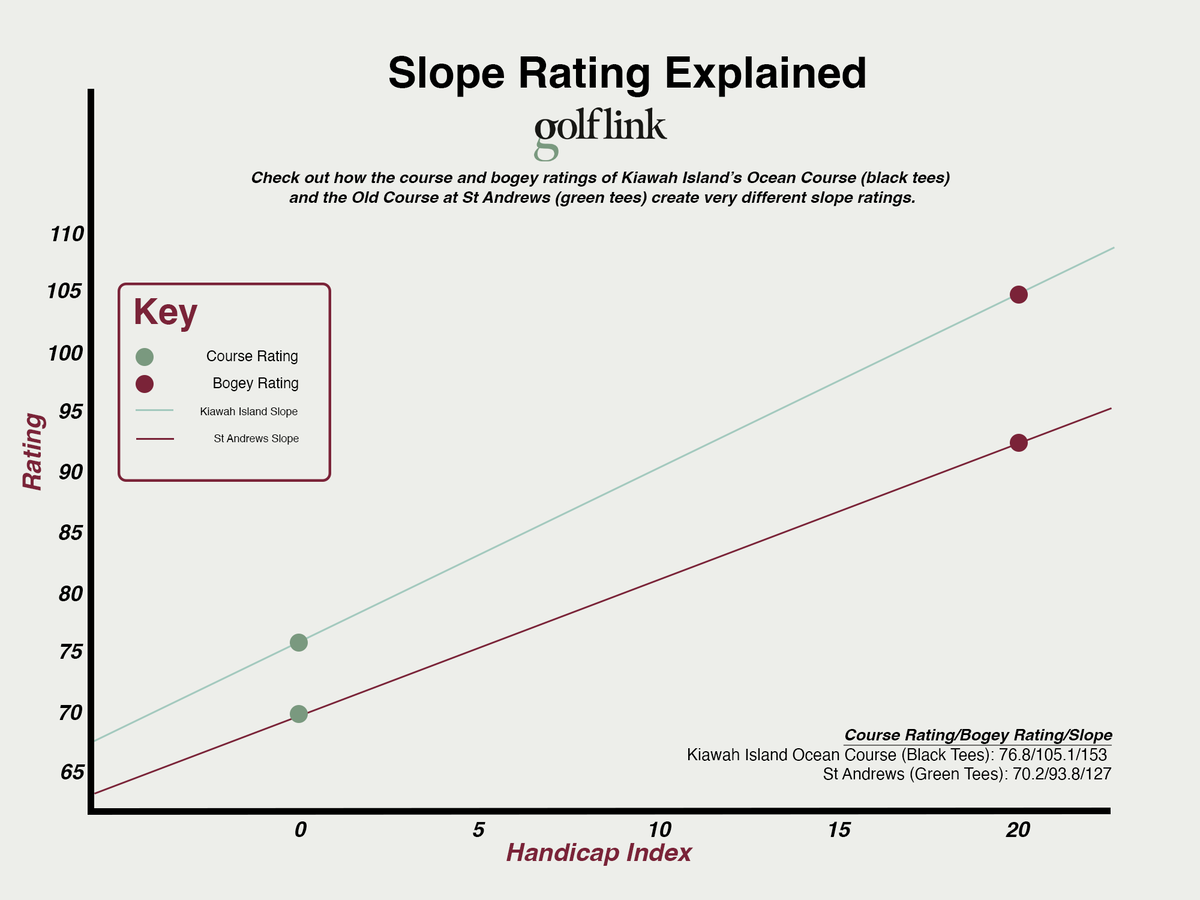
The raters meticulously evaluate each hole, assigning a numerical value to each of these factors for both the scratch and bogey golfer. This data is then fed into a computer program that calculates the final Slope Rating.
The Practical Application of Slope Rating for Golfers
Understanding Slope Rating is not merely an academic exercise; it has direct and tangible benefits for every golfer. It transforms how you interpret your scores and how you approach different courses.
Fairer Competition and Handicapping
The most significant benefit of Slope Rating is its role in creating a more equitable handicapping system. When you play a course with a higher Slope Rating, your Course Handicap increases. This means you receive more strokes, which levels the playing field between you and golfers of different abilities playing on a course that is significantly more challenging for you. Without Slope Rating, a golfer might consistently underperform on challenging courses, leading to an inflated handicap that doesn’t accurately reflect their true playing ability in less demanding conditions. Conversely, on an easier course (lower Slope Rating), your Course Handicap will be lower, reflecting the reduced challenge. This ensures that handicaps remain fluid and reflective of a golfer’s performance across a variety of courses.
Strategic Course Management and Goal Setting
Knowing a course’s Slope Rating can influence your strategy and expectations. If you’re facing a course with a very high Slope Rating, you might adjust your expectations for the day. Instead of aiming for your typical score, you might focus on playing smart, minimizing penalties, and accepting that your score might be a few strokes higher than usual. This proactive approach can reduce frustration and lead to a more enjoyable round. Conversely, a course with a lower Slope Rating might present an opportunity to aim for a better-than-average score, provided your handicap index is accurate. Understanding the course’s characteristics that contribute to its slope can also help you identify your weaknesses and focus your practice on specific areas that are likely to be challenged on that particular course.
Informed Equipment and Practice Decisions
While not its direct purpose, understanding slope and its contributing factors can indirectly inform your practice routines and even equipment choices. If you consistently struggle on courses with significant elevation changes or numerous hazards, it might prompt you to work on your long game, your ability to hit from uneven lies, or your recovery shots. If you find yourself frequently penalized by fairway bunkers, you might focus on accuracy off the tee. This deeper understanding of course difficulty, facilitated by the Slope Rating, can lead to more targeted and effective practice.
The Slope Rating Scale: Understanding the Numbers
The Slope Rating scale provides a clear, albeit numerical, representation of a golf course’s difficulty for the average golfer relative to a scratch golfer. It’s important to understand what these numbers signify.
The Range and Its Meaning
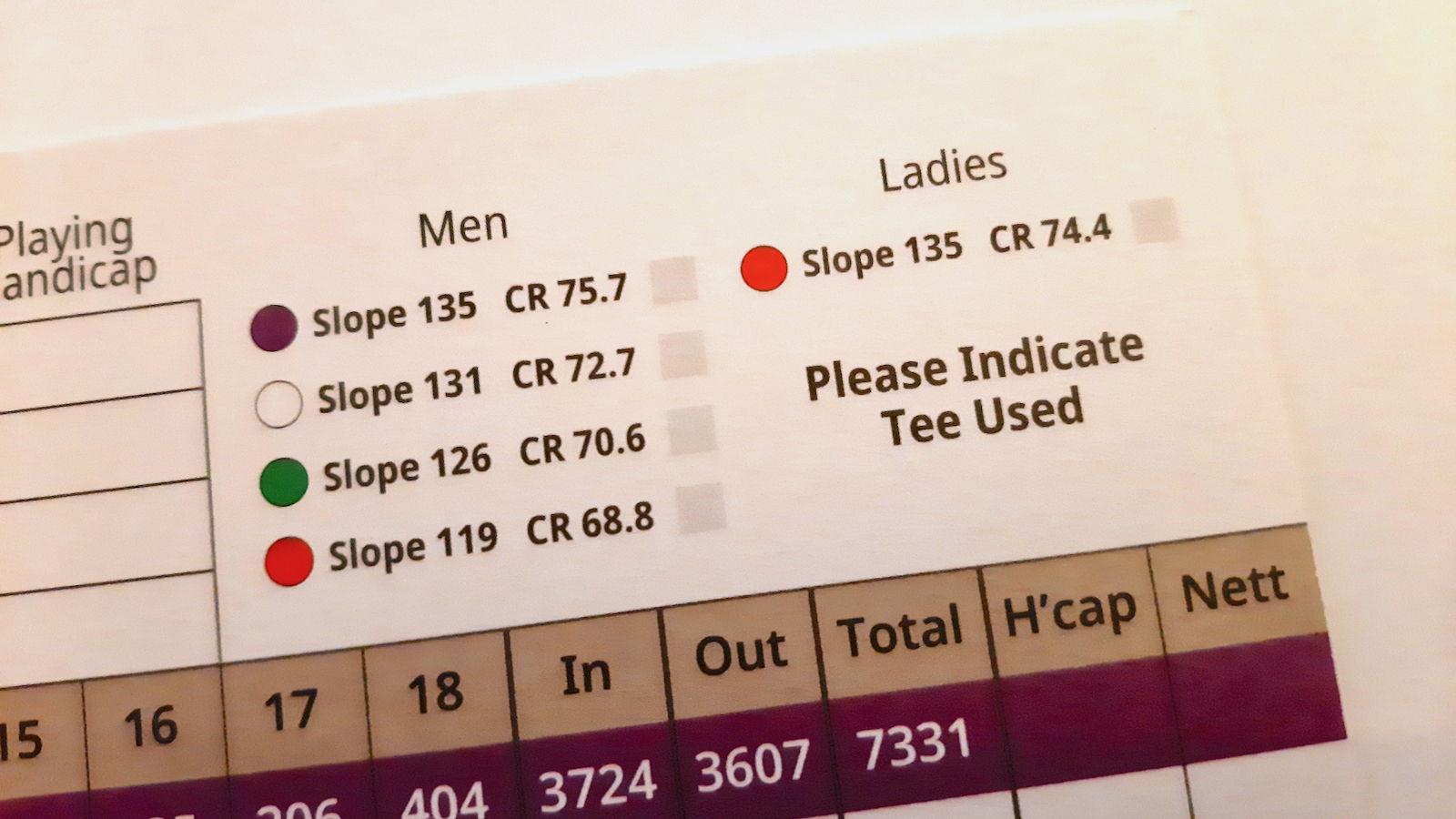
The Slope Rating scale officially ranges from 55 to 155.
- 55: This represents the easiest possible Slope Rating. Courses with this rating are exceptionally benign, offering very few challenges for the average golfer.
- 113: This is the neutral point on the scale, representing the average slope of a golf course. A course with a Slope Rating of 113 is considered to have a difficulty level that is neither exceptionally easy nor exceptionally difficult for the average golfer relative to a scratch golfer.
- 155: This is the maximum Slope Rating currently allowed. Courses with this rating are extremely challenging for the average golfer, presenting numerous and severe obstacles that significantly penalize errant shots and strategic misjudgments.
Typical Slope Ratings
Most golf courses fall within the 110-140 range.
- 110-119: These courses are generally considered moderately challenging. They offer a fair test of golf for players of all abilities without being overly punitive.
- 120-129: Courses in this range are considered more challenging. They will likely test a golfer’s skills more rigorously, with more demanding hazards and strategic considerations.
- 130-139: These courses are significantly challenging. Golfers can expect to encounter a substantial number of obstacles and strategic decisions that will test their game.
- 140+: Courses with Slope Ratings of 140 and above are exceptionally difficult. These are often championship-level courses designed to test the very best players, and they will present a formidable challenge to the average golfer.
When comparing two courses, a higher Slope Rating always indicates a greater relative difficulty for a bogey golfer. Therefore, a golfer with a handicap index of 15 playing on a course with a Slope Rating of 140 will receive more strokes and have a higher Course Handicap than if they were playing on a course with a Slope Rating of 120. This nuance is fundamental to the integrity and fairness of the handicapping system.
In conclusion, Slope Rating is an indispensable component of modern golf handicapping. It moves beyond simple course length and par to provide a nuanced assessment of how a course’s design and inherent challenges impact players of varying skill levels, particularly the average amateur. By understanding what Slope Rating is and how it is calculated, golfers can gain a deeper appreciation for the game, improve their strategic approach to different courses, and ultimately, enjoy a more accurate and equitable golfing experience. It is a testament to the ongoing effort to make golf a more inclusive and fair sport for everyone.
aViewFromTheCave is a participant in the Amazon Services LLC Associates Program, an affiliate advertising program designed to provide a means for sites to earn advertising fees by advertising and linking to Amazon.com. Amazon, the Amazon logo, AmazonSupply, and the AmazonSupply logo are trademarks of Amazon.com, Inc. or its affiliates. As an Amazon Associate we earn affiliate commissions from qualifying purchases.