
The intersection of biotechnology and dermatology has birthed a new era of “tweakments” that move beyond traditional surface-level cosmetics. At the forefront of this movement is the “skin booster”—a term that, while sounding like a marketing buzzword, represents a sophisticated advancement in bio-engineering and intradermal delivery systems. To understand what a skin booster is in the modern context, one must look past the vanity and into the complex world of molecular weight, cross-linking technology, and precision medical hardware.
The Molecular Engineering Behind Hydration Technology
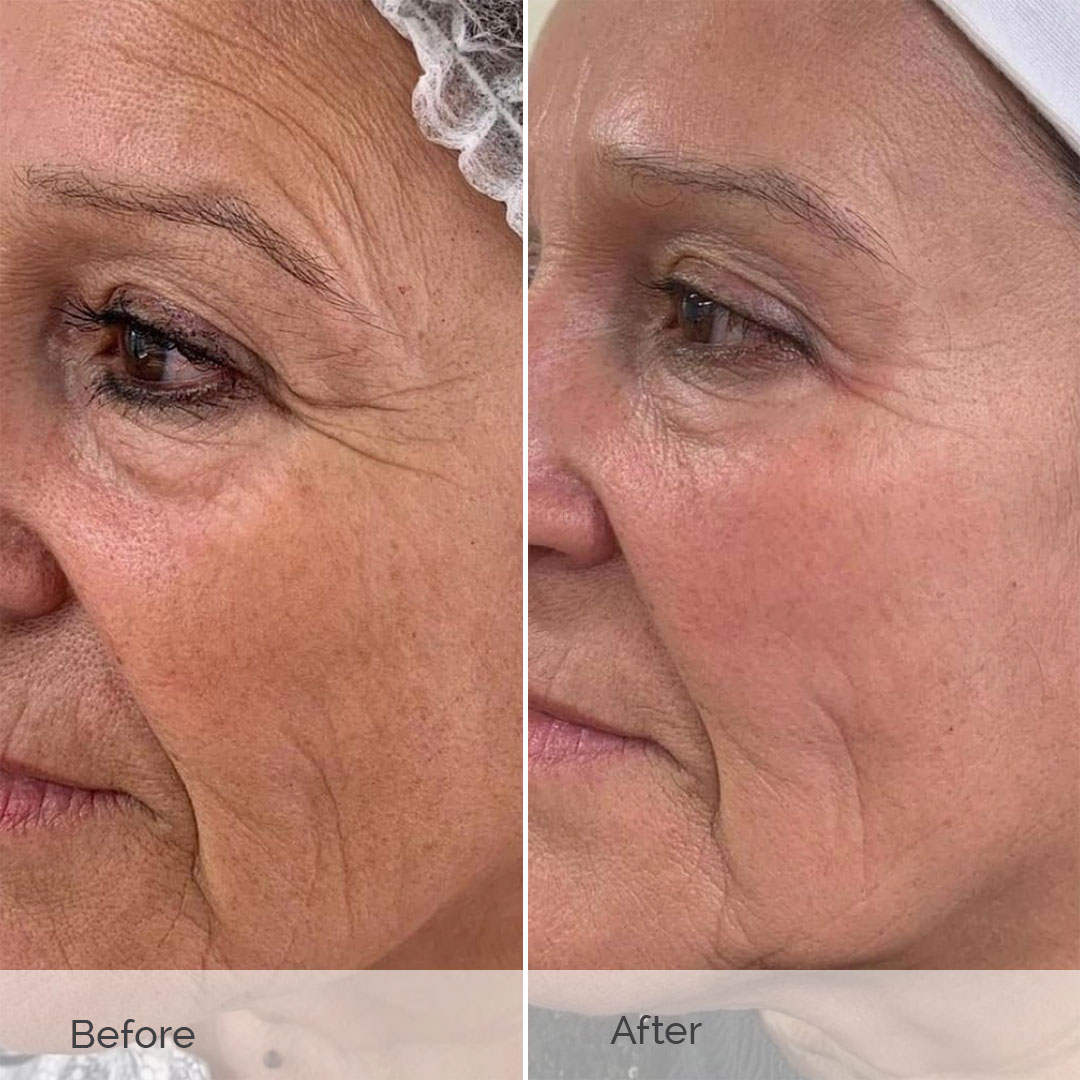
At its core, a skin booster is a technical intervention designed to alter the internal environment of the dermis. Unlike traditional dermal fillers, which are engineered to provide structural volume and mechanical lift, skin boosters are formulated as “internal moisturizers.” The technology hinges on the manipulation of Hyaluronic Acid (HA), a naturally occurring glycosaminoglycan.
The Science of Non-Cross-Linked Hyaluronic Acid
In the realm of aesthetic tech, the distinction between “filled” and “boosted” lies in the chemical structure of the HA molecule. Traditional fillers use high levels of cross-linking (usually via the chemical BDDE) to create a robust gel that resists degradation. Skin boosters, however, utilize non-cross-linked or minimally cross-linked HA. This allows the substance to flow fluidly through the tissues, integrating into the interstitial spaces rather than sitting as a static clump. This “flowability” is a result of advanced rheology engineering, ensuring the product spreads evenly to provide a uniform “hydro-lifting” effect.
Molecular Weight and Bio-Stimulation
Modern skin boosters are often engineered with a specific blend of high-molecular-weight and low-molecular-weight HA. High-molecular-weight HA provides immediate surface hydration and anti-inflammatory properties, while low-molecular-weight fragments act as signaling molecules. These fragments “program” the fibroblasts (the skin’s structural cells) to increase the production of endogenous collagen and elastin. This is not merely an aesthetic change; it is a bio-technical optimization of the skin’s regenerative cycle.
Hardware and Delivery: The Precision of Automated Injection Systems
The efficacy of a skin booster is inherently tied to the technology used to deliver it. Because these formulas must be placed precisely within the papillary or reticular dermis, manual delivery is increasingly being replaced by sophisticated automated systems.
Vacuum-Assisted Injection Technology
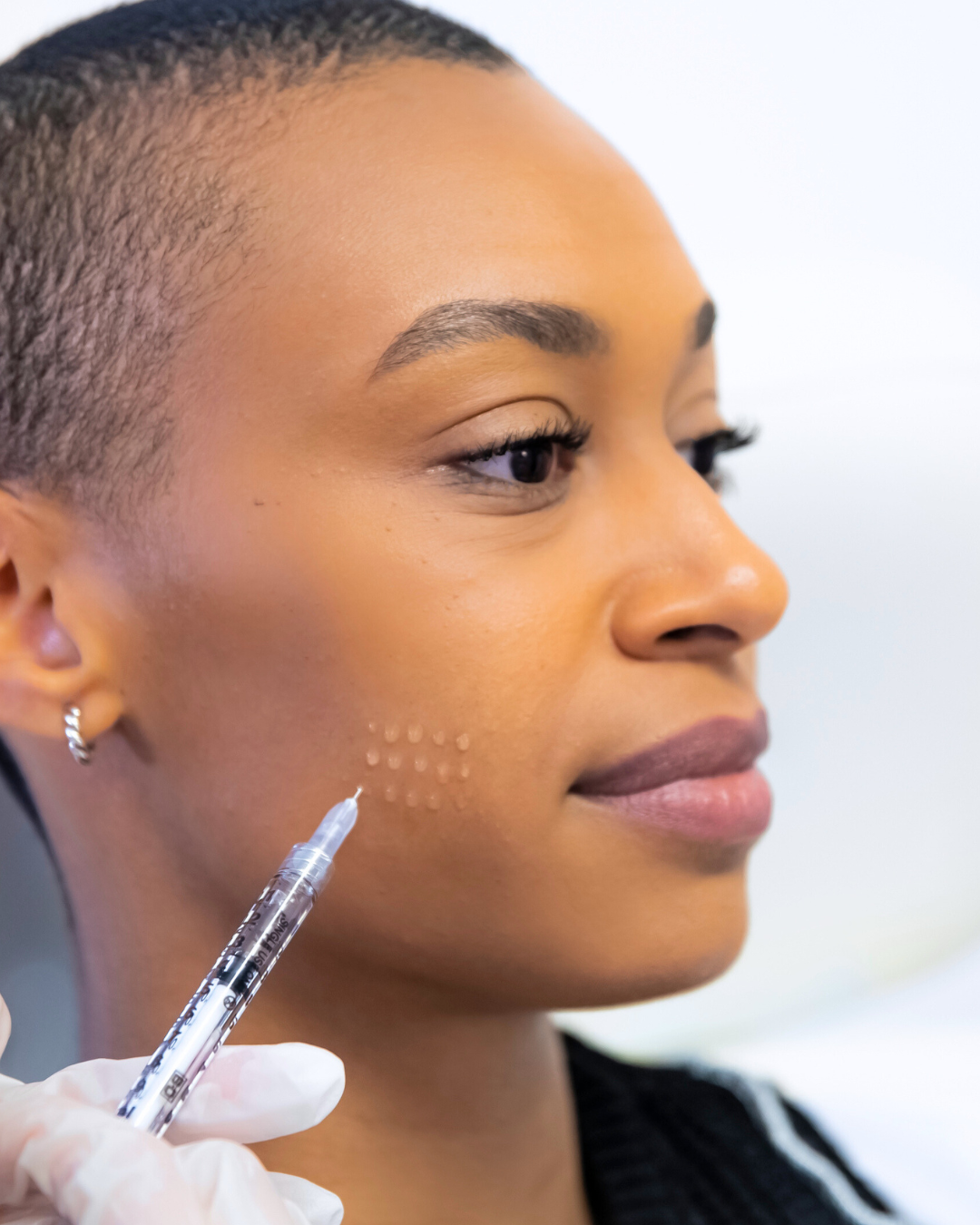
One of the most significant technological leaps in this field is the development of multi-needle, vacuum-assisted delivery devices. These machines utilize a suction mechanism to stabilize the skin surface before deploying a precise grid of micro-needles. This minimizes trauma to the tissue and ensures that the “boost” is distributed at a consistent depth across the entire treatment area. From a technical standpoint, this removes human error and ensures a standardized dosage that manual syringes cannot match.
Micro-Channelling and Depth Calibration
The hardware involved in skin booster administration often includes digital calibration tools. Practitioners can set the injection depth to increments as small as 0.1mm. This level of precision is critical because the dermis varies in thickness across different anatomical regions (e.g., the periorbital area versus the cheeks). By utilizing computer-controlled delivery, the technology ensures that the bio-active ingredients reach the specific cellular layers where they can trigger the most significant metabolic response.
Diagnostic Integration: AI-Driven Skin Analysis and Protocol Formulation
The “skin booster” of today is no longer a one-size-fits-all product. It is increasingly part of a data-driven ecosystem where AI and digital imaging dictate the technical protocol.

Predictive Modeling and Skin Mapping
Before a single injection is made, advanced diagnostic tools like the VISIA Skin Analysis system use multi-spectral imaging to map the skin’s current state. These systems analyze UV damage, pore size, and red areas (vascularity). AI algorithms then process this data to determine the optimal density and placement of the skin booster. This technical integration allows for a “bespoke” approach, where the “software” of the human face is analyzed to determine the exact “hardware” intervention required.
Digital Tracking of Interstitial Hydration
The next frontier in aesthetic tech is the ability to measure skin hydration levels digitally post-treatment. Using bio-impedance sensors, technicians can track how the skin booster is performing over time. This data loop provides a feedback mechanism that allows for the iterative refinement of treatment cycles, moving aesthetic medicine toward the same precision found in high-end software development—where every update (or treatment) is measured for its “user” impact.
The Rise of Regenerative Tech: Beyond Traditional Fillers
While HA remains the foundational technology for skin boosters, the industry is shifting toward more complex, multi-component bio-stimulators. This represents a shift from “filling” a deficit to “re-coding” the skin’s biological behavior.
Polynucleotides and DNA-Based Repair
The latest iteration of skin boosters incorporates polynucleotides—fractions of DNA extracted and purified to act as biopolymers. This technology works at a deeper level than hydration; it focuses on cellular repair and trophic effects. By introducing these sequences into the dermal environment, the tech stimulates the repair of tissues damaged by oxidative stress and UV radiation. It is essentially a “system restore” for damaged skin cells.
Exosomes and Nano-Delivery
Perhaps the most exciting tech trend in skin boosting is the use of exosomes. These are nano-sized extracellular vesicles that act as the communication system between cells. In a skin booster context, exosomes are engineered to carry a cargo of growth factors, lipids, and messenger RNA directly into the target cells. This represents a move toward “cell-free” regenerative medicine, where the technology focuses on the transmission of information rather than just the physical presence of a moisturizing molecule.
Data Security and Technical Compliance in the Aesthetic Industry
As skin booster treatments become more high-tech and data-reliant, the industry is facing new challenges regarding digital security and regulatory compliance.
Protecting Patient Biometrics
With the use of AI imaging and digital patient mapping, aesthetic clinics are now repositories of sensitive biometric data. The technology behind skin boosters must, therefore, be supported by robust cybersecurity frameworks. Encrypted cloud storage for skin maps and GDPR-compliant patient portals are becoming as essential to the modern clinic as the needles themselves. The “tech” of skin boosters extends from the syringe to the server.
Regulatory Algorithms and Safety Standards
The manufacturing of skin boosters is governed by stringent technical standards (such as CE marking in Europe or FDA clearance in the US). These standards require rigorous clinical trials and the use of automated manufacturing processes to ensure batch consistency. As the formulas become more complex—incorporating vitamins, amino acids, and minerals—the technological burden of proving safety and efficacy increases. This high barrier to entry ensures that only the most technically advanced laboratories can compete in the global market.
The Future of Bio-Integrated Aesthetics
The “skin booster” is a prime example of how technology is blurring the lines between topical skincare and surgical intervention. It is a product of high-level bio-engineering, delivered by precision hardware, and optimized by artificial intelligence. As we look toward the future, we can expect these treatments to become even more integrated with wearable technology—imagine a sensor that alerts your practitioner when your dermal hydration levels drop below a certain threshold, triggering a notification for your next “update.”
In this professional landscape, the skin booster is not just a beauty treatment; it is a sophisticated biological maintenance system. It represents the pinnacle of modern MedTech, where the goal is to optimize human tissue through the intelligent application of chemistry and physics. For those looking to understand the future of the industry, the skin booster serves as a roadmap for the transition from “correction” to “optimization”—a fundamental shift in how we approach the intersection of technology and the human body.
aViewFromTheCave is a participant in the Amazon Services LLC Associates Program, an affiliate advertising program designed to provide a means for sites to earn advertising fees by advertising and linking to Amazon.com. Amazon, the Amazon logo, AmazonSupply, and the AmazonSupply logo are trademarks of Amazon.com, Inc. or its affiliates. As an Amazon Associate we earn affiliate commissions from qualifying purchases.