
At first glance, the question “what is sin(1)?” might seem like a simple mathematical query, perhaps belonging to a high school trigonometry textbook. However, for anyone deeply involved in technology, software development, engineering, or data science, the humble sine function, particularly with an input like ‘1’, represents a fundamental building block. It’s a core component that underpins a vast array of digital processes, from the animations on our screens to the complex algorithms driving artificial intelligence, and the precision required in modern engineering.
In the digital realm, mathematics isn’t just an abstract concept; it’s the very language computers speak. Trigonometric functions like sine, cosine, and tangent are not merely tools for solving triangles; they are indispensable for modeling periodic phenomena, describing oscillatory motion, and representing wave forms – aspects inherent to almost every facet of the technological world. Understanding “sin(1)” isn’t just about knowing its numerical value (which is approximately 0.84147); it’s about appreciating the conceptual power it wields when interpreted and applied by algorithms and hardware. This article delves into the profound role of the sine function, specifically sin(1), within the technological landscape, exploring its foundations, diverse applications, and the underlying computational considerations that make it so powerful.
The Foundation: Understanding Sine in a Digital Context
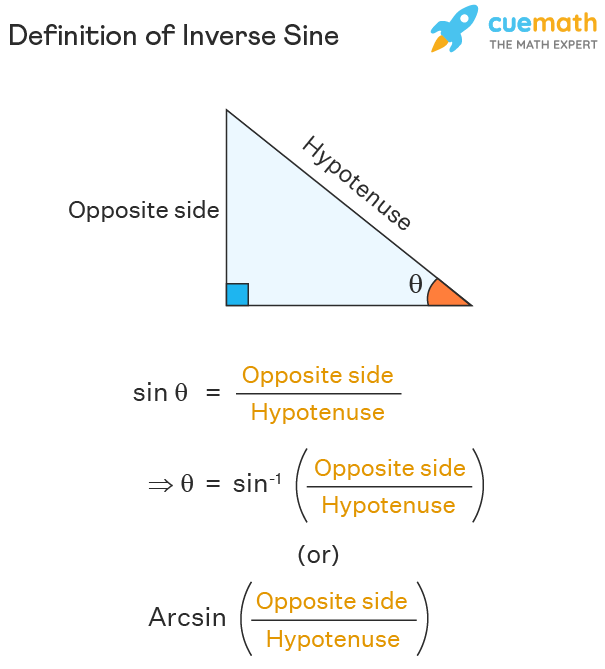
Before we dive into its technological manifestations, it’s crucial to solidify our understanding of what sine represents, especially when ported into a digital environment. The sine function, denoted as sin(x), takes an angle x as input and returns the ratio of the length of the side opposite that angle to the length of the hypotenuse in a right-angled triangle. More broadly, it describes the y-coordinate of a point on the unit circle corresponding to the angle x.
Sine as a Periodic Function
One of sine’s most defining characteristics is its periodicity. The values of sin(x) oscillate between -1 and 1 as x increases, repeating every 2π radians (or 360 degrees). This intrinsic characteristic makes sine an ideal mathematical model for phenomena that exhibit cyclical or wave-like behavior. In technology, such behaviors are ubiquitous: from alternating current (AC) electricity, sound waves, radio frequencies, light waves, and even the oscillations of a pendulum in a simulated physics engine. The regularity and predictability of sine waves are invaluable for engineers and developers seeking to analyze, synthesize, or control systems that inherently operate on cycles.
Radians vs. Degrees: The Digital Standard
When we talk about sin(1), the ‘1’ almost universally refers to 1 radian in a computational context. While humans often think in degrees (e.g., 90°, 180°, 360°), most programming languages and mathematical libraries default to radians for trigonometric functions. A radian is a unit of angle defined such that an angle of one radian subtended from the center of a circle cuts off an arc equal in length to the radius. There are 2π radians in a full circle, approximately 6.283 radians, meaning 1 radian is roughly 57.3 degrees.
This preference for radians in computing isn’t arbitrary. Radians offer a more “natural” unit for angles in calculus and advanced mathematics, simplifying many formulas and derivations, particularly when dealing with derivatives and integrals of trigonometric functions. For example, the derivative of sin(x) is simply cos(x) when x is in radians, whereas it involves an extra conversion factor if x is in degrees. This mathematical elegance translates directly into more efficient and less error-prone algorithms in software. Therefore, when a programmer writes sin(1) in Python, Java, C++, or MATLAB, they are almost certainly calculating the sine of 1 radian.
Computing sin(1): Algorithms and Precision
How does a computer actually calculate sin(1)? Unlike simple arithmetic operations, trigonometric functions are not direct hardware instructions. Instead, they are computed using sophisticated numerical algorithms, most commonly Taylor series expansions or CORDIC (Coordinate Rotation Digital Computer) algorithms.
A Taylor series approximates a function as an infinite sum of terms calculated from the function’s derivatives at a single point. For sine, it looks like:
sin(x) = x - x^3/3! + x^5/5! - x^7/7! + ...
A computer evaluates a finite number of these terms to achieve a desired level of precision. The more terms calculated, the more accurate the result. CORDIC algorithms, on the other hand, use a sequence of elementary rotations to approximate trigonometric functions, making them particularly suitable for hardware implementations where multiplications are costly. The choice of algorithm depends on factors like required precision, computational speed, and available hardware resources. Modern processors often have specialized units that can compute these functions very rapidly, typically delivering results with high floating-point precision (e.g., 64-bit double precision), ensuring that sin(1) is calculated accurately for its myriad applications.
Sine’s Ubiquity in Software Development and Engineering
The abstract mathematical concept of sine truly comes alive in its practical applications across various technological domains. Its ability to model waves and cycles makes it an indispensable tool for engineers and developers.
Graphics and Animation: Creating Realistic Motion
One of the most visually apparent applications of sine is in computer graphics and animation. To create fluid, natural-looking motion – whether it’s the bobbing of a character’s head, the sway of a tree branch, the gentle ripple of water, or the path of a projectile – developers often use sine waves.
-
Oscillations: A simple
y = A * sin(frequency * time)equation can create a smooth, repetitive up-and-down motion. -
Procedural Generation: Sine functions can be used to generate textures, terrains, or other procedural content, adding organic variation without manual detailing.
-
Camera Movement: Cinematic camera paths often involve smooth curves derived from sine and cosine to create appealing sweeping motions.
-
Inverse Kinematics: In robotics and character animation, inverse kinematics (determining joint angles to achieve a desired end-effector position) heavily relies on trigonometry.

Signal Processing: From Audio to Communications
Signal processing is perhaps where the sine function shines brightest. Any wave-like signal—be it sound, light, radio waves, or even financial market data—can be decomposed into a sum of simple sine waves of different frequencies and amplitudes (Fourier analysis).
-
Audio Synthesis and Analysis: Digital audio workstations use sine waves to synthesize sounds (e.g., creating pure tones or building complex waveforms from harmonics). Conversely, algorithms use Fourier transforms (which rely on sine and cosine) to analyze audio, allowing for equalization, noise reduction, and pitch detection.
-
Telecommunications: Radio frequency (RF) signals are essentially modulated sine waves. Understanding and manipulating these waves through modulation (e.g., Amplitude Modulation – AM, Frequency Modulation – FM) is fundamental to wireless communication. Digital signal processors (DSPs) embedded in phones, Wi-Fi routers, and satellites constantly compute sine and cosine to encode, decode, filter, and transmit information.
-
Image Processing: In advanced image compression techniques (like JPEG), images are transformed into frequency domains using discrete cosine transforms (closely related to Fourier transforms) to efficiently store and transmit visual data.
Physics Engines and Simulations: Modeling Reality
Physics engines, which power video games, industrial simulations, and scientific research, rely heavily on trigonometry to model real-world phenomena.
-
Projectile Motion: Calculating the trajectory of a thrown object involves resolving forces into components using sine and cosine.
-
Rotational Dynamics: Any object rotating in 2D or 3D space will have its position and velocity components defined by sine and cosine as it moves around an axis.
-
Wave Simulations: Simulating water, cloth, or string behavior often involves solving wave equations, which inherently feature sinusoidal components.
-
Pendulums and Springs: The oscillatory motion of a pendulum or a mass on a spring is classically described by sine functions.
Control Systems and Robotics: Precision and Automation
In robotics and industrial control systems, precision is paramount. Trigonometric functions are fundamental for navigation, motion planning, and maintaining stability.
-
Robot Kinematics: Determining the exact position of a robot’s end-effector based on its joint angles (forward kinematics) or vice-versa (inverse kinematics) requires extensive use of sine and cosine.
-
Sensor Fusion: Combining data from various sensors (e.g., accelerometers, gyroscopes) to determine orientation and movement often involves trigonometric transformations to align coordinate systems.
-
Motor Control: For precise control of motors, especially in applications like drones or CNC machines, sinusoidal waveforms are used to drive phases for smooth and efficient operation.
Beyond the Basics: Advanced Applications and Emerging Tech
The influence of the sine function extends into more cutting-edge and complex areas, demonstrating its enduring relevance.
Data Science and Machine Learning: Pattern Recognition
While not always explicitly visible, sine functions play a crucial role in certain data science and machine learning applications, particularly when dealing with time-series data or periodic patterns.
-
Feature Engineering: For time-series data (e.g., stock prices, sensor readings), cyclical features like time of day, day of week, or month of year can be encoded using sine and cosine transformations. This helps models recognize periodicity without assuming a linear relationship.
-
Neural Networks: In some recurrent neural network architectures or positional encoding in transformer models, sine and cosine functions are used to embed temporal or positional information into data sequences, aiding in context understanding.
-
Signal Denoising: Techniques that rely on frequency domain analysis (like Fourier transforms) use sine waves to separate signal from noise in complex datasets.
Cybersecurity: Cryptography and Randomness
Even in the seemingly abstract world of cybersecurity, periodic functions can find a niche.
-
Pseudo-random Number Generation: Some algorithms for generating pseudo-random numbers, crucial for cryptography and simulations, may incorporate trigonometric functions to introduce non-linearity and unpredictability.
-
Signal Analysis: Analyzing network traffic or electromagnetic emissions for anomalies or signatures can sometimes involve looking for specific frequency patterns, again leveraging Fourier analysis.
Quantum Computing: The Wave Function Connection
In the emerging field of quantum computing, the fundamental principles are rooted in quantum mechanics, where particles are described by wave functions.
-
Wave Functions: The state of a quantum system is described by a wave function, which often involves complex exponentials (Euler’s formula:
e^(ix) = cos(x) + i*sin(x)). Thus, sine and cosine are inherently part of the mathematical fabric of quantum mechanics. -
Quantum Algorithms: Many quantum algorithms, such as Shor’s algorithm for factoring large numbers or Grover’s search algorithm, utilize quantum Fourier transforms, which are built upon the sine and cosine functions operating on complex amplitudes. Understanding
sin(1)in this context means understanding a piece of the underlying mathematics describing the probability amplitudes of quantum states.
The Developer’s Toolkit: Implementing sin(x)
For developers, sin(x) is not just a theoretical concept but a practical tool readily available in almost every programming environment.
Standard Libraries and Built-in Functions
Modern programming languages offer highly optimized implementations of sin(x) as part of their standard math libraries.
-
Python:
math.sin(1) -
Java:
Math.sin(1.0) -
C/C++:
sin(1.0)(from<cmath>or<math.h>) -
JavaScript:
Math.sin(1) -
MATLAB/Octave:
sin(1)
These functions abstract away the complex numerical algorithms, allowing developers to focus on application logic while trusting that sin(1) will be computed quickly and accurately. The default input is almost always expected to be in radians.
Performance Considerations and Optimization
While standard library functions are highly optimized, in performance-critical applications (e.g., real-time audio processing, high-frame-rate gaming), developers sometimes need to consider further optimizations:
-
Approximations: For applications where extreme precision isn’t necessary, faster, less accurate approximations (e.g., polynomial approximations, lookup tables) can be used.
-
Vectorization: Modern CPUs and GPUs can perform operations on multiple data points simultaneously (SIMD instructions). Libraries like NumPy in Python leverage this for faster array-wise trigonometric calculations.
-
Hardware Acceleration: Dedicated math coprocessors or GPU shaders can perform trigonometric calculations much faster than general-purpose CPU cores.

Common Pitfalls and Precision Issues
Despite the robustness of modern implementations, developers should be aware of a few common issues:
-
Degrees vs. Radians: The most frequent mistake is inputting degrees when the function expects radians. Always double-check the documentation or explicitly convert if using degrees (e.g.,
sin(degrees * PI / 180)). -
Floating-Point Precision: Computers use floating-point numbers to approximate real numbers. While highly precise, these approximations are not exact. Operations like
sin(PI)might not yield precisely0.0but a very small number close to zero due to the finite precision ofPIand thesinfunction itself. This is generally not an issue for most applications but can be critical in highly sensitive numerical analysis. -
Input Range: While
sin(x)theoretically accepts any real number, excessively large inputs can sometimes lead to reduced precision in floating-point calculations, as the argument reduction step (bringing the angle into the primary range 0 to 2π) can accumulate errors.
In conclusion, “what is sin(1)?” is far more than a simple math problem. It represents a fundamental mathematical operation that underpins an incredible array of modern technological advancements. From the visual aesthetics of graphics and animation to the intricate workings of signal processing, the precision of control systems, and the theoretical underpinnings of quantum computing, the sine function in its digital interpretation is an indispensable tool. Developers and engineers wield this seemingly simple function daily, transforming abstract mathematical concepts into tangible innovations that shape our digital world. Its enduring relevance highlights how foundational mathematical principles continue to be the bedrock upon which the most sophisticated technologies are built.
aViewFromTheCave is a participant in the Amazon Services LLC Associates Program, an affiliate advertising program designed to provide a means for sites to earn advertising fees by advertising and linking to Amazon.com. Amazon, the Amazon logo, AmazonSupply, and the AmazonSupply logo are trademarks of Amazon.com, Inc. or its affiliates. As an Amazon Associate we earn affiliate commissions from qualifying purchases.