
In the modern automotive landscape, the hardware of a vehicle—the pistons, gears, and valves—is only half the story. The other half is written in code. Subaru Intelligent Drive, commonly known as SI-Drive, represents a sophisticated intersection of mechanical engineering and software optimization. It is a multi-mode engine management system that allows the driver to modify the vehicle’s power delivery and transmission characteristics on the fly. By leveraging electronic control units (ECUs) and complex mapping algorithms, SI-Drive transforms a single vehicle into multiple driving machines, catering to the specific needs of the environment or the driver’s intent.
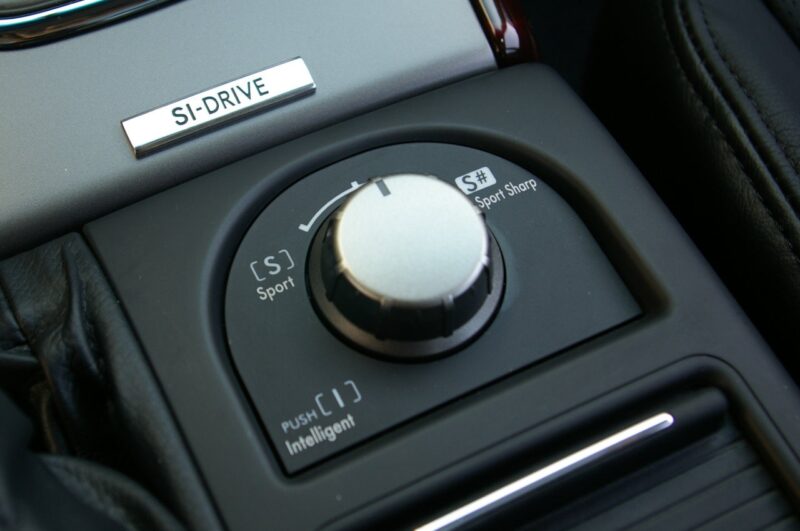
Understanding SI-Drive requires moving beyond the marketing brochures and looking into the “drive-by-wire” technology that makes such a system possible. It is a prime example of how digital logic can override or enhance physical inputs to achieve specific performance or efficiency targets.
The Architecture of Subaru Intelligent Drive (SI-Drive)
At its core, SI-Drive is a software-driven layer that sits between the driver’s right foot and the engine’s throttle plate. In older vehicles, a physical cable connected the gas pedal to the engine. In a Subaru equipped with SI-Drive, that connection is entirely digital.
Software-Driven Powertrain Control
The system functions by utilizing pre-programmed “maps” stored within the Engine Control Unit (ECU) and the Transmission Control Unit (TCU). When a driver selects a specific mode, the ECU instantly switches to a different set of instructions regarding fuel injection timing, ignition timing, and, most importantly, electronic throttle control. This means that the physical position of the accelerator pedal does not always correspond to a fixed percentage of throttle opening; instead, the software interprets the pedal position based on the selected mode’s logic.
Electronic Throttle Mapping and Transmission Logic
Beyond just the engine, SI-Drive communicates directly with the Lineartronic Continuously Variable Transmission (CVT). In high-performance applications, such as the Subaru WRX, the SI-Drive system manages the “stepped” ratios of the CVT. By altering the transmission’s logic, the tech can simulate traditional gear shifts more aggressively or maintain lower ratios to keep the engine within its optimal power band. This synchronization between engine mapping and transmission response is what allows SI-Drive to feel like a fundamental change in the car’s personality rather than just a superficial adjustment.
Analyzing the Core Operational Modes: Logic and Algorithms
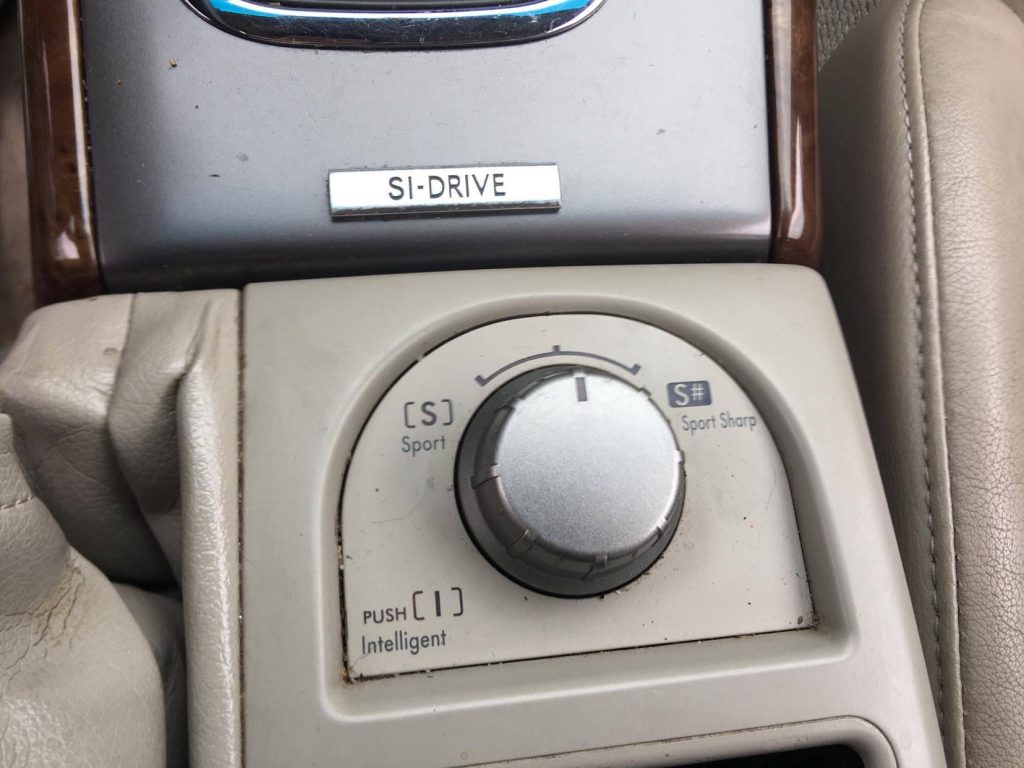
SI-Drive typically offers two or three distinct modes, depending on the specific Subaru model. Each mode represents a unique philosophy in software tuning, designed to optimize the vehicle for a specific use case.
Intelligent (I) Mode: Efficiency through Algorithms
Intelligent Mode is the default setting for most Subaru vehicles. The primary goal of this mode is fuel economy and smoothness. In this setting, the ECU implements a “relaxed” throttle map. Even if the driver applies sudden pressure to the accelerator, the software smooths out the input, opening the throttle valve gradually to prevent unnecessary fuel consumption.
From a technical standpoint, “I” mode optimizes the CVT for lower engine speeds (RPMs), ensuring the car stays in its most efficient range. It is particularly effective in stop-and-go urban traffic, where jerky throttle inputs usually lead to wasted energy. The technology acts as a digital buffer, prioritizing environmental efficiency over raw response.
Sport (S) Mode: Linear Response for Daily Dynamics
Sport Mode is designed for “all-around” driving. The technical distinction here lies in the linear relationship between the pedal and the engine. In Sport Mode, the mapping is designed to provide a 1:1 feel—meaning the engine responds exactly as the driver expects across the entire range of the accelerator. This mode is ideal for highway merging or driving on winding roads where predictable power delivery is essential. It provides a sharper response than Intelligent Mode without the high-revving aggression found in the more extreme settings.
Sport Sharp (S#) Mode: Maximum Output and Response
Available on performance-oriented models like the WRX or the Forester Sport, Sport Sharp (S#) is the pinnacle of the SI-Drive’s technical capability. In this mode, the software mapping becomes highly aggressive. Even a small amount of pedal travel can result in a large opening of the throttle valve.
Technically, S# often modifies the CVT to utilize eight predetermined “gear” ratios, allowing for rapid-fire shifting that mimics a dual-clutch transmission. The engine stays high in the rev range to ensure that the turbocharger (if equipped) is always spooled and ready to deliver peak torque. This mode demonstrates the power of software to extract the absolute maximum potential from the vehicle’s mechanical components.
The Integration of Hardware and Software: The ECM and TCU Interaction
The magic of SI-Drive isn’t just in the engine; it’s in the seamless communication across the vehicle’s internal network, specifically the Controller Area Network (CAN bus).
The Role of the Engine Control Module (ECM)
The ECM acts as the brain of the SI-Drive system. It constantly monitors a variety of sensors, including the Mass Air Flow (MAF) sensor, the Manifold Absolute Pressure (MAP) sensor, and engine temperature sensors. When SI-Drive is engaged in a high-performance mode, the ECM adjusts the air-fuel ratio to be slightly richer and advances the ignition timing to the edge of the engine’s safety limits. This allows for instantaneous combustion response. The software must balance these parameters in real-time to prevent engine “knock” while delivering the requested power.
Interaction with Symmetrical All-Wheel Drive
Subaru’s signature Symmetrical All-Wheel Drive system also benefits from SI-Drive integration. While SI-Drive primarily manages the engine and transmission, the way power is delivered to the wheels affects traction. In Intelligent Mode, the smoother power delivery helps prevent wheel spin on slippery surfaces like ice or gravel. Conversely, in Sport Sharp, the aggressive torque delivery is managed in conjunction with the Vehicle Dynamics Control (VDC) system to ensure that the power is distributed to the wheels with the most grip, allowing for high-speed cornering stability.
User Interface and Real-Time Data Feedback
A key component of any high-tech automotive system is how it communicates with the human operator. Subaru has integrated SI-Drive into the digital ecosystem of the cabin to provide drivers with immediate feedback on how the system is performing.
Digital Multi-Function Displays
Most modern Subarus feature a Multi-Function Display (MFD) that provides a visual representation of the SI-Drive’s performance. When switching modes, the driver can often see a “torque curve” graph or a boost gauge. This digital feedback is crucial because it helps the driver understand the shift in the vehicle’s behavior. For example, in S# mode, the graph might show a much steeper incline, indicating that peak torque is reached much earlier in the pedal’s travel.
Steering Wheel Controls and Tactile Inputs
The hardware interface for SI-Drive is usually located on the steering wheel or the center console. By placing these controls (often labeled “S/I” or “S#”) within thumb’s reach, Subaru emphasizes the “tech-gadget” nature of the system. It allows for mid-drive adjustments without taking eyes off the road. The tactile click of the button sends a signal to the ECU, which can swap maps in milliseconds—a feat that would have required a physical chip swap in vehicles from two decades ago.
The Future of Dynamic Driving Tech: Beyond Internal Combustion
As the automotive industry pivots toward electrification, the principles of SI-Drive are becoming even more relevant. In an electric vehicle (EV) or a hybrid, such as the Subaru Solterra or the Crosstrek Hybrid, the “mapping” isn’t about fuel and air—it’s about kilowatt delivery and regenerative braking force.
From Internal Combustion to Electric Torque Management
The evolution of SI-Drive will likely see it transition into a more comprehensive “Drive Mode Select” system that manages electric motor output. Since electric motors provide instant torque, the software’s role becomes even more critical in “dampening” that power for efficiency or “unleashing” it for performance. We can expect future iterations of this technology to include AI-driven “Adaptive Modes” that learn a driver’s habits over time and create a custom software map that balances the thrill of Sport Sharp with the sustainability of Intelligent Mode automatically.
In conclusion, Subaru SI-Drive is a testament to the power of software in the modern age. It is a tool that allows a mechanical machine to be versatile, efficient, and exciting all at once. By manipulating the digital signals that govern the engine and transmission, SI-Drive proves that in the world of modern gadgets and tech, the most powerful component in a car isn’t just the engine—it’s the code that controls it.
aViewFromTheCave is a participant in the Amazon Services LLC Associates Program, an affiliate advertising program designed to provide a means for sites to earn advertising fees by advertising and linking to Amazon.com. Amazon, the Amazon logo, AmazonSupply, and the AmazonSupply logo are trademarks of Amazon.com, Inc. or its affiliates. As an Amazon Associate we earn affiliate commissions from qualifying purchases.