
In the complex ecosystem of the financial markets, few phenomena capture the public imagination—or devastate portfolios—quite like a short squeeze. It is a high-stakes tug-of-war between two groups of investors with diametrically opposed views on a company’s value. While traditional investing follows the “buy low, sell high” mantra, a short squeeze turns this logic on its head, creating a parabolic price spike that defies fundamental valuation.
For the modern investor, understanding the mechanics of a short squeeze is no longer optional. Whether you are a retail trader looking for the next “meme stock” or a conservative investor protecting a long-term portfolio, the volatility triggered by these events can ripple across the entire market. This article explores the intricate details of how short squeezes occur, the metrics used to predict them, and the historical lessons every participant in the “Money” niche must master.
The Mechanics of a Short Squeeze: How the Trap is Set
To understand a short squeeze, one must first understand the mechanics of short selling. In a standard trade, an investor buys a stock expecting it to rise. In a short sale, an investor borrows shares from a broker and sells them immediately at the current market price, hoping to buy them back later at a lower price. If the price drops, they pocket the difference. However, if the price rises, the short seller faces a mathematically infinite risk, as there is no ceiling on how high a stock price can go.
Understanding the Short Seller’s Obligation
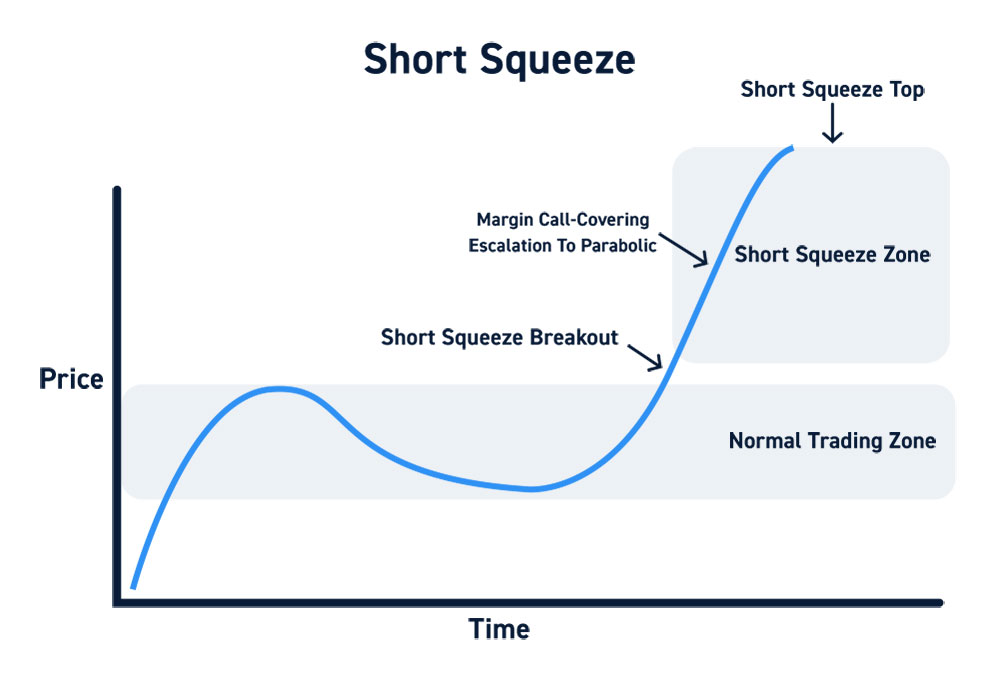
When an investor shorts a stock, they enter into a contractual obligation to eventually return those borrowed shares. This is known as “covering” the short position. Unlike a “long” investor who can theoretically hold a losing position forever, a short seller is subject to margin requirements. If the stock price rises significantly, the broker may issue a margin call, demanding more collateral. If the investor cannot provide it, the broker will force the investor to buy back the shares at the current high price to close the position.
The Tipping Point: Buying Pressure
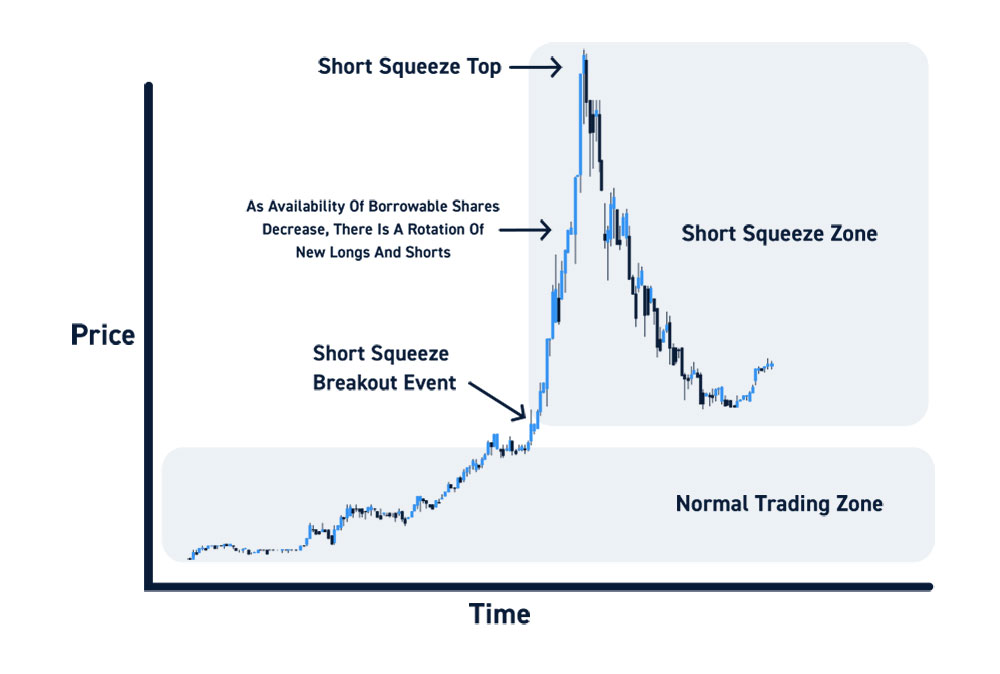
A short squeeze begins when an unexpected catalyst—such as a positive earnings report, a new product launch, or a coordinated wave of retail buying—pushes the stock price upward. This initial rise makes short sellers nervous. As the price nears their “stop-loss” levels or triggers margin calls, they are forced to buy shares to exit their positions. This buying activity adds more upward pressure on the stock, which in turn forces even more short sellers to cover.
The Feedback Loop: A Self-Fulfilling Prophecy
The “squeeze” occurs because of a supply-and-demand imbalance. As short sellers rush to buy shares to minimize losses, they compete with “long” buyers who are jumping in to profit from the momentum. Because the supply of available shares (the “float”) is limited, the surge in demand causes the price to skyrocket. This creates a feedback loop where the rising price creates more buyers (the short sellers), which further increases the price, creating a vertical line on the stock chart.
Identifying the Warning Signs: Metrics to Watch
While short squeezes often feel like chaotic accidents, they are usually preceded by specific statistical signals. Investors in the “Money” niche use several key metrics to identify stocks that are “crowded”—meaning too many people are betting against them—and thus ripe for a squeeze.
Short Interest and Short Interest Ratio
Short interest represents the total number of shares that have been sold short but not yet covered. This is often expressed as a percentage of the total float. When the short interest exceeds 20% of the float, the stock is considered highly shorted. The “Short Interest Ratio,” also known as “Days to Cover,” is calculated by dividing the total shorted shares by the average daily trading volume. If a stock has a ratio of 10, it would take ten days of average volume for all short sellers to buy back their shares, indicating a high potential for a squeeze if liquidity dries up.
The Role of the “Float”
The float refers to the number of shares available for public trading, excluding those held by insiders or restricted shareholders. Stocks with a “low float” are particularly susceptible to short squeezes. In these scenarios, a relatively small amount of buying volume can cause massive price movements because there simply aren’t enough shares available to meet the sudden demand from panicked short sellers.
Borrowing Fees and Utilization Rates
Shorting a stock isn’t free; investors must pay a borrowing fee to the broker. When a stock is in high demand for shorting, these fees can skyrocket—sometimes to over 100% annually. Additionally, the “utilization rate” measures the percentage of available shares that have already been borrowed. When utilization hits 100%, it becomes nearly impossible for new short sellers to enter the market, and existing ones are under immense pressure to hold their ground or fold.
Historical Precedents: Lessons from the Markets
History is littered with instances where short sellers were caught off guard by a squeeze. These case studies provide invaluable insights into how market dynamics can shift in an instant, moving from rational valuation to pure momentum.
The Volkswagen-Porsche Saga of 2008
Perhaps the most famous institutional short squeeze occurred in 2008 involving Volkswagen. During the height of the global financial crisis, many hedge funds shorted VW, believing the company was overvalued. Unbeknownst to the market, Porsche had been quietly accumulating a massive stake in VW through options. When Porsche revealed it controlled 74% of the company, the “free float” essentially disappeared overnight. Short sellers scrambled to buy the remaining shares, briefly making Volkswagen the most valuable company in the world as the price spiked from €200 to over €1,000 in days.
The Meme Stock Revolution: GameStop (GME)
In early 2021, the financial world witnessed a paradigm shift with GameStop. Retail investors on social media platforms like Reddit’s r/WallStreetBets noticed that GameStop’s short interest exceeded 100% of its float—a mathematical anomaly that meant more shares were shorted than actually existed. By coordinating their buying power, retail investors forced institutional hedge funds into a massive squeeze. This event highlighted the power of decentralized retail participation and how “crowdsourced” research can challenge traditional Wall Street narratives.
Risks and Rewards for the Individual Investor
For an investor, a short squeeze represents both the highest potential reward and the most significant risk. Navigating these waters requires a disciplined approach to risk management and an understanding that the laws of gravity eventually return to the stock market.
The Danger for Short Sellers
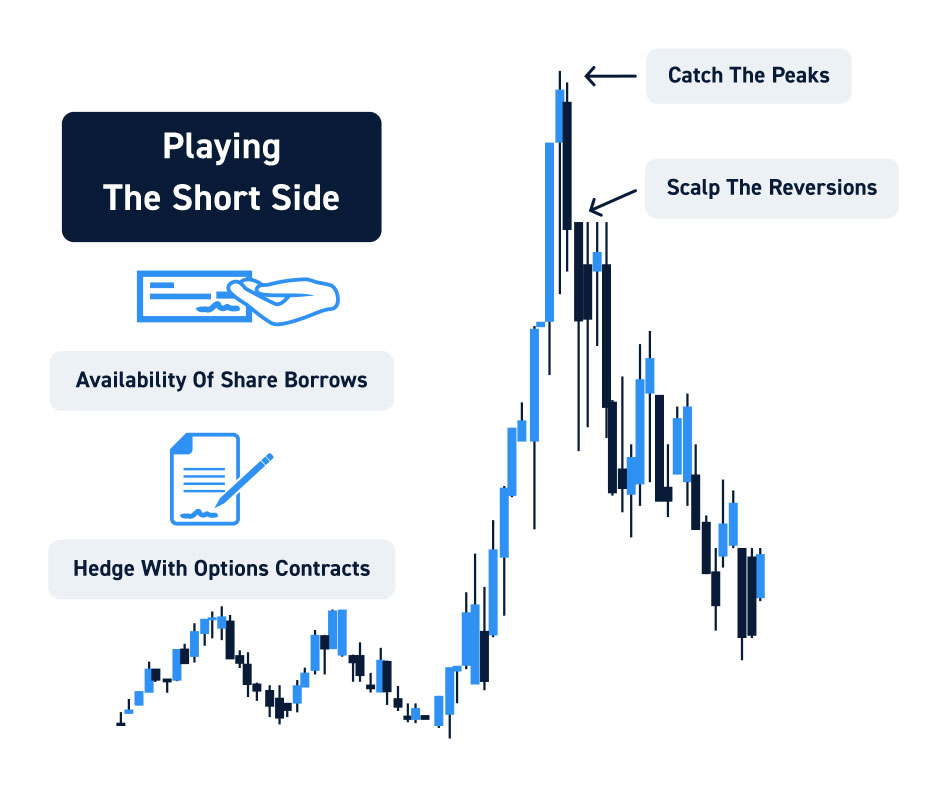
The primary lesson of a short squeeze is the danger of “infinite loss.” When you buy a stock at $10, your maximum loss is $10. When you short a stock at $10, and it goes to $100, $500, or $1,000, your losses are theoretically limitless. This is why professional short sellers often use “hedges” or strict stop-loss orders to ensure that a single squeeze doesn’t wipe out their entire fund.
Strategies for Trading a Squeeze
Many traders look to profit by “going long” on stocks that show signs of an impending squeeze. The strategy involves buying into the momentum and exiting before the “pop.” However, timing is everything. Entering too late means buying at the peak of the squeeze, just as the buying pressure from short sellers exhausts itself. Professional traders often look for high-volume “breakouts” above key resistance levels as their entry signal.
Why Squeezes are Temporary
It is crucial to remember that a short squeeze is a liquidity event, not necessarily a fundamental one. The price spike is driven by the necessity of short sellers to buy, not because the company’s intrinsic value has increased tenfold. Once the short positions are covered, the “forced buyers” disappear from the market. Frequently, the stock price crashes back down to its pre-squeeze levels as quickly as it rose, leaving “bag holders” who bought at the top.
Navigating the Ethical and Regulatory Landscape
As short squeezes become more frequent in the age of social media, they have drawn the attention of regulators and sparked debates about the fairness of the modern financial system.
Market Manipulation vs. Market Forces
A fine line exists between a natural market reaction and deliberate market manipulation. Regulators like the SEC (Securities and Exchange Commission) monitor markets for “wash trading” or “pump and dump” schemes that might use a short squeeze as a cover. However, if a squeeze happens because investors simply shared public data about high short interest, it is generally considered a legitimate, albeit volatile, market force.
The Role of Social Media and Digital Communities
In the past, the information required to identify a short squeeze was the domain of wealthy institutional investors. Today, digital tools and social platforms have democratized this data. Financial influencers and communities can now mobilize billions of dollars in capital in hours. This shift has forced institutional investors to change how they manage risk, as they can no longer assume that a “distressed” company will stay down just because its fundamentals are weak.
Conclusion: The Eternal Tug-of-War
The short squeeze remains one of the most dramatic spectacles in the world of finance. It serves as a reminder that the market is not just a collection of numbers and balance sheets, but a reflection of human psychology, greed, and fear. For those focused on personal finance and investing, the short squeeze is a masterclass in the importance of liquidity, the danger of leverage, and the unpredictable power of the crowd. Whether you view them as opportunities for profit or warnings of market instability, short squeezes are a permanent and essential feature of the global financial landscape.
aViewFromTheCave is a participant in the Amazon Services LLC Associates Program, an affiliate advertising program designed to provide a means for sites to earn advertising fees by advertising and linking to Amazon.com. Amazon, the Amazon logo, AmazonSupply, and the AmazonSupply logo are trademarks of Amazon.com, Inc. or its affiliates. As an Amazon Associate we earn affiliate commissions from qualifying purchases.