
Understanding the Gravest Sin in Islamic Theology
Shirk, an Arabic term translating to “association” or “partnership,” represents the most grievous sin in Islam. It fundamentally refers to the act of associating partners with Allah (God) in His divinity, worship, or attributes. This concept forms the bedrock of Tawhid, the Islamic principle of divine oneness, and any deviation from this absolute monotheism is considered shirk. Understanding shirk is paramount for any Muslim seeking to live a life in accordance with Islamic teachings, as it directly impacts one’s faith, intentions, and ultimate salvation.
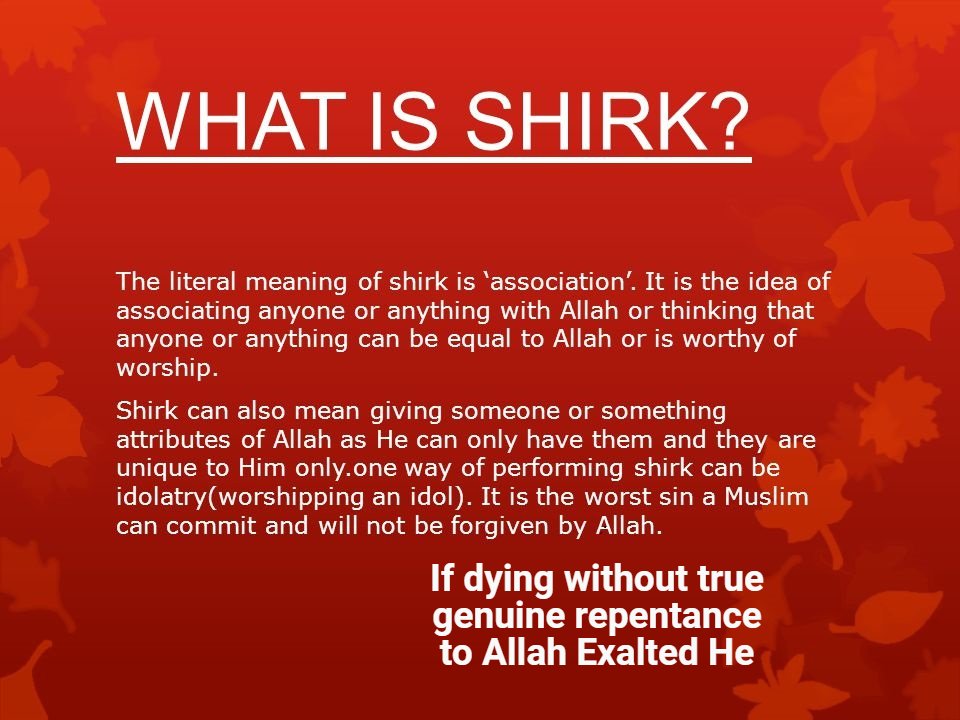
The Quran and the Sunnah (the teachings and practices of Prophet Muhammad, peace be upon him) extensively condemn shirk, categorizing it as an unforgivable sin if one dies in a state of shirk without sincere repentance. This emphasis highlights the critical importance of safeguarding one’s faith from any form of idolatry or deviation from the pure worship of Allah alone.
The Absolute Oneness of God: Tawhid
At the heart of Islam lies the concept of Tawhid, the absolute oneness and uniqueness of Allah. This is not merely a philosophical assertion but a fundamental tenet that shapes every aspect of a Muslim’s life. Tawhid encompasses three core dimensions:
Tawhid al-Rububiyyah (Oneness of Lordship)
This aspect asserts that Allah alone is the Creator, Sustainer, Owner, and Sovereign of the universe. He is the one who brings everything into existence, provides for all His creations, and ultimately controls their destinies. Believing in Tawhid al-Rububiyyah means acknowledging that no other being shares in these unique divine functions. This includes rejecting the notion that any intermediary, saint, or idol possesses the power to create, sustain, or govern the cosmos. It is a rejection of polytheistic beliefs that attribute divine powers to created beings or forces.
Tawhid al-Uluhiyyah (Oneness of Worship)
This is perhaps the most directly related aspect to the concept of shirk. Tawhid al-Uluhiyyah dictates that all acts of worship must be directed solely to Allah. Worship in Islam is a broad concept, encompassing not only formal prayers (Salah) and fasting (Sawm) but also supplication (Du’a), seeking refuge, making vows, offering sacrifices, and even having a deep sense of love, fear, and hope directed towards Allah. Any act of worship directed towards anyone or anything other than Allah is a direct violation of Tawhid and constitutes shirk. This includes praying to saints, bowing before idols, seeking help from jinn or spirits in matters that only Allah can control, or attributing divine love and devotion to anything other than the Creator.
Tawhid al-Asma wa al-Sifat (Oneness of Names and Attributes)
This dimension affirms that Allah is unique in His beautiful names and perfect attributes. Muslims believe that Allah has described Himself in the Quran and through His Messenger with names and attributes that are perfect and transcendent, without any deficiency or comparison to His creation. Tawhid al-Asma wa al-Sifat means accepting these names and attributes as they are revealed, without distortion, denial, anthropomorphism (likening Allah to His creation), or seeking to understand their essence beyond what Allah has made known. Associating partners with Allah in His names and attributes would involve believing that other beings possess similar divine qualities or claiming for oneself divine attributes that belong solely to Allah.
Manifestations of Shirk in Practice
Shirk can manifest in various overt and subtle ways, often stemming from a misunderstanding of Tawhid or a lapse in conscious remembrance of Allah. Recognizing these forms is crucial for individuals to safeguard their faith.
Major Shirk (Shirk al-Akbar)
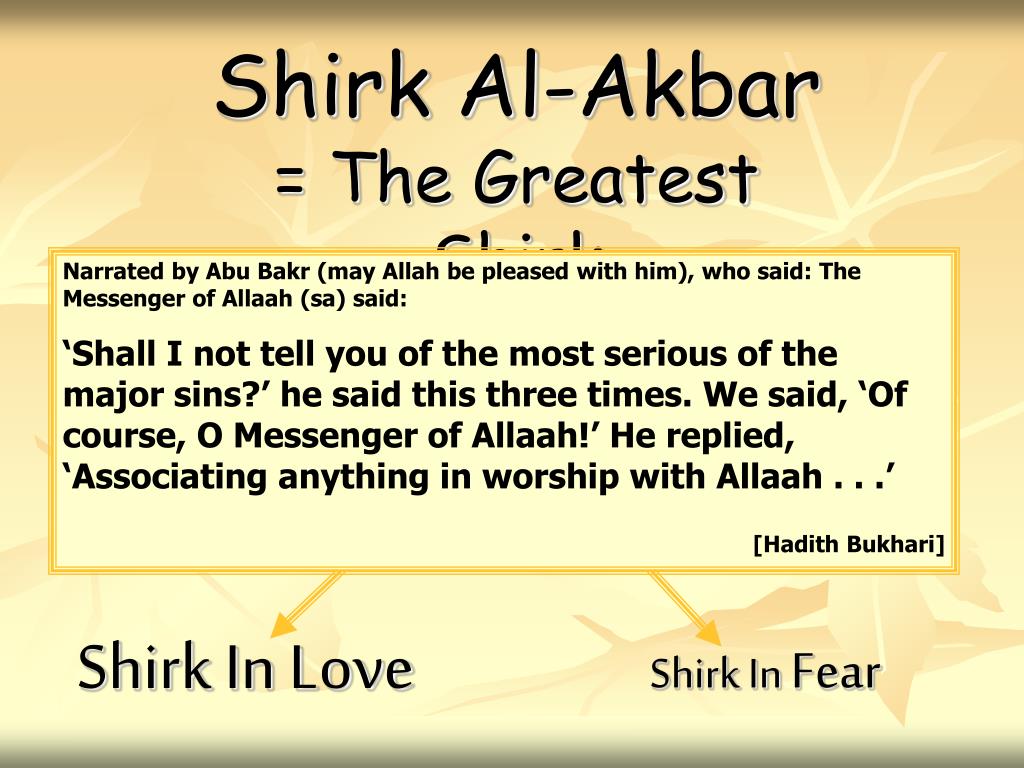
Major shirk is the most severe form and can lead to a person being expelled from the fold of Islam if they die without repentance. It is characterized by actions and beliefs that clearly negate Tawhid.
Idolatry and Idol Worship
This is perhaps the most universally recognized form of shirk. It involves the worship of idols, statues, pictures, or any created object as deities or as intermediaries to Allah. Historically, this was the prevalent form of disbelief that Prophet Muhammad (peace be upon him) encountered. Even in contemporary times, some practices, though perhaps not explicitly labeled as idol worship, can verge on this by elevating created beings or objects to a status of reverence that belongs only to Allah.
Seeking Intercession or Power from Other Than Allah
This includes the belief that certain individuals, saints, prophets, or even deceased righteous people can intercede with Allah on one’s behalf in matters that are exclusively within Allah’s purview, or that they possess independent power to grant requests. While seeking blessings from righteous individuals is permissible, attributing divine power or demanding from them what only Allah can provide crosses the line into shirk. This also extends to seeking help from jinn, sorcerers, or soothsayers for matters such as protection, wealth, or love, which are all ultimately under Allah’s command.
Belief in Other Deities or Divine Partners
This encompasses the explicit belief that there are other gods besides Allah, or that any created being shares in Allah’s divinity or Lordship. This was the primary target of the Prophet’s mission: to eradicate the polytheistic practices of the Arabian Peninsula. It is a clear denial of Allah’s unique sovereignty.
Extremism in Reverence for Righteous Individuals
While respecting and loving righteous people is encouraged in Islam, extreme veneration that leads to praying to them, seeking their assistance in dire straits, or believing they have divine knowledge or power is a form of shirk. This is often seen in the veneration of saints or Sufi shrines where people make supplications or sacrifices in their name.
Minor Shirk (Shirk al-Asghar)
Minor shirk refers to actions or intentions that are not as severe as major shirk but are still considered deviations from pure monotheism and can lead to major shirk if not corrected.
Riya (Showing Off)
Riya means performing good deeds, such as prayer, charity, or reciting the Quran, with the intention of being seen and praised by others, rather than for the sake of Allah alone. The Prophet Muhammad (peace be upon him) warned that riya is a hidden form of shirk that can nullify good deeds. The intention behind every act of worship is crucial. If the primary motivation is worldly recognition, then it becomes a form of association with people in acts of devotion due to Allah.
Ta’t’im (Swearing by Other Than Allah)
Taking oaths by something other than Allah, such as by the Ka’bah, one’s parents, or one’s life, is considered a form of minor shirk. The Prophet Muhammad (peace be upon him) stated, “Whoever swears by other than Allah has committed disbelief or shirk.” This is because the solemnity of an oath is reserved for the one who is All-Knowing, All-Powerful, and All-Truthful – attributes that belong exclusively to Allah.
Superstition and Reliance on Luck or Charms
Believing that certain amulets, charms, or superstitions can bring good luck or ward off evil, independent of Allah’s will, is a manifestation of minor shirk. While seeking protection through legitimate means like reciting Quranic verses is encouraged, relying on these items as if they possess inherent power is problematic. This also includes attributing outcomes to luck or destiny in a way that negates Allah’s divine plan and decree.
The Importance of Repentance and Seeking Forgiveness
The doors of repentance are always open to those who commit shirk, provided they repent sincerely before their death. Shirk is a grave sin, but Allah’s mercy is vast.
Sincere Repentance (Tawbah)
Sincere repentance involves regretting the past act of shirk, ceasing the associated behavior immediately, and resolving not to return to it. For those who have committed major shirk, this also requires publicly declaring their disassociation from shirk and reaffirming their belief in Tawhid. The Quran states, “And whoever repents of his wrongdoing after his transgression and reforms, indeed, Allah will turn to him in forgiveness. Indeed, Allah is Forgiving and Merciful.” (Quran 5:39)
Continuous Vigilance and Self-Reflection
Maintaining a pure and sincere faith requires constant vigilance and self-reflection. Muslims are encouraged to regularly examine their intentions, beliefs, and actions to ensure they are not inadvertently falling into any form of shirk. This includes seeking knowledge, understanding the nuances of Tawhid, and constantly turning to Allah for guidance and protection.
In conclusion, understanding shirk is not merely an academic exercise but a vital component of practicing Islam authentically. By safeguarding one’s faith from any form of association with Allah, Muslims strive to live lives of complete submission and devotion to the One True God, seeking His pleasure and His ultimate reward in the Hereafter.
aViewFromTheCave is a participant in the Amazon Services LLC Associates Program, an affiliate advertising program designed to provide a means for sites to earn advertising fees by advertising and linking to Amazon.com. Amazon, the Amazon logo, AmazonSupply, and the AmazonSupply logo are trademarks of Amazon.com, Inc. or its affiliates. As an Amazon Associate we earn affiliate commissions from qualifying purchases.