
In the rapidly evolving landscape of global personal finance, new terminologies often emerge from specific cultural contexts to describe universal human behaviors. One of the most provocative and insightful terms to surface in recent years is “Shibal-bi-yong.” Originating from South Korea, a nation known for its high-pressure work environments and hyper-competitive social structures, the term has become a focal point for behavioral economists and financial advisors worldwide. To understand “what is Shibal” in a financial context is to understand the intersection of stress, emotional regulation, and the modern consumer’s relationship with money.
At its core, “Shibal-bi-yong” (often translated as “Spite Spending” or “Stress Spending”) refers to money spent on unnecessary things to relieve stress caused by work or daily life. It represents a specific category of expenditure that occupies the gray area between essential living costs and strategic investments. By examining this phenomenon through a financial lens, we can uncover the psychological triggers that lead to impulsive spending and develop more robust strategies for long-term wealth management.
The Origin and Definition of Shibal-bi-yong
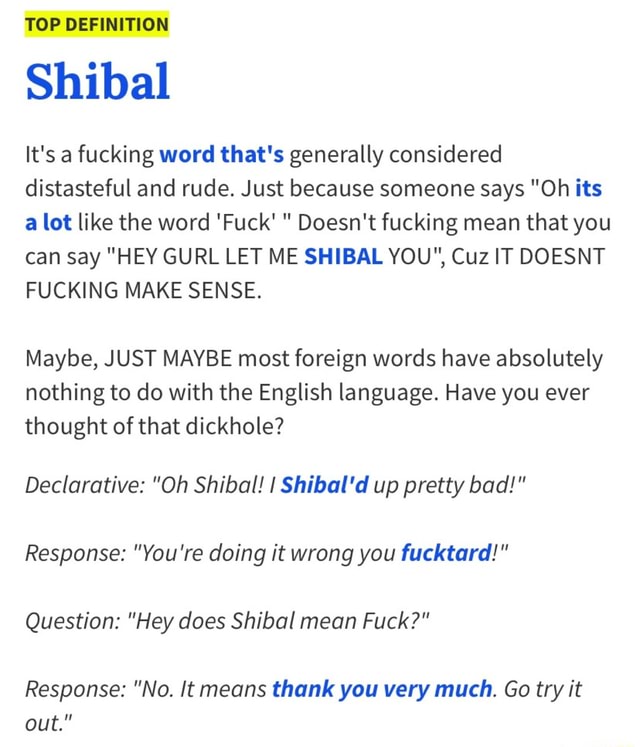
To grasp the financial implications of this term, one must first look at its linguistic and cultural roots. The word “Shibal” is a profanity in Korean, roughly equivalent to the “F-word” in English, while “bi-yong” means cost or expense. Therefore, the literal translation is “f***-it cost.” It is the money you spend when you are so frustrated with a situation—usually a demanding boss, a grueling commute, or an unfair social interaction—that you feel entitled to an immediate, albeit fleeting, financial release.
Etymology and Cultural Context
The term gained traction among the “Sampo” generation—a demographic of young people who have given up on courtship, marriage, and children due to economic pressures. When the traditional milestones of financial success (like buying a home) feel unattainable, individuals often pivot their spending toward immediate gratification. In this context, “Shibal” spending isn’t just about recklessness; it is a coping mechanism for a generation facing stagnant wages and rising inflation. It is the cost of maintaining one’s sanity in a system that feels increasingly rigged against the individual.
The Psychology of Emotional Expenditure
From a behavioral finance perspective, Shibal spending is driven by “ego depletion.” This theory suggests that willpower is a finite resource. After a long day of making difficult decisions and suppressing emotions at the office, our ability to resist impulsive purchases is significantly weakened. We spend money as a way to reclaim a sense of agency. When you cannot control your workload or your salary, you can at least control the decision to buy a premium latte, an expensive taxi ride home, or a designer accessory you don’t strictly need.
The Financial Impact: Why We Spend When We Are Stressed
The danger of Shibal spending lies in its stealthy nature. Unlike a major investment or a large-scale purchase like a car, these expenses are often small enough to be dismissed individually but large enough to erode a savings plan over time. Understanding the mechanics of these “leakages” is essential for anyone looking to optimize their personal cash flow.
Identifying the “Small Luxury” Trap
Shibal spending often masquerades as “small luxuries.” This might include ordering expensive takeout because you’re too drained to cook, or upgrading to a first-class train seat just to avoid the crowd after a bad day. While these purchases provide a temporary dopamine hit, they rarely address the underlying cause of the stress. Financially, these habits create a high-burn rate. If a professional spends an extra $50 a week on “spite expenses,” that totals $2,600 a year—money that could have been directed toward a high-yield savings account or a diversified stock portfolio.
How Social Media Amplifies Spite Spending
The digital age has exacerbated the Shibal phenomenon. Platforms like Instagram and TikTok have normalized the “treat yourself” culture, often rebranding impulsive spending as “self-care.” This creates a feedback loop where financial stress leads to spending, which leads to social validation (through likes or comments), which temporarily masks the guilt of the expenditure. However, the financial reality remains: social-media-driven spite spending often leads to a cycle of debt and decreased net worth, as consumers try to keep up with an idealized version of lifestyle success that is rarely sustainable.

Strategies to Manage Impulsive Financial Habits
Recognizing “what is Shibal” spending in your own life is the first step toward financial discipline. However, awareness is not enough; one must implement structural barriers to prevent emotions from dictating financial outcomes. The goal is not to eliminate all joy-based spending, but to transition from “spite spending” to “intentional spending.”
The 24-Hour Rule and Cooling-Off Periods
One of the most effective tools in a financial toolkit is the mandatory cooling-off period. Since Shibal spending is an impulsive reaction to a specific stressor, the urge to spend usually dissipates once the emotional spike subsides. By committing to a 24-hour rule—waiting one full day before clicking “purchase” on any non-essential item—you allow your prefrontal cortex (the logical part of the brain) to override the amygdala (the emotional part). This simple pause can save thousands of dollars annually by filtering out purchases driven purely by temporary frustration.
Budgeting for Stress: The “Joy Fund” Alternative
Rather than trying to suppress the urge to spend entirely—which often leads to a “binge” spending session later—financial experts suggest creating a dedicated “Joy Fund” or “Stress Buffer.” By allocating a specific, modest percentage of your monthly income to guilt-free, discretionary spending, you transform Shibal-bi-yong into a controlled variable. This shifts the psychology from “I’m spending this because I’m angry” to “I’m spending this because it is a planned part of my financial strategy.”
Shibal Spending vs. Strategic Investing
When we analyze Shibal spending, we must also consider the opportunity cost. In finance, opportunity cost is the loss of potential gain from other alternatives when one alternative is chosen. Every dollar spent on a “spite expense” is a dollar that isn’t working for you in the market.
Opportunity Cost and Long-term Wealth
Consider the power of compound interest. If a 25-year-old redirects $100 a month from impulsive stress spending into an index fund with an 8% average annual return, that capital could grow to over $300,000 by the time they reach 65. When viewed through this lens, that “spiteful” $100 dinner isn’t just $100—it’s thousands of dollars of future wealth. Shibal spending prioritizes the “Current Self” at the extreme expense of the “Future Self.” Bridging this gap is the hallmark of sophisticated financial planning.
Leveraging Financial Tools to Automate Discipline
To combat the urge to spend out of spite, individuals can use various fintech tools to automate their discipline. Setting up “round-up” apps that invest small change, or automating transfers to a brokerage account on payday, ensures that your “Future Self” is paid before you have the chance to spend out of frustration. Furthermore, using expense-tracking apps to categorize “Emotional Spends” can provide the data-driven reality check needed to change long-term habits. When you see a monthly pie chart showing that 15% of your income went to “Shibal” costs, the motivation to pivot toward investing becomes much clearer.

Conclusion: Redefining Value in an Overworked Culture
The concept of “Shibal” serves as a mirror to our modern financial lives. It reveals the cracks in our work-life balance and the ways we use capital to bandage emotional wounds. While the occasional “spite spend” is a human reality, allowing it to become a primary financial habit is a recipe for long-term instability.
By identifying the triggers of Shibal-bi-yong, we can begin to reclaim our financial power. True financial freedom isn’t just about having a high salary; it’s about having the emotional intelligence to manage that salary in a way that serves our long-term goals. Instead of spending to spite a bad day, we can choose to save and invest to secure a better future—a future where we aren’t beholden to the very stressors that drive us to spend in the first place. In the end, the best response to a “Shibal” moment isn’t a purchase; it’s a plan.
aViewFromTheCave is a participant in the Amazon Services LLC Associates Program, an affiliate advertising program designed to provide a means for sites to earn advertising fees by advertising and linking to Amazon.com. Amazon, the Amazon logo, AmazonSupply, and the AmazonSupply logo are trademarks of Amazon.com, Inc. or its affiliates. As an Amazon Associate we earn affiliate commissions from qualifying purchases.