
In the landscape of digital security and data integrity, few acronyms have carried as much weight as SHA-1. Standing for Secure Hash Algorithm 1, this cryptographic function was once the bedrock of internet security, used for everything from securing website connections to verifying the integrity of software downloads. However, the story of SHA-1 is not just one of technical utility; it is a cautionary tale about the relentless march of computational power and the inevitable obsolescence of even the most sophisticated algorithms.
To understand SHA-1, one must first understand the concept of a “hash.” In computing, a hash function is a mathematical algorithm that takes an input of any size (a string of text, a file, or an entire database) and transforms it into a fixed-size string of characters, which is typically a hexadecimal number. This output is often referred to as a “digital fingerprint.”
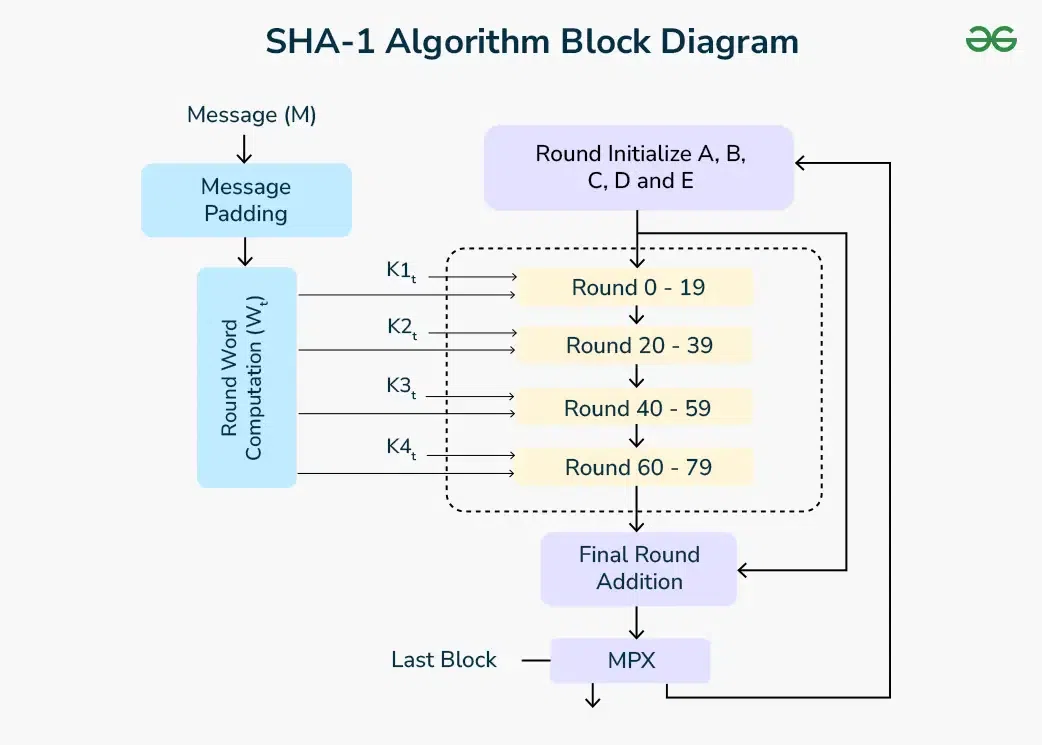
Foundations of SHA-1: How the Algorithm Works
SHA-1 was designed to be a “one-way” function. This means that while it is computationally simple to generate a hash from a piece of data, it should be effectively impossible to reverse the process—that is, to determine the original data based solely on the hash. This property is what makes hashing vital for security.
The Mechanics of Hashing
When you run a file through the SHA-1 algorithm, it undergoes a complex series of logical operations, including bitwise rotations and additions. The result is always a 160-bit hash value, usually represented as a 40-character hexadecimal string. For example, the word “Hello” (with a capital H) always produces a specific SHA-1 hash. If you change even a single character—changing “Hello” to “hello”—the resulting hash will be completely and unpredictably different. This is known as the “avalanche effect,” and it ensures that even the smallest modification to data is immediately detectable.
Key Characteristics: Deterministic and One-Way
For a hashing algorithm to be useful in a technical environment, it must possess three primary characteristics:
- Deterministic: The same input will always produce the exact same hash output.
- Fast Computation: The algorithm should be able to return a hash value quickly, even for large files.
- Pre-image Resistance: Given a hash, it should be impossible to find the original input.
SHA-1 met these criteria excellently during its peak years, providing a reliable way for developers to verify that data had not been tampered with during transmission or storage.
The History and Evolution of SHA-1
The development of SHA-1 was a response to the growing need for a standardized approach to digital signatures and data authentication in an increasingly connected world.
The NSA and NIST Partnership
SHA-1 was developed by the National Security Agency (NSA) and published by the National Institute of Standards and Technology (NIST) in 1995 as a Federal Information Processing Standard (FIPS). It was an improvement over the original SHA-0, which was withdrawn shortly after its release due to a “significant flaw” that the NSA never fully publicly disclosed. SHA-1 corrected this flaw, adding a bitwise rotation to the message schedule.
From SHA-0 to SHA-1
For over a decade, SHA-1 was the gold standard. It was integrated into many widely used security protocols, including Transport Layer Security (TLS), Secure Sockets Layer (SSL), Pretty Good Privacy (PGP), and Secure Shell (SSH). It became the default choice for digital certificates, which are used to prove that a website or a piece of software is legitimate and hasn’t been compromised by a malicious third party.
During the late 90s and early 2000s, the tech industry relied on SHA-1 to secure the burgeoning world of e-commerce and online banking. It was considered robust enough to withstand the computational capabilities of the era.
The Vulnerability Crisis: Why SHA-1 is No Longer Secure
In the world of cryptography, an algorithm is considered “broken” as soon as a mathematical shortcut is discovered that makes it easier to crack than a “brute-force” attack. For SHA-1, the beginning of the end started in the mid-2000s.
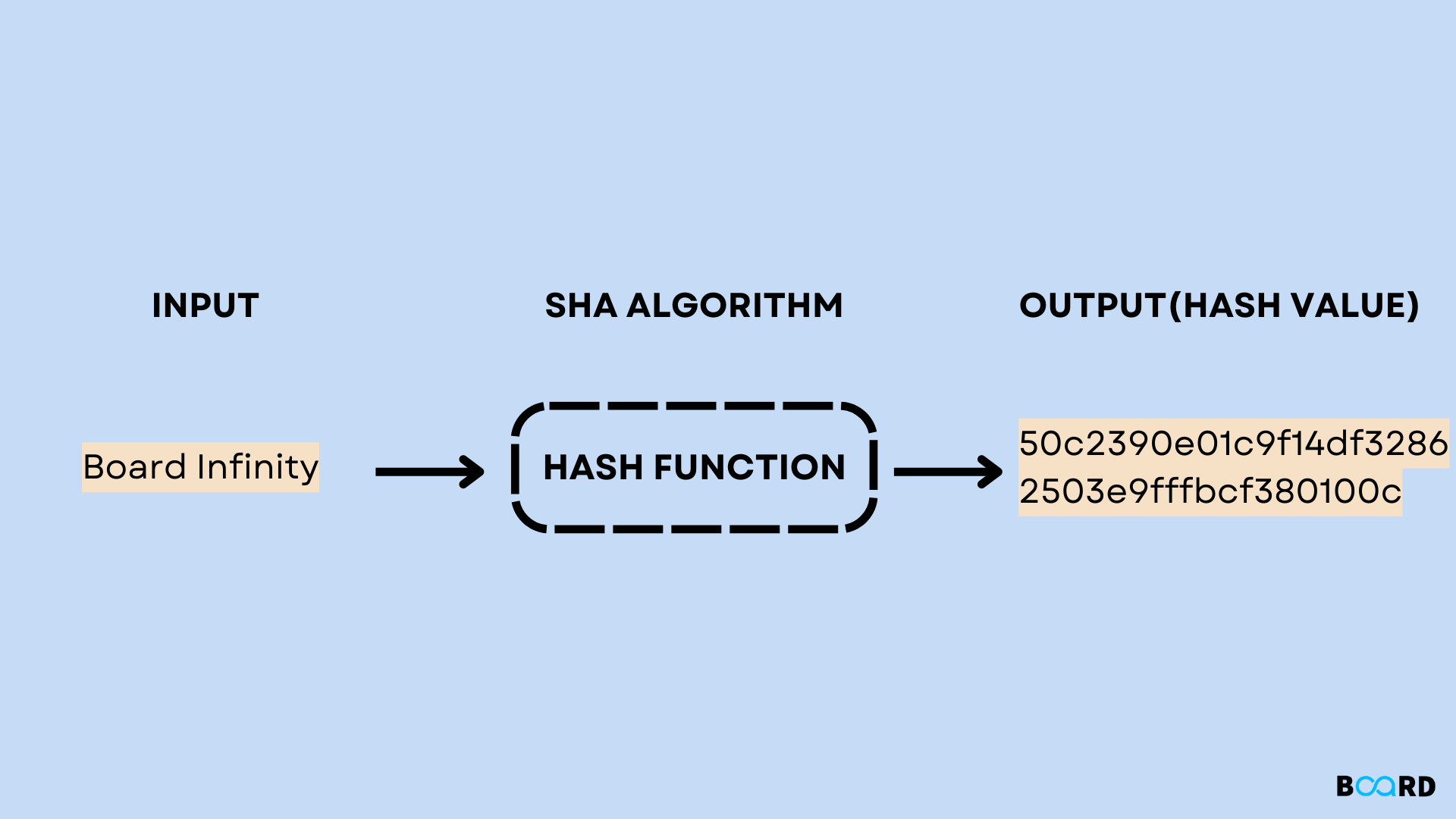
Understanding Hash Collisions
The primary security threat to a hashing algorithm is a “collision.” A collision occurs when two different inputs produce the exact same hash output. Since the number of possible hashes is finite (though incredibly large), collisions theoretically exist for every algorithm. However, a secure algorithm makes it so difficult to find a collision that it would take thousands of years for even the most powerful supercomputers to do so.
In 2005, cryptographers began publishing papers suggesting that SHA-1 was not as collision-resistant as previously believed. These theoretical vulnerabilities suggested that a sophisticated attacker could generate two different documents with the same SHA-1 hash, allowing them to swap a legitimate file for a malicious one without the user noticing.
The “SHAttered” Attack by Google
The theoretical threat became a reality in 2017 when researchers from Google and the CWI Institute in Amsterdam announced the first successful “collision attack” on SHA-1, dubbed “SHAttered.” They produced two different PDF files that had different content but identical SHA-1 hashes.
While the computation required for this attack was massive—equivalent to 110 years of processing on a single GPU—it proved that SHA-1 could no longer be trusted for security-sensitive tasks. This landmark event effectively killed SHA-1 for use in digital signatures and SSL certificates. Major browsers like Chrome, Firefox, and Microsoft Edge began flagging SHA-1 certificates as “untrusted,” forcing the entire tech industry to migrate to more secure alternatives.
Practical Applications and Modern Replacements
Despite its security vulnerabilities, SHA-1 hasn’t vanished entirely. Its role has shifted from a security mechanism to a data management tool.
Legacy Systems and Checksum Verification
In non-security contexts, SHA-1 is still frequently used as a “checksum.” When you download a large software package or a Linux ISO, the provider often gives you a SHA-1 hash. After the download is finished, you can run the file through a SHA-1 generator on your own computer. If your hash matches theirs, you know the file wasn’t corrupted during the download process. In this context, SHA-1 is perfectly fine because an accidental file corruption is extremely unlikely to result in a hash collision.
Another notable use case is in Git, the world’s most popular version control system. Git uses SHA-1 hashes to identify commits and file versions. While the Git community is currently in the process of transitioning to SHA-256 to prevent potential “targeted” attacks on repositories, the vast majority of existing codebases still use SHA-1 for internal tracking.
The Transition to SHA-2 and SHA-3
As SHA-1 was deprecated, the tech industry moved toward the SHA-2 family. SHA-2 includes several variants, the most common being SHA-256 and SHA-512. Unlike SHA-1, which produces a 160-bit hash, SHA-256 produces a much larger 256-bit hash, making the number of possible combinations exponentially higher and significantly harder to crack.
More recently, SHA-3 was released. Interestingly, SHA-3 is not based on the same mathematical structure as its predecessors; it uses a “sponge construction.” This provides a backup in case a fundamental flaw is ever discovered in the SHA-2 family, ensuring that the tech world remains resilient against future cryptographic breakthroughs.
Future-Proofing Digital Security
The lifecycle of SHA-1 provides vital lessons for software developers, IT professionals, and digital security experts. It highlights the need for constant vigilance and “cryptographic agility.”
Best Practices for Developers
Modern development standards now dictate that SHA-1 should never be used for password hashing, digital signatures, or any application where security is paramount. For password storage, developers should use algorithms specifically designed for that purpose, such as Argon2 or bcrypt, which include “salts” and are intentionally slower to prevent brute-force attacks. For data integrity in secure communications, SHA-256 is currently the industry standard.

The Importance of Cryptographic Agility
The downfall of SHA-1 was a massive logistical headache for the tech world. It took years to replace certificates, update legacy software, and educate users. This led to the concept of cryptographic agility: the ability of a system to quickly switch from one encryption or hashing algorithm to another without requiring a total overhaul of the infrastructure.
As we look toward the future, the rise of quantum computing poses a potential threat to current standards like SHA-256. By building systems that are “agile,” the tech community can ensure that when the next algorithm inevitably becomes obsolete, the transition will be seamless rather than a crisis.
In conclusion, while SHA-1 is no longer suitable for securing our digital lives, its contribution to the evolution of the internet cannot be overstated. It served as the primary line of defense during the first great expansion of the digital age. Today, it remains a useful tool for basic data verification, while serving as a permanent reminder that in technology, security is a moving target that requires constant adaptation and improvement.
aViewFromTheCave is a participant in the Amazon Services LLC Associates Program, an affiliate advertising program designed to provide a means for sites to earn advertising fees by advertising and linking to Amazon.com. Amazon, the Amazon logo, AmazonSupply, and the AmazonSupply logo are trademarks of Amazon.com, Inc. or its affiliates. As an Amazon Associate we earn affiliate commissions from qualifying purchases.