
In the contemporary landscape of 4K Ultra-High Definition (UHD) and burgeoning 8K displays, the term “SD” or Standard Definition often feels like a relic of a bygone era. However, Standard Definition remains a foundational concept in video technology, digital broadcasting, and streaming architecture. To understand what an SD movie is, one must look beyond just the resolution; it is a blend of history, technical specifications, and data management strategies that continue to influence how we consume media today.
Standard Definition refers to a video system that has a lower resolution than High Definition (HD). While the term is most frequently associated with the “480p” resolution seen on DVDs and early digital broadcasts, it encompasses a wide range of technical parameters, from aspect ratios to frame rates. This article explores the technical nuances of SD, its historical significance, and why it remains a relevant component of the modern tech ecosystem.

Decoding the Technical Specifications of Standard Definition (SD)
At its core, the definition of an SD movie is rooted in its pixel count. In the digital realm, resolution is measured by the number of horizontal lines a screen displays from top to bottom. For a video to be classified as SD, it typically falls within the range of 480 or 576 vertical lines.
Pixel Count and Digital Resolution
In North America and parts of South America and Asia, the standard for SD was traditionally defined by the NTSC (National Television System Committee) system, which uses 480 active lines. In a digital context, this is usually expressed as 720×480 pixels. Conversely, in Europe and much of the rest of the world, the PAL (Phase Alternating Line) system was the standard, offering a slightly higher resolution of 720×576 pixels. When you watch an SD movie on a streaming service today, you are likely viewing a “480p” file, where the “p” stands for progressive scanning—a method where every line of the frame is drawn in sequence.
Aspect Ratios: The Era of 4:3
One of the most defining characteristics of the SD era is the aspect ratio. Before the wide adoption of 16:9 widescreen displays, the “Academy Ratio” or 4:3 (1.33:1) was the industry standard. This square-like format was the baseline for television sets for over half a century. While SD movies can be encoded in a 16:9 format (often referred to as “Anamorphic Widescreen” on DVDs), the native resolution of SD is intrinsically tied to the legacy of 4:3 displays. This is why watching an old SD movie on a modern TV often results in “pillarboxing”—the black bars on the left and right sides of the screen.
Frame Rates and Interlaced Scanning
Technical enthusiasts often distinguish SD by its scanning method. In the analog television era, “interlaced” scanning (480i) was used to conserve bandwidth. This involved splitting a single frame into two “fields”—one containing the odd-numbered lines and the other containing the even-numbered lines. While this created a smoother motion for live sports, it often resulted in “combing” artifacts during fast-moving movie scenes. Modern digital SD movies have largely transitioned to progressive scanning, which provides a cleaner, more stable image for digital displays.
The Evolution of Video Standards: From Analog to Digital
The journey of the SD movie is inextricably linked to the transition from analog signals to digital data packets. This evolution represents one of the most significant leaps in communication technology.
The Legacy of NTSC and PAL
Before digital files existed, SD was defined by radio frequencies and vacuum tubes. The NTSC and PAL standards were the blueprints for broadcasting. These standards dictated not only the resolution but also how color information was encoded. For decades, the technical limitations of these systems defined the “look” of cinema on television. Movies had to be color-graded specifically for the narrow color gamut of SD sets, leading to a visual style that was often softer and less vibrant than the original 35mm film prints.
Digital Video Compression and the MPEG-2 Revolution
The true birth of the “SD Movie” as a portable digital commodity came with the advent of MPEG-2 compression. This technology allowed high-quality video to be shrunk down into a size that could fit on an optical disc. The DVD (Digital Versatile Disc) became the gold standard for SD content. By using lossy compression, engineers could remove redundant visual data that the human eye wouldn’t necessarily miss, allowing a two-hour movie to fit into roughly 4.7 gigabytes of storage. This era solidified 720×480 as the benchmark for “home cinema.”
Why SD Stayed Relevant During the DVD Era
Even as HD technology began to emerge in the early 2000s, SD remained dominant due to hardware limitations. High Definition required significantly more processing power and storage capacity. For a long period, the infrastructure of the internet and the processing speed of home computers were optimized for SD. It provided a “sweet spot” of visual clarity that was significantly better than VHS tapes but light enough to be handled by the consumer electronics of the time.
SD vs. HD, UHD, and Beyond: A Comparative Analysis
To appreciate Standard Definition, one must compare it against its successors. The move from SD to HD was not just a minor upgrade; it was a fundamental shift in how visual information is processed and displayed.
Visual Comparison: Clarity and Detail
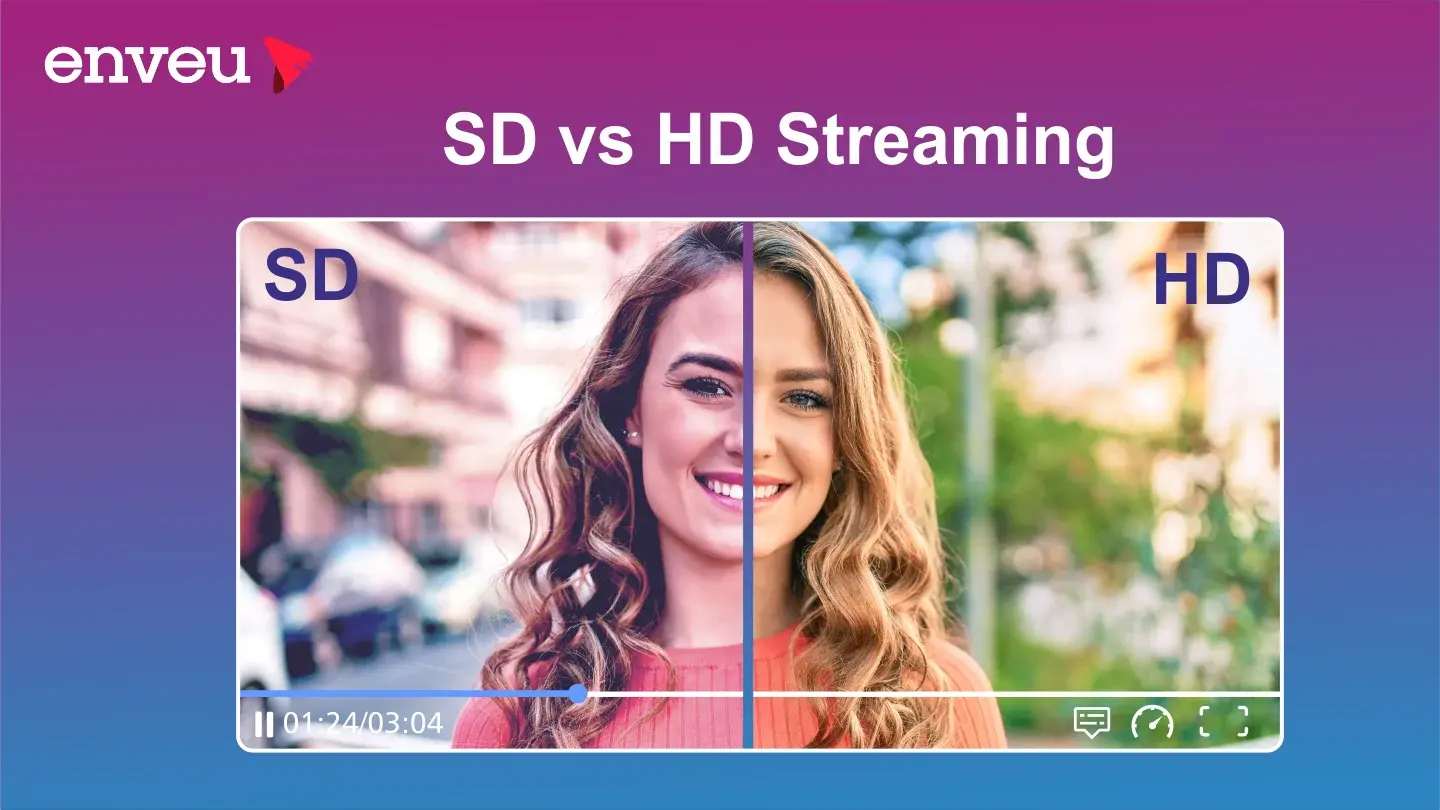
A standard 480p SD image contains approximately 345,600 pixels per frame. In contrast, a 1080p Full HD image contains over 2 million pixels, and a 4K UHD image contains over 8 million. The difference in clarity is staggering. In an SD movie, fine details like individual strands of hair, skin pores, or distant background text are often lost in a blur of pixels. However, on smaller screens (such as a 5-inch smartphone), the human eye struggles to distinguish the difference between SD and HD, which is why SD remains a viable option for mobile viewing.
Bandwidth and Data Storage Advantages
From a technical standpoint, the primary advantage of SD is efficiency. An SD movie requires significantly less bandwidth to stream than its HD counterparts. A typical SD stream requires about 1 to 2 Mbps (Megabits per second), whereas 4K streaming requires 15 to 25 Mbps. For users with data caps on their internet plans or those living in regions with unstable connectivity, SD is a vital tool for ensuring uninterrupted playback. It is the “failsafe” of the streaming world.
Display Scaling and Upscaling Tech
When you play an SD movie on a modern 4K television, the TV must perform a process called “upscaling.” Since the SD image only fills a small fraction of a 4K screen’s pixels, the TV’s internal processor must use algorithms to “guess” what the missing pixels should look like. Cheap upscalers can make SD movies look muddy or “blocky,” but advanced AI-driven upscaling in modern high-end TVs can make an SD movie look remarkably close to 720p HD, breathing new life into old content.
The Practical Role of SD in the Modern Streaming Landscape
Despite the push toward 8K, Standard Definition is far from obsolete. In fact, it serves several critical functions in the global digital infrastructure.
Mobile Viewing and Data Conservation
Streaming giants like Netflix, YouTube, and Amazon Prime Video continue to offer SD as a viewing tier. For mobile users on the go, SD is often the default setting. Because mobile screens are small, the density of pixels (PPI) is high enough that an SD movie still looks sharp. More importantly, streaming in SD saves massive amounts of data—allowing users to watch three to four times more content on the same data plan compared to HD.
Archival Content and Nostalgia
A vast majority of the world’s filmed history was recorded in formats that do not exceed SD resolution. While many blockbuster films shot on 35mm can be rescanned in 4K, countless television shows, documentaries, and home movies exist only in SD formats like BetaCam, VHS, or early digital tape. For these titles, the “SD movie” is the definitive version. Preserving these in their native resolution ensures that the original artistic intent and the “texture” of the era are maintained.
Accessibility in Developing Digital Infrastructures
In many parts of the world, high-speed broadband is not yet a reality. SD movies are the primary way millions of people access digital entertainment. By maintaining SD compatibility, tech companies ensure that their platforms remain accessible to a global audience, regardless of local economic or technical constraints. It is a tool for digital inclusivity, bridging the gap between high-tech urban centers and rural areas with limited connectivity.
Conclusion: The Enduring Legacy of Standard Definition
The SD movie is more than just a low-resolution video file; it is the bridge that connected the analog past to our digital future. It represents the era when digital media became accessible to the masses through the DVD and early internet streaming. While our eyes have become accustomed to the razor-sharp precision of high-definition displays, the technical efficiency and historical importance of Standard Definition cannot be overlooked.
In the tech world, newer is often equated with better, but “standard” implies a baseline of reliability. SD remains that baseline. Whether it is serving as a data-saving measure for a commuter on a train, a medium for preserving 20th-century television history, or a gateway for users in developing nations, Standard Definition continues to play a quiet but essential role in the global media ecosystem. Understanding what an SD movie is allows us to appreciate how far video technology has come while acknowledging the elegant efficiency of the standards that started the digital revolution.
aViewFromTheCave is a participant in the Amazon Services LLC Associates Program, an affiliate advertising program designed to provide a means for sites to earn advertising fees by advertising and linking to Amazon.com. Amazon, the Amazon logo, AmazonSupply, and the AmazonSupply logo are trademarks of Amazon.com, Inc. or its affiliates. As an Amazon Associate we earn affiliate commissions from qualifying purchases.