
In the rapidly advancing landscape of agricultural technology, the pursuit of efficiency has moved from the expansive fields of traditional farming into the controlled environments of indoor laboratories and high-tech greenhouses. One of the most significant methodologies to emerge from this shift is Scrog, or “Screen of Green.” While originally conceptualized as a manual gardening technique, Scrog has evolved into a sophisticated discipline of structural engineering and precision canopy management. At its core, Scrog is a high-yield agricultural strategy designed to maximize light exposure and spatial efficiency, now being revolutionized by IoT integration, automated hardware, and data-driven optimization.
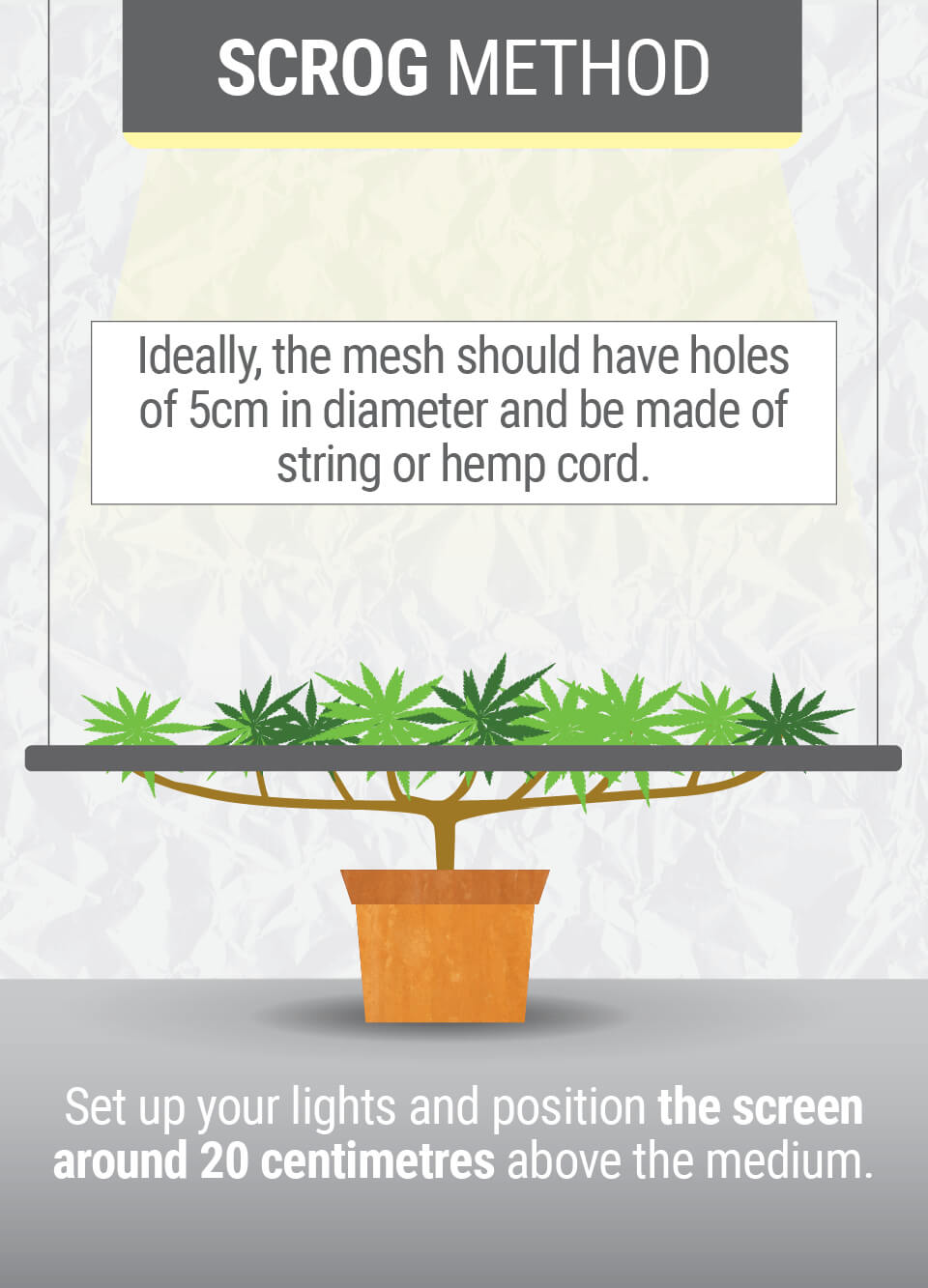
For tech-focused cultivators and ag-tech innovators, Scrog represents the pinnacle of resource management. By manipulating the physical architecture of a plant’s growth, Scrog allows for the conversion of vertical growth into horizontal surface area, creating a uniform “table” of vegetation. This transformation is not merely a botanical trick; it is a fundamental reconfiguration of the biological interface between the plant and its energy source, necessitating a deep dive into the technology that makes it possible.
The Engineering Behind the Screen of Green
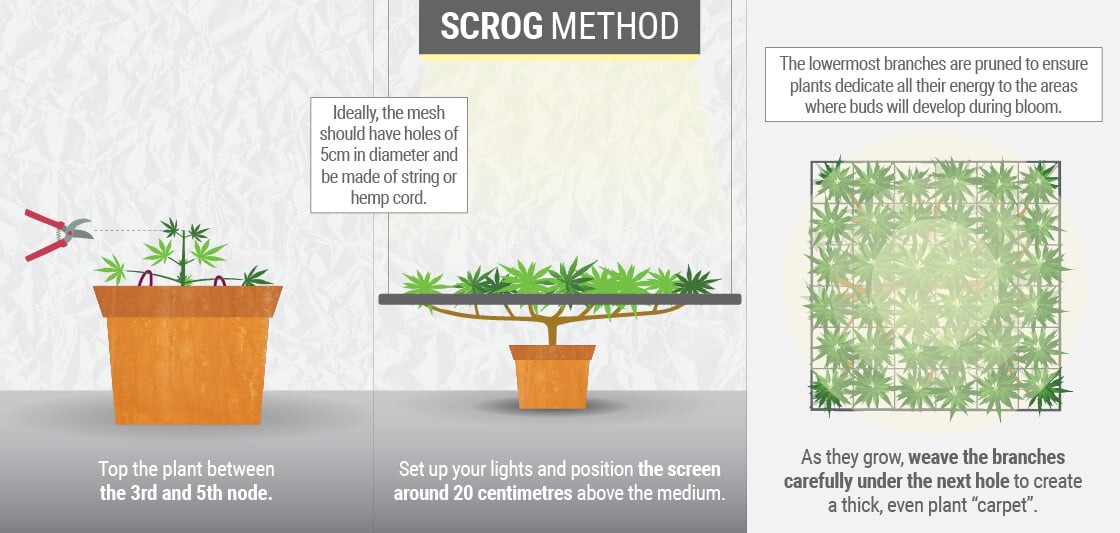
The fundamental premise of Scrog is the use of a physical barrier—typically a mesh or lattice screen—to train plants to grow horizontally rather than vertically. In a traditional indoor grow, plants often develop a “Christmas tree” shape, where the top-most growth (the apical meristem) receives the majority of the light while the lower branches are shaded and underdeveloped. Scrog disrupts this hierarchy through deliberate structural manipulation.
Structural Frameworks and Material Science
The “screen” in a Scrog system is a piece of precision hardware. Modern industrial applications have moved away from simple netting toward modular, adjustable frames constructed from high-grade polymers or aerospace-grade aluminum. These frames must be rigid enough to withstand the significant upward pressure of a rapidly growing canopy while remaining adaptable to different growth stages.
Engineers focus on “apical dominance suppression.” By tucking the main stem under the screen, the plant’s hormonal balance shifts, redistributing growth energy (auxins) to the lateral branches. This creates a uniform canopy where every branch is at the same distance from the light source. The material of the screen itself is critical; it must be non-reactive to high-intensity discharge (HID) or LED light and resistant to the high-humidity microclimates that exist directly beneath the leaf surface.
The Geometry of Canopy Management
The mathematics of a Scrog setup involves calculating the “fill rate” of the screen. High-tech cultivators use software to model the growth rate of specific cultivars, predicting when the screen will be 70% to 80% full. This is the optimal point to trigger the flowering phase of the plant. Precision in this timing ensures that the remaining 20% to 30% of the screen is filled by the “stretch” that occurs during the early reproductive cycle, resulting in a 100% efficient use of the square footage. This level of spatial optimization is a key metric in commercial indoor farming, where real estate and energy costs are the primary drivers of overhead.
Integrating Smart Sensors and IoT into Scrog Systems
As the “Screen of Green” method moves into the era of Industry 4.0, it is being augmented with Internet of Things (IoT) devices and sophisticated sensor arrays. A “Smart Scrog” setup does more than just hold plants in place; it serves as a data collection platform that informs the cultivator about the health and progress of the crop in real-time.
Environmental Monitoring and Data Feedback Loops
In a dense Scrog canopy, airflow becomes a critical technical challenge. Because the vegetation is so thick, it can create “dead zones” of stagnant air, leading to moisture buildup and pathogen risk. To mitigate this, integrated sensor nodes are deployed both above and below the screen. These sensors monitor:
- Vapor Pressure Deficit (VPD): Using high-precision temperature and humidity probes to ensure the plants can transpire efficiently.
- CO2 Concentration: Monitoring carbon dioxide levels at the leaf surface to ensure the photosynthetic engine is fully fueled.
- Substrate Moisture Sensors: Capacitance-based sensors that provide data on how quickly the plant is consuming water under the increased intensity of a Scrog light spread.
These data points are fed into a central controller (such as a Raspberry Pi or a custom PLC) that automatically adjusts variable-speed fans and dehumidifiers to maintain the perfect microclimate.
Automated Height Adjustment and Actuator Integration
One of the most exciting developments in Scrog technology is the advent of motorized screen systems. Traditional Scrog screens are static, meaning the light source must be moved to accommodate growth. However, advanced systems now utilize linear actuators to raise or lower the screen itself with millimeter precision. This allows the system to maintain a constant “Distance to Light” (DTL) ratio. When paired with laser distance sensors, the screen can automatically adjust its height as the plants grow, ensuring that the light intensity—measured in Photosynthetic Photon Flux Density (PPFD)—remains at the optimal threshold without human intervention.
Computational Light Management in a Scrog Environment
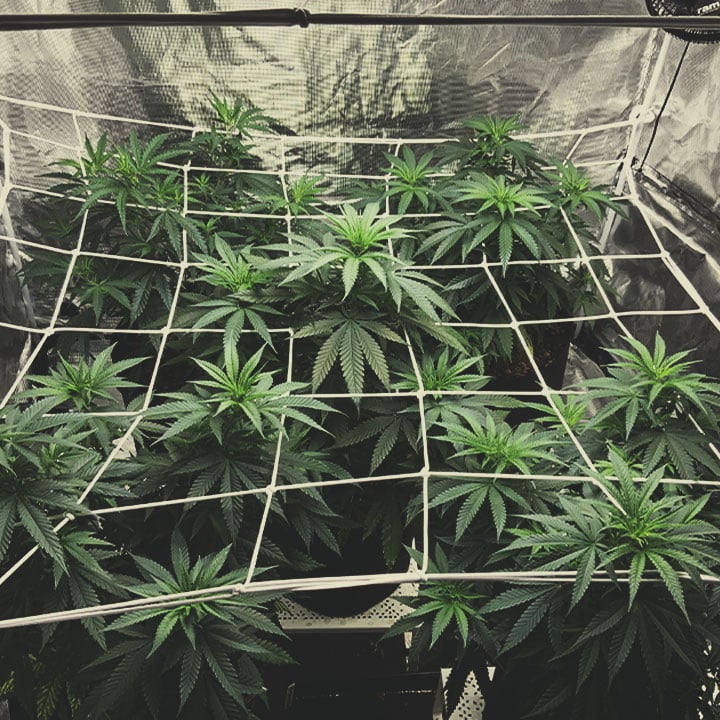
The true power of Scrog is realized through its interaction with lighting technology. Because the canopy is perfectly flat, it allows for a level of light uniformity that is impossible in traditional growing. This uniformity is the key to maximizing the efficiency of high-end LED arrays.
PAR Efficiency and Shadow Mitigation
Photosynthetically Active Radiation (PAR) refers to the spectral range of solar radiation that plants are able to use in the process of photosynthesis. In a Scrog system, the goal is to eliminate the “shadow tax”—the loss of energy that occurs when upper leaves shade lower parts of the plant. By spreading the plant across a screen, the cultivator creates a two-dimensional photosynthetic surface.
Tech-driven farms use light mapping software to ensure that the PAR footprint of their LED fixtures aligns perfectly with the dimensions of the Scrog screen. This involves adjusting the beam angles of the diodes and utilizing reflective surfaces to capture every stray photon. The result is a dramatic increase in “grams per watt,” a standard efficiency metric in controlled environment agriculture.
Spectrum Tailoring via Smart Controllers
Modern LED controllers allow for dynamic spectrum adjustment, which is particularly useful in a Scrog setup. During the vegetative stage (when the plant is being trained across the screen), the light can be tuned to a blue-heavy spectrum to encourage short internodal spacing and thick stems. Once the screen is filled, the controller can shift to a red-heavy spectrum to drive flower production. Some advanced systems even use “far-red” wavelengths at specific times of the day to trigger the “shade-avoidance response,” subtly encouraging the plant to fill gaps in the screen more quickly.
Scaling with Software: Management Platforms for Commercial Scrog
At the commercial level, managing hundreds of Scrog screens requires more than just hardware; it requires a robust software layer. Enterprise-level agricultural management platforms are now being designed to handle the specific workflows associated with the Scrog method.
Workflow Automation and Resource Planning
The “tucking” and “weaving” of plants into a screen is a labor-intensive process. Software platforms help managers track the man-hours required for these tasks, scheduling “canopy training” sessions based on the growth rates logged in the system. By using historical data and machine learning, these platforms can predict exactly when a specific room will be ready for the next phase of growth, allowing for just-in-time logistics and labor allocation.
AI-Driven Predictive Harvesting
Computer vision is also playing a role in Scrog optimization. Overhead cameras equipped with AI image-recognition models scan the canopy to detect the uniformity of the “green.” If a particular area of the screen is lagging, the AI can flag it for inspection or automatically adjust the local environment (e.g., increasing localized light intensity). Furthermore, these AI models can estimate the final yield based on the density and health of the canopy on the screen weeks before harvest, providing valuable data for business forecasting and supply chain management.
The Future of High-Tech Indoor Agriculture
The Scrog methodology is a testament to how traditional horticultural wisdom can be transformed by modern technology. As we look toward the future, the integration of robotics and further automation promises to make Scrog even more efficient and scalable.
Robotics and the Hands-Off Scrog
One of the remaining hurdles in Scrog is the manual labor required to train the plants through the mesh. Research is currently underway into robotic arms equipped with soft-touch end-effectors and advanced computer vision. These robots would be capable of delicately weaving branches through a screen, effectively automating the most labor-intensive part of the process. This would allow for massive, multi-level vertical Scrog farms that require minimal human entry, reducing the risk of contamination and lowering operational costs.
Sustainability and Energy-Efficiency Benchmarks
In a world increasingly concerned with the energy footprint of indoor farming, Scrog stands out as a sustainability tool. By maximizing the output per square foot and ensuring that every milliwatt of light is utilized by the plant, Scrog reduces the total energy required to produce a kilogram of biomass. When combined with smart-grid integration—where the farm’s energy consumption is optimized based on real-time electricity prices and renewable availability—the “Screen of Green” becomes a model for the future of sustainable, high-tech food and medicine production.
Ultimately, Scrog is more than a screen; it is a framework for precision. It represents the transition of agriculture from an art form based on intuition to a rigorous tech discipline based on data, engineering, and architectural efficiency. As the hardware becomes smarter and the software more intuitive, Scrog will continue to be a foundational technique for anyone looking to push the boundaries of what is possible in controlled environment agriculture.
aViewFromTheCave is a participant in the Amazon Services LLC Associates Program, an affiliate advertising program designed to provide a means for sites to earn advertising fees by advertising and linking to Amazon.com. Amazon, the Amazon logo, AmazonSupply, and the AmazonSupply logo are trademarks of Amazon.com, Inc. or its affiliates. As an Amazon Associate we earn affiliate commissions from qualifying purchases.