
In the rapidly evolving landscape of modern technology, the term “scientific evidence” has migrated from the sterile environments of laboratory test tubes to the high-velocity world of data centers, neural networks, and algorithmic validation. In the tech sector, scientific evidence is no longer just a collection of physical observations; it is the rigorous, empirical backbone that supports software reliability, cybersecurity protocols, and the ethical deployment of Artificial Intelligence (AI).
As we transition into an era dominated by machine learning and complex digital ecosystems, understanding what constitutes scientific evidence is vital for developers, data scientists, and tech leaders. It is the difference between a product that works by “luck” and a platform built on the immutable laws of data integrity and statistical significance.
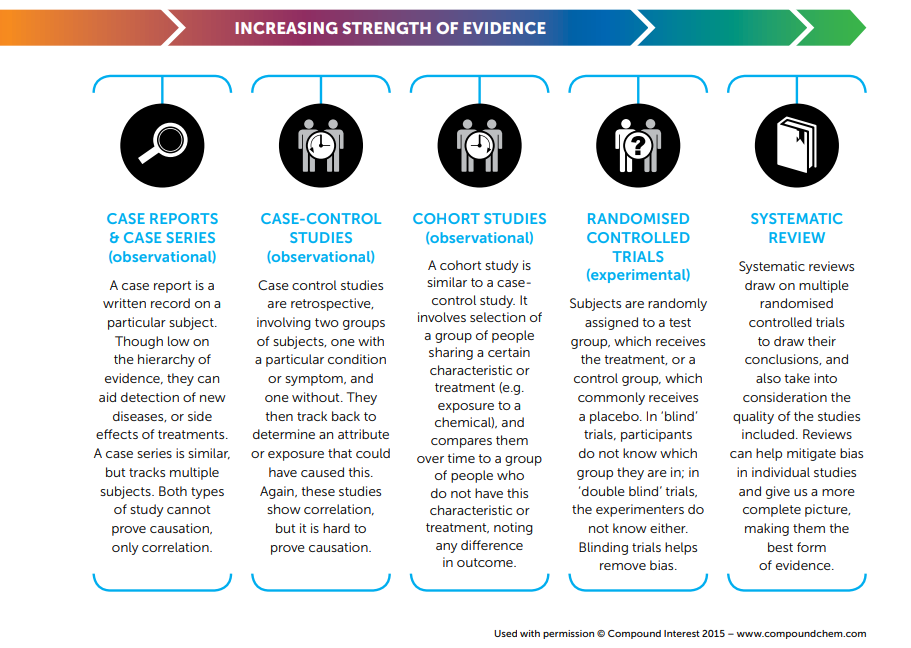
The Foundation of Empirical Evidence in Software Engineering
At its core, scientific evidence in technology is defined by reproducibility and falsifiability. In software engineering, this manifests as the shift from intuitive coding—relying on a developer’s “gut feeling”—to empirical, data-driven development.
From Heuristics to Data-Driven Development
Historically, software development relied heavily on heuristics—mental shortcuts or “best practices” that generally worked but lacked formal proof. However, as systems have become more complex, the tech industry has adopted the scientific method to validate performance. Scientific evidence in this context refers to telemetry data, error logs, and performance metrics that prove a system operates within defined parameters. When a software engineer claims that a new update improves latency, that claim must be backed by a dataset that shows a statistically significant deviation from the baseline. This move toward evidence-based engineering ensures that software is robust enough to handle real-world stressors.
The Role of A/B Testing as a Scientific Method
Perhaps the most visible application of the scientific method in tech is A/B testing (split testing). This is a controlled experiment with two variants, A and B, which serve as the control and the treatment. To gain scientific evidence that a specific feature enhances user engagement, companies deploy these versions to different segments of users simultaneously. The “evidence” is gathered by measuring specific KPIs and applying statistical tests—such as p-values and confidence intervals—to ensure that the results are not due to random chance. This rigorous approach prevents companies from wasting resources on features that do not provide measurable value.
Scientific Evidence in Artificial Intelligence and Machine Learning
The rise of Artificial Intelligence has redefined the nature of evidence. In the realm of Machine Learning (ML), scientific evidence is the data used to train, validate, and test models. Without high-quality evidence, an AI model is nothing more than a “black box” generating unreliable outputs.
Validation Sets and Ground Truth
In ML, the concept of “ground truth” serves as the primary form of scientific evidence. Ground truth refers to information that is known to be real or true, used to check the accuracy of an algorithm. When training a computer vision model to identify medical anomalies, the scientific evidence consists of thousands of images pre-labeled by expert radiologists. The model’s performance is then measured against a “validation set”—a piece of evidence the model has never seen before. If the model can accurately predict outcomes on the validation set, we have empirical evidence of the model’s predictive power.
Addressing Bias through Statistical Rigor
One of the most pressing challenges in tech today is algorithmic bias. Scientific evidence plays a crucial role in identifying and mitigating these biases. By performing statistical audits on training data, tech researchers can provide evidence that a dataset is skewed toward a certain demographic or behavior. This evidence-based approach allows for the implementation of “de-biasing” techniques. In this niche, evidence isn’t just about whether a tool works, but whether it works fairly and consistently across all variables. This requires a level of scrutiny that mirrors the peer-review process found in traditional scientific journals.

Cybersecurity: Using Forensics as Digital Scientific Evidence
In the world of digital security, scientific evidence takes the form of digital forensics and cryptographic proofs. As cyber threats become more sophisticated, the ability to provide undeniable proof of an intrusion or a transaction is paramount.
Cryptographic Proof and Blockchain Integrity
Blockchain technology is perhaps the ultimate expression of scientific evidence in the digital age. Through cryptographic hashing and consensus algorithms, a blockchain provides mathematical evidence of a transaction’s validity. There is no need for a central authority to “vouch” for the data; the evidence is embedded in the math itself. Each block in the chain contains a cryptographic hash of the previous block, creating an immutable record. If a single bit of data is changed, the hashes no longer match, providing immediate scientific evidence of tampering.
Incident Response and the Chain of Custody
When a data breach occurs, cybersecurity experts act as digital detectives. Scientific evidence in this field involves capturing volatile memory, analyzing network traffic logs, and examining file system artifacts. For this evidence to be “scientific” and admissible in a professional or legal setting, it must follow a strict “chain of custody.” This ensures that the digital evidence has not been altered from the moment of collection to the moment of analysis. Tools like EnCase or FTK Imager are used to create bit-for-bit copies of drives, providing a forensic foundation that can be verified by independent third parties.
The Future of Evidence: Quantum Computing and Complex Simulations
As we look toward the future, the nature of scientific evidence in tech will continue to shift, moving away from retrospective analysis toward predictive modeling and synthetic environments.
Synthetic Data vs. Real-World Evidence
One of the emerging trends in AI is the use of “synthetic data.” This is data that is artificially generated rather than collected from real-world events. While it might seem counterintuitive to call artificial data “scientific evidence,” it is increasingly used to train models where real-world data is scarce or sensitive (such as in healthcare or autonomous driving). The scientific evidence here lies in the mathematical correlation between the synthetic data and the real-world phenomena it simulates. If a self-driving car performs flawlessly in a high-fidelity physics simulation, that provides substantial evidence of its readiness for the road.
The Shift Toward Predictive Analytics
We are moving from a world where we ask, “What happened?” (Descriptive Evidence) to “What will happen?” (Predictive Evidence). In the tech industry, predictive analytics uses historical data, machine learning, and statistical modeling to provide evidence for future trends. Whether it is predicting server failures before they happen or anticipating a surge in network traffic, the “evidence” is found in the patterns and correlations identified by high-performance computing. This proactive stance is becoming the standard for enterprise-level technology management.
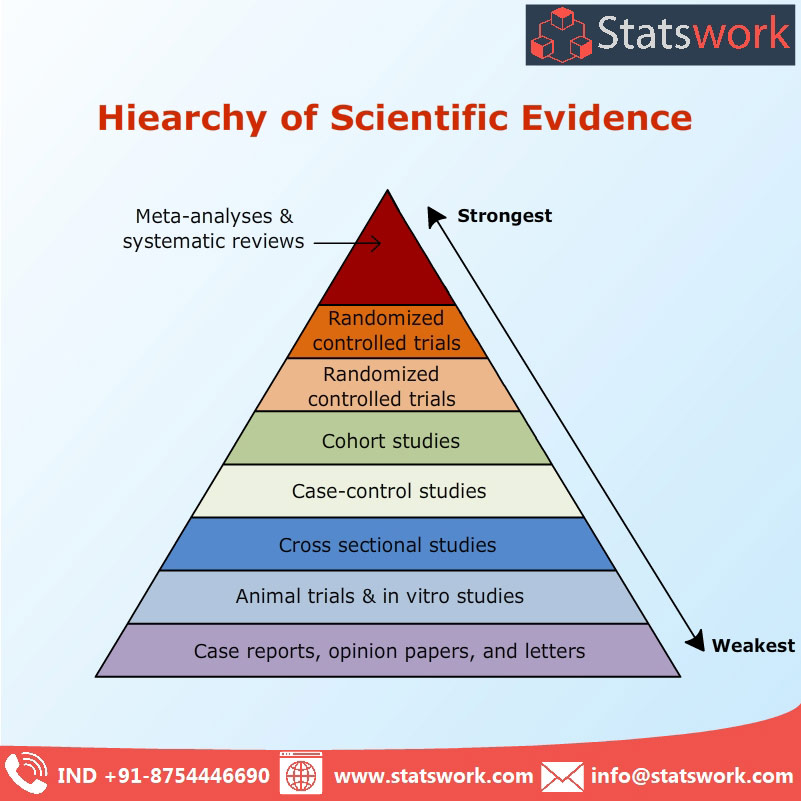
Conclusion: The Imperative of Rigor
In the tech world, scientific evidence is the antidote to hype. In an industry often characterized by “move fast and break things,” the application of scientific rigor provides the necessary guardrails for sustainable innovation. Whether it is through the statistical validation of an A/B test, the cryptographic certainty of a blockchain transaction, or the forensic analysis of a security breach, evidence is the currency of trust.
As software continues to eat the world, the definition of scientific evidence will only become more data-centric. For tech professionals, the ability to gather, analyze, and present this evidence is not just a technical skill—it is a foundational requirement for building the next generation of reliable, secure, and ethical technology. To ask “what is scientific evidence” in a tech context is to ask “how do we know this works?” The answer, invariably, lies in the data.
aViewFromTheCave is a participant in the Amazon Services LLC Associates Program, an affiliate advertising program designed to provide a means for sites to earn advertising fees by advertising and linking to Amazon.com. Amazon, the Amazon logo, AmazonSupply, and the AmazonSupply logo are trademarks of Amazon.com, Inc. or its affiliates. As an Amazon Associate we earn affiliate commissions from qualifying purchases.