
In the contemporary landscape of technological advancement, the boundaries between theoretical research and practical application are increasingly blurred by a specialized discipline known as scientific computing. Often referred to as computational science, scientific computing is the intersection of computer science, mathematics, and specific scientific disciplines. It involves the development of mathematical models, numerical analysis techniques, and advanced software to solve complex problems that are otherwise too difficult, expensive, or dangerous to address through traditional experimentation.
While traditional science relies on two pillars—theory and experimentation—scientific computing has emerged as the “third pillar.” It allows researchers to simulate the birth of a galaxy, the folding of a protein, or the aerodynamic flow over a hypersonic jet without ever leaving a terminal. This article explores the core components, the technological infrastructure, and the transformative impact of scientific computing on the modern tech ecosystem.
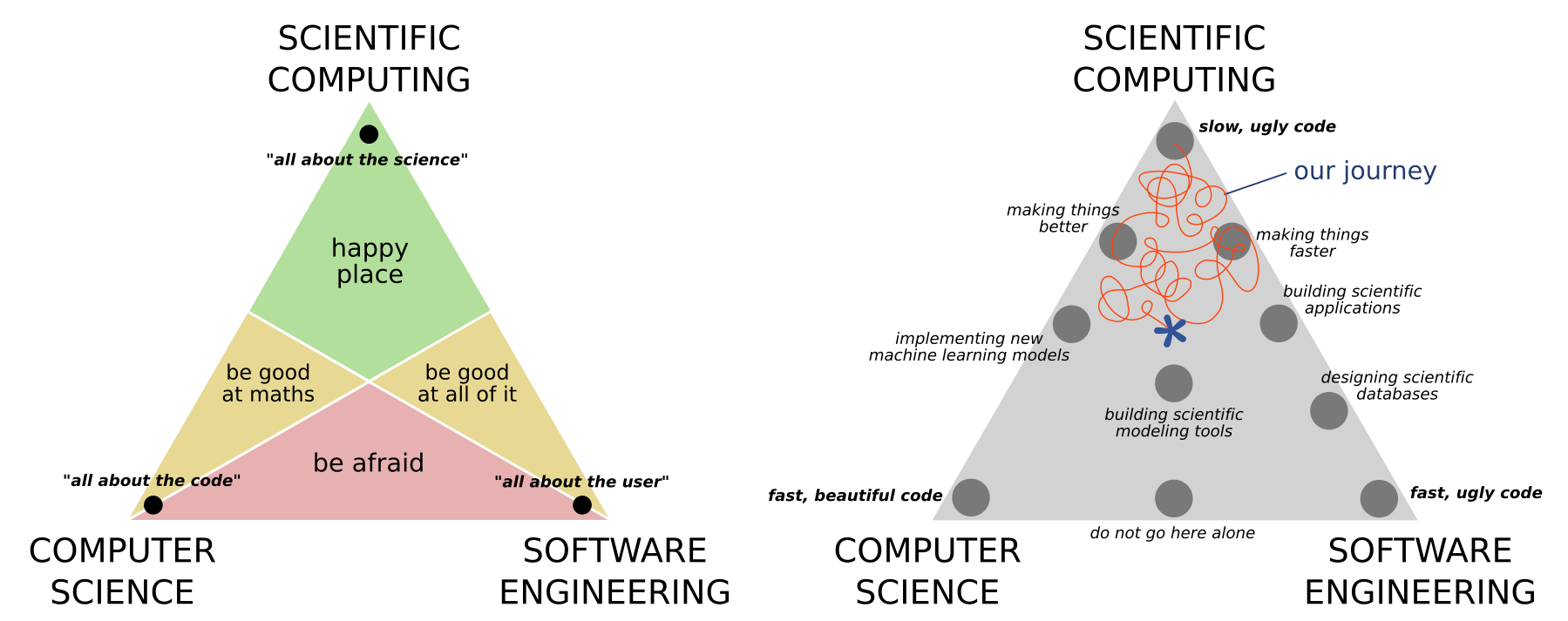
The Architectural Pillars of Scientific Computing
At its core, scientific computing is not just about “using computers for science.” It is a rigorous methodology that translates physical phenomena into digital logic. To understand its scope, we must look at the three foundational elements that make it possible.
Mathematical Modeling and Simulation
The journey of scientific computing begins with a mathematical model. This is a set of equations—often partial differential equations—that describe the behavior of a system. For instance, the Navier-Stokes equations describe fluid motion. In scientific computing, these continuous equations are “discretized,” meaning they are broken down into a finite number of points or elements that a computer can process. Simulation is the act of running these models over time to observe how a system evolves under various conditions.
Numerical Analysis and Algorithms
Computers do not understand calculus; they understand arithmetic. Numerical analysis is the branch of mathematics that creates algorithms for obtaining numerical approximations to problems. In scientific computing, accuracy and stability are paramount. An algorithm must be able to handle “floating-point” arithmetic without accumulating errors that render the result useless. Common techniques include the Finite Element Method (FEM) for structural analysis and Monte Carlo simulations for probabilistic modeling.
Software Engineering and Programming Languages
Unlike general-purpose software development, scientific computing requires languages and libraries optimized for high-speed calculation. While Python has become the dominant interface for scientific computing due to its extensive libraries (like NumPy, SciPy, and Matplotlib), the “heavy lifting” is often still performed by compiled languages like C++ or Fortran. These languages allow for manual memory management and low-level optimizations that are critical when dealing with datasets that span terabytes or simulations that require weeks of processing time.
Technological Infrastructure: HPC and the Hardware Revolution
The evolution of scientific computing is intrinsically linked to the evolution of hardware. As the complexity of our questions grows, so does the demand for raw processing power. This has led to the rise of High-Performance Computing (HPC) and specialized hardware architectures.
High-Performance Computing (HPC) and Supercomputers
HPC refers to the practice of aggregating computing power in a way that delivers much higher performance than one could get out of a typical desktop computer. Supercomputers are the pinnacle of HPC. These machines consist of thousands of compute nodes working in parallel. The architecture of these systems focuses on “throughput” and “latency,” ensuring that data can move between processors fast enough to keep up with the calculation. Modern supercomputers, such as those reaching the Exascale (one quintillion calculations per second), are the primary labs for scientific computing.
The Shift from CPUs to GPUs
One of the most significant shifts in the tech niche over the last decade is General-Purpose Computing on Graphics Processing Units (GPGPU). Originally designed for rendering video game graphics, GPUs are excellent at performing the same operation on many data points simultaneously (parallelism). Because scientific simulations often involve performing the same calculation across a massive grid, GPUs have proven to be exponentially faster than traditional CPUs. Companies like NVIDIA have revolutionized the field by creating software layers like CUDA, which allow scientists to write code specifically for GPU architectures.
Cloud Computing for Science
Historically, scientific computing was restricted to those with access to multi-million dollar local clusters. However, the “Cloudification” of tech has democratized this field. Platforms like Amazon Web Services (AWS), Google Cloud, and Microsoft Azure now offer specialized instances optimized for scientific workloads. This allows startups and smaller research teams to rent “supercomputing” power on an hourly basis, facilitating rapid prototyping and scaling that was previously impossible.
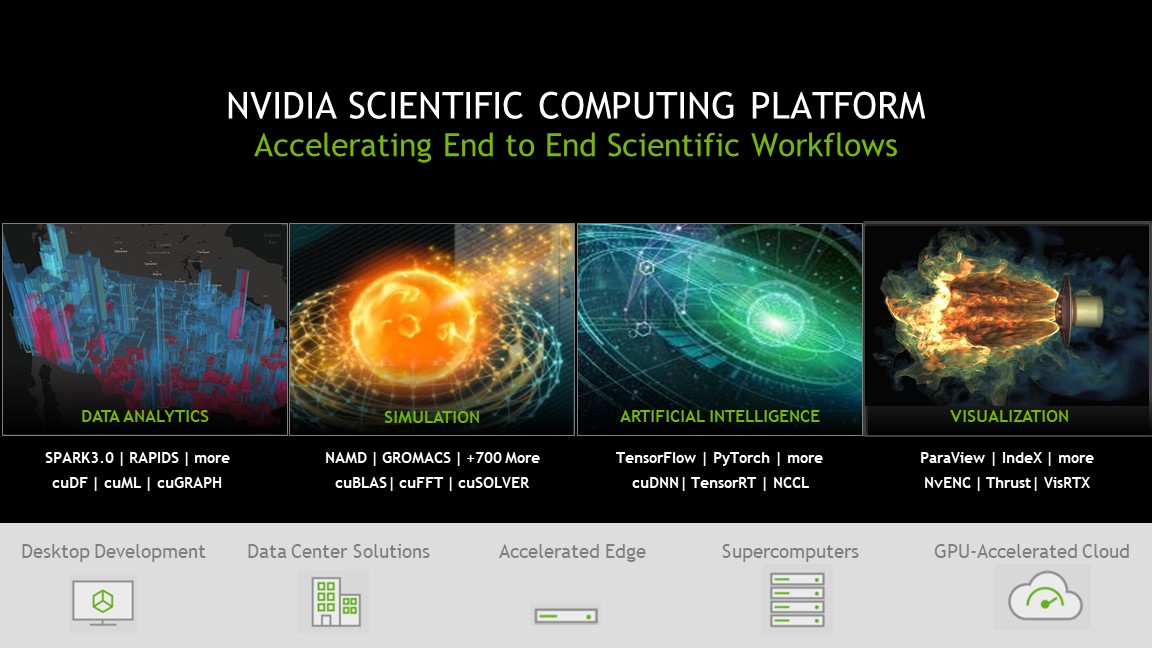
The Convergence of Scientific Computing and Artificial Intelligence
In recent years, the distinction between traditional scientific computing and Artificial Intelligence (AI) has begun to vanish. This convergence is creating a new paradigm: “AI-accelerated scientific computing.”
Data-Driven Modeling
Traditional scientific computing is “principled,” meaning it starts with known laws of physics. AI, conversely, is “data-driven,” meaning it learns patterns from observations. Modern scientific computing combines these. For example, if a physical phenomenon is too complex to be fully described by equations, machine learning models can be trained on experimental data to fill in the gaps, creating “surrogate models” that run thousands of times faster than traditional simulations.
Physics-Informed Neural Networks (PINNs)
One of the most exciting tech trends in this space is the development of Physics-Informed Neural Networks (PINNs). Unlike standard neural networks, which might suggest a result that violates the laws of physics (like matter moving faster than light), PINNs have physical laws embedded directly into their loss functions. This ensures that the AI’s predictions are not only statistically likely but physically possible, making them invaluable for engineering and fluid dynamics.
Automating the Discovery Process
Scientific computing is now being used to automate the scientific method itself. Large Language Models (LLMs) and specialized AI tools are being integrated into the scientific workflow to scan millions of research papers, suggest new chemical compounds, and then use scientific computing simulations to “test” those compounds in a virtual environment. This “self-driving lab” concept is drastically reducing the time-to-market for new materials and pharmaceuticals.
Real-World Applications Shaping the Future
Scientific computing is not a theoretical exercise; it is the engine behind the products and services we use every day. Its applications span across every high-tech sector.
Computational Biology and Drug Discovery
The most visible success of scientific computing in recent years is the mapping of the human genome and the rapid development of vaccines. Computational biology uses scientific computing to simulate how drugs interact with viruses at a molecular level. Tools like DeepMind’s AlphaFold, which solved the “protein folding problem,” utilize scientific computing and AI to predict the 3D shapes of proteins, a breakthrough that could lead to cures for diseases that have plagued humanity for centuries.
Climate Modeling and Green Tech
Understanding climate change requires the processing of massive amounts of atmospheric, oceanic, and terrestrial data. Scientific computing allows scientists to run “Earth System Models” that predict long-term climate trends. Furthermore, it is essential in the development of green technology, such as simulating the magnetic plasma in fusion reactors or optimizing the placement of turbines in a wind farm to maximize energy capture and minimize turbulence.
Aerospace and Autonomous Systems
In the tech world, aerospace engineering relies heavily on Computational Fluid Dynamics (CFD). Before a plane or rocket is built, it undergoes millions of hours of virtual flight testing. Similarly, the development of autonomous vehicles relies on scientific computing to simulate sensor data and environmental physics, allowing self-driving algorithms to be trained in a virtual “digital twin” of a city before they are ever deployed on real streets.

Conclusion: The Digital Frontier
Scientific computing represents the ultimate synthesis of human logic and machine power. As we move deeper into the 21st century, the importance of this field will only grow. We are entering an era where our ability to innovate is limited not by our imagination, but by our computational throughput.
By integrating advanced mathematics with cutting-edge hardware and the latest breakthroughs in AI, scientific computing is solving the “unsolvable.” From personalizing medicine based on a patient’s genetic simulation to designing the next generation of sustainable energy systems, scientific computing is the quiet powerhouse of the technology niche, turning abstract theories into the tangible realities of our future. For tech professionals and researchers alike, mastering the tools of this discipline is no longer just an advantage—it is a necessity for anyone looking to build at the edge of the possible.
aViewFromTheCave is a participant in the Amazon Services LLC Associates Program, an affiliate advertising program designed to provide a means for sites to earn advertising fees by advertising and linking to Amazon.com. Amazon, the Amazon logo, AmazonSupply, and the AmazonSupply logo are trademarks of Amazon.com, Inc. or its affiliates. As an Amazon Associate we earn affiliate commissions from qualifying purchases.