
In an age dominated by smartphones and advanced computing devices, the humble calculator might seem like an anachronism. Yet, for anyone navigating the complex worlds of mathematics, science, engineering, or even advanced finance, a scientific calculator remains an indispensable tool. Far more sophisticated than its basic arithmetic counterpart, a scientific calculator is a specialized electronic gadget designed to tackle intricate mathematical operations, scientific notation, and a wide array of functions crucial for academic and professional applications. It’s a testament to focused technological design, offering precise computational power in a portable format.
At its core, a scientific calculator extends beyond simple addition, subtraction, multiplication, and division. It introduces a suite of pre-programmed functions that would be tedious, if not impossible, to perform manually or with a standard calculator. This technological marvel empowers users to efficiently solve problems involving trigonometry, logarithms, exponential functions, statistical analysis, and more, effectively bridging the gap between theoretical mathematical concepts and practical numerical solutions.

The Core Functionality: Beyond Basic Arithmetic
The fundamental distinction between a basic calculator and a scientific calculator lies in the latter’s expansive set of functions. While both handle the four basic arithmetic operations, the scientific calculator delves deep into higher mathematics and complex numerical representations. This advanced capability makes it an essential device for students and professionals alike, providing immediate access to a vast computational toolkit.
Fundamental Operations and Their Significance
Even with basic arithmetic, a scientific calculator often offers enhanced features such as handling order of operations (PEMDAS/BODMAS) automatically and more sophisticated memory functions. It allows for multi-step calculations to be entered sequentially, respecting mathematical hierarchy, which reduces error and streamlines complex problem-solving. This foundational accuracy is crucial before diving into more advanced functions.
Advanced Mathematical Functions
The true power of a scientific calculator becomes evident when exploring its array of advanced functions:
- Trigonometry (Sine, Cosine, Tangent, and their Inverses): Essential for fields like physics, engineering, and geometry, these functions allow for calculations involving angles, waves, and vector analysis. Whether determining the height of a building from an angle of elevation or analyzing alternating current waveforms, trigonometric functions are fundamental.
- Logarithms and Exponentials: Logarithms (log base 10, natural log ln) and exponential functions (e^x, 10^x, y^x) are critical for modeling growth, decay, and scaling relationships in chemistry, biology, finance, and physics. They are used to simplify calculations with very large or very small numbers, analyze Richter scales, pH levels, or compound interest.
- Powers and Roots: Beyond simple squaring and square roots, scientific calculators handle arbitrary powers (x^y) and roots (y√x), vital for calculations in algebra, calculus, and engineering, such as determining volumes, areas, or analyzing polynomial functions.
- Factorials, Permutations, Combinations: These functions are cornerstones of probability and statistics. Factorials (n!) are used to find the number of ways to arrange items, while permutations (nPr) and combinations (nCr) calculate the number of ways to select items from a set, with or without regard to order, respectively. They are indispensable for risk assessment, experimental design, and data analysis.
- Fractions and Decimal Conversions: Many scientific calculators can work directly with fractions, simplifying results to their lowest terms and converting between mixed numbers, improper fractions, and decimals, ensuring precision and clarity in mathematical expressions.
Scientific Notation and Engineering Mode
A hallmark of scientific calculations is dealing with extremely large or small numbers, such as the speed of light or the mass of an electron. Scientific notation (e.g., 6.02 x 10^23) provides a concise way to represent these values. Scientific calculators handle these notations natively, displaying results in an easily interpretable format. Engineering mode, a related feature, presents numbers in powers of ten that are multiples of three (e.g., 10^3, 10^6, 10^-3), aligning with common engineering prefixes like kilo, mega, micro, and nano, which simplifies unit conversions and understanding in practical applications.
Essential Features and Their Applications
Beyond the core functions, scientific calculators integrate various features designed to enhance usability, solve complex problems more efficiently, and cater to specialized academic and professional needs. These features collectively transform the device from a mere number cruncher into a powerful analytical tool.
Memory Functions and Variables
Modern scientific calculators often boast multiple memory registers, allowing users to store numerical values and recall them later. This is particularly useful for multi-step problems where intermediate results need to be preserved without re-entry. Additionally, many models support variable assignment (e.g., A=5, B=X+Y), enabling the creation and manipulation of simple equations directly on the device, greatly simplifying algebraic problem-solving.
Statistical Functions
For anyone engaged in data analysis, a scientific calculator’s statistical functions are invaluable. They can quickly compute fundamental statistical measures such as mean, median, standard deviation, and variance for a given set of data. More advanced models might offer linear regression analysis, allowing users to find the best-fit line for a scatter plot and make predictions, crucial for fields ranging from social sciences to quality control and experimental physics.
Unit Conversions and Constants
Many scientific calculators come pre-programmed with a library of physical constants (e.g., speed of light, gravitational constant, Avogadro’s number) and unit conversion factors (e.g., converting meters to feet, Celsius to Fahrenheit). This built-in convenience saves time and reduces errors that could arise from manually looking up and entering these values, especially in chemistry, physics, and engineering contexts.
Graphing Capabilities (for advanced models)
While technically a sub-category of scientific calculators, graphing calculators represent the pinnacle of this technology. They not only perform all the functions of a standard scientific calculator but also allow users to input functions and equations, then graphically display their curves on a larger screen. This visual representation is incredibly powerful for understanding mathematical relationships, identifying roots, finding intersections, and analyzing the behavior of functions. These are particularly popular in higher-level mathematics and physics courses.
Programming and Solver Functions
Some high-end scientific and graphing calculators offer limited programming capabilities, allowing users to write and store custom formulas or short programs to automate repetitive calculations. Solver functions, on the other hand, can numerically solve equations for an unknown variable, even if the equation cannot be algebraically isolated. These features are highly beneficial for advanced problem-solving, iterative processes, and custom applications in specialized fields.
The Evolution of Scientific Calculators: From Gadget to Software
The journey of the scientific calculator reflects the broader evolution of computing technology – from dedicated physical devices to ubiquitous software applications. Each phase has brought greater accessibility, power, and integration, transforming how users interact with complex mathematics.

Early Innovations and Physical Devices
The concept of a scientific calculator wasn’t born overnight. It evolved from earlier computational aids like slide rules and mechanical calculators. The first electronic handheld scientific calculator, the HP-35, introduced by Hewlett-Packard in 1972, was a groundbreaking device. It packed trigonometric, logarithmic, and exponential functions into a pocket-sized gadget, revolutionizing scientific and engineering work. Manufacturers like Texas Instruments and Casio soon followed, making these powerful tools more accessible and affordable. These early devices were characterized by their physical buttons, LCD screens, and robust designs, built to withstand the rigors of academic and professional use. The focus was on portability and dedicated computational power.
Integration into Digital Ecosystems
As personal computers became prevalent, scientific calculator functionality began to migrate to software. Operating systems like Windows and macOS included built-in calculator applications with scientific modes, offering a virtual counterpart to the physical device. The rise of smartphones and tablets further accelerated this trend. Today, countless mobile apps replicate or even surpass the capabilities of physical scientific calculators, often integrating features like unit converters, currency converters, and interactive graphing tools. This integration means that a powerful scientific calculator is now often just a tap away on a device many people already carry.
Specialized Calculators vs. General-Purpose Devices
While general-purpose devices like smartphones offer scientific calculator apps, dedicated physical scientific calculators still hold a significant place, especially in educational settings. Graphing calculators, for instance, remain a distinct category, designed for the specific needs of advanced math and science students who require visual analysis of functions. The choice between a physical device and a software application often comes down to specific requirements, such as exam regulations (which often prohibit smartphone use), tactile preference for physical buttons, or the need for advanced features only found on specialized graphing models.
Who Uses Scientific Calculators and Why They Matter
The widespread utility of scientific calculators underscores their importance as fundamental technological tools across various disciplines. Their ability to simplify complex computations allows users to focus on understanding concepts rather than getting bogged down in arithmetic.
Students in STEM Fields
Perhaps the most obvious users of scientific calculators are students pursuing STEM (Science, Technology, Engineering, and Mathematics) fields. From high school algebra and trigonometry to university-level calculus, physics, chemistry, and engineering courses, a scientific calculator is often a mandatory tool. It enables students to solve problem sets, verify answers, and perform calculations required for laboratory experiments and project work, fostering a deeper understanding of theoretical principles through practical application.
Professionals Across Disciplines
Beyond academia, scientific calculators are indispensable in numerous professional capacities:
- Engineers: Civil, mechanical, electrical, and chemical engineers rely on them for design calculations, stress analysis, fluid dynamics, circuit analysis, and process optimization.
- Scientists: Researchers in physics, chemistry, biology, and environmental science use them for data analysis, statistical computations, experimental design, and formula derivation.
- Architects: For structural calculations, geometry, and material estimations.
- Financial Analysts: While financial calculators exist, scientific calculators can be used for complex actuarial calculations, bond valuations, and other advanced financial modeling, particularly if they involve exponential growth or decay functions.
- Surveyors and Cartographers: For triangulation, area calculations, and coordinate transformations.
Enhancing Problem-Solving and Conceptual Understanding
The primary reason scientific calculators matter so profoundly is their role in enhancing problem-solving. By automating intricate calculations, they free up mental bandwidth, allowing users to concentrate on the underlying concepts, problem formulation, and interpreting results. Instead of spending valuable time on manual computation, individuals can dedicate their efforts to understanding the principles at play, developing critical thinking skills, and exploring different scenarios. They also serve as powerful tools for checking manual calculations, providing confidence in results and identifying errors.
Choosing the Right Scientific Calculator in the Modern Era
With a multitude of options available, selecting the appropriate scientific calculator can seem daunting. The “right” choice depends heavily on individual needs, budgetary constraints, and specific academic or professional requirements.
Key Considerations: Needs, Budget, and Exam Requirements
- Needs: For basic high school math, a standard scientific calculator with trigonometric and logarithmic functions will suffice. For advanced engineering or university-level physics, a model with more memory, statistical functions, and perhaps even basic programming might be necessary. Graphing capabilities are crucial for calculus and advanced algebra.
- Budget: Prices vary significantly, from affordable basic models to premium graphing calculators. Determine what features are essential and align them with your budget.
- Exam Requirements: This is a critical factor for students. Many standardized tests (e.g., SAT, ACT, AP exams, professional certification exams) have strict rules regarding permissible calculator models. Some ban graphing calculators, others only allow specific non-programmable scientific ones, and most prohibit internet-connected devices like smartphones. Always verify the rules before making a purchase for exam purposes.
Physical vs. Digital: Pros and Cons
- Physical Calculators: Offer tactile feedback from buttons, are often permitted in exams where digital devices are not, have dedicated battery life, and can be less distracting than a multi-purpose device. Their robustness makes them suitable for long-term use.
- Digital (App/Software) Calculators: Provide unparalleled convenience, accessibility (always on your phone/computer), often feature larger displays, can be updated easily, and sometimes integrate with other software. However, they are usually disallowed in exams and can be a source of distraction.
Leading Brands and Models
The market for scientific calculators is dominated by a few key players known for their reliability and range of features:
- Texas Instruments (TI): Particularly popular in North America, with models like the TI-30XS Multiview (scientific) and the TI-83/84 Plus series (graphing) being staples in high schools and universities.
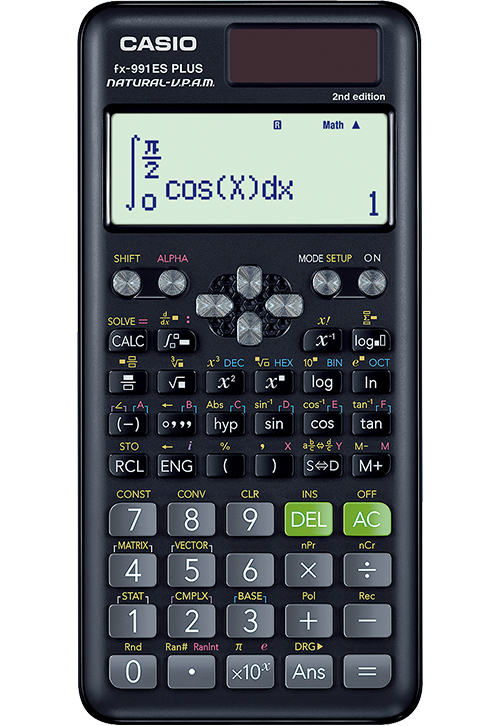
- Casio: A strong contender globally, offering a wide array of scientific calculators such as the fx-series (e.g., fx-991EX ClassWiz), known for user-friendly interfaces and robust feature sets. Their graphing calculators, like the fx-CG50, are also highly regarded.
- Hewlett-Packard (HP): While less dominant in general education markets today compared to TI and Casio, HP calculators (like the HP 35s or the advanced HP Prime graphing calculator) are revered by many for their RPN (Reverse Polish Notation) input system and powerful capabilities, often favored by engineers and professionals.
Ultimately, the best scientific calculator is one that meets the user’s specific computational needs, fits within budgetary constraints, and complies with any relevant academic or professional regulations.
In conclusion, the scientific calculator, in its various forms, remains an enduring and essential technological tool. It stands as a testament to the power of specialized design, enabling individuals to conquer complex mathematical challenges with efficiency and precision. From the earliest handheld devices to modern software applications, its evolution continues to empower students and professionals, allowing them to push the boundaries of knowledge and innovation in an increasingly data-driven and complex world. Far from being obsolete, the scientific calculator continues to be a cornerstone of STEM education and professional practice, an indispensable aid in navigating the intricate language of numbers.
aViewFromTheCave is a participant in the Amazon Services LLC Associates Program, an affiliate advertising program designed to provide a means for sites to earn advertising fees by advertising and linking to Amazon.com. Amazon, the Amazon logo, AmazonSupply, and the AmazonSupply logo are trademarks of Amazon.com, Inc. or its affiliates. As an Amazon Associate we earn affiliate commissions from qualifying purchases.