
Saturn, the jewel of our solar system, captivates us with its magnificent rings and its intriguing celestial dance. Among its many fascinating characteristics, one of the most fundamental is its rotation time – how long it takes for the planet to complete one full spin on its axis. While seemingly a straightforward astronomical question, understanding Saturn’s rotation time delves into the complexities of gas giant dynamics, observational challenges, and even the technological advancements that allow us to measure such phenomena.
This exploration of Saturn’s rotation time touches upon themes that resonate deeply with the core topics of our website: Tech, Brand, and Money. While not a direct application of AI tools or a personal finance strategy, understanding Saturn’s rotation time highlights the power of scientific inquiry, the consistent effort behind building a planetary “brand” within our collective consciousness, and the indirect economic implications of space exploration and the technologies it drives.
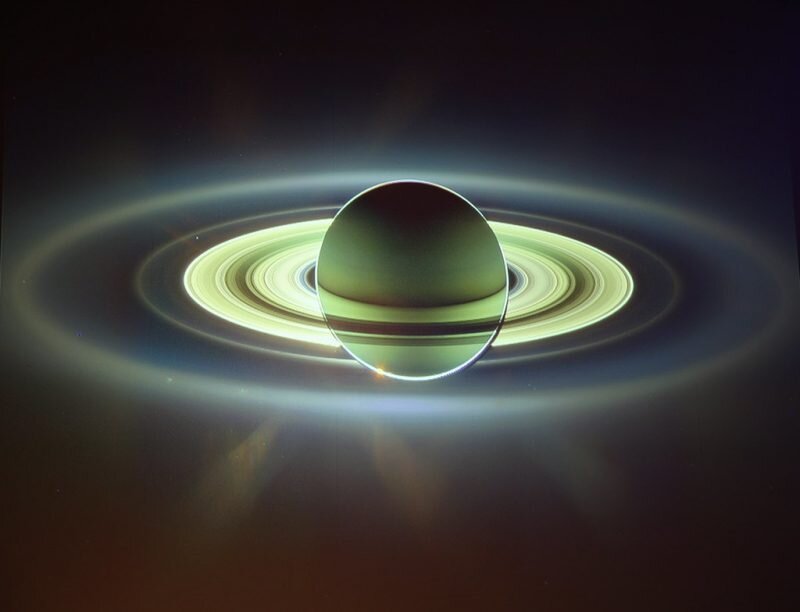
The Challenge of Measuring a Gas Giant’s Spin
Unlike rocky planets like Earth, where we can observe surface features and track their movement with relative ease, Saturn is a colossal ball of gas and liquid. This presents a significant challenge when trying to pin down its exact rotation period. There are no solid landmarks on Saturn’s visible surface that consistently rotate at the same speed. Instead, the planet’s atmosphere is a dynamic and turbulent environment, with clouds and storms constantly shifting.
Early Observations and the “System of Rotation”
Early astronomers, armed with increasingly powerful telescopes, observed patterns in Saturn’s cloud bands. They noted that these features seemed to drift and change, but also that certain features appeared to be associated with a general planetary rotation. However, without a fixed surface, directly timing a full rotation by watching a single cloud drift across the visible disk proved unreliable. Different atmospheric layers rotate at different speeds, a phenomenon known as differential rotation. This complexity led to the concept of a “system of rotation” rather than a single, definitive rotation time.
For a long time, astronomers relied on observations of visible features like the Great White Spots – massive storms that periodically erupt on Saturn – or the movement of atmospheric bands. These observations provided estimates, but they were approximations based on observable phenomena that themselves were not perfectly stable. The planet’s internal structure and the rapid movement of its gaseous atmosphere meant that pinpointing a single, consistent rotation time was akin to trying to time the spin of a swirling, multi-colored vortex.
The Evolution of Measurement: From Telescopes to Space Probes
The quest to understand Saturn’s rotation has been a journey of technological advancement. Early telescopic observations, while groundbreaking for their time, were limited by atmospheric distortion and the resolution of the instruments. As telescopes improved, so did the ability to discern finer details in Saturn’s atmosphere, leading to more refined estimates of its rotation.
However, the true leap in our understanding came with the advent of space exploration. Missions like Pioneer 11, Voyager 1 and 2, and most notably, the Cassini-Huygens mission, provided unprecedented close-up views and analytical capabilities. These spacecraft weren’t just passive observers; they were sophisticated scientific instruments capable of measuring magnetic fields, radio emissions, and the internal dynamics of the planet.
Saturn’s Rotation Time: The Modern Understanding
Through the sophisticated instruments of space probes, scientists have been able to glean more accurate data about Saturn’s rotation. One of the most significant discoveries came from analyzing the planet’s magnetic field. Saturn possesses a powerful magnetic field, which is generated by the motion of electrically conductive material in its interior. This magnetic field is remarkably stable and acts as a consistent, albeit indirect, indicator of the planet’s internal rotation.
Radio Emissions as a Cosmic Clock
A key breakthrough in determining Saturn’s rotation came from observing the radio emissions emanating from the planet. Saturn, like Earth, has a magnetosphere that interacts with charged particles, producing radio waves. Scientists discovered that these radio emissions pulsed with a regular frequency, which was directly linked to the planet’s internal rotation. Imagine Saturn’s magnetic field acting like a giant, invisible dynamo, and the radio waves it emits are the ticking of its internal clock.
The Voyager missions detected these radio signals, and subsequent analysis by the Cassini spacecraft provided even more precise measurements. These radio signals indicated a rotation period of approximately 10 hours and 33 minutes. This period is remarkably fast for such a massive planet. For context, Earth’s rotation period is about 24 hours. This rapid spin contributes to Saturn’s flattened shape, a characteristic visible even through amateur telescopes.
The Cassini Mission’s Refined Measurement
The Cassini-Huygens mission, which orbited Saturn for over 13 years (2004-2017), provided the most comprehensive data on the planet’s rotation. Cassini’s instruments were able to analyze subtle variations in Saturn’s gravitational field, which are influenced by the planet’s internal mass distribution and rotation. By meticulously mapping these gravitational anomalies, scientists were able to deduce a more precise rotation period.
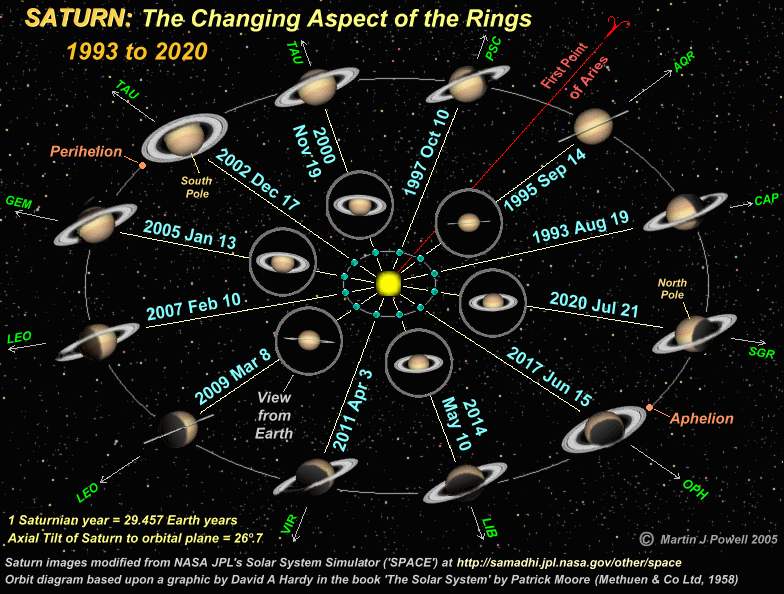
The Cassini data refined the radio-based measurements, suggesting a rotation period of 10 hours, 33 minutes, and 38 seconds. This level of precision underscores the technological prowess involved in modern space exploration. It’s a testament to how advanced sensors and sophisticated data analysis can overcome the inherent challenges of studying distant celestial bodies. The Cassini mission effectively gave us the most accurate “heartbeat” of Saturn, revealing its rapid internal rhythm.
The Implications of Saturn’s Rapid Rotation
Saturn’s swift rotation has several profound implications for its physical characteristics and its place in the solar system. These consequences are a fascinating study in planetary science and demonstrate how a single characteristic can influence a planet’s entire being.
The Oblate Spheroid Shape: A Visible Consequence
One of the most striking visual consequences of Saturn’s rapid rotation is its oblate spheroid shape. Planets with fast rotation rates experience a greater outward centrifugal force at their equator compared to their poles. This force causes the planet to bulge at its equator and flatten at its poles. Saturn is significantly more oblate than Earth, meaning its equatorial diameter is considerably larger than its polar diameter. This flattening is a direct, observable result of its speedy spin.
Atmospheric Dynamics and Weather Patterns
The rapid rotation also plays a crucial role in shaping Saturn’s dynamic atmosphere. Differential rotation, where different latitudes spin at different speeds, creates powerful jet streams. These jet streams are responsible for the distinct banding patterns seen on Saturn’s visible surface. The immense storms, like the recurring Great White Spots, are also influenced by these rotational forces and the underlying atmospheric convection. Understanding these dynamics is an ongoing area of research, made possible by the continuous monitoring and data collection from missions like Cassini.
The “Brand” of a Ringed Giant
Beyond the scientific specifics, Saturn’s rotation time contributes to its overall brand in our collective imagination. The rapid spin, contributing to its flattened shape and dynamic atmosphere, adds to its unique and dynamic character. While its rings are its most iconic feature, the very essence of Saturn as a colossal, swirling, and fast-spinning entity is a powerful part of its celestial identity. This “brand” is not just for us humans; it’s how Saturn is perceived within the grand tapestry of the solar system. The consistent and awe-inspiring nature of its rotation, even if the exact number wasn’t always known, has always been part of its allure.
Connecting to Tech, Brand, and Money
While the direct topic is the rotation time of Saturn, we can draw parallels to our core website themes:
Tech: The Engine of Discovery
The ability to accurately measure Saturn’s rotation time is a triumph of Tech. From the development of increasingly powerful telescopes to the engineering marvels that are deep-space probes like Cassini, technology has been the essential enabler of our understanding. The sensors, communication systems, and data processing capabilities required for such missions are at the cutting edge of human innovation. The development of algorithms to analyze radio signals or gravitational fields from billions of miles away showcases the power of advanced computing and AI in scientific research. Furthermore, the ongoing drive to develop even more sophisticated probes and observational tools is fueled by the promise of future technological breakthroughs.
Brand: The Enduring Fascination
Saturn’s iconic image and its mysterious allure have cemented its status as a celestial celebrity. Its “brand” is one of grandeur, mystery, and unparalleled beauty, largely defined by its rings. However, understanding its intrinsic properties, like its rapid rotation, deepens this brand. It transforms Saturn from a static image into a dynamic, living entity within our solar system. The consistent, swift spin contributes to its character, making it more than just a distant object of beauty; it becomes a world with its own energetic rhythm. This enduring fascination, built over centuries of observation and scientific discovery, is a testament to the power of a compelling celestial brand.

Money: The Investment in Knowledge and Future Innovation
The pursuit of astronomical knowledge, including understanding planetary rotation times, represents a significant investment. While the immediate tangible returns might not seem obvious, space exploration and scientific research drive innovation that has far-reaching economic implications. The technologies developed for space missions often find applications in everyday life, from GPS systems to medical imaging. Furthermore, the economic benefits of a well-informed populace, capable of understanding complex scientific concepts, are immeasurable. The ongoing development of more efficient propulsion systems, advanced materials, and data analysis techniques for space missions represents an investment in future technological capabilities, which in turn can lead to new industries and economic growth. The pursuit of knowledge about Saturn, and indeed the universe, is an investment in human progress and our collective future.
In conclusion, the question of “what is Saturn’s rotation time” opens a window into the sophisticated world of planetary science, the continuous evolution of technology, and the enduring power of celestial branding. It’s a reminder that even the most distant and seemingly abstract scientific inquiries are deeply connected to the advancements we make on Earth and the values we hold dear. Saturn’s rapid spin, once a subject of speculation, is now a precisely measured fact, thanks to the relentless curiosity and ingenuity of humankind.
aViewFromTheCave is a participant in the Amazon Services LLC Associates Program, an affiliate advertising program designed to provide a means for sites to earn advertising fees by advertising and linking to Amazon.com. Amazon, the Amazon logo, AmazonSupply, and the AmazonSupply logo are trademarks of Amazon.com, Inc. or its affiliates. As an Amazon Associate we earn affiliate commissions from qualifying purchases.