
In the dynamic and often complex world of digital finance, few names evoke as much intrigue and importance as “Satoshi.” Far from being merely a historical footnote, Satoshi represents a fundamental building block of the cryptocurrency revolution, embodying both the elusive genesis of Bitcoin and its most granular unit of value. For anyone navigating the digital economy, understanding “what is Satoshi” is not just about appreciating a historical pseudonym; it’s about grasping a critical component of financial innovation, investment strategy, and the future of global money. This article will delve into the multifaceted meaning of Satoshi, exploring its origins, its role as a fundamental monetary unit, its implications for investors, and its enduring legacy in the financial landscape, all viewed through the lens of personal and global finance.
The Genesis of a Digital Denomination
The story of Satoshi is inextricably linked to the birth of Bitcoin, a pivotal moment that redefined our understanding of money and trust. To truly comprehend the significance of a “satoshi,” one must first acknowledge its namesake and the groundbreaking innovation it represents.
The Enigmatic Creator: Satoshi Nakamoto
The term “Satoshi” first gained prominence through the pseudonymous entity “Satoshi Nakamoto,” the individual or group credited with authoring the Bitcoin whitepaper in October 2008 and subsequently releasing the first Bitcoin software in January 2009. Nakamoto’s work introduced a decentralized, peer-to-peer electronic cash system that promised to overcome the inherent flaws of traditional financial institutions – namely, the need for trusted intermediaries. This anonymous architect’s vision was audacious: to create a digital currency independent of central banks and governments, secured by cryptography, and governed by a network of participants.
The identity of Satoshi Nakamoto remains one of the greatest mysteries of the digital age. After creating Bitcoin and fostering its initial development, Nakamoto gradually withdrew from public communication in late 2010, leaving the project in the hands of other developers and the nascent community. This disappearance only amplified the legend, making “Satoshi Nakamoto” synonymous with the ultimate act of creative financial disruption, a ghost in the machine that sparked a monetary revolution. For financial enthusiasts and investors, Satoshi Nakamoto represents the ultimate example of a disrupter, an innovator whose ideas reshaped the very concept of value transfer.
Bitcoin’s Indivisible Core: Understanding the Smallest Unit
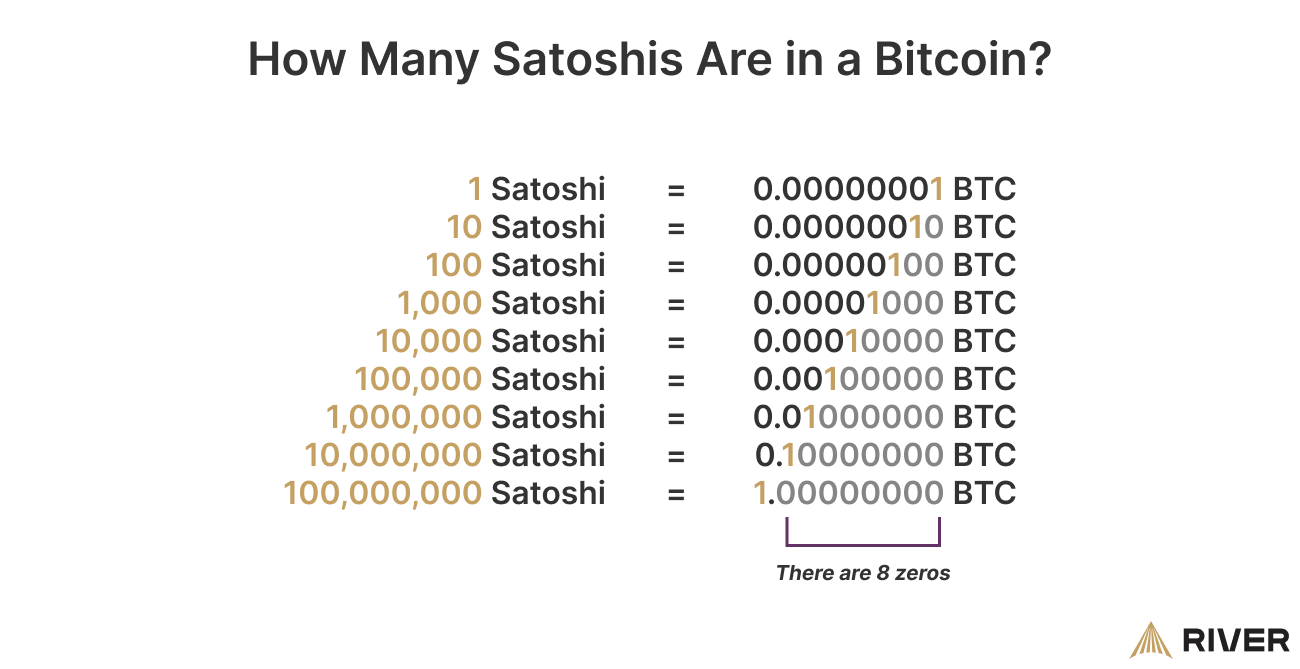
Beyond the elusive creator, “satoshi” also refers to the smallest unit of Bitcoin (BTC). Just as a dollar can be divided into 100 cents, a single Bitcoin can be divided into 100 million satoshis. This means that 1 Satoshi is equal to 0.00000001 BTC. This seemingly minute denomination is not arbitrary; it’s a crucial design feature with significant financial implications.
The divisibility of Bitcoin into satoshis was a deliberate choice by Satoshi Nakamoto to ensure the currency’s practicality and scalability for future economic activity. Imagine a world where Bitcoin achieves widespread adoption and its value potentially skyrockets. Without a smaller unit like the satoshi, conducting everyday transactions – buying a coffee, paying for micro-services, or even just sending small tips – would become unwieldy and impractical. The satoshi ensures that Bitcoin remains a versatile medium of exchange, capable of handling transactions across an enormous spectrum of values, from billions of dollars to fractions of a penny. For personal finance, this means accessibility; even with high Bitcoin prices, one can participate in the ecosystem by acquiring and transacting in satoshis. This inherent divisibility positions Bitcoin as a truly global and adaptable currency, ready for a future of varying economic scales.
Satoshi: The Micro-Unit of Macro-Value
While often overshadowed by the larger Bitcoin, the satoshi holds immense significance in its own right, functioning as a practical micro-unit that underpins the entire Bitcoin economy. Its existence ensures both the currency’s flexibility and its long-term viability in an increasingly digital and global financial landscape.
Practicality in a Volatile Market
The cryptocurrency market is renowned for its volatility. Bitcoin’s price can fluctuate dramatically, making its larger units unwieldy for certain financial calculations or small everyday purchases. This is where the satoshi shines. By breaking down Bitcoin into 100 million smaller units, the satoshi provides a stable and understandable denomination for transactions even when Bitcoin’s price soars.
For instance, if Bitcoin were to reach a value of $1,000,000 per BTC, one satoshi would be worth $0.01. This makes it a highly functional unit for pricing goods and services, allowing businesses and consumers to engage with Bitcoin without needing to grapple with cumbersome decimal points for small amounts. From a personal finance perspective, thinking in satoshis can make Bitcoin feel more accessible and less intimidating. Instead of feeling priced out by a high BTC value, individuals can focus on accumulating satoshis, making gradual investments that align with their budget. This practicality fosters greater adoption and integration of Bitcoin into mainstream commerce.
The Foundation for Microtransactions and Scalability
One of the long-term goals for Bitcoin and other cryptocurrencies is to facilitate fast, cheap, and secure microtransactions. These are small payments, often a few cents or dollars, that are common in online services, content consumption, and machine-to-machine economies (e.g., IoT payments). Without the satoshi, enabling such transactions on the Bitcoin network would be challenging.

The satoshi acts as the fundamental accounting unit for these smaller value transfers. Innovations like the Lightning Network, a second-layer scaling solution built on top of Bitcoin, heavily rely on the ability to transact in small units. The Lightning Network allows for near-instant, low-cost payments by moving many transactions off the main blockchain, settling them later. These off-chain transactions are almost exclusively denominated and processed in satoshis, showcasing the micro-unit’s critical role in Bitcoin’s scalability and its evolution as a practical payment system. For financial services, this opens up avenues for new business models based on micropayments, subscriptions, and even automated value transfers, all powered by the satoshi.
Investing in Satoshis: Small Steps, Significant Potential
For many, the idea of owning an entire Bitcoin seems out of reach due to its price. This perception often deters potential investors. However, understanding the satoshi completely changes this perspective, opening the door to incremental investment strategies and highlighting the long-term growth potential inherent in even the smallest units of Bitcoin.
Accumulation Strategies for the Long Term
Investing in satoshis, rather than whole Bitcoins, makes crypto investment accessible to a wider audience. This approach aligns perfectly with strategies like Dollar-Cost Averaging (DCA), where an investor commits to investing a fixed amount of money at regular intervals, regardless of the asset’s price. For example, instead of saving up to buy one Bitcoin, an investor might decide to buy $50 worth of Bitcoin (or X amount of satoshis) every week. Over time, this strategy averages out the purchase price, mitigating the risk of investing a large sum at an unfortunate peak.
The accumulation of satoshis can be seen as building a digital nest egg. Even small, consistent contributions can grow significantly if Bitcoin’s value appreciates over the years. This method democratizes Bitcoin investment, allowing individuals with modest incomes to participate in the potential upside of the crypto market. Financial advisors often recommend DCA for volatile assets, and satoshis make this strategy particularly potent and understandable for Bitcoin. It shifts the focus from timing the market to consistent participation, a key principle of sound long-term financial planning.
Demystifying Risk and Reward in Crypto Investments
While investing in satoshis makes Bitcoin more accessible, it doesn’t eliminate the inherent risks of cryptocurrency investments. The crypto market is volatile, and prices can experience rapid and significant swings. However, by investing in smaller units, individuals can manage their risk exposure more effectively. Investing an amount that won’t significantly impact one’s financial well-being allows for participation without undue stress.
The potential reward, however, remains compelling. If Bitcoin achieves its proponents’ long-term visions – becoming a global reserve asset or a widely adopted digital currency – even a modest holding of satoshis today could represent substantial value in the future. Educating oneself on market dynamics, understanding the technology, and only investing what one can afford to lose are paramount. The satoshi simplifies this process, making it easier for new investors to dip their toes into the market, learn, and gradually increase their exposure as their understanding and comfort grow. It transforms the intimidating prospect of buying “Bitcoin” into the manageable task of accumulating “satoshis,” fostering a more thoughtful and strategic approach to a high-potential asset class.
The Enduring Legacy and Future of Satoshi
The name “Satoshi,” whether referring to the enigmatic creator or the fundamental unit of Bitcoin, is more than just a nomenclature; it represents a paradigm shift in finance. Its legacy is deeply intertwined with the ongoing evolution of money and its potential to foster a more inclusive and interconnected global economy.
Towards Financial Inclusion and Global Accessibility
One of the most profound impacts of Bitcoin, and by extension the satoshi, is its potential to drive financial inclusion. Billions of people worldwide remain unbanked or underbanked, lacking access to traditional financial services, credit, and easy means of transferring money across borders. Bitcoin, being permissionless and globally accessible with just an internet connection, offers an alternative.
The satoshi plays a crucial role here. It allows individuals in developing nations, or those sending remittances, to engage with a global digital currency even with very limited funds. For instance, sending a small amount of money internationally via traditional means can be expensive due to high fees. Using satoshis, such transfers can be significantly cheaper and faster, empowering individuals to manage their finances independently. This opens up opportunities for micro-lending, decentralized finance (DeFi) participation, and cross-border commerce for populations previously excluded from the global financial system. The ability to transact in and save satoshis, no matter how few, grants economic agency to a broader segment of humanity, aligning with the original vision of a truly global, peer-to-peer electronic cash system.
Satoshi in a Multi-Currency Digital Future
As the world hurtles towards a more digitized financial future, the concept of a “satoshi” will likely continue to evolve and potentially influence other digital currencies. While Bitcoin remains the dominant force, the underlying principle of extreme divisibility for a high-value asset is a critical design pattern that could be adopted by central bank digital currencies (CBDCs) or other private digital currencies.
The satoshi serves as a testament to the foresight of its creator, recognizing that a truly global and successful digital currency must be adaptable to both large-scale institutional transactions and micro-payments for everyday use. Its existence ensures that Bitcoin can function not just as a store of value, but also as a viable medium of exchange for an increasingly interconnected world. As more innovations emerge in blockchain and digital money, the concept of a universally recognized, miniscule unit of value will remain a cornerstone, ensuring that digital finance can cater to every conceivable economic interaction. The legacy of Satoshi, both the name and the unit, is thus etched into the very foundation of the digital money paradigm, continually shaping how we perceive, transact, and invest in value in the 21st century.
In conclusion, “what is Satoshi?” is a question with layered answers. It encompasses the mystery of Bitcoin’s founder, the ingenuity of its fundamental unit, and the profound financial implications for investors, consumers, and the unbanked across the globe. By understanding the satoshi, one gains a clearer perspective on Bitcoin’s design, its economic potential, and its role in forging a more decentralized, accessible, and inclusive global financial system.
aViewFromTheCave is a participant in the Amazon Services LLC Associates Program, an affiliate advertising program designed to provide a means for sites to earn advertising fees by advertising and linking to Amazon.com. Amazon, the Amazon logo, AmazonSupply, and the AmazonSupply logo are trademarks of Amazon.com, Inc. or its affiliates. As an Amazon Associate we earn affiliate commissions from qualifying purchases.