
In the landscape of modern telecommunications, satellite radio represents a significant leap from traditional terrestrial broadcasting. While conventional AM and FM radio rely on ground-based towers that transmit signals across limited geographic areas, satellite radio utilizes a sophisticated network of orbiting spacecraft to deliver high-quality digital audio across entire continents. This technology, officially known as Satellite Digital Audio Radio Service (SDARS), has revolutionized how we consume media, particularly in the automotive and mobile sectors, by providing a seamless, uninterrupted signal regardless of the listener’s proximity to a city center.
Understanding the Architecture of Satellite Broadcasting
At its core, satellite radio is a digital broadcast system that circumvents the physical limitations of the Earth’s curvature and terrain. To understand how it functions, one must examine the three primary components of its architecture: the space segment, the ground segment, and the user segment.

Space Segment: Geostationary and Highly Elliptical Orbits
The most critical component of satellite radio is the constellation of satellites orbiting the Earth. Unlike communications satellites used for point-to-point data, broadcast satellites must ensure a consistent “look angle” for receivers on the ground.
Most satellite radio providers utilize two types of orbits: Geostationary Earth Orbit (GEO) and Highly Elliptical Orbit (HEO). GEO satellites remain fixed over a single point on the equator at an altitude of approximately 35,786 kilometers. This stability allows for a constant signal over a massive footprint, such as the entire North American continent. HEO satellites, conversely, follow an elongated path that keeps them at a high altitude over specific northern latitudes for extended periods. By using a constellation of three or more HEO satellites, a provider can ensure that at least one satellite is always positioned high in the sky, minimizing signal blockage from tall buildings or mountainous terrain.
Ground Segment: Uplink Stations and Terrestrial Repeaters
The process begins at a terrestrial broadcast center, where hundreds of channels of content are curated, digitized, and compressed. This digital stream is then sent to a massive uplink dish, which beams the signal to the satellites in the S-band (around 2.3 GHz in the United States).
A unique challenge for satellite technology is the “urban canyon” effect. In dense cities with skyscrapers, the direct line of sight to a satellite can be interrupted. To solve this, the ground segment includes a network of terrestrial repeaters. These are ground-based transmitters that receive the satellite signal and rebroadcast it locally. Your receiver is designed to intelligently switch between the satellite signal and the repeater signal (or combine them) to ensure the audio never drops out, a technique known as “space diversity.”
The Digital Signal Path: From Encoding to Reception
Unlike traditional analog radio, which modulates a carrier wave with an audio signal, satellite radio is entirely digital. This allows for superior audio fidelity, a greater number of channels, and the transmission of metadata such as artist names, song titles, and traffic data.
Modulation and Multiplexing Techniques
To fit hundreds of channels into a limited slice of the electromagnetic spectrum, satellite radio employs advanced digital compression. Most systems use a variation of the Advanced Audio Coding (AAC) codec or proprietary perceptual coding algorithms. These algorithms remove frequencies that the human ear cannot perceive, significantly reducing the file size without a noticeable loss in quality.
Once compressed, these channels are “multiplexed” into a single bitstream. This bitstream is then modulated—typically using Quadrature Phase Shift Keying (QPSK)—and beamed to the satellites. Because the signal is digital, the receiver can perform error correction. If a few bits of data are lost due to atmospheric interference, the receiver’s onboard processor can mathematically reconstruct the missing information, resulting in a clean, “hiss-free” audio experience.
Conditional Access and Encryption
Because satellite radio is generally a subscription-based service, the signal is encrypted. This is managed through a “Conditional Access System” (CAS). Each satellite radio receiver has a unique Electronic Serial Number (ESN) or Radio ID. When a user subscribes, the provider sends a specific “authorization packet” over the air. This packet contains the decryption keys necessary for that specific radio to unlock the digital bitstream. If a subscription lapses, the provider sends a “kill signal” that revokes the decryption rights, effectively locking the device.
Satellite vs. Terrestrial: A Technical Breakdown
The move from terrestrial (AM/FM) to satellite radio is not just a change in delivery; it is a fundamental shift in technical capabilities.
Spectrum Efficiency and Bandwidth
Terrestrial radio is highly inefficient in terms of spectrum use. An FM station requires a 200 kHz wide channel to broadcast a single audio program. Satellite radio, through the use of digital multiplexing, can pack over 150 high-quality audio channels plus data services into a 12.5 MHz band. This efficiency allows for niche programming that would be economically and technically unfeasible on the local airwaves.
Signal Propagation and Environmental Interference
AM radio relies on “ground waves” and “skywaves,” which are prone to electrical interference and atmospheric changes (especially at night). FM radio relies on “line-of-sight” propagation, which limits its range to about 40–60 miles and makes it susceptible to “multipath interference”—where signals bounce off buildings and arrive at the antenna at different times, causing distortion.
Satellite radio eliminates these issues. Because the signal originates from high in the sky, it blankets a massive area with uniform signal strength. The use of digital “time diversity” further stabilizes the signal. The receiver actually buffers a few seconds of the stream; if the signal is momentarily blocked by an overpass, the radio plays from the buffer while it re-establishes the connection, creating a seamless experience for the user.
Hardware Evolution: The Integration of Satellite Radio in Modern Gadgets
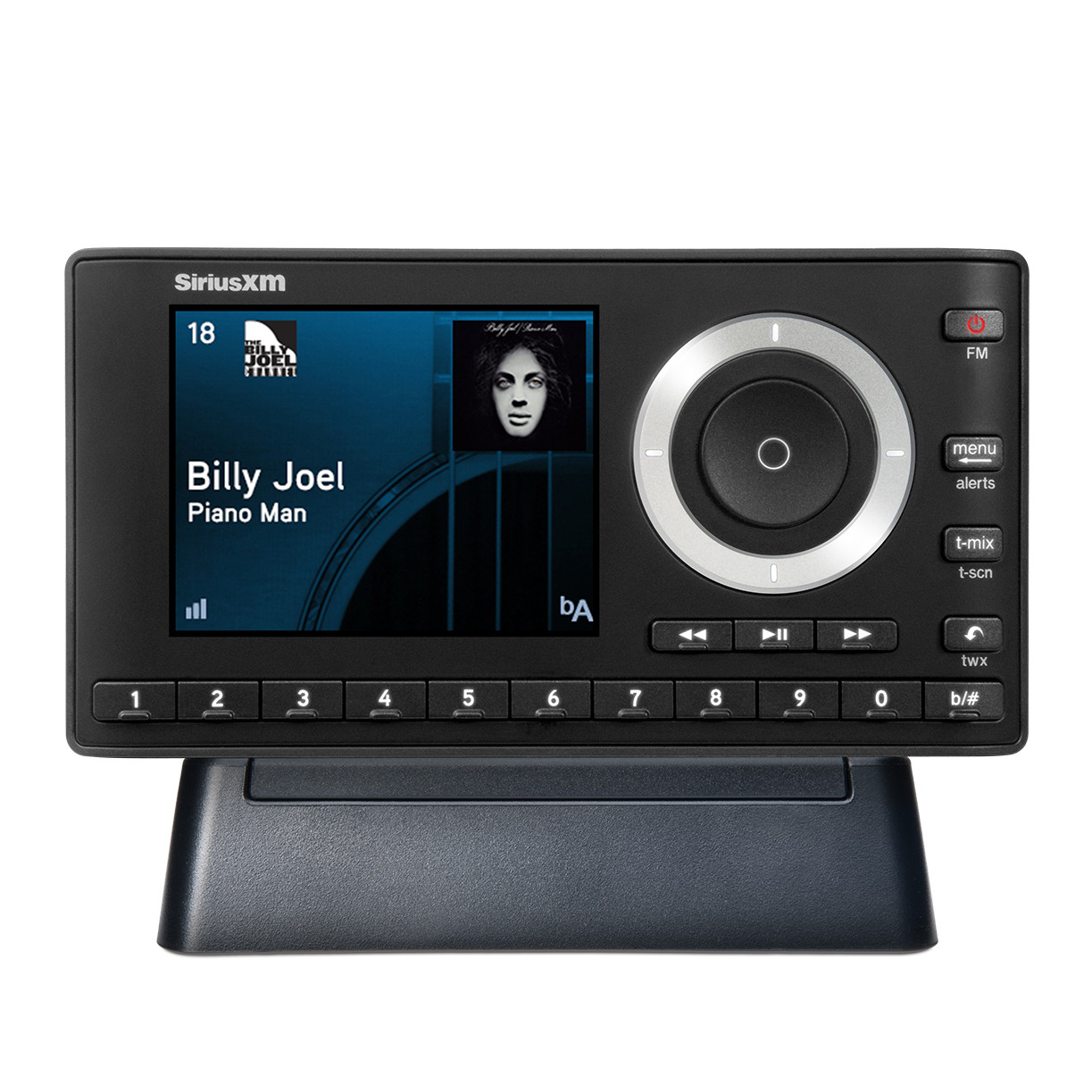
The early days of satellite radio required bulky external tuners and “saucer” antennas that had to be mounted on vehicle roofs. Today, the hardware has been miniaturized to the point of being nearly invisible.
Tuners, Antennas, and OEM Integration
Most modern vehicles come with satellite radio hardware integrated directly into the Head Unit (the dashboard display). The antenna is often a small “shark fin” or a patch hidden under glass or plastic body panels. These antennas are “active,” meaning they contain a small pre-amplifier to boost the weak signal received from 22,000 miles away before it reaches the tuner.
Technological advancements have also led to the development of “software-defined radios” (SDR). In these systems, much of the signal processing that used to be handled by dedicated chips is now handled by software. This allows manufacturers to update the radio’s features or even change its frequency handling via firmware updates.
The Shift to Hybrid Connectivity (IP-Integrated Satellite)
We are currently seeing the emergence of “Hybrid Radio.” As vehicles become increasingly connected via 4G and 5G LTE, satellite radio providers are merging satellite delivery with Internet Protocol (IP) delivery. If a car enters a tunnel where both satellite and terrestrial repeater signals are blocked, the system can seamlessly switch to a cellular data stream to continue the broadcast. This hybrid approach ensures 100% uptime and allows for “on-demand” features, such as pausing live radio or restarting a show from the beginning, which were previously impossible with one-way satellite broadcasts.
The Future of Satellite Radio in the Era of 5G and Software-Defined Vehicles
As we look toward the future of technology, satellite radio is evolving to maintain its relevance in an era dominated by high-speed mobile internet. While 5G offers massive bandwidth, it lacks the universal coverage of satellites, particularly in rural or maritime environments.
Autonomous Vehicle Integration
In the world of autonomous vehicles (AVs), satellite radio technology is being explored for more than just entertainment. The same satellites that broadcast music can be used to broadcast high-precision GNSS (Global Navigation Satellite System) correction data. This data helps autonomous cars determine their position on the road with centimeter-level accuracy, far exceeding standard GPS.

Next-Generation Satellites
The next generation of broadcasting satellites is designed with higher power outputs and more flexible transponders. This allows for even higher bitrates (better audio quality) and more robust data services, such as real-time 3D weather overlays for navigation systems and emergency alert broadcasts that function even when terrestrial cell towers are knocked out by natural disasters.
Satellite radio remains a marvel of modern engineering. By combining the physics of orbital mechanics with advanced digital signal processing, it provides a reliable, high-quality communication link that spans continents. While streaming services continue to grow, the unique “one-to-many” efficiency of satellite broadcasting ensures its place as a critical pillar of the global technological infrastructure.
aViewFromTheCave is a participant in the Amazon Services LLC Associates Program, an affiliate advertising program designed to provide a means for sites to earn advertising fees by advertising and linking to Amazon.com. Amazon, the Amazon logo, AmazonSupply, and the AmazonSupply logo are trademarks of Amazon.com, Inc. or its affiliates. As an Amazon Associate we earn affiliate commissions from qualifying purchases.