
In the contemporary landscape of enterprise resource planning (ERP) and digital transformation, data has evolved from a byproduct of business processes into a primary strategic asset. However, the sheer volume of data generated by modern organizations often leads to “data silos,” where inconsistent information across different departments creates operational friction. This is where SAP Master Data Governance (MDG) becomes a critical technological pillar. SAP MDG is a state-of-the-art enterprise data management solution that provides a unified framework for the central creation, maintenance, and governance of master data. By ensuring that data is accurate, consistent, and compliant across the entire corporate ecosystem, SAP MDG serves as the “single source of truth” for global enterprises.
The Architecture of Modern Data Integrity
At its core, SAP Master Data Governance is built to handle the complexities of large-scale IT landscapes. Unlike traditional data management tools that simply store information, MDG is designed to govern the lifecycle of data. This architectural sophistication allows organizations to move away from reactive data cleaning toward a proactive, “quality-at-entry” approach.
Central Governance vs. Consolidation
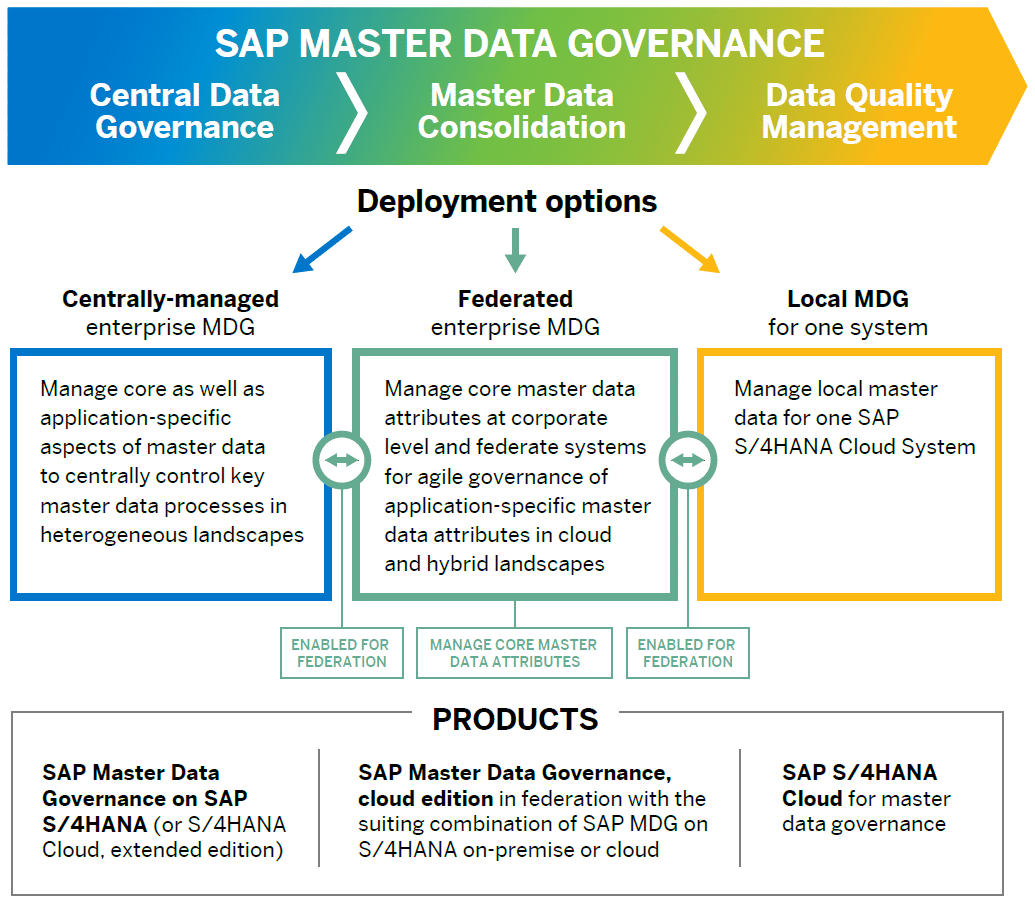
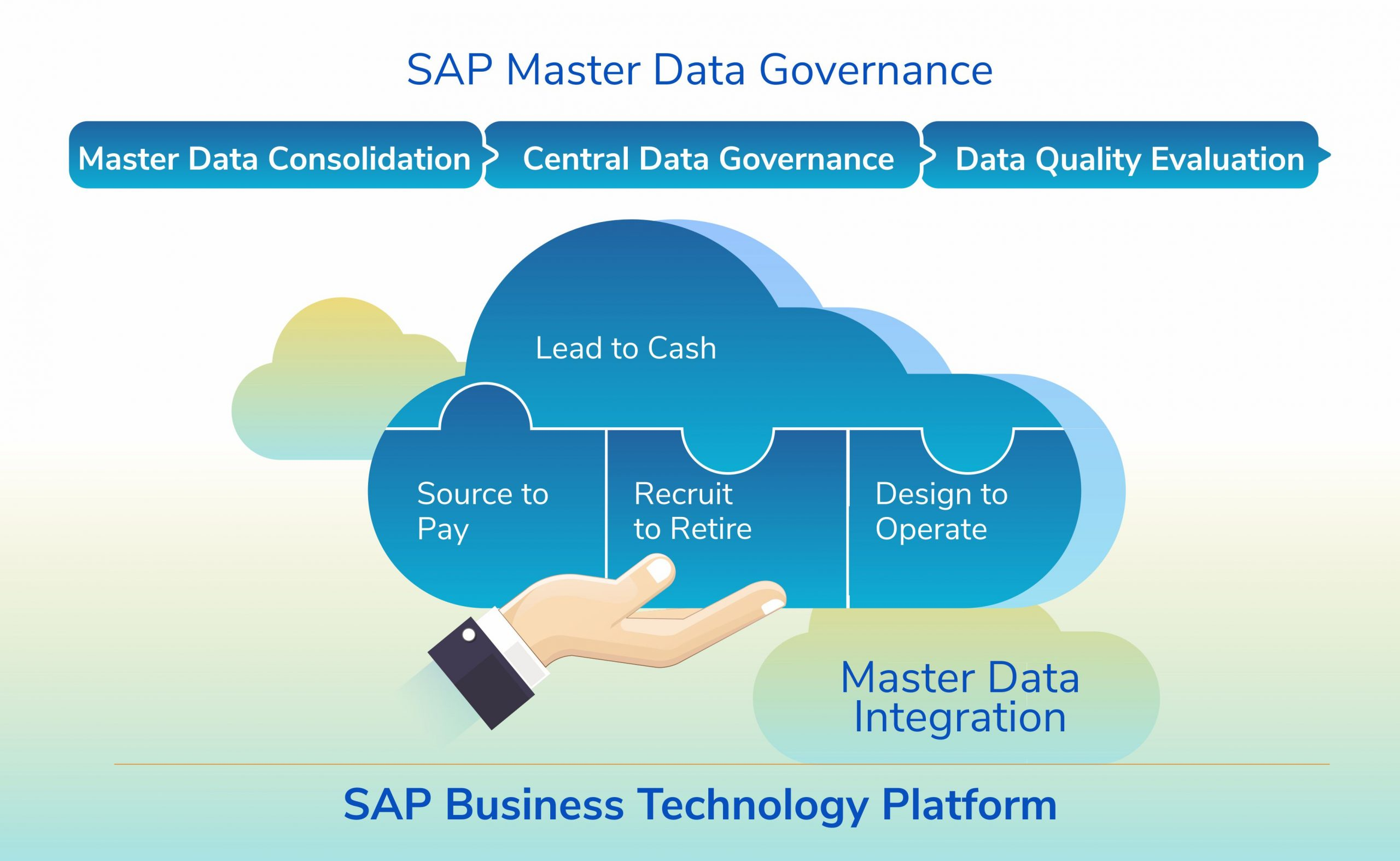
SAP MDG offers two primary architectural patterns: Central Governance and Consolidation. Central Governance is a “top-down” approach where master data is created in a central hub. Before the data is distributed to various operational systems (like SAP S/4HANA, non-SAP ERPs, or CRM systems), it must pass through a rigorous validation and approval process. This ensures that no “junk data” ever enters the ecosystem.
On the other hand, Consolidation is a “bottom-up” approach. It allows organizations to take existing data from disparate sources, identify duplicates, and merge them into a single “Golden Record.” By utilizing sophisticated matching and merging algorithms, the software can determine, for example, that “Global Tech Inc.” and “Global Tech Incorporated” are the same entity, thereby streamlining the technical footprint of the organization’s database.
Integration with SAP S/4HANA and the Business Technology Platform
As a native component of the SAP ecosystem, MDG is optimized for S/4HANA. It leverages the SAP HANA in-memory database to provide real-time data validation and analytics. Furthermore, with the shift toward the SAP Business Technology Platform (BTP), MDG has expanded into a “federated” governance model. This allows different business units to manage their own local data while subscribing to a global data standard defined in the central MDG hub. This hybrid technical architecture balances the need for corporate-wide consistency with the flexibility required by localized business operations.
Key Capabilities and Functional Modules
SAP MDG is not a monolithic application; it is a modular suite tailored to specific data domains. Each domain—whether it be Financials, Suppliers, Customers, or Materials—comes with pre-defined data models, user interfaces, and business logic. This modularity allows IT teams to scale their governance efforts incrementally.
Data Modeling and the Fiori UI Framework
The technical backbone of MDG is its extensible data model. While SAP provides standard models for common domains (like the ‘MM’ model for Materials), developers can create custom objects to govern industry-specific data. This is paired with the SAP Fiori user interface, which provides a clean, web-based experience for data stewards and business users. The Fiori apps are designed to be responsive, meaning that a manager can approve a new “Customer Master” request from a tablet or smartphone, ensuring that the governance workflow never stalls due to technical bottlenecks.
Workflow Management and Process Analytics
One of the most powerful features of SAP MDG is its rule-based workflow engine, powered by SAP Business Workflow or BRFplus (Business Rule Framework plus). When a user initiates a “Change Request,” the system automatically determines the necessary routing based on the data type and organizational hierarchy. For instance, a change to a “Product Price” might require approval from both the Finance and Marketing departments.
Beyond the workflow itself, the software provides deep process analytics. IT managers can monitor “Key Performance Indicators” (KPIs) such as the time taken for data approvals, the number of rejected requests, and the overall “health” of the data. This level of visibility allows for continuous improvement of the technical processes governing the data.

Data Quality Management (DQM)
Data Quality Management is a specialized module within MDG that allows organizations to define, execute, and monitor data quality rules. Instead of relying on manual checks, DQM enables the creation of automated validation rules (e.g., “A VAT number must follow a specific alphanumeric pattern for EU countries”). These rules are applied at the point of entry and can also be used to run “mass evaluations” on existing data. The system generates “Quality Scorecards,” providing a transparent view of how well the organization’s digital assets align with its corporate standards.
Implementation Strategies and Deployment Models
Deciding how to deploy SAP MDG is a significant technical decision that depends on an organization’s existing IT infrastructure and long-term digital strategy. There are several models to consider, each with its own set of technical advantages.
The Hub vs. Co-deployment Approach
In a “Hub” deployment, SAP MDG sits on a dedicated server (or instance) separate from the operational ERP. This is the preferred method for large-scale enterprises with multiple ERP systems (both SAP and non-SAP). The hub acts as a neutral zone where data is perfected before being pushed to the satellite systems.
Conversely, “Co-deployment” involves installing MDG directly onto an existing SAP S/4HANA instance. This is often more cost-effective and reduces the complexity of data replication, making it an attractive option for mid-sized companies or those who have fully standardized on a single S/4HANA environment.
Transitioning to SAP MDG on Cloud (SAP BTP)
The modern trend in enterprise software is the move toward “SaaS” (Software as a Service) and “PaaS” (Platform as a Service). SAP MDG, Cloud Edition, is a modular solution built on the SAP Business Technology Platform. It allows companies to start their governance journey with minimal upfront infrastructure investment. The cloud edition is particularly effective for “Business Partner” data (Customers and Suppliers) and can be integrated seamlessly with on-premise systems via the SAP Cloud Connector. This “Clean Core” strategy ensures that customizations are kept outside the main ERP, making future software upgrades much simpler and faster.
The Role of AI and Automation in SAP MDG
As we move further into the era of intelligent enterprises, SAP MDG is increasingly incorporating Artificial Intelligence (AI) and Machine Learning (ML) to automate mundane tasks and enhance data precision. This shift is transforming master data management from a manual, labor-intensive chore into an automated, intelligent process.
Machine Learning for Data Mapping and Matching
One of the most time-consuming aspects of data management is mapping data from legacy systems into a new MDG environment. SAP now utilizes ML algorithms to suggest mappings based on historical patterns. In the “Consolidation” phase, AI is used to calculate “similarity scores” between records. Instead of a human having to look at thousands of potential duplicates, the AI identifies the high-probability matches, requiring human intervention only for ambiguous cases. This dramatically accelerates the “Data Cleansing” phase of any digital transformation project.
Rule-Based Automation and Self-Service Data
The future of SAP MDG lies in “Self-Service Data.” By using AI-driven bots and advanced validation rules, the system can guide non-technical users through the data creation process. For example, when a salesperson enters a new lead, the system can use external APIs (like Google Maps or corporate registries) to auto-populate address and tax information. This reduces the burden on data stewards and ensures that the technical foundation of the company—its master data—is built on accuracy from the very first keystroke.
Conclusion
SAP Master Data Governance is far more than a simple database management tool; it is a comprehensive technological framework designed to ensure the reliability of an organization’s most important asset: its data. By leveraging central governance, sophisticated workflows, and integrated AI, MDG provides the technical infrastructure necessary for a modern enterprise to function efficiently.
Whether deployed on-premise as a dedicated hub or in the cloud via SAP BTP, MDG eliminates the inconsistencies that plague fragmented IT landscapes. As companies continue to navigate the complexities of AI, Big Data, and global commerce, the role of SAP MDG in maintaining a “Single Source of Truth” will only become more vital. It is the silent engine that powers accurate reporting, streamlined supply chains, and, ultimately, the successful digital evolution of the modern brand.
aViewFromTheCave is a participant in the Amazon Services LLC Associates Program, an affiliate advertising program designed to provide a means for sites to earn advertising fees by advertising and linking to Amazon.com. Amazon, the Amazon logo, AmazonSupply, and the AmazonSupply logo are trademarks of Amazon.com, Inc. or its affiliates. As an Amazon Associate we earn affiliate commissions from qualifying purchases.