
In an era increasingly defined by data, the ability to collect, process, analyze, and derive actionable insights from vast information sets is no longer a luxury but a necessity for business survival and growth. At the forefront of this data-driven revolution stands Business Intelligence (BI) software, and prominent among its pioneers and enduring powerhouses is SAP BusinessObjects. Often simply referred to as “BusinessObjects,” this comprehensive suite of tools from SAP has empowered organizations for decades to transform raw data into meaningful intelligence, facilitating smarter decisions and driving operational excellence.
But what exactly is SAP BusinessObjects? It’s more than just a single application; it’s an integrated portfolio of reporting, query and analysis, and enterprise information management (EIM) tools designed to provide a unified view of business performance. From intricate data warehousing to intuitive self-service dashboards, BusinessObjects serves as the technological backbone for countless enterprises seeking to harness the strategic potential of their information assets. This deep dive will explore its core components, functionalities, architectural significance, and its evolving role in the modern analytics landscape, firmly situating it within the broader context of enterprise technology.
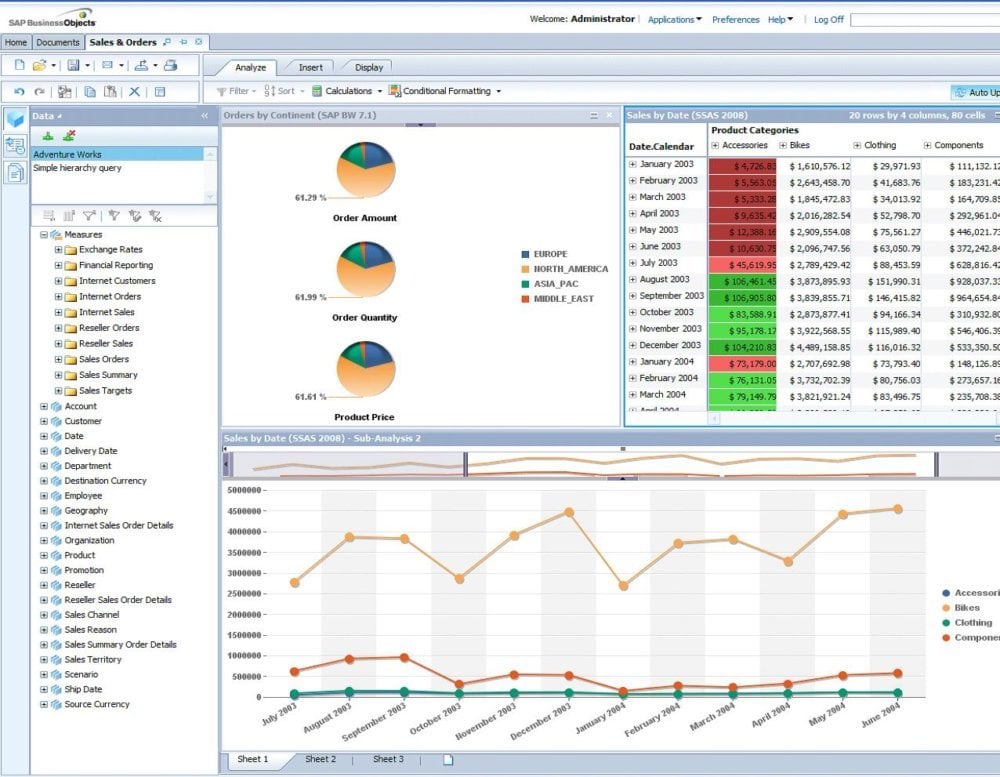
The Essence of Business Intelligence and SAP BusinessObjects
Understanding SAP BusinessObjects begins with a clear grasp of what Business Intelligence entails and how this particular suite addresses its multifaceted demands.
Defining Business Intelligence (BI)
Business Intelligence refers to the strategies, technologies, and practices used by enterprises for the data analysis of business information. BI technologies provide historical, current, and predictive views of business operations. Common functions of business intelligence technologies are reporting, online analytical processing (OLAP), analytics, data mining, process mining, complex event processing, business performance management, benchmarking, text mining, predictive analytics, and prescriptive analytics. The overarching goal of BI is to improve decision-making, optimize business processes, and identify new opportunities for growth and efficiency by making sense of complex datasets. It bridges the gap between raw data and actionable insights, moving organizations from merely knowing “what happened” to understanding “why it happened” and even predicting “what will happen.”
The Role of SAP BusinessObjects in BI
SAP BusinessObjects plays a pivotal role in delivering a comprehensive BI ecosystem. It offers a structured approach to data analysis, allowing organizations to collect data from disparate sources, transform it into a consistent format, store it efficiently, and then present it through various interactive reports, dashboards, and analytical applications. Unlike a single-point solution, BusinessObjects provides a robust framework that supports the entire BI lifecycle—from data integration and warehousing to front-end visualization and distribution. Its architecture is designed to handle the complexity and scale of enterprise data environments, ensuring that relevant, accurate, and timely information is accessible to the right stakeholders, whether they are executives, data analysts, or operational staff. By standardizing the way data is accessed and presented, SAP BusinessObjects reduces discrepancies, fosters a single source of truth, and ultimately cultivates a data-driven culture within an organization.
Key Components and Capabilities of SAP BusinessObjects Suite
The power of SAP BusinessObjects lies in its modular yet integrated design. The suite comprises several distinct applications, each tailored for specific BI functions, working in concert to deliver a holistic analytics experience.
SAP BusinessObjects Web Intelligence (WebI)
Web Intelligence, or WebI, is arguably one of the most widely used components of the BusinessObjects suite. It’s a powerful and intuitive tool that allows users to create ad-hoc queries, interactive reports, and perform in-depth analysis directly from a web browser. WebI excels at querying, reporting, and analysis, enabling users to drill down into data, slice and dice information, and present it in various formats. Its user-friendly interface makes it suitable for business users who need to generate reports and gain insights without deep technical knowledge, fostering self-service BI across the enterprise.
SAP Crystal Reports
Crystal Reports is a sophisticated reporting tool known for its pixel-perfect report design capabilities. While WebI focuses on interactive querying and ad-hoc analysis, Crystal Reports is geared towards creating highly formatted, production-quality reports such as invoices, statements, and operational reports. It offers granular control over layout, formatting, and data presentation, making it ideal for statutory reporting, mail merge applications, and situations where precise visual representation of data is paramount. Its strong integration with various data sources allows for robust data consolidation and presentation.
SAP Lumira
SAP Lumira is a data visualization and discovery tool designed for agility and speed. It empowers business users to prepare, visualize, and analyze data quickly, uncovering hidden insights and patterns. Lumira offers a rich set of interactive charts, graphs, and geographical maps, enabling users to create compelling dashboards and infrographics. It supports both self-service data discovery for individual users and the creation of guided analytics applications, facilitating a more exploratory approach to data analysis.
SAP BusinessObjects Dashboards (formerly Xcelsius)
This component is dedicated to creating highly interactive and engaging dashboards. Dashboards (formerly Xcelsius) allows users to build dynamic, visually rich data presentations that combine various charts, gauges, and widgets, often driven by what-if scenarios and sliders. These dashboards are ideal for executives and managers who need to monitor key performance indicators (KPIs) and critical metrics at a glance, enabling them to make quick, informed decisions based on a clear, real-time snapshot of business performance.
SAP BusinessObjects Design Studio (now SAP Analytics Cloud Designer)
While now largely succeeded by the capabilities within SAP Analytics Cloud, SAP BusinessObjects Design Studio (originally) was a development environment for creating sophisticated, highly customized analytical applications and dashboards. It offered greater control over design and scripting compared to Dashboards, catering to more advanced developers and specific application requirements. Its focus was on providing a flexible platform for crafting tailored BI solutions that integrate seamlessly with SAP BW and SAP HANA environments.
Data Integrator and Data Services (ETL)
Crucial for any BI strategy, SAP BusinessObjects Data Integrator (now part of SAP Data Services) is an Extract, Transform, Load (ETL) tool. It enables organizations to extract data from various source systems (databases, applications, files), transform it according to business rules (cleaning, standardizing, aggregating), and load it into a target data warehouse or data mart. Data Services is fundamental for ensuring data quality, consistency, and availability, forming the bedrock upon which all other BI tools within the suite rely for accurate and reliable information.
How SAP BusinessObjects Empowers Data-Driven Decisions

The collective capabilities of the SAP BusinessObjects suite translate directly into tangible benefits for organizations seeking to become more data-driven. It’s not just about tools; it’s about enabling a fundamental shift in how decisions are made.
Enhancing Data Visibility and Accessibility
One of the primary challenges in large enterprises is data fragmentation. Information often resides in silos across different departments and systems, making it difficult to get a unified view. SAP BusinessObjects addresses this by providing a centralized platform for accessing and analyzing data from diverse sources. Through its robust data integration capabilities and user-friendly front-end tools, it makes complex data visible and accessible to a wide range of users. This enhanced visibility ensures that decision-makers have a comprehensive and consistent understanding of business performance, eliminating reliance on disparate spreadsheets and conflicting reports.
Facilitating Self-Service Analytics
In the past, business users were often dependent on IT departments to generate reports and provide data. SAP BusinessObjects, particularly with tools like Web Intelligence and Lumira, champions the concept of self-service analytics. It empowers business users to explore data independently, create their own reports, and build personalized dashboards without requiring extensive technical expertise. This not only reduces the burden on IT but also accelerates the decision-making process, as users can quickly get answers to their specific business questions as they arise, fostering greater agility and responsiveness.
Driving Strategic Planning and Operational Efficiency
By providing deep insights into operational performance, customer behavior, market trends, and financial health, SAP BusinessObjects becomes an indispensable tool for both strategic planning and day-to-day operational efficiency. Executives can leverage dashboards and analytical applications to monitor KPIs, identify emerging trends, and adjust strategies in real-time. At an operational level, detailed reports and analyses can pinpoint inefficiencies, optimize supply chains, improve customer service, and enhance various business processes, leading to significant cost savings and improved productivity. The ability to predict future trends based on historical data further enables proactive decision-making rather than reactive problem-solving.
Architecture and Integration within the Enterprise Landscape
The robustness and longevity of SAP BusinessObjects stem from its well-defined architecture and its ability to integrate seamlessly within complex enterprise IT environments.
The Semantic Layer (Universe)
A cornerstone of the SAP BusinessObjects architecture is the “Universe,” often referred to as the semantic layer. The Universe acts as an abstraction layer between the complex database structures and the business users. It translates technical database language (tables, columns, joins) into familiar business terms (e.g., “Customer Name” instead of “CUSTNMTBL.CUST_ID”). This layer simplifies data access for end-users, allowing them to drag and drop business objects into their queries without needing to understand the underlying database schema. The Universe ensures consistent data definitions, enforces security, and enables flexible reporting across various data sources, significantly simplifying the user experience and ensuring data integrity.
Data Sources and Connectivity
SAP BusinessObjects boasts extensive connectivity options, allowing it to integrate with virtually any data source an enterprise might use. This includes relational databases (Oracle, SQL Server, DB2), flat files, spreadsheets, ERP systems (SAP ECC, SAP S/4HANA), data warehouses (SAP BW, Teradata, Snowflake), big data platforms, and even cloud-based applications. This broad connectivity is critical for building a holistic BI solution that can consolidate information from all relevant systems across an organization, providing a 360-degree view of the business.
Integration with Other SAP and Non-SAP Systems
Beyond data sources, SAP BusinessObjects is designed for deep integration within the broader enterprise application landscape. Naturally, it offers robust integration with other SAP products, particularly SAP ERP (ECC/S/4HANA) and SAP BW (Business Warehouse), allowing for optimized data extraction and reporting. However, its open architecture also facilitates integration with non-SAP systems, middleware, and other third-party applications. This flexibility ensures that organizations can leverage their existing IT investments while augmenting them with powerful BI capabilities, creating a cohesive and efficient information ecosystem.
The Evolution and Future Outlook of SAP BusinessObjects
Like all enterprise software, SAP BusinessObjects has undergone significant evolution, adapting to new technological paradigms and market demands. While its core strengths remain, its future is increasingly intertwined with cloud computing and next-generation analytics platforms.
From On-Premise Dominance to Cloud Integration
Historically, SAP BusinessObjects was primarily an on-premise solution, requiring significant infrastructure investment and maintenance. However, in response to the pervasive shift towards cloud computing, SAP has introduced options for deploying BusinessObjects in the cloud, either through hyperscalers (AWS, Azure, GCP) or private cloud environments. This provides greater flexibility, scalability, and reduced operational overhead for organizations. While the on-premise version continues to be widely used and supported, the trend towards hybrid deployments and cloud-native analytics is undeniable.
Coexistence with SAP Analytics Cloud (SAC)
SAP’s strategic direction for future innovation in analytics is largely centered around SAP Analytics Cloud (SAC). SAC is a comprehensive, cloud-native solution that combines BI, planning, predictive analytics, and augmented analytics capabilities into a single, unified platform. This raises questions about the future of SAP BusinessObjects. SAP’s current stance is one of coexistence. BusinessObjects continues to be developed and supported, especially for organizations with significant on-premise investments and specific reporting needs (like pixel-perfect reports via Crystal Reports). However, new innovations, especially in areas like augmented analytics, AI/ML integration, and real-time planning, are primarily driven in SAC.

Continued Relevance in Hybrid Environments
For many large enterprises, a complete migration from a mature on-premise BI landscape to a purely cloud-native one is a complex, multi-year undertaking, if even desired. Therefore, SAP BusinessObjects remains highly relevant in hybrid environments. Organizations often leverage BusinessObjects for their established reporting and data warehousing needs while simultaneously adopting SAC for new analytical initiatives, particularly those requiring advanced planning or predictive capabilities. The focus is on integrating these platforms to create a seamless analytics experience, allowing businesses to harness the strengths of both traditional and modern BI approaches. SAP continues to provide tools and strategies for integrating BusinessObjects data with SAC, ensuring a smooth transition and co-existence strategy.
In conclusion, SAP BusinessObjects stands as a testament to the enduring need for robust, reliable, and comprehensive business intelligence tools. While the analytics landscape continues to evolve rapidly with the advent of AI, machine learning, and cloud-native solutions, BusinessObjects retains its fundamental value proposition. It provides the technological framework for turning raw data into strategic assets, empowering organizations across industries to make more informed decisions, optimize operations, and confidently navigate the complexities of the modern business world. Its legacy and continued development ensure that it remains a critical component in the enterprise technology stack for years to come, especially for those navigating the intricate path from traditional on-premise systems to a cloud-enabled future.
aViewFromTheCave is a participant in the Amazon Services LLC Associates Program, an affiliate advertising program designed to provide a means for sites to earn advertising fees by advertising and linking to Amazon.com. Amazon, the Amazon logo, AmazonSupply, and the AmazonSupply logo are trademarks of Amazon.com, Inc. or its affiliates. As an Amazon Associate we earn affiliate commissions from qualifying purchases.