
The S&P 500, a name synonymous with the health of the American stock market and often the global economy, is far more than just a number you hear on the news. It is a vital benchmark, a sophisticated tool for investors, and a reflection of the collective performance of some of the largest and most influential publicly traded companies in the United States. For anyone looking to understand the mechanics of financial markets, make informed investment decisions, or simply grasp the dynamics of economic reporting, a deep dive into the S&P 500 is indispensable.

At its core, the S&P 500 is a stock market index that represents 500 of the largest U.S. companies by market capitalization. It is widely regarded as the best gauge of large-cap U.S. equities and a leading indicator of the U.S. economy. Managed by S&P Dow Jones Indices, its methodology is designed to capture the performance of a broad cross-section of industries, providing a comprehensive snapshot of the market. Understanding this index is not merely an academic exercise; it’s a foundational step for anyone navigating the world of personal finance and investing.
Understanding the S&P 500 Index
To truly appreciate the significance of the S&P 500, it’s crucial to first understand what a stock market index is and how this particular index is constructed. Unlike simply picking individual stocks, an index offers a bird’s-eye view, aggregating the performance of multiple companies into a single, digestible metric.
A Benchmark for U.S. Stock Market Health
A stock market index serves as a statistical measure of the changes in a portfolio of stocks representing a specific market or segment of the market. Its primary purpose is to act as a benchmark – a standard against which the performance of individual investments, fund managers, or the market as a whole can be measured. For instance, if an investor’s portfolio grows by 8% in a year, they might compare that to the S&P 500’s return for the same period to gauge how well their investments performed relative to the broader market.
The S&P 500 stands out because of its broad coverage and the rigorous criteria used for its constituent companies. It is a market-capitalization-weighted index, meaning that companies with larger market values have a greater impact on the index’s overall performance. This structure ensures that the index accurately reflects the trends and movements of the most influential players in the U.S. equity market, making it an excellent proxy for the overall health and direction of the large-cap segment. Its prominence is such that when financial news reports on “the market” moving up or down, they are very often referring to the performance of the S&P 500.
The “500” Explained: Selection Criteria and Composition
The “500” in S&P 500 is not just an arbitrary number; it refers to the 500 companies selected by S&P Dow Jones Indices for inclusion. However, it’s important to note that due to technicalities like share classes, the actual number of stocks in the index can sometimes be slightly more than 500. The selection process is meticulous and guided by several key criteria, ensuring that the index remains representative, tradable, and reflective of the U.S. large-cap market.
Key selection criteria include:
-
U.S. Company: The company must primarily be based in the United States.
-
Market Capitalization: A minimum market capitalization threshold is required, which is adjusted periodically. This ensures that only large, established companies are included.
-
Liquidity: Shares must be highly liquid, meaning they are actively traded and can be bought and sold easily without significantly impacting their price. This prevents undue volatility from illiquid stocks.
-
Public Float: A significant portion of the company’s shares must be available to the public for trading, rather than being held by insiders or restricted parties.
-
Sector Representation: While not a strict quota, the index committee aims for a balance across various sectors of the economy to ensure diversification and prevent overconcentration in any single industry.
-
Profitability: Companies must have positive reported earnings in the most recent quarter and positive aggregate earnings over the past four consecutive quarters. This criterion helps ensure the inclusion of financially stable companies.
The S&P Dow Jones Indices committee meets regularly to review and adjust the index constituents. Companies can be added or removed due to mergers, acquisitions, bankruptcies, or a failure to meet the ongoing criteria. This dynamic composition ensures the S&P 500 remains relevant and reflective of the current economic landscape, consistently representing the market’s leading companies.
Why the S&P 500 Matters to Investors
For individual and institutional investors alike, the S&P 500 holds immense significance. It’s not just a reporting tool; it’s a foundational element of many investment strategies and a constant point of reference for evaluating economic health and portfolio performance.
A Gauge of Economic Performance
The S&P 500 is often cited as a leading indicator of the U.S. economy’s health. Because its constituent companies are large, multinational corporations that significantly contribute to the nation’s GDP and employment, their collective performance offers valuable insights into broader economic trends. When these companies are thriving – posting strong earnings, expanding operations, and demonstrating robust sales – it generally signals a healthy economy. Conversely, sustained declines in the S&P 500 can suggest impending economic headwinds or a recession.
Watching the S&P 500 provides clues about corporate earnings, consumer confidence, and investor sentiment. Its movements reflect market participants’ expectations for future economic growth, inflation, interest rates, and geopolitical events. Therefore, understanding the S&P 500’s performance helps investors contextualize their financial decisions within the broader economic narrative.
Diversification Through a Single Investment
One of the most compelling reasons for individual investors to pay attention to the S&P 500 is its inherent diversification. By reflecting the performance of 500 large-cap companies across all major sectors of the U.S. economy, investing in an S&P 500 index fund or ETF offers instant diversification. This means an investor isn’t putting all their eggs in one basket by relying on the success of a single company or even a single industry.
If one company within the index falters, its impact on the overall index is mitigated by the performance of the other 499 companies. This broad exposure significantly reduces company-specific risk, allowing investors to benefit from the overall growth of the U.S. economy rather than having to pick individual winners. It’s a strategy that embraces the market rather than attempting to beat it, which historically has proven to be a challenging endeavor for most active investors.
Historical Performance and Long-Term Growth Potential
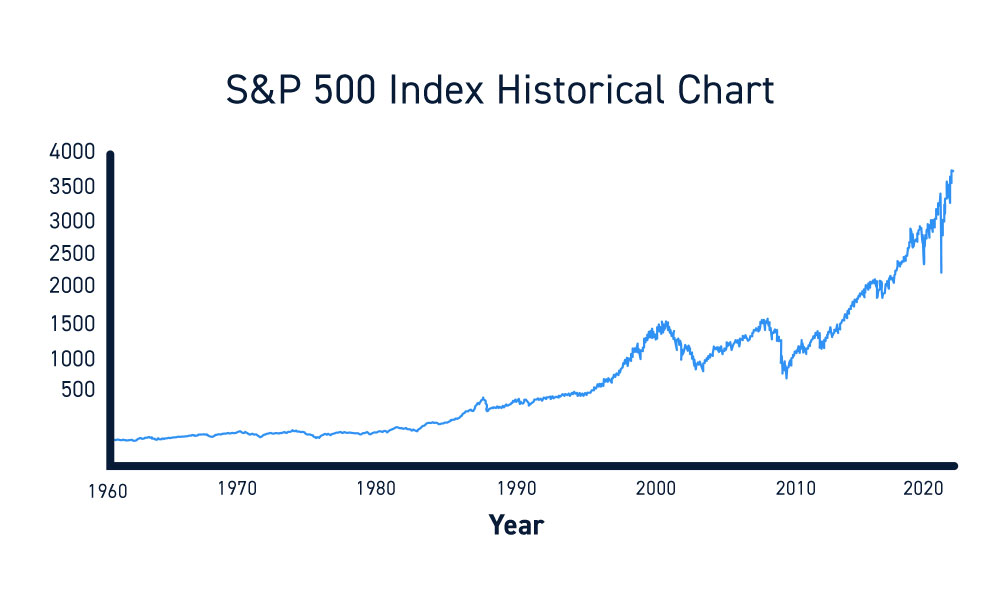
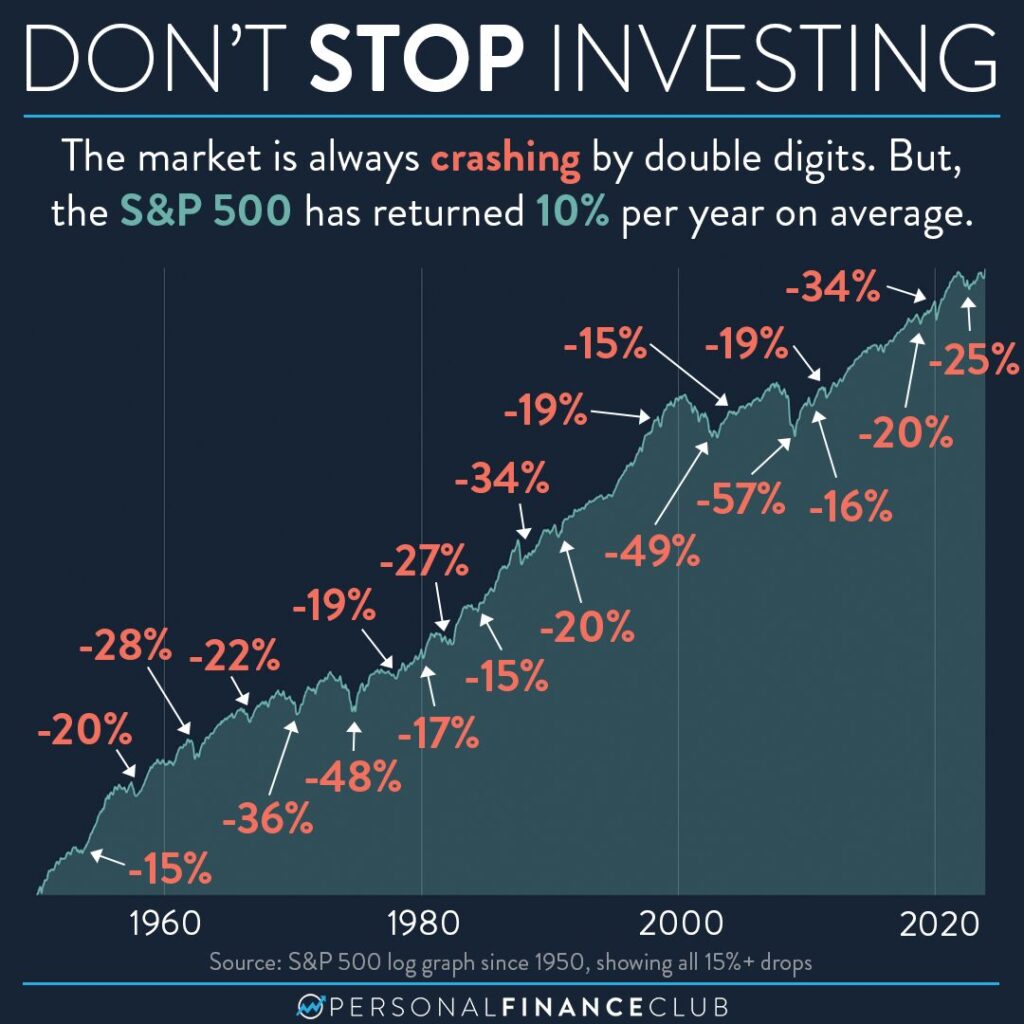
The S&P 500 has a remarkable track record of delivering long-term growth. While past performance is never a guarantee of future returns, the index has historically averaged annual returns in the high single to low double digits over extended periods (e.g., 10% on average per year over the last 50 years, including dividends). This robust performance is a testament to the resilience and innovation of American corporations and the power of compound interest.
Investing in the S&P 500 allows investors to participate in this long-term wealth creation. By reinvesting dividends and holding investments over decades, the compounding effect can lead to substantial growth. For many, a core allocation to the S&P 500 forms the bedrock of their retirement savings and long-term financial goals, benefiting from the steady upward trajectory of the market despite inevitable short-term fluctuations and downturns.
How Investors Access the S&P 500
For those looking to invest in the S&P 500, the good news is that accessing this diversified basket of companies is straightforward and accessible to nearly anyone with a brokerage account. While buying all 500 individual stocks is impractical and costly, several investment vehicles allow investors to mirror the index’s performance effortlessly.
Index Funds: Mutual Funds Tracking the S&P 500
One of the most traditional ways to invest in the S&P 500 is through an S&P 500 Index Mutual Fund. These are professionally managed funds that aim to replicate the performance of the S&P 500 by holding all, or a representative sample, of the stocks in the index in the same proportions. Because their objective is simply to track the index rather than actively pick stocks, they are considered “passively managed.”
Key characteristics of S&P 500 index mutual funds:
-
Low Expense Ratios: Passive management means lower operational costs, which translates into lower fees (expense ratios) for investors compared to actively managed mutual funds.
-
Broad Diversification: Immediate exposure to 500 large-cap U.S. companies.
-
Simplicity: A “set it and forget it” approach, ideal for long-term investors who don’t want to actively manage their portfolio.
-
Automatic Rebalancing: The fund managers automatically adjust holdings to reflect changes in the S&P 500 index.
Investors typically buy and sell mutual fund shares at the end of the trading day, based on the Net Asset Value (NAV) calculated after the market closes.
Exchange-Traded Funds (ETFs): The Modern Approach
Exchange-Traded Funds (ETFs) that track the S&P 500 are another highly popular and increasingly preferred method for gaining exposure to the index. Like index mutual funds, S&P 500 ETFs hold a portfolio of stocks designed to mirror the index’s performance. However, they differ in their trading mechanism.
Key characteristics of S&P 500 ETFs:
-
Traded Like Stocks: ETFs can be bought and sold throughout the trading day at market prices, just like individual stocks. This offers greater flexibility and liquidity compared to mutual funds.
-
Even Lower Expense Ratios: Many S&P 500 ETFs have extremely low expense ratios, making them highly cost-efficient investment vehicles.
-
Tax Efficiency: ETFs often have a more tax-efficient structure than traditional mutual funds, particularly in taxable accounts, due to how they manage capital gains distributions.
-
Accessibility: Widely available through almost any brokerage account.
Popular examples include SPY, IVV, and VOO, which are among the largest and most liquid ETFs in the world, directly tracking the S&P 500. For most individual investors, an S&P 500 ETF or index mutual fund represents the most practical, cost-effective, and diversified way to invest in the broader U.S. stock market.
Direct Investment (Not Recommended for Individuals)
While technically possible to invest directly in the S&P 500 by purchasing all 500 individual stocks, this approach is highly impractical and expensive for the vast majority of investors. The capital required to buy even a single share of each of the 500 companies would be substantial, not to mention the prohibitive transaction costs and the ongoing effort required for rebalancing and managing such a diverse portfolio. For these reasons, index funds and ETFs are the universally recommended methods for S&P 500 exposure.
Advantages and Considerations of Investing in the S&P 500
Investing in the S&P 500 offers a compelling proposition for many, but like any investment, it comes with its own set of advantages and inherent risks. A balanced perspective is crucial for making informed financial decisions.
Benefits: Diversification, Liquidity, Low Cost, Simplicity
The advantages of investing in the S&P 500 are significant and widely recognized:
-
Broad Diversification: As discussed, it instantly diversifies an investor’s portfolio across 500 companies in various sectors, significantly reducing company-specific risk.
-
High Liquidity: S&P 500 index funds and ETFs are highly liquid, meaning they can be easily bought and sold without significant price impact, ensuring investors can access their capital when needed.
-
Low Cost: Due to their passive management style, S&P 500 index funds and ETFs typically boast some of the lowest expense ratios in the investment world, ensuring more of an investor’s returns stay in their pocket.
-
Simplicity: They offer a “buy and hold” strategy that requires minimal ongoing management, making them ideal for busy individuals or those new to investing.
-
Consistent Performance: Historically, the S&P 500 has proven to be a robust engine for wealth creation over the long term.
Risks and Limitations: Market Volatility, Lack of Concentration, U.S. Focus
While highly beneficial, investing in the S&P 500 is not without its risks and limitations:
-
Market Volatility: The S&P 500 is subject to overall market volatility. During economic downturns, recessions, or periods of significant market uncertainty, the index can experience substantial declines, leading to capital losses for investors.
-
Lack of Concentration: While diversification is a strength, it can also be seen as a limitation by those seeking aggressive growth. Because it tracks 500 companies, the S&P 500 is unlikely to see the explosive growth of a single, highly successful small-cap company. Investors seeking to outperform the market significantly often look beyond broad market indices.
-
U.S. Focus: The S&P 500 is entirely composed of U.S. companies. While many of these companies have global operations, the index itself does not offer direct exposure to international markets. Investors seeking global diversification would need to supplement their S&P 500 investment with international stock funds or ETFs.
-
No Active Management Advantage: For investors who believe in their ability to pick winning stocks or time the market, an S&P 500 index fund offers no opportunity to demonstrate “skill” in stock selection.
S&P 500 vs. Other Benchmarks (e.g., Dow Jones, Nasdaq)
It’s also useful to understand how the S&P 500 compares to other prominent market indices:
-
Dow Jones Industrial Average (DJIA): Consists of only 30 large, “blue-chip” U.S. companies. It’s a price-weighted index, meaning higher-priced stocks have a greater influence. Due to its limited number of companies, it’s less representative of the broader market than the S&P 500.
-
Nasdaq Composite: Tracks all stocks listed on the Nasdaq stock exchange, heavily skewed towards technology and growth companies. While broader than the Dow, it’s not as diversified across sectors as the S&P 500.
-
Russell 2000: Focuses on small-cap U.S. companies. It’s an important benchmark for measuring the performance of smaller, often more volatile, companies.
The S&P 500 generally offers a superior blend of breadth, representation, and stability compared to these other indices, making it the most widely adopted benchmark for the overall U.S. stock market.
The Future of the S&P 500 and Your Portfolio
For many investors, the S&P 500 is more than just an index; it’s a cornerstone of a well-structured financial plan. Its enduring relevance and proven track record make it an invaluable tool for long-term wealth accumulation.
A Core Component of a Balanced Portfolio
Financial advisors frequently recommend an S&P 500 index fund or ETF as a core holding within a diversified investment portfolio. For many, it acts as the primary equity exposure, often complemented by allocations to international stocks, bonds, real estate, or other asset classes to further enhance diversification and manage risk according to individual goals and risk tolerance. Its role as a foundational investment provides a stable and growth-oriented base upon which other, potentially more specialized, investments can be built.
Long-Term Perspective and Dollar-Cost Averaging
The key to successful S&P 500 investing lies in embracing a long-term perspective. While the index will experience downturns and corrections, its historical trajectory has been upward. Trying to time the market – buying low and selling high – is notoriously difficult and often leads to missing out on significant gains.
A much more effective strategy for most investors is dollar-cost averaging. This involves investing a fixed amount of money regularly (e.g., monthly or bi-weekly) regardless of market conditions. When prices are high, your fixed amount buys fewer shares; when prices are low, it buys more shares. Over time, this strategy helps average out the purchase price, reduces the impact of short-term volatility, and automates the disciplined habit of consistent investing.
Staying Informed and Rebalancing
While S&P 500 investing is largely passive, staying generally informed about economic trends and reviewing your overall portfolio periodically is still wise. Understand that the index’s composition can change, reflecting shifts in the economy. More importantly, as your S&P 500 allocation grows, or other parts of your portfolio change in value, it may shift your overall asset allocation away from your target percentages.
Rebalancing is the process of adjusting your portfolio back to your desired asset allocation. For example, if your S&P 500 investment has grown significantly and now represents too large a portion of your portfolio, you might sell a portion of it to invest in underperforming assets (like bonds) to restore your target allocation. This helps manage risk and ensures your portfolio remains aligned with your financial goals over time.
In conclusion, the S&P 500 is a powerful, accessible, and historically robust tool for investors seeking diversified exposure to the U.S. large-cap stock market. By understanding its structure, benefits, and the simple ways to invest in it, individuals can confidently incorporate this indispensable index into their long-term financial strategy, harnessing the collective growth potential of America’s leading companies.
aViewFromTheCave is a participant in the Amazon Services LLC Associates Program, an affiliate advertising program designed to provide a means for sites to earn advertising fees by advertising and linking to Amazon.com. Amazon, the Amazon logo, AmazonSupply, and the AmazonSupply logo are trademarks of Amazon.com, Inc. or its affiliates. As an Amazon Associate we earn affiliate commissions from qualifying purchases.