
For the savvy consumer or the budget-conscious investor, the automotive market offers various avenues for wealth preservation and asset acquisition. Among these, few topics are as polarizing or as financially complex as salvage title cars. To the uninitiated, a salvage title sounds like a warning label; however, to a person with a keen eye for financial valuation and risk management, it represents a unique intersection of high-risk and high-reward investment.
Understanding the financial mechanics of salvage title cars is essential for anyone looking to optimize their personal balance sheet. Whether you are considering a salvage vehicle as a low-cost daily driver or as a potential project for a profitable side hustle, the decision must be rooted in rigorous financial analysis.
Understanding the Economics of a Salvage Title
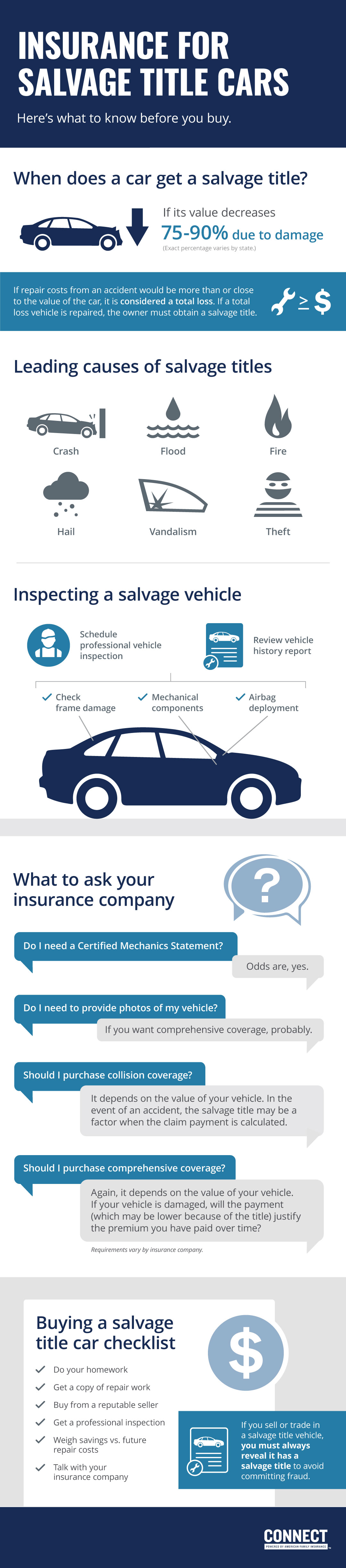
The term “salvage title” is primarily a financial designation rather than a purely mechanical one. It is a label applied by insurance companies and state motor vehicle departments when the cost of repairing a damaged vehicle approaches or exceeds its current market value.
The Definition of Total Loss and Insurance Thresholds
In the world of personal finance and insurance, every vehicle has an “Actual Cash Value” (ACV). This is the amount the car is worth in its current condition, accounting for depreciation, mileage, and wear. When a car is involved in an accident, or suffers damage from fire, flood, or theft, an insurance adjuster estimates the cost of repairs.
Most insurance companies use a “Total Loss Threshold.” While this varies by state and provider, it typically ranges between 70% and 100% of the ACV. If a car is worth $10,000 and the repairs are estimated at $7,500, the insurance company will likely “total” the car. From their financial perspective, it is more cost-effective to pay the owner the $10,000 and sell the remains (the “salvage”) to a recycler or rebuilder rather than managing a complex repair process that might uncover hidden costs.
Why a Car Receives a Salvage Title
Beyond collisions, several financial scenarios can trigger a salvage designation. “Theft recovery” is a common example. If a vehicle is stolen and not recovered within a certain window (usually 30 days), the insurance company pays out the claim. If the car is found later, it belongs to the insurer. Even if the car is in perfect condition, the act of the payout often results in a salvage title being issued to settle the legal and financial paperwork. Understanding the “why” behind the title is the first step in determining the asset’s underlying value.
The Financial Risks and Rewards of Investing in Salvage Vehicles
Buying a salvage title car is an exercise in weighing immediate capital savings against long-term financial liabilities. It is rarely a neutral transaction; it either saves you a fortune or becomes a significant “money pit.”
Significant Upfront Savings vs. Long-term Depreciation
The most compelling reason to consider a salvage title car is the price tag. On average, a vehicle with a salvage or rebuilt title trades at a 20% to 50% discount compared to its “clean title” counterparts. For an individual looking to avoid high-interest auto loans, this discount allows for a cash purchase, effectively eliminating monthly debt obligations and interest expenses.
However, the “Money” niche requires looking at the exit strategy. Depreciation is the enemy of automotive wealth. A salvage title vehicle has already taken its largest financial hit, but its resale value will always be capped. Most dealerships will not accept them as trade-ins, and the pool of private buyers is significantly smaller. If you plan to drive the car into the ground, the upfront savings are a win. If you plan to flip it in two years, the lack of liquidity and low resale value may negate the initial savings.
The Difficulty of Securing Financing and Insurance
From a banking perspective, a salvage title car is a risky collateral. Most major lenders refuse to issue traditional auto loans for salvage vehicles because determining an accurate valuation is nearly impossible. If you do find a lender, expect higher interest rates and a requirement for a larger down payment.
Insurance presents another financial hurdle. While most companies will provide “Liability Only” coverage for a rebuilt salvage vehicle, many balk at providing “Comprehensive and Collision” coverage. If you cannot insure the vehicle for its full replacement value, you are essentially self-insuring. In the event of another accident, you could lose your entire investment with no recourse for an insurance payout.

Evaluating the ROI: Is Rebuilding a Salvage Car a Viable Side Hustle?
For those with mechanical skills or access to affordable labor, “flipping” salvage cars can serve as a lucrative side hustle. This involves purchasing a salvage vehicle at an auction, repairing it to safety standards, and getting it rebranded as a “Rebuilt Title.”
Calculating Repair Costs and Market Value
To ensure a positive Return on Investment (ROI), a meticulous budget is required. The professional investor uses a “Max Bid” formula:
Target Resale Price (of a rebuilt title) – Cost of Repairs – Inspection Fees – Desired Profit = Max Bid.
Investors must account for the “Rebuilt Title Discount.” Even after a car is fully repaired and passes state inspections, it will still sell for significantly less than a clean-title car. If a clean-title version of a car sells for $20,000, the rebuilt version might only fetch $14,000. If your purchase price and repair costs exceed $11,000, your margin for error is dangerously slim.
The Process of Obtaining a Rebuilt Title
The transition from “Salvage” to “Rebuilt” is a legal and financial process. Once the repairs are completed, the vehicle must typically undergo a rigorous state inspection to ensure it is roadworthy and that all parts used in the repair were legally sourced (to prevent “chop shop” activity). The fees for these inspections, along with the administrative costs of retitling, must be factored into the initial business plan. A “Rebuilt” status is significantly more marketable than a “Salvage” status, as it signals to future buyers and insurers that the vehicle has been professionally vetted.
Strategic Due Diligence: Protecting Your Capital
In any financial venture, due diligence is the primary defense against catastrophic loss. When dealing with salvage titles, the information asymmetry between the seller and the buyer is vast.
Reviewing VIN History Reports and Repair Records
A vehicle’s history report (such as Carfax or AutoCheck) is a vital financial document. It reveals where the damage occurred and the severity of the incident. For example, a car salvaged due to “hail damage” is a much safer financial bet than one salvaged due to “flood damage.” Flood damage often leads to long-term electrical issues that can result in endless, unpredictable repair bills—the ultimate drain on personal finances.
The Importance of Professional Financial Appraisals
Before committing capital, an independent pre-purchase inspection (PPI) is non-negotiable. A qualified mechanic can identify if the frame is straight or if the airbags were properly replaced. From a financial standpoint, a $200 inspection fee is a small premium to pay to protect a $10,000 investment. If the inspection reveals structural compromises, the car’s true value may be close to zero, and the “deal” becomes a liability.

Conclusion: Making an Informed Financial Decision
Deciding whether to engage with salvage title cars depends entirely on your financial goals and risk tolerance. For the person looking to eliminate car payments and who possesses the patience to research a vehicle’s history, a salvage title can be a brilliant way to acquire a high-end asset for a fraction of its cost. By paying cash and bypassing the depreciation curve of a new car, you can redirect your monthly cash flow toward high-yield investments or retirement accounts.
However, for the average consumer who relies on traditional financing and requires a guaranteed resale value, the salvage market is often a minefield. The hidden costs of insurance, the lack of financing options, and the potential for unforeseen repairs can quickly erode the initial savings.
Ultimately, a salvage title car is not just a vehicle; it is a complex financial instrument. Success in this niche requires the discipline of an auditor and the foresight of an investor. By understanding the mechanics of insurance thresholds, the reality of market depreciation, and the necessity of rigorous due diligence, you can turn a “total loss” into a significant financial gain.
aViewFromTheCave is a participant in the Amazon Services LLC Associates Program, an affiliate advertising program designed to provide a means for sites to earn advertising fees by advertising and linking to Amazon.com. Amazon, the Amazon logo, AmazonSupply, and the AmazonSupply logo are trademarks of Amazon.com, Inc. or its affiliates. As an Amazon Associate we earn affiliate commissions from qualifying purchases.