
The human body is a marvel of biological engineering, a intricate network of systems working in perfect, often unseen, harmony. Among these vital yet frequently overlooked components are the salivary glands. More than just producers of spit, these unassuming organs play a critical role in digestion, oral health, and overall well-being. In an era dominated by technological innovation, the study of salivary glands extends far beyond basic biology. It has become a fascinating field for tech enthusiasts, medical engineers, and AI researchers who seek to understand, diagnose, mimic, and even enhance these natural biological systems. This exploration delves into the fundamental nature of salivary glands and the profound technological advancements they inspire, from advanced diagnostics to bio-inspired engineering and the promise of personalized medicine.

The Biological Imperative: Understanding Salivary Gland Function
To appreciate the technological frontiers, one must first grasp the foundational biology of salivary glands. These essential organs are sophisticated bio-factories, continuously producing a complex fluid vital for numerous bodily functions.
Anatomy and Physiology: The Body’s Natural Lubrication System
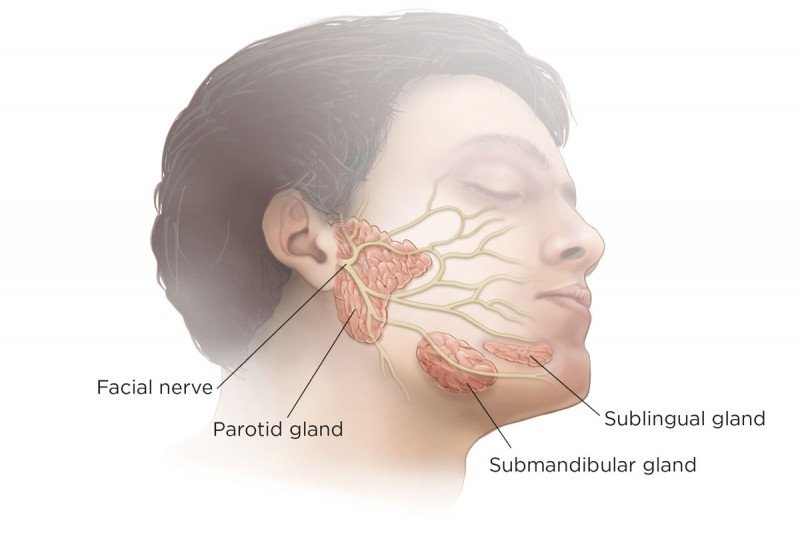
The human body houses three pairs of major salivary glands: the parotid, submandibular, and sublingual glands, along with hundreds of minor glands scattered throughout the oral cavity. Each of these glands contributes to the production of saliva, a fluid primarily composed of water (99%), but also rich in electrolytes, enzymes (like amylase and lipase), mucus, and antimicrobial compounds.
The parotid glands, located in front of the ears, produce a serous (watery) saliva rich in amylase, crucial for initiating carbohydrate digestion. The submandibular glands, situated under the jaw, produce a mixed serous and mucous saliva, offering both digestive enzymes and lubricating mucus. The smallest of the major glands, the sublingual glands under the tongue, primarily secrete a viscous, mucous saliva that aids in lubrication and buffering. Together, these glands secrete approximately 0.5 to 1.5 liters of saliva daily, a testament to their continuous activity.
Beyond their digestive role, salivary glands are guardians of oral health. Saliva lubricates the mouth, facilitating speech and swallowing. It cleanses food debris from teeth, neutralizes acids produced by bacteria, and contains antibodies and antimicrobial agents that protect against infections and tooth decay. Without sufficient salivary flow, individuals suffer from xerostomia (dry mouth), leading to significant discomfort, difficulty eating, and increased susceptibility to dental problems and oral infections.
The Sophistication of Secretion: A Microscopic Marvel
At a cellular level, salivary glands are intricate machines. They consist of clusters of secretory cells called acini, which produce the primary saliva, and a network of ducts that modify its composition as it travels to the oral cavity. This process is tightly regulated by the autonomic nervous system. Parasympathetic stimulation typically increases the volume and fluidity of saliva, often associated with rest and digestion, while sympathetic stimulation tends to produce a more viscous, protein-rich saliva, as might be experienced during stress or fear.
The precise control over saliva composition and flow highlights a remarkable feat of biological engineering. Each component of saliva is secreted or absorbed by specific cellular mechanisms, ensuring that the final product is perfectly tailored to its diverse functions. Understanding these microscopic processes is not just academic; it provides invaluable blueprints for bio-inspired technological design, from microfluidic systems to the development of artificial organs.
Technological Advancements in Salivary Gland Diagnostics and Imaging
The ability to precisely diagnose conditions affecting salivary glands, or to utilize saliva itself as a diagnostic medium, has been revolutionized by technology. Modern medical tools offer unprecedented insights into both the structure and function of these glands.
High-Resolution Imaging: Unveiling Hidden Details
Traditional diagnostic methods for salivary gland disorders (like inflammation, stones, or tumors) involved invasive procedures. Today, high-resolution imaging techniques provide non-invasive or minimally invasive ways to visualize these glands and their ducts.
-
Sialography: While somewhat invasive, this technique involves injecting a contrast agent into the salivary ducts, followed by X-rays, to reveal blockages or strictures. Modern digital sialography offers improved detail and lower radiation exposure.
-
Ultrasound: This non-invasive, radiation-free method uses sound waves to create images of soft tissues. It’s particularly effective for identifying stones (sialoliths), cysts, or masses within the major salivary glands. Portable ultrasound devices are making diagnostics more accessible.
-
CT and MRI Scans: Computed Tomography (CT) and Magnetic Resonance Imaging (MRI) provide highly detailed cross-sectional images, crucial for evaluating complex tumors, identifying the extent of disease, or planning surgical interventions. Advances in these technologies include faster scan times, higher resolution, and functional MRI techniques that can assess gland activity.
-
Endoscopic Techniques (Sialendoscopy): This minimally invasive procedure involves inserting tiny endoscopes directly into the salivary ducts. It allows direct visualization of stones, strictures, or inflammation, and enables precise interventions like stone removal or duct dilation, often avoiding more extensive surgery. This technology exemplifies the marriage of optics, miniaturization, and surgical precision.
Biosensors and Biomarkers: Saliva as a Diagnostic Goldmine
Perhaps one of the most exciting technological frontiers involving salivary glands is the use of saliva itself as a diagnostic fluid. Saliva, often dubbed “the mirror of the body,” contains a plethora of biomarkers reflecting both oral and systemic health. Its non-invasive collection makes it an ideal medium for diagnostic testing, circumventing the discomfort and risks associated with blood draws.
-
Non-Invasive Detection of Systemic Diseases: Researchers are developing and refining biosensors to detect biomarkers for a wide range of conditions in saliva. For example, salivary glucose levels can indicate diabetes, hormone levels can track stress or reproductive health, and specific proteins or nucleic acids can signal early-stage cancers (oral, breast, pancreatic), viral infections (HIV, hepatitis), or cardiovascular disease.
-
Wearable Tech and Point-of-Care Devices: The advent of miniaturized electronics and microfluidics is paving the way for wearable devices and point-of-care diagnostics that can analyze saliva in real-time, outside of a laboratory setting. Imagine a smart mouthguard or a small patch that continuously monitors salivary biomarkers, alerting users to health changes or the onset of illness. These devices leverage advanced sensor technology, electrochemical detection, and wireless data transmission.
-
AI and Machine Learning for Pattern Recognition: The vast amount of data generated by salivary biomarker analysis is perfectly suited for AI and machine learning algorithms. These intelligent systems can identify complex patterns and correlations within salivary profiles that might be imperceptible to the human eye, leading to more accurate diagnoses, personalized risk assessments, and earlier detection of diseases, even before symptoms appear. This represents a paradigm shift in preventive medicine.
Bio-Inspired Engineering: Mimicking Nature’s Design
The intricate architecture and sophisticated function of salivary glands serve as a powerful inspiration for engineers and biotechnologists striving to create artificial systems or regenerate damaged tissues.
Artificial Salivary Glands and Organoids: Regenerative Medicine Frontier
For individuals suffering from severe xerostomia due to conditions like Sjögren’s syndrome, radiation therapy, or certain medications, the development of artificial salivary glands offers a beacon of hope. The challenge lies in replicating the gland’s complex 3D structure, its diverse cell types, and its dynamic, nerve-controlled secretory function.
-
Tissue Engineering and 3D Bioprinting: Significant progress is being made in tissue engineering, where scientists aim to grow functional salivary gland tissue in vitro. This involves isolating salivary gland stem cells, culturing them on biocompatible scaffolds, and providing the necessary growth factors to differentiate them into functional secretory units. 3D bioprinting offers a revolutionary approach, allowing researchers to precisely arrange cells and biomaterials layer-by-layer to construct complex organ-like structures, including preliminary salivary gland organoids. These “mini-organs” are not yet suitable for transplantation into humans but provide invaluable models for drug testing and disease research.
-
Challenges and Breakthroughs: While a fully functional artificial salivary gland ready for transplantation remains a distant goal, current breakthroughs include the successful generation of salivary gland spheroids and even structures that demonstrate basic secretory function. The integration of vascularization and nerve supply, crucial for long-term survival and controlled secretion in vivo, represents the next major hurdle.
Robotics and Microfluidics: Learning from Saliva Flow
The principles governing saliva production and flow are also informing engineering design in unexpected ways.
-
Microfluidic Devices: The salivary gland’s ability to precisely secrete and modify fluid composition within tiny ducts has inspired the design of microfluidic “labs-on-a-chip.” These miniature devices manipulate minuscule volumes of fluids, enabling rapid chemical analysis, drug screening, and diagnostic tests with minimal sample requirements. They are essentially artificial biological systems, mirroring nature’s efficiency at the microscale.
-
Robots with ‘Saliva-Like’ Lubrication: In robotics, particularly for delicate manipulation tasks or in environments requiring resistance to friction and wear, engineers are exploring lubrication systems inspired by saliva. The non-Newtonian properties of saliva, its ability to coat surfaces, and its antimicrobial characteristics offer insights for developing smart lubricants or even self-repairing surfaces for advanced robotic systems, especially those designed to interact with biological materials or operate in challenging biological environments.
The Future Landscape: AI, Personalized Medicine, and Ethical Considerations
The synergistic relationship between salivary glands and technology is poised to redefine healthcare, driven by artificial intelligence and the promise of personalized approaches.
AI-Driven Research and Drug Discovery
AI is dramatically accelerating our understanding of salivary gland biology and pathology. Machine learning algorithms can analyze vast datasets of genomic, proteomic, and clinical information related to salivary gland diseases, identifying novel therapeutic targets, predicting disease progression, and even designing new drug molecules. This “in silico” approach significantly reduces the time and cost associated with traditional drug discovery, leading to faster development of treatments for conditions like Sjögren’s syndrome, salivary gland cancers, and xerostomia.
Personalized Oral Healthcare: Tailoring Solutions
The future of oral healthcare will increasingly be personalized, with technology playing a central role. Genomic analysis can reveal individual predispositions to salivary gland disorders or unique metabolic profiles that affect salivary composition. AI-powered diagnostics, based on an individual’s unique salivary biomarkers, will enable highly customized preventive strategies and therapeutic interventions. For example, custom-formulated salivary substitutes or gene therapies tailored to an individual’s genetic makeup could provide more effective relief for dry mouth or prevent specific oral diseases. This shift from one-size-fits-all to bespoke solutions is fundamentally powered by sophisticated data analysis and biotechnological capabilities.

Ethical Implications and Regulatory Challenges
As technology advances, so too do the ethical and regulatory considerations. The collection and analysis of salivary diagnostic data raise questions about privacy and data security. Ensuring the responsible use of AI in diagnostics, preventing bias in algorithms, and obtaining informed consent for advanced biomarker testing are critical. Furthermore, the development of bio-engineered artificial glands and gene therapies for salivary gland disorders will necessitate rigorous safety testing, transparent regulatory frameworks, and careful ethical deliberation to ensure equitable access and prevent unintended consequences.
In conclusion, “what is salivary glands?” is far more than a simple biological question. It is a gateway to understanding complex biological systems that are increasingly intertwined with the world of technology. From advanced imaging and non-invasive diagnostics to bio-inspired engineering and the cutting edge of AI-driven personalized medicine, the humble salivary gland continues to inspire and drive innovation, promising a healthier future for humanity where biological insights meet technological ingenuity.
aViewFromTheCave is a participant in the Amazon Services LLC Associates Program, an affiliate advertising program designed to provide a means for sites to earn advertising fees by advertising and linking to Amazon.com. Amazon, the Amazon logo, AmazonSupply, and the AmazonSupply logo are trademarks of Amazon.com, Inc. or its affiliates. As an Amazon Associate we earn affiliate commissions from qualifying purchases.