
In the world of business finance and wealth creation, predictability is the ultimate currency. Whether you are running a multi-million dollar corporation, a burgeoning side hustle, or an online income stream, your ability to forecast future revenue determines your capacity for investment and expansion. At the heart of this predictability lies the “sales pipeline.”
A sales pipeline is a visual and systematic representation of where prospects are in the purchasing journey. It provides a structured overview of the journey a potential client takes from the initial point of contact to the final transaction. From a financial perspective, the sales pipeline is more than just a list of names; it is a vital tool for cash flow management, risk assessment, and long-term financial planning. Understanding and mastering the sales pipeline is the difference between a business that survives month-to-month and one that achieves consistent, scalable growth.
The Financial Foundation: Defining the Sales Pipeline in Modern Business
To manage business finance effectively, one must understand the machinery that generates revenue. The sales pipeline serves as the structural blueprint for this machinery. It tracks every opportunity as it progresses through various stages, allowing business owners to see exactly how much capital is expected to enter the business and when.
Pipeline vs. Funnel: Understanding the Financial Distinction
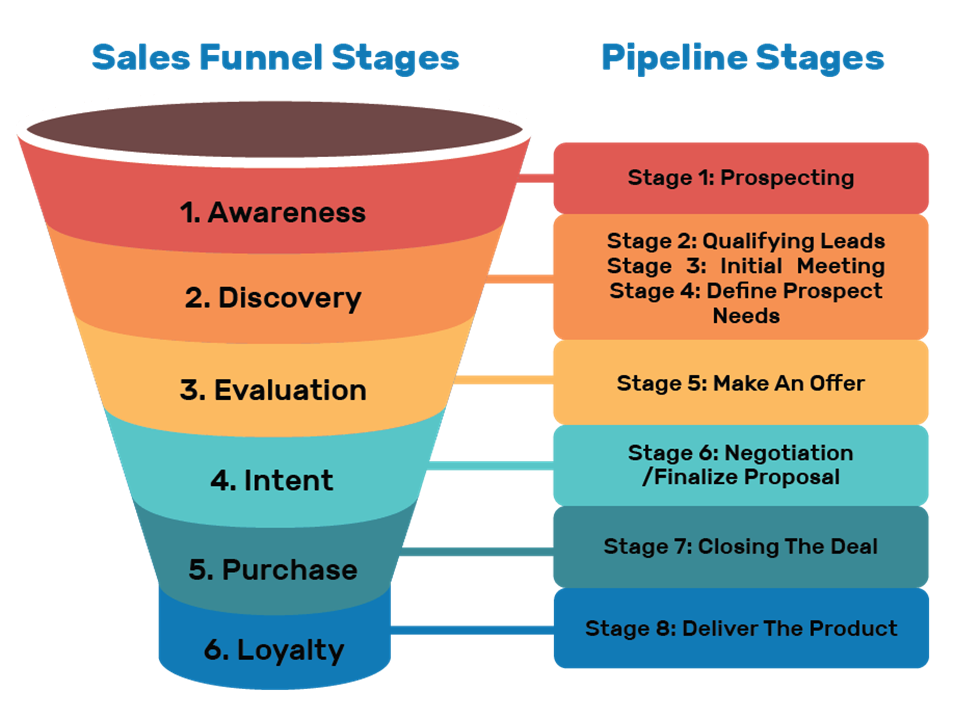
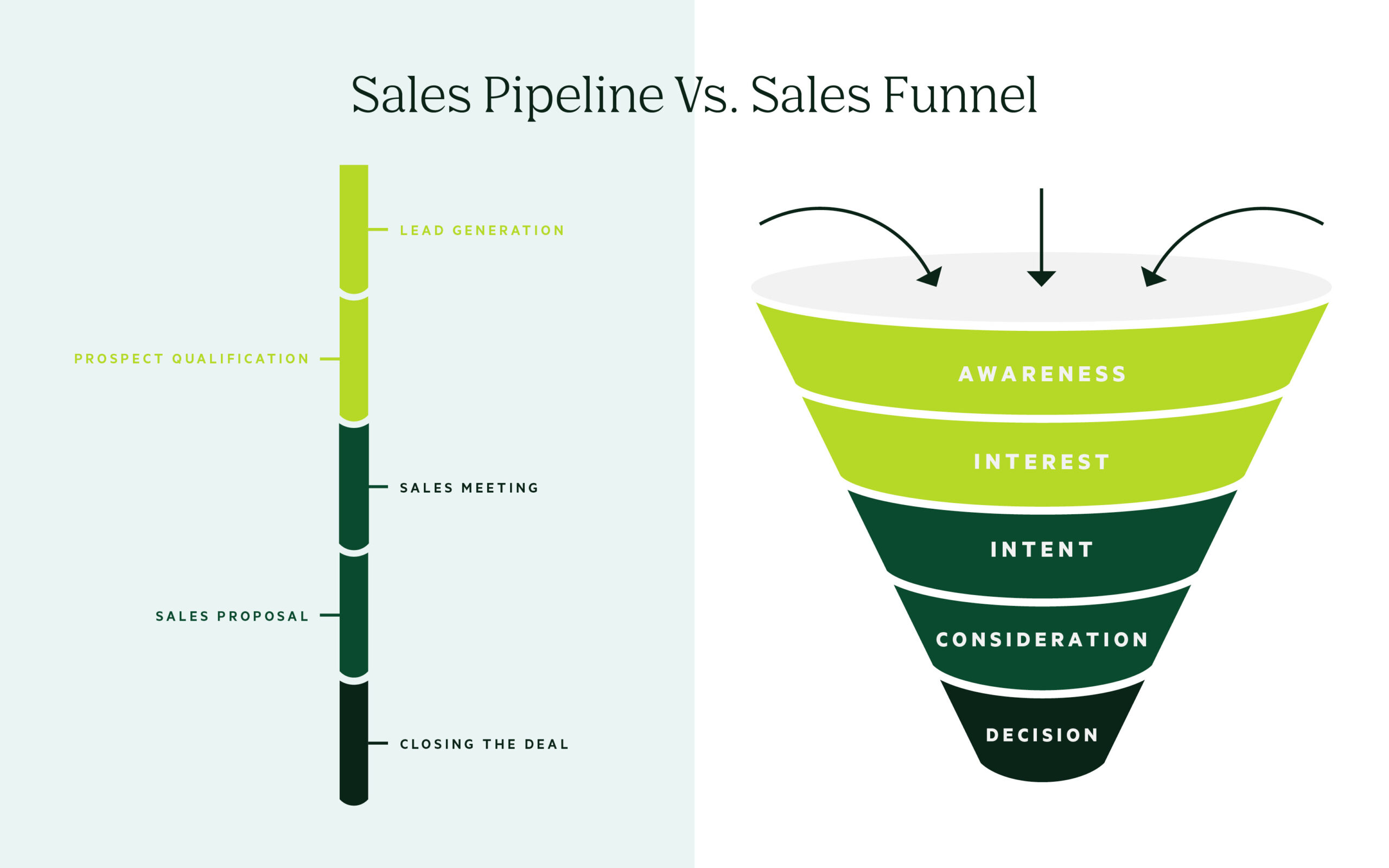
In many business circles, the terms “sales funnel” and “sales pipeline” are used interchangeably, but from a financial and operational standpoint, they represent different perspectives. A sales funnel focuses on the conversion rates of a large pool of leads—illustrating how a broad audience narrows down to a few buyers. It is often a tool used by marketing to track volume and interest.
Conversely, a sales pipeline is an internal tool that focuses on the specific actions and stages required to move a deal toward revenue recognition. While the funnel tracks the customer’s journey, the pipeline tracks the seller’s progress and the specific dollar value attached to those efforts. For those focused on business finance, the pipeline is the superior metric because it deals with tangible assets and weighted revenue projections rather than just general interest levels.
The Role of the Pipeline in Cash Flow Management
Cash flow is the lifeblood of any enterprise. A well-maintained sales pipeline provides a “forward-looking” view of a company’s financial health. By analyzing the pipeline, a CFO or business owner can identify potential “dry spells” months before they happen.
If the “early-stage” section of your pipeline is empty today, your bank account will likely be empty three months from now (depending on your sales cycle). This foresight allows for proactive financial adjustments—such as increasing lead generation spend or cutting overhead—before a crisis occurs. In the context of online income and side hustles, a pipeline helps you move away from the “feast or famine” cycle by providing a clear picture of future earnings.
The Core Stages of a High-ROI Sales Pipeline
For a sales pipeline to provide accurate financial data, it must be divided into logical, measurable stages. Each stage represents a milestone where the probability of closing a deal increases, thereby increasing the “weighted value” of that deal in your financial books.
Lead Generation and Qualification
Every profitable pipeline begins with the acquisition of prospects. However, from a financial efficiency standpoint, not all leads are created equal. Lead generation involves identifying potential customers, but “qualification” is where the real money is made or lost.
Qualification is the process of determining if a prospect has the budget, authority, need, and timeline (BANT) to make a purchase. Spending time and resources on unqualified leads is a net negative for your business ROI. A streamlined pipeline ensures that only high-probability leads move into the later, more expensive stages of the sales process, protecting your profit margins.
Proposal and Negotiation
Once a lead is qualified, the pipeline moves into the proposal stage. This is where a formal value proposition is presented, and specific pricing is discussed. In terms of business finance, this is a critical juncture where “contract value” is established.
During negotiation, the focus is on maintaining price integrity to protect margins. A common mistake in pipeline management is offering deep discounts just to “close the deal.” While this might increase the volume of the pipeline, it can significantly damage the long-term financial health of the brand and the overall net profit. Strategic negotiation within the pipeline ensures that the revenue gained is actually profitable revenue.
Closing and Revenue Recognition
The final stage is the “closed-won” phase. In accounting terms, this is when a prospect becomes a customer and revenue recognition occurs. However, a professional sales pipeline doesn’t just stop at the signature. It should account for the transition from the sales team to the fulfillment or service delivery team. Ensuring a smooth handoff is essential for minimizing “churn” and maximizing the Life-Time Value (LTV) of the customer, which is one of the most important metrics in business finance.

Metrics that Matter: Measuring Pipeline Health for Financial Success
A sales pipeline is only as good as the data it produces. To treat your business as a serious investment, you must track specific Key Performance Indicators (KPIs) that dictate your financial trajectory.
Pipeline Velocity: The Speed of Capital
Pipeline velocity is perhaps the most critical financial metric for any business. It measures the speed at which leads move through your pipeline and how much revenue you are generating for every day that passes. The formula for pipeline velocity is:
(Number of Deals in Pipeline x Average Deal Value x Win Rate %) / Length of Sales Cycle
Increasing your velocity means you are generating capital more quickly, which improves your liquidity and allows you to reinvest in the business faster. For online income earners, shortening the time from “first contact” to “payment” is the fastest way to scale a side hustle into a full-time career.
Conversion Rates and Win Ratios
Measuring the percentage of leads that move from one stage to the next allows you to identify “leaks” in your financial bucket. If you have 100 leads at the top but only 2 become customers, your conversion rate is 2%. By improving that win ratio to 4%, you effectively double your revenue without spending an extra penny on lead generation. This optimization is the hallmark of a financially savvy business owner.
Weighted Pipeline Value and Forecasting Accuracy
One of the greatest benefits of a sales pipeline for business finance is the ability to create “weighted forecasts.” You cannot count 100% of the value of a deal that is only in the “initial contact” stage.
Instead, you assign a probability to each stage (e.g., 10% for initial contact, 50% for proposal, 90% for contract sent). If you have a $10,000 deal at the 50% stage, its weighted value is $5,000. Summing these values across your entire pipeline gives you a highly accurate forecast of expected revenue, allowing for smarter budgeting and investment decisions.
Optimizing Your Pipeline for Scalable Online Income and Business Growth
Growth is not merely about working harder; it is about building systems that produce higher yields for every hour of effort. Optimizing your sales pipeline is the most effective way to achieve this.
Reducing Friction to Maximize Profit Margins
Friction is anything that slows down the movement of a deal or increases the cost of acquisition. In a financial context, friction equals lost interest and increased labor costs. By analyzing where deals get “stuck” in your pipeline, you can implement strategies to smooth the path. This might involve better educational content to pre-qualify leads or a more streamlined checkout process. Reducing friction ensures that your sales process is as cost-effective as possible, directly boosting your bottom line.
Leveraging Automation for Financial Efficiency
In the modern economy, time is money. Using automation to manage the repetitive aspects of your sales pipeline—such as follow-up emails, lead scoring, and meeting scheduling—allows you to handle a larger volume of deals without increasing your headcount.
For those pursuing online income or side hustles, automation is the key to decoupling your time from your earnings. A pipeline that runs on autopilot while you sleep is the ultimate financial asset. By integrating financial tools with your pipeline management, you can create a seamless ecosystem where a lead enters, a sale is closed, and the data is automatically reflected in your profit and loss statement.
Conclusion: The Pipeline as Your Ultimate Financial Asset
A sales pipeline is far more than a simple organizational chart; it is a sophisticated financial instrument that provides clarity, stability, and growth. By understanding the stages of the pipeline, monitoring the right metrics, and constantly optimizing for velocity and conversion, you transform your business from a guessing game into a predictable revenue-generating machine.
Whether your goal is to manage a corporate budget or to maximize your personal wealth through online ventures, the sales pipeline is the foundation upon which your financial success is built. In the world of money, those who can see the future are the ones who control it—and a healthy sales pipeline is the best crystal ball a business owner can have.
aViewFromTheCave is a participant in the Amazon Services LLC Associates Program, an affiliate advertising program designed to provide a means for sites to earn advertising fees by advertising and linking to Amazon.com. Amazon, the Amazon logo, AmazonSupply, and the AmazonSupply logo are trademarks of Amazon.com, Inc. or its affiliates. As an Amazon Associate we earn affiliate commissions from qualifying purchases.