
Sales forecasting is the heartbeat of a company’s financial planning. It is the process of estimating future sales revenue for a specific period—typically monthly, quarterly, or annually. Far more than a mere “best guess,” a professional sales forecast is a data-driven projection that allows business owners, CFOs, and investors to make informed decisions about the future of an organization.
In the world of business finance, accuracy in sales forecasting can mean the difference between scaling a company to new heights and facing a catastrophic liquidity crisis. When a business understands its projected income, it can effectively manage its cash flow, allocate resources, and attract capital. This guide explores the mechanics of sales forecasting through a financial lens, highlighting its importance in maintaining a healthy bottom line.
The Financial Foundation: Why Sales Forecasting Is Critical for Success
For any business, money is the lifeblood of operations. Sales forecasting serves as the primary tool for managing that lifeblood. Without a clear picture of what the future holds, a company is essentially flying blind, unable to predict whether it will have enough capital to meet its obligations or seize new opportunities.
Cash Flow Management and Liquidity
The most immediate benefit of sales forecasting is its impact on cash flow management. Positive cash flow is not just about the money coming in; it is about the timing of those inflows relative to outflows. By forecasting sales, finance teams can predict when revenue will actually hit the bank account. This allows the business to plan for major expenses, such as payroll, rent, and taxes, ensuring that they maintain enough liquidity to stay solvent during leaner months.
Strategic Budgeting and Resource Allocation
Sales forecasts dictate a company’s budget. If a forecast suggests a 20% growth in the next quarter, the finance department may authorize increased spending on inventory, hiring, or marketing. Conversely, if the forecast predicts a downturn, the business can proactively implement cost-cutting measures to protect its margins. This proactive approach prevents “panic-cutting” and ensures that every dollar spent is aligned with the company’s expected revenue.
Investor Relations and Capital Acquisition
For startups and established corporations alike, sales forecasting is a cornerstone of investor relations. Investors and lenders look at forecasts to assess the risk and potential return of their investment. A well-documented, realistic forecast demonstrates that the management team has a firm grasp on their market and financial trajectory. It builds trust and can lead to more favorable terms when seeking venture capital, bank loans, or lines of credit.
Quantitative vs. Qualitative: Choosing the Right Financial Model
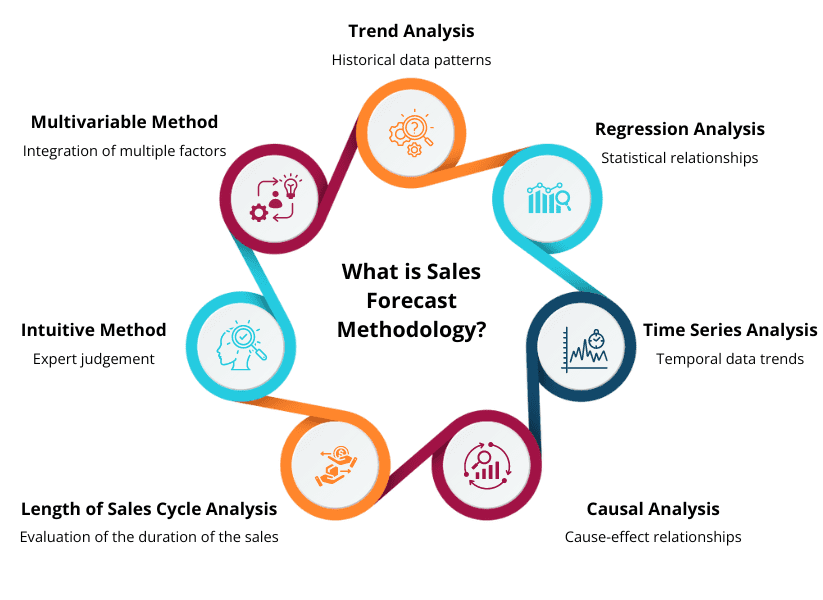
To generate an accurate forecast, financial analysts typically employ a mix of quantitative and qualitative methods. The choice of model often depends on the company’s age, the amount of historical data available, and the stability of the market.
Historical Trend Analysis
This quantitative method relies on past performance to predict future results. By looking at revenue from previous years—adjusting for seasonal fluctuations and historical growth rates—finance teams can create a baseline for the future. While this is one of the most reliable methods for established businesses in stable industries, it can be misleading for rapidly evolving companies or during periods of significant economic volatility.
Lead-Driven and Opportunity Stage Forecasting
In more dynamic sales environments, finance teams look at the sales pipeline itself. Lead-driven forecasting assigns a value to each lead based on historical conversion rates. Opportunity stage forecasting takes this a step further by assigning a “probability of closing” to each deal based on where it sits in the sales funnel (e.g., discovery, proposal, negotiation). For example, a $100,000 deal in the “negotiation” phase might be weighted at 80%, contributing $80,000 to the forecast.
The Delphi Method and Qualitative Insights
When data is scarce—such as when launching a new product or entering a new market—qualitative methods become essential. The Delphi Method involves gathering opinions from a panel of experts to reach a consensus on future sales. This “human-led” approach accounts for market sentiment, competitive shifts, and economic indicators that a purely mathematical model might miss.
The Step-by-Step Process to Building a Robust Financial Forecast

Creating a sales forecast is a systematic process that requires collaboration between the sales team and the finance department. To ensure the forecast is useful for financial planning, it must be structured logically.
Defining the Sales Cycle and Stages
Before any numbers can be crunched, the business must define its sales cycle. How long does it take for a lead to become a paying customer? What are the specific milestones along the way? By standardizing these stages, the finance team can more accurately estimate when revenue will be realized. This timing is crucial for determining the “revenue recognition” phase of financial reporting.
Setting a Baseline and Adjusting for Seasonality
Every business has a rhythm. Retailers may see a massive spike in Q4, while B2B software companies might see a dip during the summer months. A robust forecast accounts for these seasonal variations. By establishing a “run rate” (the current pace of sales) and adjusting for these known fluctuations, the forecast becomes a much more realistic tool for managing month-to-month operations.
Factoring in Market Volatility and Macroeconomics
A sales forecast does not exist in a vacuum. External factors such as inflation, interest rates, and changes in consumer spending habits must be considered. In a high-interest-rate environment, for instance, customers may take longer to approve large capital expenditures. Incorporating “sensitivity analysis”—creating “best-case,” “worst-case,” and “most likely” scenarios—allows the finance team to prepare for various economic outcomes.
Leveraging Financial Tools and Technology for Accuracy
In the modern business landscape, relying on manual spreadsheets for sales forecasting is a recipe for error. Financial technology (FinTech) has revolutionized the way organizations project their income.
ERP and CRM Integration
The most accurate forecasts are built on “a single source of truth.” By integrating Enterprise Resource Planning (ERP) systems with Customer Relationship Management (CRM) software, finance teams can see real-time data flow. When a salesperson moves a deal to a new stage in the CRM, the projected revenue is automatically updated in the financial forecast. This eliminates data silos and reduces the risk of human error.
The Role of Predictive Analytics and AI
Artificial Intelligence is now playing a major role in business finance. Predictive analytics can scan millions of data points—from historical sales to web traffic and social media trends—to identify patterns that a human analyst might overlook. These tools can provide “early warning signals” if a forecast is trending downward, allowing management to adjust their financial strategy before a crisis occurs.
The Importance of Manual Auditing
While technology provides the data, human oversight remains essential. Finance leaders must regularly audit the forecast to ensure that the underlying assumptions remain valid. If a major competitor enters the market or a key supplier changes their pricing, the automated models may need to be manually adjusted to reflect these new realities.
Mitigating Risk: Common Forecasting Errors and Their Financial Impact
An inaccurate sales forecast is not just a minor inconvenience; it can lead to significant financial loss. Understanding the pitfalls of forecasting is the first step in protecting the company’s capital.
Over-Optimism Bias
One of the most common errors in business finance is over-optimism. Sales teams are naturally incentivized to be positive, but if a forecast is unrealistically high, the company may over-extend itself. This can lead to excessive inventory that must be liquidated at a loss, or hiring staff that the company eventually cannot afford to pay. Strategic finance requires a degree of healthy skepticism to ensure that forecasts remain grounded in reality.
Ignoring Customer Churn and Retention
For subscription-based businesses or those that rely on repeat customers, sales forecasting must account for churn. If a company forecasts $1 million in new sales but loses $500,000 in existing contracts, the “net” revenue is significantly lower. Failing to factor in retention rates can lead to a gross overestimation of the company’s available cash.
Data Silos and Poor Communication
When the sales department and the finance department operate in isolation, the forecast suffers. Sales may be tracking “bookings,” while finance is tracking “collected revenue.” If there is a significant lag between a sale being made and the cash being received, the finance team may find themselves in a liquidity crunch despite “great” sales numbers. Regular “S&OP” (Sales and Operations Planning) meetings are vital to ensure that everyone is looking at the same financial picture.
In conclusion, sales forecasting is an indispensable pillar of business finance. By combining historical data, market analysis, and advanced financial tools, organizations can create a roadmap for growth. Whether you are a small business owner looking to manage next month’s payroll or a corporate executive planning a multi-million dollar expansion, mastering the art and science of the sales forecast is essential for long-term financial stability.
aViewFromTheCave is a participant in the Amazon Services LLC Associates Program, an affiliate advertising program designed to provide a means for sites to earn advertising fees by advertising and linking to Amazon.com. Amazon, the Amazon logo, AmazonSupply, and the AmazonSupply logo are trademarks of Amazon.com, Inc. or its affiliates. As an Amazon Associate we earn affiliate commissions from qualifying purchases.