
In the modern landscape of the smart home, kitchen appliances have evolved from simple analog tools into sophisticated pieces of hardware controlled by complex software. Your stove is no longer just a heating element and a gas valve; it is a networked computer with a user interface, sensors, and dedicated firmware. Among the myriad of settings found in the sub-menus of contemporary ranges from brands like Bosch, Samsung, and GE, one specific feature stands out for its unique logic: Sabbath Mode.
Technically speaking, Sabbath Mode is a specialized software configuration that overrides the standard automated behaviors of an appliance. For the average tech enthusiast, understanding Sabbath Mode provides a fascinating look at how hardware manufacturers use software to bypass automated sensors, safety protocols, and interactive displays to meet specific user requirements. This feature represents a critical intersection between user-centric design and high-level appliance engineering.
The Engineering Behind the Interface: How Sabbath Mode Modifies Hardware Logic
To understand Sabbath Mode from a technical perspective, one must first understand how a modern digital stove operates under normal conditions. Contemporary appliances are “reactive.” When you open the oven door, a magnetic reed switch or a mechanical plunger sends a signal to the control board, which then triggers a relay to turn on an internal light. When the temperature inside the cavity drops, a thermocouple detects the change, and the firmware immediately initiates a heating cycle to compensate.
Sabbath Mode fundamentally alters this “Input-Process-Output” loop. It introduces a layer of software abstraction that prevents the appliance from reacting to user intervention.
Overriding the Sensor Array
The most significant technical change occurs in the sensor processing unit. In Sabbath Mode, the software is instructed to ignore the status of the door sensors. This means that opening or closing the oven door does not trigger the light, nor does it immediately trigger a change in the heating element’s state. By disabling these reactive triggers, the appliance transitions from an interactive device to a “passive” state.
Modifying the Thermostat Algorithm
In standard operation, an oven’s thermostat works on a tight feedback loop. If the temperature fluctuates by even a few degrees, the software engages the heating element. Sabbath Mode often introduces a “randomized” delay or a modified algorithm to this process. Instead of an immediate response to a temperature drop—which would be a direct result of the user opening the door—the software waits for a predetermined or randomized interval before adjusting the heat. This shifts the appliance from a reactive machine to a time-based automated system.
Digital Display and Feedback Suppression
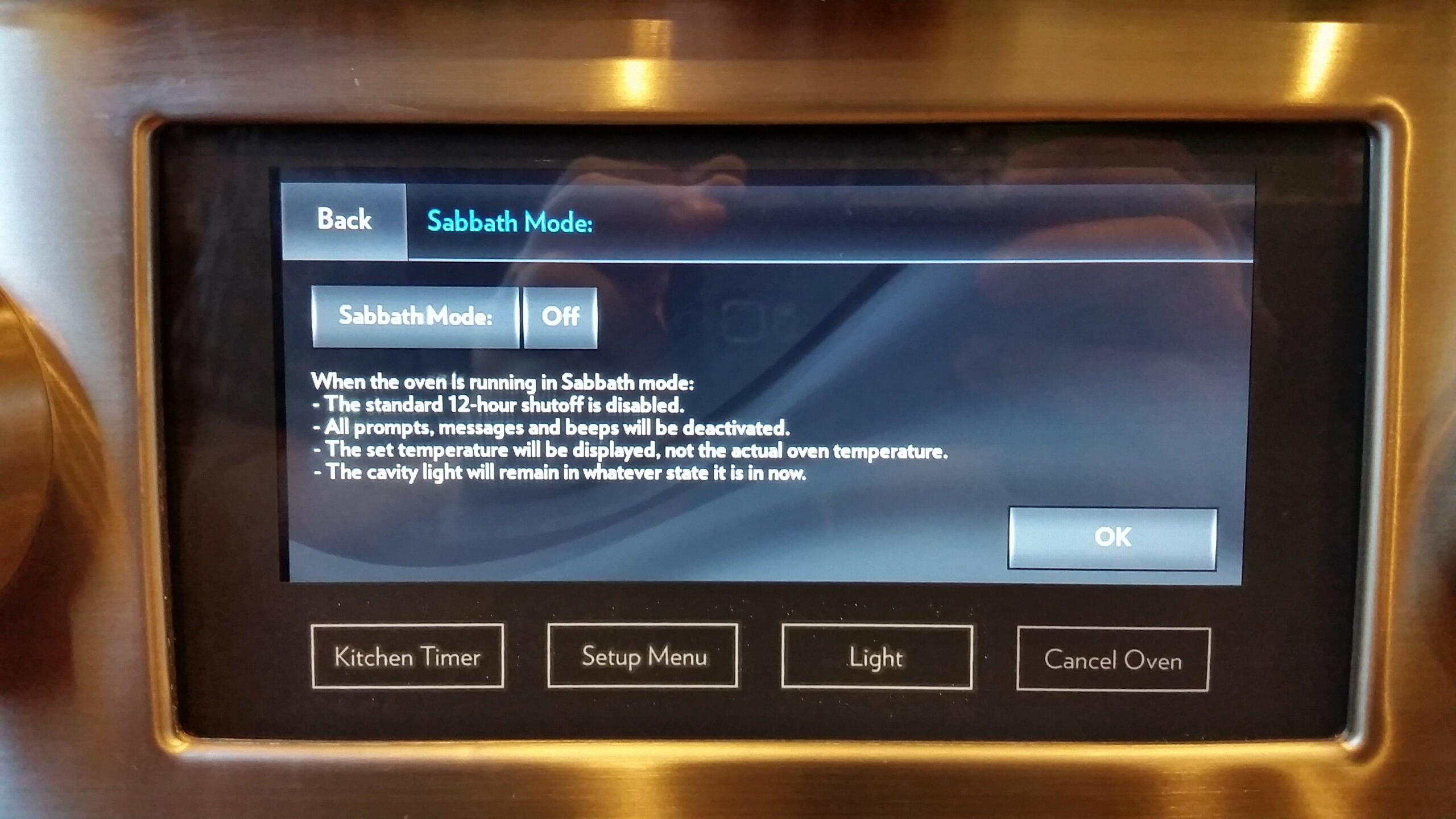
From a UI/UX perspective, Sabbath Mode is the ultimate “distraction-free” setting. Modern capacitive touchscreens and LED displays are designed to provide constant feedback: scrolling text, temperature readouts, and auditory alerts (beeps and chirps). When Sabbath Mode is activated, the firmware suppresses all visual and auditory feedback. The display will often show a static “Sab” or remain entirely dark, and all buttons (except for the cancel/off function for safety) are deactivated. This prevents the user from inadvertently interacting with the digital logic of the machine.
Software Certification and IoT Integration
The implementation of Sabbath Mode is not a wild-west of programming; it is governed by strict technical standards. Much like how Wi-Fi devices must meet IEEE standards, appliances with Sabbath Mode often undergo certification by organizations like Star-K. These organizations provide the technical specifications that the software must follow to ensure the appliance is truly “passive.”
Firmware Limitations and Safety Protocols
One of the most impressive technical feats of Sabbath Mode is balancing religious compliance with fire safety regulations. Most modern oven firmware includes an “Auto-Shutoff” feature, typically set to 12 hours. This is a hard-coded safety measure designed to prevent fires if an oven is left on accidentally.
However, Sabbath Mode requires the oven to stay on for up to 72 hours. This requires a sophisticated override in the appliance’s core logic. The firmware must be programmed to recognize that when Sabbath Mode is engaged, the standard 12-hour safety timer is bypassed in favor of a secondary, longer-duration safety timer. Engineers must ensure that the cooling fans (which protect the sensitive PCB and electronic components) remain operational even when the heating elements are in their “passive” state.
The Role of Smart Home Apps
In the era of the Internet of Things (IoT), Sabbath Mode has moved beyond the physical buttons on the stove. Many high-end smart ranges now allow users to schedule Sabbath Mode via a smartphone app. This integration requires a secure handshake between the mobile device and the appliance’s Wi-Fi module.
Using apps like SmartThings or Home Connect, a user can pre-program their appliance to enter Sabbath Mode at a specific time every week. This automation is handled by a cloud-based server that sends a command packet to the stove’s local firmware. This evolution shows how tradition is being streamlined by modern automation tools, making the management of complex appliance settings as simple as setting a digital alarm.
Hardware Resilience: Surviving Long-Duration Operation
Operating a heating element for 24 to 72 hours straight puts significant thermal stress on the hardware. From a gadget-review perspective, the quality of an appliance’s Sabbath Mode implementation is often a testament to its build quality.
Thermal Management Systems
When an oven stays on for days, the heat doesn’t just stay in the cavity; it migrates toward the control panel. High-end tech-integrated stoves use advanced thermal shielding and variable-speed cooling fans to protect the digital components. In Sabbath Mode, these fans must operate quietly and efficiently. If the software detects that the internal temperature of the control board is reaching a critical threshold, it must have a “fail-safe” protocol to shut down the heating element without requiring user input, protecting the expensive silicon chips that drive the appliance.
Energy Efficiency and Power Consumption
From a “Money and Tech” perspective, leaving a stove on for 72 hours sounds like an energy nightmare. However, modern induction ranges and high-efficiency convection ovens use pulse-width modulation (PWM) to maintain temperatures with minimal power draw. The software is optimized to use the least amount of energy possible to maintain a steady state. Engineers are constantly refining these algorithms to ensure that the “stay-on” feature doesn’t lead to a massive spike in the user’s utility bill or cause premature wear on the heating coils.
Troubleshooting and Technical Glitches
As with any software-driven feature, Sabbath Mode can occasionally experience glitches. Understanding the tech behind the feature can help in troubleshooting these issues.
The “Lockout” Phenomenon
One common issue reported by users is the “accidental lockout.” Because Sabbath Mode disables most buttons, a user who accidentally activates it may think their stove’s control board has fried. There is no “reset” button for the physical hardware; instead, the user must perform a specific “key combo” (like holding the ‘Clock’ and ‘Bake’ buttons for three seconds) to interrupt the software loop. This is similar to a hard reboot on a smartphone or a “Force Quit” on a computer.
Power Outages and Memory
What happens to Sabbath Mode if the power goes out? This depends on the appliance’s Non-Volatile RAM (NVRAM). Superior appliance tech includes a memory feature that remembers the state of the machine. If power is lost for a few minutes, the firmware reboots and resumes Sabbath Mode. Cheaper models may lack this memory capacity, causing the stove to reboot into a standard “Power Loss” mode (usually indicated by a blinking clock), which effectively kills the Sabbath Mode logic.
The Future of Compliance Tech in Kitchen Gadgets
The evolution of Sabbath Mode is a precursor to a wider trend in technology: “Context-Aware Computing.” We are moving toward a future where appliances are aware of the day, the time, and the specific needs of the user.
We are already seeing the emergence of “Holiday Modes” and “Vacation Modes” that use similar logic to Sabbath Mode. In Vacation Mode, a smart refrigerator might increase its internal temperature slightly and stop the ice maker to save energy, knowing that the door won’t be opened for a week. This is the same underlying tech as Sabbath Mode—using software to override the appliance’s standard reactive sensors based on a specific set of user-defined constraints.
As AI becomes more integrated into the kitchen, we may see appliances that don’t even need to be told to enter Sabbath Mode. Using geofencing and calendar integration, the stove’s firmware could automatically download the specific sunset times for the user’s location and engage the passive state without a single button press.
In conclusion, Sabbath Mode is far more than a simple “on/off” switch for religious compliance. It is a sophisticated software solution that showcases the power of firmware to redefine hardware behavior. It bridges the gap between the high-speed, reactive world of digital sensors and the need for a controlled, passive environment. For the tech-savvy homeowner, it serves as a reminder that even the most domestic of gadgets—the kitchen stove—is now a complex computer capable of intricate logic and specialized performance modes.
aViewFromTheCave is a participant in the Amazon Services LLC Associates Program, an affiliate advertising program designed to provide a means for sites to earn advertising fees by advertising and linking to Amazon.com. Amazon, the Amazon logo, AmazonSupply, and the AmazonSupply logo are trademarks of Amazon.com, Inc. or its affiliates. As an Amazon Associate we earn affiliate commissions from qualifying purchases.