
In the world of finance, few terms carry as much weight or are cited as frequently as the “S&P 500.” Whether you are watching a nightly news broadcast, reading a quarterly 401(k) statement, or listening to a podcast about wealth management, the S&P 500 is the ultimate yardstick. But what exactly is this index, and why does it hold such a dominant position in the global economy?
The Standard & Poor’s 500 Index, commonly known as the S&P 500, is a stock market index that tracks the performance of 500 of the largest companies listed on stock exchanges in the United States. Far more than just a list of names, it is a living representation of the health of the American corporate landscape and a foundational tool for millions of individual investors. Understanding how it functions is the first step toward mastering personal finance and long-term wealth building.

Understanding the Mechanics of the S&P 500
To appreciate the S&P 500, one must understand that it is not a simple average of stock prices. Unlike the Dow Jones Industrial Average (DJIA), which is price-weighted, the S&P 500 utilizes a float-adjusted market capitalization weighting methodology. This means that companies with higher market valuations have a more significant impact on the index’s movement.
Market Capitalization and Weighting
Market capitalization is calculated by multiplying a company’s current stock price by its total number of outstanding shares. In a market-cap-weighted index like the S&P 500, a 1% move in a trillion-dollar company like Apple or Microsoft affects the index far more than a 1% move in a company with a $20 billion valuation. The “float-adjusted” aspect ensures that only the shares available to the public—excluding those held by insiders or government agencies—are counted, providing a more accurate reflection of market liquidity.
Eligibility and Selection Criteria
Contrary to popular belief, the S&P 500 does not simply include the 500 largest companies in America. A company must meet strict eligibility requirements to be considered for inclusion. These include being a U.S.-based corporation, having a market cap of at least $15.8 billion (this threshold is periodically adjusted), maintaining high liquidity, and, perhaps most importantly, demonstrating positive earnings over the most recent four quarters. These hurdles ensure that the index represents not just size, but also financial viability.
The Role of the Index Committee
The S&P 500 is actively maintained by the S&P Dow Jones Indices Index Committee. This group meets regularly to review the index’s composition. When a company no longer meets the criteria—perhaps due to a declining market cap or a merger—it is removed, and a new, qualified candidate is added. This “survival of the fittest” mechanism allows the index to evolve alongside the economy, transitioning from an industrial-heavy index in the mid-20th century to one dominated by technology and healthcare today.
Why the S&P 500 Matters to Individual Investors
For the average person looking to grow their savings, the S&P 500 serves two primary roles: it is a benchmark for performance and a vehicle for diversified growth. It is often referred to as “the market,” and for good reason—it represents approximately 80% of the total value of the U.S. equities market.
A Benchmark for Financial Success
When an investment professional or a mutual fund manager claims they have “beaten the market,” they are almost always referring to the S&P 500. Because the index captures the performance of the leading companies in the world’s largest economy, it serves as the gold standard for comparison. If your personal portfolio is returning 5% while the S&P 500 is returning 10%, it suggests that your investment strategy may need adjustment. Conversely, matching or slightly exceeding the index is considered a hallmark of a successful long-term strategy.
Diversification Across Economic Sectors
One of the greatest strengths of the S&P 500 is its breadth. It covers 11 different sectors, including Information Technology, Healthcare, Financials, Consumer Discretionary, and Energy. This diversification protects investors from the total collapse of a single industry. While the technology sector might experience volatility, the stability of consumer staples or utilities often provides a cushion. By owning the index, an investor is essentially betting on the collective ingenuity and resilience of the entire American corporate sector rather than the success of a single firm.
Historical Returns and the Power of Compounding
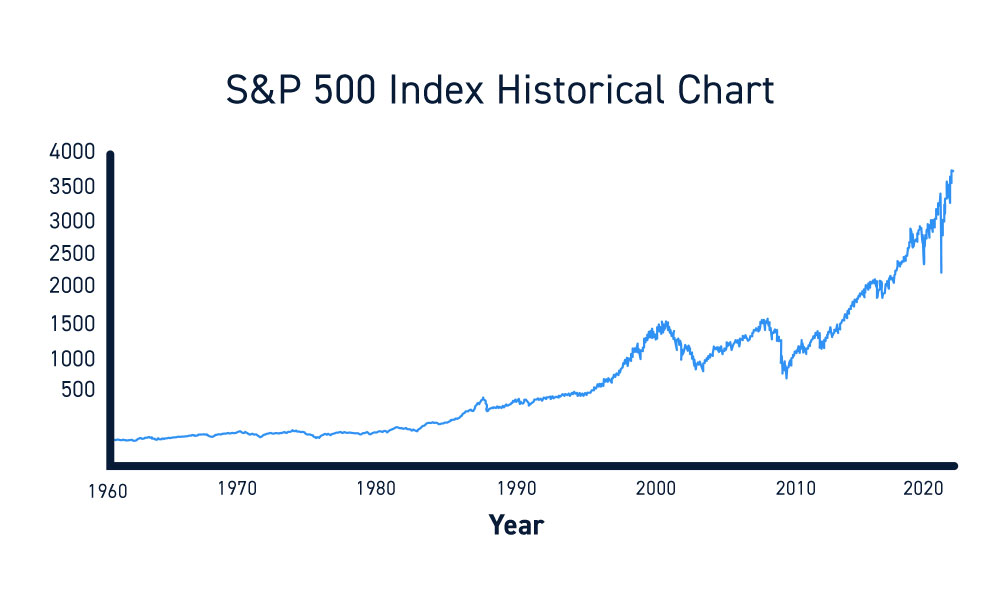
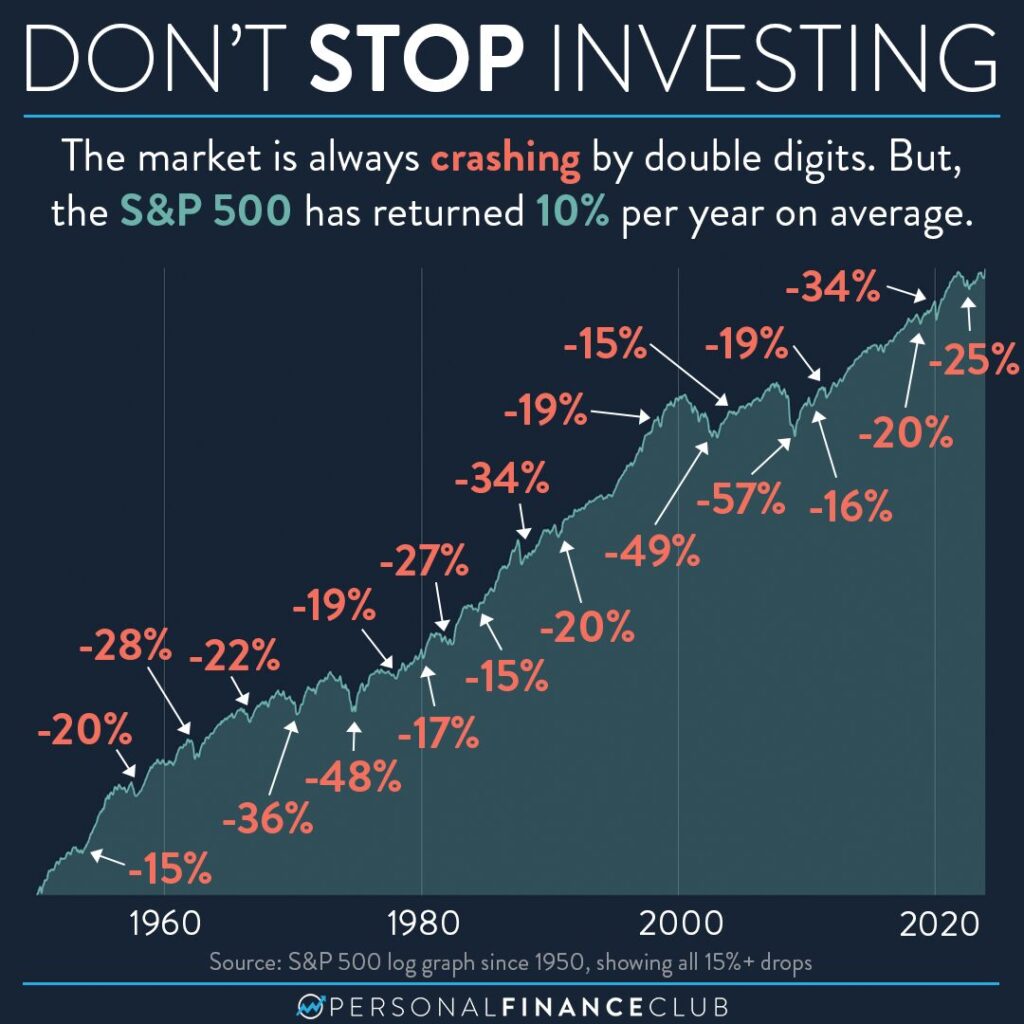
Historically, the S&P 500 has delivered an average annual return of approximately 10% before inflation since its inception in its current form in 1957. While the market does not go up every year—witnessing significant pullbacks in 2008 and 2022—the long-term trajectory has been consistently upward. For a “Money” focused individual, this makes the S&P 500 an exceptional tool for compounding wealth over decades. An investment in an S&P 500-linked fund is a way to capture the productivity gains and innovations of the world’s most profitable enterprises.
How to Invest in the S&P 500
You cannot “buy” the S&P 500 directly because it is a mathematical index, not a stock. However, you can invest in financial products designed to track its performance with near-perfect precision. This is the cornerstone of passive investing, a strategy popularized by the late John Bogle.
Index Funds vs. Exchange-Traded Funds (ETFs)
The two most common ways to gain exposure to the S&P 500 are through Index Mutual Funds and Exchange-Traded Funds (ETFs).
- Index Mutual Funds: These are purchased directly from a fund provider like Vanguard or Fidelity. They are typically priced once at the end of the trading day.
- ETFs: These trade like individual stocks on an exchange throughout the day. Popular examples include the SPDR S&P 500 ETF Trust (SPY) and the Vanguard S&P 500 ETF (VOO).
Both options allow an investor to own a tiny slice of all 500 companies in the index with a single transaction.
The Advantage of Low Costs
One of the primary reasons the S&P 500 is a favorite among savvy investors is the low cost of entry. Because these funds are “passively managed”—meaning a computer simply replicates the index rather than a highly paid manager picking stocks—the fees (known as expense ratios) are incredibly low. Many S&P 500 ETFs charge less than 0.05% annually. In the world of finance, keeping costs low is one of the few guaranteed ways to increase your total return over time.
Implementing a Dollar-Cost Averaging Strategy
For those focused on building a side hustle or optimizing their salary, the most effective way to invest in the S&P 500 is through Dollar-Cost Averaging (DCA). This involves investing a fixed amount of money at regular intervals, regardless of whether the market is up or down. This strategy removes the emotional stress of “timing the market” and ensures that you buy more shares when prices are low and fewer when prices are high, ultimately lowering your average cost per share over time.
Limitations and Risks of S&P 500 Investing
While the S&P 500 is an extraordinary wealth-building tool, it is not without its drawbacks. A prudent investor must understand the risks associated with an index-only approach to ensure their financial plan is truly robust.
Concentration Risk and the “Magnificent Seven”
In recent years, the S&P 500 has become increasingly concentrated in its top holdings. A small group of tech giants—often referred to as the “Magnificent Seven” (including Apple, Microsoft, Alphabet, Amazon, Nvidia, Meta, and Tesla)—now account for a significant percentage of the index’s total weight. This means that if the tech sector faces a regulatory crackdown or a sudden downturn, the entire index can suffer, even if the other 493 companies are performing well.
Market Volatility and Macroeconomic Sensitivity
The S&P 500 is highly sensitive to macroeconomic factors such as interest rate hikes, inflation, and geopolitical instability. During periods of economic recession, the index can experience “drawdowns” of 20%, 30%, or even 50%. For investors with a short time horizon—such as those nearing retirement—relying solely on the S&P 500 can be risky. It is essential to balance index investing with other assets like bonds or cash equivalents to manage volatility.
The Absence of Small-Cap and International Exposure
The S&P 500 focuses exclusively on “large-cap” U.S. companies. By investing only in this index, you are missing out on the growth potential of small-cap companies (the “stars of tomorrow”) and the diversification offered by international markets in Europe, Asia, and emerging economies. While the S&P 500 companies are global in their operations, their stock performance is still largely tied to U.S. market sentiment. A holistic financial plan often involves supplementing an S&P 500 core with other types of investments.
Final Thoughts: The Bedrock of a Wealth Strategy
The S&P 500 is more than just a number on a screen; it is the heartbeat of modern capitalism. For anyone looking to take control of their financial future, understanding the S&P 500 is essential. It offers a transparent, low-cost, and historically proven method to participate in the growth of the world’s most successful corporations.
By recognizing the mechanics of how the index is built, leveraging it as a benchmark for personal success, and utilizing low-cost ETFs to build a position, an investor can move from a spectator to a participant in global wealth creation. While it requires the discipline to weather occasional market storms, the S&P 500 remains one of the most powerful engines for achieving long-term financial independence. Whether you are just starting your first side hustle or managing a corporate portfolio, the “market” is a tool that, when understood and respected, can help pave the way to lasting prosperity.
aViewFromTheCave is a participant in the Amazon Services LLC Associates Program, an affiliate advertising program designed to provide a means for sites to earn advertising fees by advertising and linking to Amazon.com. Amazon, the Amazon logo, AmazonSupply, and the AmazonSupply logo are trademarks of Amazon.com, Inc. or its affiliates. As an Amazon Associate we earn affiliate commissions from qualifying purchases.