
In the rapidly evolving landscape of cinema technology, the theater-going experience has shifted from simple celluloid projection to a sophisticated ecosystem of digital hardware, acoustic engineering, and high-bitrate data processing. One of the most prominent standards in this modern era is RPX, or Regal Premium Experience. Developed by Regal Cinemas, RPX is not merely a marketing label; it represents a specific technological specification designed to maximize the fidelity of digital cinema. To understand what RPX is, one must look past the comfortable seating and delve into the technical infrastructure of high-luminance projection, immersive audio protocols, and optimized architectural design.
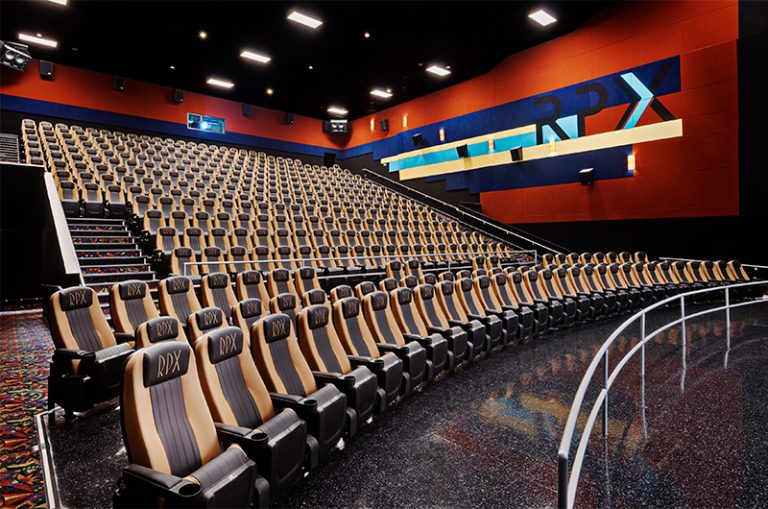
The Technological Architecture of the Regal Premium Experience
The core philosophy behind RPX is the integration of high-end hardware components that exceed the baseline requirements of DCI (Digital Cinema Initiatives) standards. While a standard theater screen might provide a functional viewing experience, RPX aims for a “Premium Large Format” (PLF) output. This is achieved through a multi-layered approach to audiovisual delivery.
Unlike standard auditoriums, which often utilize aging xenon bulb projectors and 5.1 or 7.1 surround sound, RPX theaters are engineered as “spec-first” environments. This means every component—from the server rack in the projection booth to the transducers under the floorboards—is calibrated to operate in a specific synergy. The goal is to provide a “director’s cut” level of fidelity, where the digital assets are rendered with minimal compression artifacts and maximum dynamic range.
Visual Engineering: Beyond Standard Digital Projection
The most immediate differentiator in an RPX theater is the screen and the projection system powering it. The visual component is built on a foundation of high-resolution digital cinema projectors, typically utilizing 4K laser technology or high-output dual-projector setups.
Laser Projection and Luminance
In recent years, many RPX installations have transitioned from traditional lamp-based projection to laser illumination. The technical advantages of laser projection are significant. Traditional xenon lamps suffer from “lumen decay,” where the brightness of the screen gradually diminishes over the life of the bulb. Laser light sources, however, maintain a consistent brightness level and offer a much wider color gamut.
In an RPX environment, the focus is on “foot-lamberts,” a unit of measurement for the brightness of a theater screen. Standard screens often hover around 14 foot-lamberts for 2D content. RPX systems are calibrated to provide higher peak brightness, which is essential for maintaining clarity during 3D presentations—where polarized glasses naturally dim the image—and for delivering the high contrast ratios necessary for modern High Dynamic Range (HDR) content.
Resolution and Pixel Density
RPX theaters prioritize 4K resolution (4096 x 2160 pixels), which provides four times the detail of the standard 2K digital projection found in many multiplexes. When projected onto a massive PLF screen, this increased pixel density is vital. On a standard 2K screen, viewers in the front rows might experience “screen-door effect,” where the individual pixels become visible. The 4K infrastructure of RPX ensures that even on screens spanning 60 feet or more, the image remains sharp, smooth, and free of jagged edges.
Furthermore, RPX systems are capable of handling High Frame Rate (HFR) content. While most films are shot at 24 frames per second (fps), certain modern productions utilize 48 or 60 fps to reduce motion blur and increase “hyper-realism.” The processing units in an RPX booth are designed to decode these massive data streams without dropped frames or jitter.
The Sonic Landscape: Immersive Audio Protocols
If the visual component of RPX is about clarity, the audio component is about spatial precision. While standard cinema audio relies on channel-based systems (where sound is sent to a specific “left,” “right,” or “rear” speaker), RPX often utilizes object-based audio protocols, most notably Dolby Atmos or Auro 11.1.
Object-Based Audio vs. Channel-Based Audio
In a traditional 7.1 setup, a sound designer decides which speaker group handles a specific sound. In an RPX environment equipped with object-based audio, sounds are treated as individual “objects” in a three-dimensional space. The system’s processor uses metadata to determine exactly where a sound should originate and how it should move across the room.
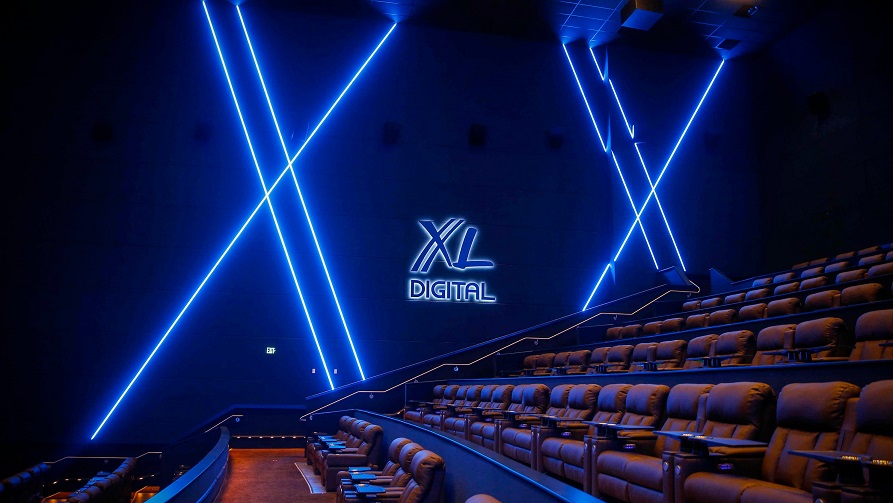
To facilitate this, RPX theaters feature an array of speakers that extend beyond the walls. Overhead ceiling speakers and additional subwoofers are integrated to create a “hemispherical” sound field. This allows for verticality in the soundstage; if a helicopter flies overhead on screen, the audio moves physically across the ceiling of the theater, creating a seamless transition that tricks the human ear into perceiving true 3D space.
Spatial Calibration and Acoustic Treatment
The hardware alone does not create the RPX sound. The theater itself undergoes rigorous acoustic treatment. Sound engineers use specialized software to map the “acoustic signature” of the room. They identify standing waves and resonance points—areas where bass might become “boomy” or where high frequencies might reflect harshly off a wall.
RPX auditoriums are fitted with custom diffusers and absorbers to ensure that the sound remains “dry” and accurate to the source material. Furthermore, many RPX seats are equipped with low-frequency transducers (tactile transducers). These are not speakers in the traditional sense; rather, they convert low-frequency audio data into physical vibrations. This “butt-kicker” technology allows the audience to feel the sub-bass frequencies through their seats, adding a physical dimension to the tech stack that is absent in standard screenings.
Hardware Synergy and Theatre Ergonomics
The “Experience” in RPX also extends to the physical engineering of the viewing environment. This includes the curvature of the screen and the placement of the seating, which are mathematically determined to optimize the “field of view.”
Screen Curvature and Peripheral Immersion
RPX screens are often slightly curved. This is a technical choice to ensure that the distance from the projector lens to the center of the screen is roughly the same as the distance to the edges. On a flat screen of massive proportions, the edges can suffer from “pincushion distortion” or a drop-off in brightness. The curve ensures uniform focus and luminance across the entire surface. This curvature also aids in immersion by filling the viewer’s peripheral vision, a key requirement for the “large format” designation.
Custom Seating and Sightlines
From a technical standpoint, the seating in an RPX theater is arranged using “stadium seating” geometry, but with more aggressive raking. This ensures that every seat has an unobstructed sightline to the screen, regardless of the height of the person in the row ahead. The chairs themselves are often upgraded to oversized, high-back leather or plush rockers, designed to reduce physical fatigue during long-form digital presentations. While this may seem like a comfort feature, it is part of the “system design” aimed at removing any external distractions from the digital content being consumed.
The Future of Premium Large Format (PLF) Technology
As home theater technology—such as OLED displays and consumer-grade Dolby Atmos soundbars—continues to improve, the technical threshold for “premium” cinema must rise. The RPX platform is positioned as a scalable tech stack that can integrate new innovations as they emerge from the R&D labs of cinema technology firms.
The Shift Toward AI-Enhanced Upscaling and HDR
We are currently seeing a move toward AI-driven image processing in the cinema space. Future iterations of RPX hardware are likely to include real-time AI upscaling, which can take older content or lower-resolution masters and sharpen them for 4K or 8K projection without the artifacts associated with traditional bilinear interpolation.
Furthermore, the industry is pushing toward true “Cinematic HDR.” While current theaters are bright, they still struggle to match the “true black” levels of an OLED screen. The next frontier for RPX will likely involve Micro-LED cinema screens—massive walls of individual light-emitting diodes that eliminate projectors entirely. This would offer infinite contrast ratios and a level of color accuracy that currently exceeds what is possible with reflected light (projection).

Networked Operations and Digital Security
Behind the scenes, RPX theaters operate on a sophisticated network. The movies arrive as Encrypted Digital Cinema Packages (DCPs). These are not mere video files; they are massive folders containing terabytes of data, protected by 128-bit AES encryption. The RPX server communicates with a central Key Delivery Message (KDM) system to “unlock” the film for a specific window of time. The automation systems in an RPX booth synchronize the lighting, curtains, audio levels, and projection parameters, ensuring that the human element—and the potential for human error—is minimized.
In summary, RPX at the movie theater is a high-performance technological standard. It is a convergence of 4K digital projection, object-based audio engineering, and optimized architectural physics. For the technophile, it represents the pinnacle of current commercial cinema, providing a high-bitrate, high-luminance environment that standard theaters simply cannot replicate. As digital media continues to push the boundaries of data density and sensory immersion, the RPX infrastructure provides the necessary hardware to translate that data into a visceral, high-fidelity reality.
aViewFromTheCave is a participant in the Amazon Services LLC Associates Program, an affiliate advertising program designed to provide a means for sites to earn advertising fees by advertising and linking to Amazon.com. Amazon, the Amazon logo, AmazonSupply, and the AmazonSupply logo are trademarks of Amazon.com, Inc. or its affiliates. As an Amazon Associate we earn affiliate commissions from qualifying purchases.